

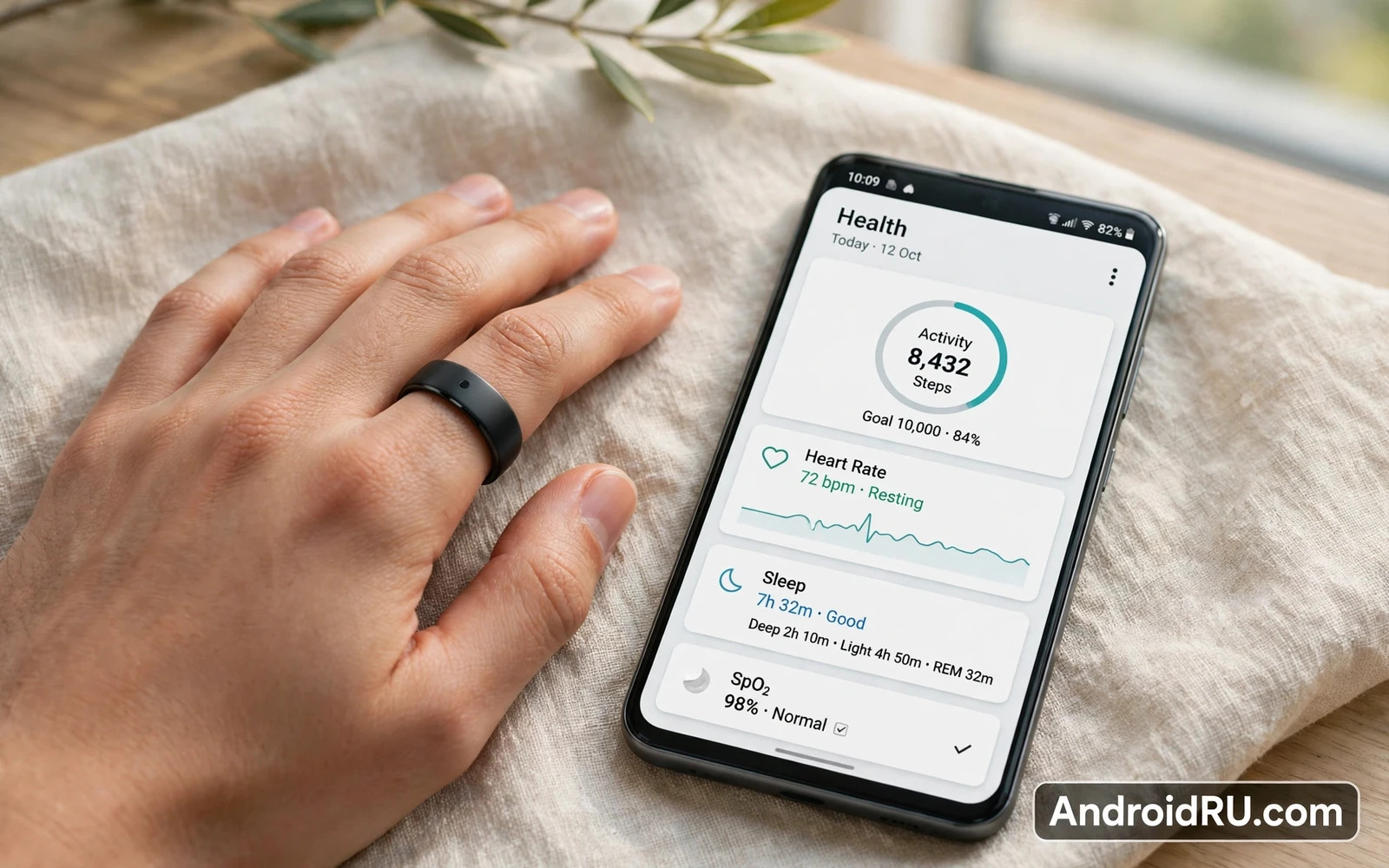
What A Smart Ring Tracks Each Day
A smart ring is a tiny sensor package worn on a finger. It tracks sleep and activity and heart rate through the day. It tracks skin temperature trends during the night. It tracks blood oxygen trends on many models as well. The finger gives sensors a stable close contact point. That contact helps readings stay consistent during sleep. A ring weighs far less than a watch on the wrist. Many people forget they wear a ring after a few days. That forgettability is the core appeal of the category. Health tracking works best when the device stays on without annoyance.
A ring does not show notifications like a watch does. It has no screen for messages or calls. That limit is a feature for people who want less distraction. The phone app becomes the main window into your data. You open the app in the morning for a sleep summary. You open it after a workout for an activity summary. You check trends weekly rather than obsessing over hourly numbers. This calmer rhythm suits people who felt overwhelmed by watch alerts. A ring tracks quietly while the phone stays in your pocket.
Sleep Tracking And Recovery Insights
Sleep is where smart rings shine brightest for most owners. The ring records sleep stages through the night. It records total sleep time and wake ups and restlessness. It combines these signals into a readiness or recovery score. That score helps you judge how hard to train today. A low score suggests a lighter day and earlier bedtime. A high score suggests your body recovered well overnight. Scores work best as trends rather than as daily verdicts. One bad night rarely means a health crisis. A pattern of poor sleep over weeks deserves attention and habit changes.
Sleep data improves when the ring fits well and stays in place. A loose ring slides and loses sensor contact during the night. A tight ring disturbs sleep and leaves marks by morning. Most makers offer a sizing kit before purchase. Use the sizing kit for several nights before you choose. Finger size changes with temperature and time of day. Test sizes in the evening when fingers run slightly larger. A good fit feels snug without pressure. That fit also improves daytime heart rate accuracy during rest.
Activity And Heart Rate Tracking
Activity tracking on a ring focuses on steps and movement and workouts. Step counts from a finger sensor differ slightly from wrist counts. The difference rarely matters for general activity goals. Workout tracking on rings covers common activities like walking and running and cycling. A ring lacks a screen for live workout stats. You start a workout in the phone app and review it after. Heart rate during workouts comes from the finger sensor. Steady state workouts track well on most rings. Very fast interval workouts can challenge any small optical sensor. Treat ring workout data as a guide rather than as lab grade truth.
Resting heart rate trends matter more than single readings. A rising resting trend over weeks can signal stress or illness or overtraining. A falling trend can signal improving fitness over months. Compare your trend with your own history rather than with strangers online. Age and fitness and medication all shift normal ranges widely. A ring app that shows clear trends helps you spot changes early. Share trend charts with a clinician when you have health worries. A ring supports conversations about health but it never replaces professional advice. Use its data as a prompt for better habits and timely checkups.
Android Compatibility And App Experience
Android compatibility varies by ring maker so check before you buy. Some rings support Android fully with every feature enabled. Some rings launch on one platform first and add Android later. Feature gaps can include payment support or workout types or data exports. Read the maker Android page carefully before ordering. Check the companion app ratings from Android users specifically. Look for recent app updates as a sign of active Android support. A ring with a neglected Android app will frustrate you daily. A ring with a cared for Android app will feel like a native product.
Bluetooth connection quality shapes the daily ring experience. The ring syncs data to the phone over Bluetooth in the background. A stable connection keeps morning summaries ready on time. A flaky connection leaves gaps in your data history. Keep the phone Bluetooth stack healthy with regular updates. Keep the ring close to the phone during the first sync each day. Other Bluetooth gear in the home can compete for attention. You can review common wireless earbuds tested on Android to see how Bluetooth behavior differs across Android devices. That background helps you judge whether a sync problem comes from the ring or from the phone itself. A methodical test saves you from blaming the wrong device.
Battery Life And Charging Habits
Battery life is a quiet strength of most smart rings. Many rings run for several days on one charge. Some rings run for a full week with light use. The charging case for a ring is small and pocket friendly. Some cases hold extra charges for travel without a socket. A ring with a week of battery fits travel far better than a daily charge watch. Charging takes a short time on most models. A quick charge while showering often covers a full day. Build charging into a daily ritual so the ring never dies overnight. A dead ring on a key sleep night loses the most valuable data of all.
Battery habits also affect long term ring health. Avoid leaving the ring on a hot charger for days. Avoid charging in direct sun on a windowsill. Keep the charging contacts clean with a soft dry cloth. Sweat and lotion can film the sensors over time. Clean the ring gently after workouts and hot days. A clean sensor reads more consistently than a filmed sensor. These tiny habits keep data quality high for years. They also keep the ring comfortable against skin during long wear.
Sizing Comfort And Daily Wear
Sizing decides whether a ring becomes a daily habit or a drawer item. A sizing kit is worth the wait before a final order. Wear the plastic sizer for work and sleep and workouts. Note any swelling after workouts or hot weather. Note any looseness in cold mornings. Choose the size that stays comfortable across all these states. A ring that fits only in one state will annoy you daily. Some makers offer free size exchanges after purchase. Check that policy before you buy. A generous exchange policy removes the fear from sizing choices.
Daily wear comfort also depends on ring shape and finish. A rounded inner profile feels kinder during long wear. A flat heavy profile can press during grip tasks. People who lift weights often remove rings for heavy sessions. People who type all day rarely notice a light ring. A durable finish resists scratches from keys and gym gear. A scratched ring still tracks well in most cases. Scratches bother owners more than sensors do. Choose a finish you will enjoy seeing every day. A ring you like to wear is a ring that keeps tracking.
Subscriptions And Data Ownership
Some rings charge a monthly fee for full insights. Some rings include all insights in the purchase price. Read the subscription terms before you buy any ring. A ring that hides core trends behind a fee may cost far more over years. A ring with no fee may still offer optional premium coaching. Decide which insights matter to you before you pay. Sleep trends and basic activity data should feel core to you. Advanced coaching and lab style reports may feel optional. Add up the total cost over three years for a fair comparison. A cheap ring with a fee can outcost a pricier ring without one.
Data ownership matters as much as price for health devices. Check whether the app exports your data in standard formats. Check whether you can delete your data fully from the service. Check where health data is stored and how it is protected. A clear privacy policy is a good sign for a health product. A vague policy is a warning worth heeding. Your health trends are sensitive personal data. Choose a maker whose data practices you trust. That trust matters more than any single feature on a spec sheet.
Final Advice For Smart Ring Buyers
Buy a smart ring when you want quiet health tracking without a screen. Buy a watch instead when you want notifications and apps on your wrist. A ring suits sleep focused users better than any watch. A ring suits minimalists who dislike wrist bulk. Start with sizing and Android support as your first filters. Then compare sleep insights and battery life and total cost. Read Android user feedback from the last few months. Recent feedback reveals current app quality better than launch reviews do. A ring bought with care becomes an invisible health companion for years.
Set honest expectations before your first week with a ring. Trends will teach you more than any single day score. Habits will improve slowly as you learn your patterns. Share worrying trends with a clinician rather than diagnosing alone. Keep the ring charged and clean and well fitted. Review your weekly trends every Sunday with a calm mind. Small steady improvements in sleep and movement add up. A smart ring simply makes those improvements visible. Visibility turns vague health goals into daily choices you can actually keep.
Ring Data And Doctor Visits
Ring trends become useful when you share them with a clinician. A chart of resting heart rate over months tells a clearer story than one reading. A chart of sleep duration over weeks reveals patterns you may miss daily. Bring printed or exported charts to checkups when you have worries. A clinician can judge whether a trend needs tests or simple habit changes. A ring never diagnoses illness on its own. It simply records signals that support professional judgment. Honest trend sharing turns a gadget into a health partner. It also prevents panic over a single odd night of data.
Wrist wearables offer a useful comparison point for ring buyers. A watch adds a screen and notifications that a ring deliberately lacks. Many people start with a watch and later add a ring for sleep. Others start with a ring and never miss a watch at all. You can compare smartwatches that work well with Android phones to see which wrist features you would actually miss. That comparison clarifies whether a ring alone covers your needs. Health apps also shape the ring experience more than hardware alone. A look at fitness trackers and health apps for Android shows how apps turn raw sensor signals into readable trends. The right app pairing makes ring data far more actionable week after week.

