

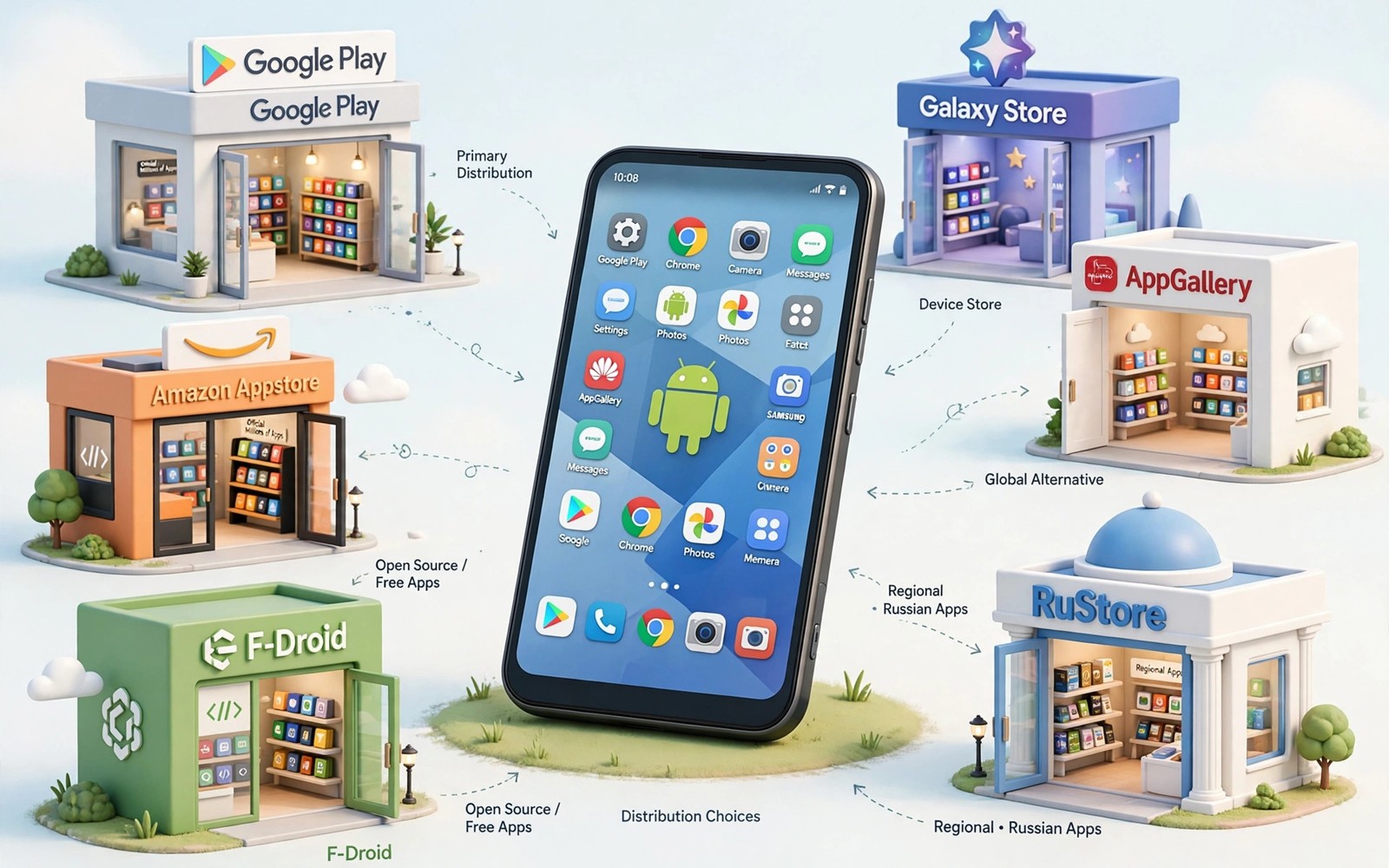
App store monopolies matter because a single gatekeeper can decide which apps reach users and on what terms. When one store controls distribution, developers must accept its fees and its rules even when those rules hurt small teams. Users lose choice when an app disappears from the only store they use. Alternative distribution restores balance by giving developers another path to users. The guide to identifying fake download buttons shows why alternative paths still need careful safety checks.
Monopoly power is not only about fees, although fees affect prices that users ultimately pay. Rules about payments and content and updates shape what apps can offer. A store may block a feature that competes with its own services, or it may delay an update for policy reasons. Developers who depend on one store have little leverage when such decisions arrive. Multiple distribution paths give developers room to negotiate and to survive a dispute.
Why developer choice protects users
When developers can choose among stores, they can pick terms that fit their business model. A small developer may prefer a store with lower fees, while a privacy focused developer may prefer a store with stricter data rules. Choice among stores creates competition on fees and on policies, not only on app catalogues. Competition of this kind benefits users through lower prices and better privacy options.
Developer choice also protects niche apps that serve small audiences. A store focused on mass appeal may reject an app that serves a specialised community. An alternative store or direct distribution can keep such apps alive. Without alternative paths, niche communities lose tools that matter to them but not to a mass market.
What users gain from alternative distribution
Users gain access to apps that a single store might never list, including regional apps and experimental tools and open source projects. They also gain the ability to install older versions when a new update removes a feature they relied upon. Choice of distribution is choice of software, and software choice shapes what a phone can do.
Alternative distribution also lets users support developers more directly, because a larger share of payment may reach the developer. Some users value that direct support even when the purchase process feels less polished. Direct relationships between users and developers can produce faster feedback and quicker fixes. A store is a middleman, and middlemen add both convenience and cost.
The security argument deserves honest treatment
Supporters of single store control argue that one gatekeeper keeps malware out more effectively. Central review does catch many harmful apps before they reach users. That benefit is real and it should not be dismissed. However, central review is not perfect, and harmful apps still appear in major stores from time to time. Security through one gatekeeper is a trade, not a guarantee.
Alternative distribution can be safe when users follow consistent verification habits. Checking file details and developer identity and update history reduces risk substantially. The safety playbook in the master playbook for safe sideloading and distribution lays out those habits in detail. Security should come from verification and user education, not only from a single store wall.
How alternative stores differ from each other
Alternative stores differ in curation and in business model and in geographic focus. Some focus on open source apps and publish code openly. Others focus on games or on regional content that major stores undervalue. A store that fits one user may not fit another, and that diversity is the point. Users should judge each store by its own record, not by the category as a whole.
Payment options also differ across alternative stores, which matters for users without credit cards. Some stores accept local payment methods or carrier billing that major stores ignore. Payment diversity expands access to paid apps for users in regions with limited banking. Access is a form of choice that store monopolies often overlook.
Sideloading as a last resort and a first principle
Sideloading lets users install an app directly from its developer without any store in between. That direct path is essential for beta testing and for apps that no store will list. It also carries the highest responsibility, because the user becomes the reviewer. Sideloading should be a deliberate act, not a casual tap on an unknown link.
Treat sideloading as a tool for specific cases rather than a default habit. Use it for trusted developers and for apps with a clear reason to bypass stores. Keep a list of sideloaded apps and their sources, so you can audit them later. Deliberate sideloading preserves freedom without surrendering safety.
Regulation and the future of distribution
Regulators in several regions now require major platforms to allow alternative stores and sideloading. These rules aim to restore competition without removing security protections. Implementation varies, and users should expect a period of confusing prompts and warnings as platforms adapt. Confusing warnings do not mean alternative distribution is unsafe by default.
The future likely mixes central stores with alternative paths, rather than replacing one monopoly with another. Users will choose a balance that fits their comfort with risk. Developers will support multiple paths when the effort pays off. A mixed ecosystem rewards both convenience seekers and freedom seekers.
An alternative distribution checklist
Use this checklist before installing from an alternative path, so freedom never becomes recklessness. It applies to alternative stores and to direct downloads alike.
Source check: developer identity known, store record reviewed
File check: version and size match listing, no bundled extras
Permission check: only access the core feature needs
Update check: update path known, version noted
Exit check: uninstall path clear, data export tested
The code above is an original example written for this guide. It shows one practical way to apply the idea in this article. You can adapt the wording and the values to fit your own phone and your own routine.
How users can support alternative stores today
Supporting alternative distribution starts with trying one reputable alternative store for a single app category. Choose a category you care about, such as open source tools or regional games, and explore what alternative stores offer there. A single successful install teaches you more about alternative distribution than hours of reading about monopolies. Practical experience also reveals which stores feel trustworthy in daily use.
Leave honest reviews for apps you install through alternative stores, because reviews help other users judge quality. A review that mentions install experience and update reliability is especially useful. Reviews also help developers improve their alternative listings. A small community of reviewers can raise the quality of an entire alternative ecosystem.
What a healthy app ecosystem looks like
A healthy ecosystem offers several stores with different strengths, plus direct distribution for developers who prefer it. No single store should be able to end a developer business by delisting an app without recourse. Developers should have appeal processes and alternative paths when disputes arise. Users should be able to move between stores without losing purchased apps entirely, although licensing makes full portability difficult today.
Healthy ecosystems also publish clear data about removals and policy changes. Transparency lets users and developers spot patterns, such as a sudden increase in removals for a particular category. The repository advice on file repositories every power user keeps bookmarked shows a similar principle, because open version history builds trust. Transparency plus choice plus appeal rights together define a fair market.
Balancing convenience with freedom
Most users will keep a major store as their primary source, and that choice is reasonable. Convenience, automatic updates and familiar payments matter in daily life. Freedom does not require abandoning convenience, only adding alternative paths for cases where the major store falls short. A user who installs ninety percent of apps from a major store and ten percent from alternatives still supports competition.
Think of alternative distribution as insurance rather than as a replacement. Insurance feels unnecessary until a dispute or a delisting removes an app you rely upon. Having a trusted alternative path ready before a crisis makes the crisis manageable. Preparation, not ideology, is the practical reason to explore alternatives now.
Common mistakes
The most common mistake is treating all alternative distribution as equally safe or equally dangerous. Quality varies sharply across stores and developers. Another mistake is disabling all security warnings to make sideloading easier. Warnings exist to slow you down, and slowing down is often the point.
- Do not install from a store you have never researched, even when an app looks appealing.
- Do not grant broad permissions to an app from an alternative source by default.
- Do not ignore update duties for sideloaded apps, because they will not update themselves.
- Do not assume that a major store listing proves an app is safe without your own checks.
A final mistake is arguing about monopolies in abstract terms without changing personal habits. Supporting alternative distribution means actually using a good alternative store or a trusted direct download when it fits. Habits, not opinions, shape the market.
Frequently asked questions
Does alternative distribution mean less security?
Not necessarily, because security depends on verification habits and store quality as much as on central control. A careful user on a good alternative store can be safer than a careless user on a major store. Use file checks and permission reviews on every path.
Why do developers care about store fees?
Fees directly reduce the revenue that funds development and support, especially for small teams. A lower fee store lets a small developer survive on fewer sales. Fee competition therefore affects which apps continue to exist.
Should I leave the major store entirely?
No for most users, because major stores offer convenience and broad catalogues. Use alternative paths alongside the major store for specific apps and developers. A mixed approach gives you choice without losing convenience.
Conclusion
Alternative distribution matters because it gives developers leverage and users choice, even when major stores remain convenient. A mixed ecosystem with careful verification habits offers the best balance of freedom and safety.
Your concrete next step is to research one alternative store this week and install one app from it using the checklist above. Note how its fees and policies differ from the store you normally use.

