

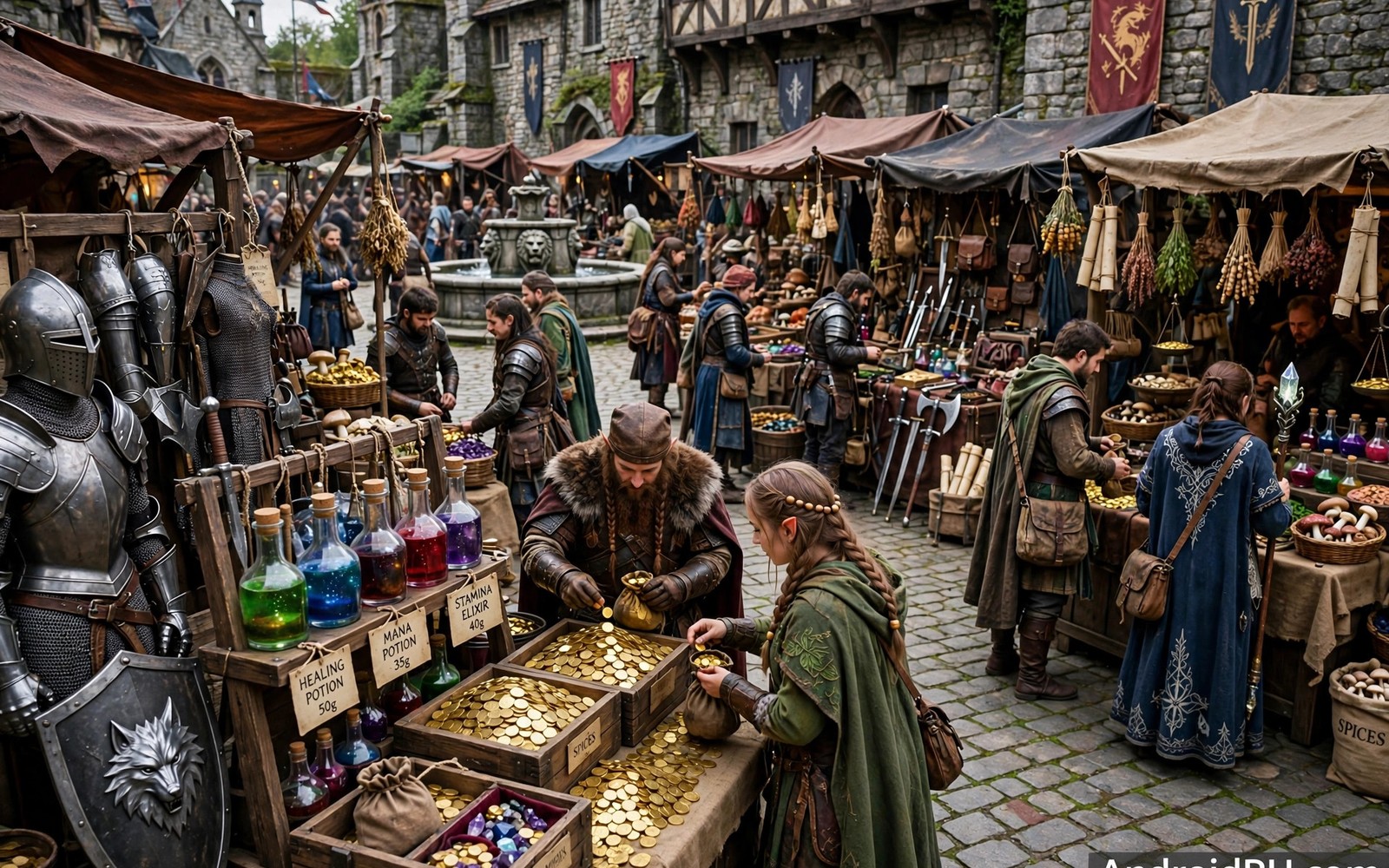
A MMORPG player economy decides whether a world feels alive or rigged. When players can trade freely and craft goods and set prices, the world gains a pulse. When a shop sells power directly, that pulse fades and the market becomes decoration. The difference shapes years of play.
Player economies run on supply and demand like any real market. Rare materials gain value when a new raid needs them. Common goods crash when everyone farms the same zone. Understanding these cycles helps you earn gold without spending real money. It also helps you spot games where the economy is honest and games where it is a trap. Guild life ties closely to markets since shared goals drive demand and you can see how team play shapes these worlds through this guide to multiplayer guild raids: mobile RPGs with multiplayer guild raids.
What makes a player economy healthy
A healthy economy gives players real tools. An auction house with search and price history lets anyone trade fairly. Crafting that turns raw materials into useful gear creates demand across all levels. Sinks like repair costs and housing fees remove gold from circulation and stop inflation from ruining prices.
Transparency matters most. Players should see recent sale prices and listing fees and tax rates. Hidden fees punish casual traders. A game that shows market data openly invites smart play. A game that hides it usually profits from confusion instead.
Gold, premium currency, and the pay-to-win line
Most mobile MMORPGs run two currencies. Gold comes from play. Premium currency comes from real money. Trouble starts when premium currency buys power that gold cannot reach. A fair game lets gold buy almost everything over time. An unfair one locks top gear behind the cash shop only.
Watch for indirect pay-to-win as well. A game may sell energy or loot boosters that multiply gold income for paying players. That still breaks fairness even if the shop never sells a sword directly. Check community guides before you commit months to a game. Veteran players spot these patterns fast and they share them openly.
Crafting and gathering as income
Gathering is the most reliable income for new players. Herbs and ore and wood always sell because crafters always need them. Learn which zones drop materials for current endgame gear. Farm those zones during off peak hours when competition is low. Sell in small stacks so buyers with modest gold can afford your goods.
Crafting earns more but needs investment. Level a craft that matches your class so your own gear improves too. Track material costs against sale prices before you craft in bulk. A recipe that looks profitable can lose gold once listing fees and failed attempts enter the math. Keep a simple spreadsheet for your top five recipes.
Auction house tactics that work
Buy low during events. When a festival floods the market with a material, prices crash. Stock up then and sell weeks later when supply dries up. This patience beats farming for many players. Just avoid tying up all your gold in one item in case a patch changes its value overnight.
Undercut by small amounts rather than huge drops. A one percent undercut still puts your listing first while keeping prices stable for everyone. Massive undercuts crash markets and hurt your own future sales. If you also manage huge installs then storage pressure can interrupt trading sessions and you can plan around that with advice on handling large game files: managing storage for massive MMORPGs.
Inflation and how it ruins casual players
Inflation is the slow poison of virtual economies, and it hurts casual players first. When gold flows into the world faster than it leaves, prices rise and new players find everything unaffordable. A potion that cost one hundred gold at launch may cost ten thousand a year later, while a new player still earns starter amounts. Veterans with old fortunes barely notice, but newcomers face a wall that feels deeply unfair.
Developers fight inflation with gold sinks, which are systems that permanently remove currency from the world. Repair bills and housing costs and fast travel fees all drain gold steadily. The strongest sink is often a luxury market where rich players spend fortunes on cosmetics or rare mounts, which pulls gold out of circulation without hurting gameplay. When you evaluate a game, look for visible sinks, because an economy without them will inflate until trading becomes meaningless for everyone except the richest players.
The role of bots and real money trading
Bots and real money traders distort player economies in ways that honest players feel daily. Bots farm materials around the clock and flood markets, crashing prices for legitimate gatherers. Real money traders sell gold for cash, which injects wealth that nobody earned through play. Both forces push honest players toward either grinding harder or paying themselves, which corrodes the fairness that makes an economy fun.
Healthy games fight back with detection and trade limits. They monitor farming patterns and ban bot accounts in waves. They cap daily trades for new accounts to slow gold sellers. They add bind-on-pickup rules for the most powerful gear so it cannot be bought at all. As a player, you can help by reporting obvious bots and refusing to buy gold from third parties. Every purchase from a gold seller funds more bots, which makes your own honest farming worth less tomorrow.
Guild economies and shared wealth
Guilds create economies inside the economy, with their own banks and rules and shared goals. A strong guild bank lets members deposit materials and withdraw what they need for raids, which smooths out individual bad luck. Crafters in the guild supply gear at cost, while gatherers keep the bank stocked. This cooperation turns a lonely grind into a team effort where everyone progresses faster than they would alone.
Fair guild banks need transparent rules to survive. Who may withdraw rare items, and how often, must be written down where all members can see it. Officers who take freely without rules breed resentment that splits guilds faster than any boss wipe. The best guilds publish weekly bank reports and rotate withdrawal rights, which keeps trust high. If you join a guild, ask about bank rules on day one, because the answer tells you everything about how that guild treats its members.
Speculation: profit and danger
Speculation means buying goods cheap now because you believe a future update will raise their price, and it is the fastest way to grow rich or go broke in a virtual economy. A new raid announcement can triple the price of a crafting material overnight, rewarding players who stocked up early. A balance patch can just as easily destroy a material’s value, wiping out fortunes built on a single bet. The difference between investing and gambling here is research and diversification.
Never speculate with gold you need for daily play. Keep your operating funds separate from your investment stash, and spread investments across several materials rather than betting everything on one. Read update notes and test server news carefully, because developers often signal changes weeks in advance. Speculation rewards patient readers far more than lucky guessers, and the players who profit most are usually the ones who treat it like a hobby rather than a shortcut.
Choosing an economy that fits your playstyle
Not every player wants the same economy, and matching one to your style prevents months of frustration. Traders love open auction houses with low fees and rich price data, because those tools reward market skill. Crafters want deep recipes and steady material demand, because that turns their time into reliable income. Casual players want simple vendors and fair fixed prices, because complex markets feel like a second job rather than a game.
Before committing to a long term game, spend a week purely inside its economy. Gather and craft and trade without worrying about story progress, and notice how it feels. Does trading feel rewarding or exhausting? Do prices make sense? Do other players trade fairly? That week of economic tourism reveals more about your future enjoyment than any review can, because economies are lived systems that only show their true character through daily use.
Track your trades with a simple log
Profitable traders keep records. This plain text log template works in any notes app. One line per trade keeps the habit fast enough to maintain daily.
DATE | ITEM | BOUGHT FOR | SOLD FOR | FEES | PROFIT
2026-01-05 | iron ore x100 | 4200 | 6100 | 305 | 1595
2026-01-06 | healing herb x50 | 900 | 1450 | 72 | 478
RULE: never invest more than 30 percent of gold in one item
This log template is an original tool written for this guide. It uses no data from any specific game. Its purpose is to force honest math on every trade. Fees and failed crafts hide inside vague memory but they show up clearly in a written log. Review the log weekly and drop any item that loses gold twice in a row.
Common mistakes
The worst mistake is spending your first gold on cosmetic mounts or flashy gear. Early gold should fund tools and gathering upgrades and market listings. Flashy purchases feel good for a day and slow your income for weeks. Build wealth first and buy luxuries from profits later.
Another mistake is trusting trade chat prices. Chat sellers quote inflated prices and prey on new players. Always check the auction house history before any direct trade. If a deal looks far below market price then it may be a scam or a stolen goods trap in games with open trading.
FAQ
Can free players earn enough gold in a mobile MMORPG?
Yes in fair economies. Gathering and crafting and daily quests generate steady gold. It takes longer than paying but the path exists. Avoid games where top gear requires premium currency only.
What causes inflation in MMORPG economies?
Too much gold entering and too little leaving. Daily rewards and easy farming flood gold while weak sinks fail to remove it. Good games tune sinks like repairs and housing to match income.
Should I join a guild for trading?
Yes. Guilds share market tips and crafting orders and bulk materials. A trading guild can double your income through shared knowledge alone. It also protects you from scams through trusted members.
Conclusion
A MMORPG player economy rewards patience and information. Learn your market and track your trades and invest in gathering before luxuries. Those habits turn gold from a grind into a game of its own.
Your next step is to open your current game and check price history for five materials you already own. Sell anything sitting idle and start the trade log above today. If guild content drives your goals then team play will multiply your market gains and you can find guild focused titles through this guide to multiplayer guild raids: RPGs supporting multiplayer guild raids.

