

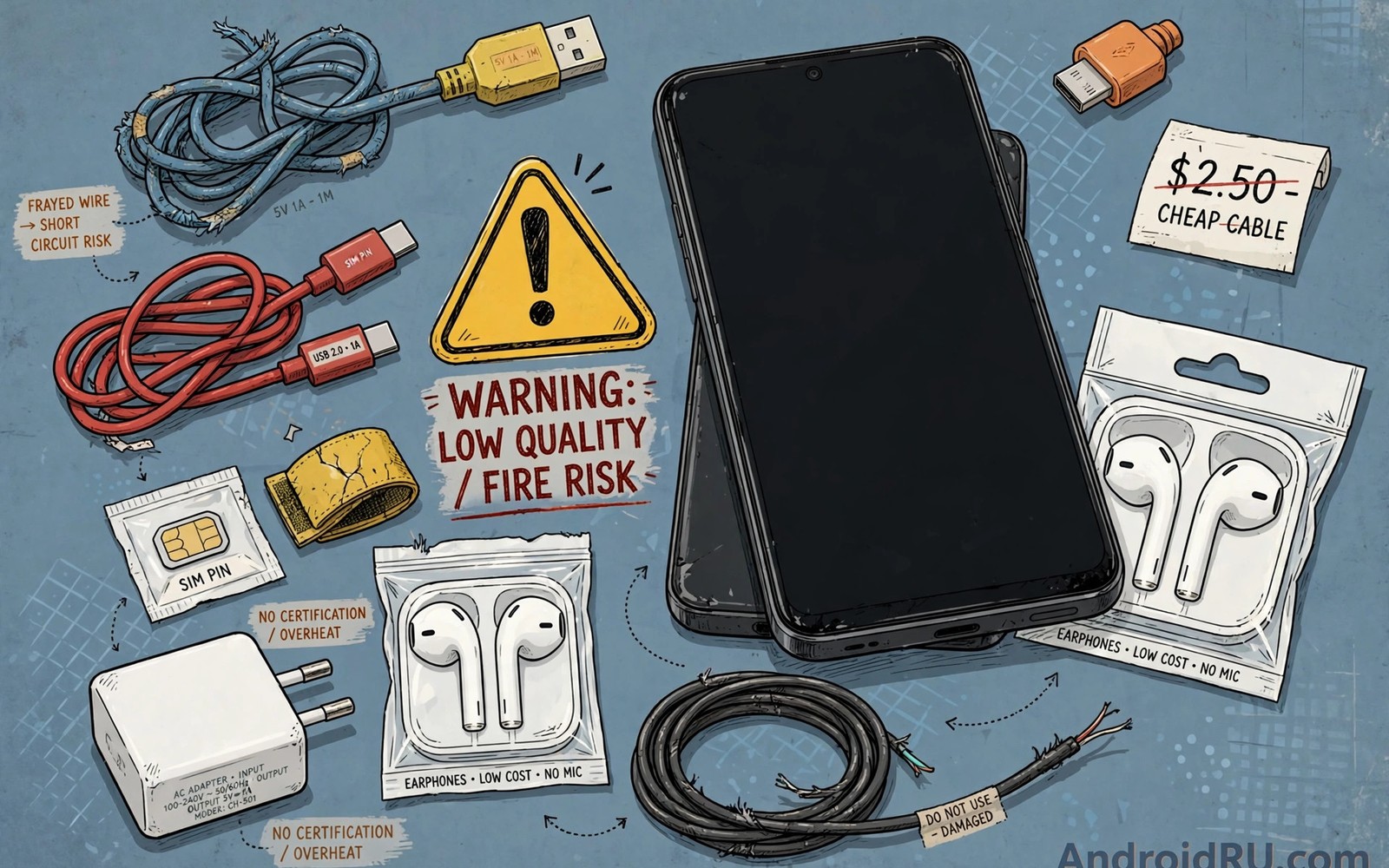
A five dollar charger can cost you a five hundred dollar phone when poor regulation sends unstable power into a battery that was never designed to forgive it.
Cheap accessories fail in predictable ways. Chargers deliver dirty power. Cables use thin wire and loose connectors. Batteries use weak cells and fake capacity labels. Each failure risks damage that warranty may not cover.
This guide names the three riskiest accessory categories and explains how to spot safe alternatives without paying luxury prices.
Chargers That Lie About Power
Cheap chargers often claim high wattage that they cannot sustain safely. They overheat under load and their voltage drifts. That drift stresses phone charging circuits over time.
Safety certification matters more than wattage claims. Look for recognised certification marks and check that the charger feels solid and well made. A charger that rattles or smells hot deserves immediate disposal.
Multi port cheap chargers deserve extra suspicion. Shared power across ports often means unstable output when several devices charge at once. A quality charger maintains stable output per port.
Cables That Damage Ports and Batteries
Thin cables resist current and generate heat. Loose connectors wiggle in the port and wear the port contacts. Repeated wiggling can loosen a phone port until charging becomes unreliable.
Fake fast charging cables claim protocol support that they lack. A phone may charge slowly or may negotiate unsafe power levels with a poor cable. Certified cables from known makers avoid that gamble.
Inspect cables regularly. Fraying near connectors signals internal wire damage. Replace a frayed cable immediately rather than taping it and hoping. A damaged cable near a battery is not a place to economise.
Batteries and Power Banks With Fake Capacity
Cheap power banks often claim capacity far above reality. They use low grade cells that degrade quickly and sometimes swell. A swelling power bank is a fire risk and should never be used.
Cheap replacement batteries pose an even greater risk. Poor cells and weak protection circuits can overheat inside a sealed phone. Always choose batteries from reputable suppliers with clear warranty terms.
Weight offers a rough clue for power banks. A power bank that claims huge capacity yet feels suspiciously light likely contains weak cells. Compare weight against reputable models of similar claimed capacity.
How to Buy Accessories Safely
Buy accessories from authorised sellers when possible. Marketplace sellers with no history and prices far below market deserve suspicion. A price that looks too good usually hides a compromise.
Check reviews for heat and durability complaints rather than only star ratings. Multiple reports of heat or melting outweigh hundreds of generic positive reviews. Look for detailed reviews that mention long term use.
Keep packaging and receipts for chargers and batteries. Warranty claims need proof of purchase. A reputable seller honours warranty without a fight while a fly by night seller disappears.
adb shell dumpsys battery | grep -E "level|temperature|voltage|health"
adb shell cat /sys/class/power_supply/battery/charge_full_design 2>/dev/null || echo "design capacity unavailable"
The commands above are an original illustration based on standard Android developer tools for reading battery temperature and health on a connected phone. They help you spot abnormal heat from a suspect charger.
Spotting Fake Products Online
Fake accessories often copy packaging from reputable brands closely. Check spelling and print quality on packaging when the product arrives. Blurry logos and missing certification marks signal counterfeit goods. Compare packaging against official product photos when uncertain.
Seller history reveals much about authenticity. A seller with many recent reviews for unrelated products may sell counterfeits across categories. A seller specialising in accessories with consistent reviews inspires more trust.
Price gaps also signal fakes. A charger sold at a tenth of the reputable price cannot use the same components. Safety components cost money and a seller cannot include them at that price. Treat extreme discounts as warnings rather than bargains.
Weight and build quality offer quick checks after delivery. A genuine charger feels solid and balanced. A fake charger often feels light and hollow and rattles when shaken. Return suspicious products immediately rather than testing them on a valuable phone.
Protecting Your Phone Port
Port damage accumulates from repeated insertion of loose connectors. A connector that wiggles wears contacts unevenly. Over months that wear causes intermittent charging and data failures. Replace loose cables at the first sign of wiggle.
Keep ports clean with gentle methods only. Compressed air removes dust safely when used briefly. Metal tools can damage contacts and should never enter a charging port. A clean port charges reliably and lasts longer.
Use magnetic cable adapters cautiously. Adapters reduce port wear by leaving a tip in place. Poor adapters can also introduce connection problems and heat. Choose adapters from reputable makers when you use them.
Charge on stable surfaces rather than hanging the phone by its cable. Cable strain pulls connectors at angles and damages ports over time. A phone resting flat while charging protects both cable and port.
Accessory Safety Standards to Look For
Safety standards for chargers include tests for overheating and short circuits and voltage stability under load. A charger that passes recognised standards has undergone testing that cheap counterfeits skip entirely. Look for certification marks from recognised bodies and verify them when possible through official databases. That verification takes minutes and protects a valuable phone.
Cable standards include tests for current capacity and connector durability and insulation quality. A cable that passes those tests handles fast charging safely over many cycles. A cable that fails those tests may work initially and degrade dangerously over time. Durability testing matters because cables flex thousands of times during normal use.
Battery standards include tests for cell quality and protection circuits and thermal runaway prevention. A power bank that passes those tests includes safety circuits that stop charging when temperature rises dangerously. A power bank without those circuits risks overheating during normal charging in warm conditions.
Building a Safe Accessory Kit
A safe accessory kit starts with one trusted charger for home and one for travel rather than a drawer full of unknown bricks. Fewer trusted chargers reduce risk and clutter simultaneously. Label trusted chargers so family members do not swap them for cheap alternatives unknowingly.
Include two quality cables in your kit because cables wear out and a spare prevents desperate use of a damaged cable. Rotate cables regularly and inspect them monthly for fraying near connectors. That routine catches damage early before it becomes dangerous.
Add a quality power bank from a reputable brand for travel days. A trusted power bank charges reliably and safely in bags and pockets. Avoid carrying power banks from unknown brands on flights where safety rules and heat risks matter most.
When to Replace Accessories
Replace chargers that run unusually hot during normal charging because heat signals internal degradation that will only worsen. A charger that once ran cool and now runs hot deserves retirement. Heat is the clearest warning sign for charger failure.
Replace cables that charge intermittently because intermittent charging wears phone ports through repeated reconnection. A cable that needs wiggling to work has already damaged itself internally. Continuing use risks port damage that costs far more than a cable.
Replace power banks that swell or hold far less charge than when new because swelling signals cell failure with safety implications. A swollen power bank should never travel in a bag or charge unattended. Dispose of it through battery recycling promptly.
Replace adapters that feel loose in the port because loose adapters arc and wear contacts unevenly. A loose adapter may still charge today but it damages the port a little with every use. Early replacement protects the phone port.
Keep a replacement schedule for heavily used cables because cables used daily wear out within a year or two. Budget for annual cable replacement rather than waiting for failure. That routine prevents mid trip failures.
Common mistakes
The biggest mistake is using a cheap charger overnight every night. Overnight use gives a faulty charger hours to overheat unnoticed. Use a trusted charger for overnight charging and keep cheap chargers out of the bedroom.
Another mistake is keeping a swollen power bank in use. Swelling signals cell failure. Stop using it immediately and dispose of it through proper battery recycling. Fast charging buyers should also read the analysis of why 100W super fast chargers might not be worth buying because wattage claims mislead.
FAQ
Can a cheap cable really brick a phone?
Yes a faulty cable can damage charging circuits or ports badly enough to require repair. Damage rarely happens instantly but repeated use increases risk steadily.
Are all cheap accessories dangerous?
No many affordable accessories from reputable brands are safe. Danger comes from unbranded products with fake claims and no certification rather than from low price alone.
How do I spot a fake charger?
Check certification marks and weight and build quality and seller reputation. A charger that feels light and rattles and lacks clear branding deserves suspicion.
Conclusion
Avoid cheap chargers and cables and batteries from unknown sellers. Spend a little more on certified accessories from reputable brands. Your concrete next step is to inspect every charger and cable you use daily and replace any that run hot or feel loose this week. Shoppers should also read the fast charging analysis of why 100W super fast chargers might not be worth buying and the value ranking of smartphone brands ranked from worst to best value and the guide to locked phones and carrier deals for total ownership costs.

