

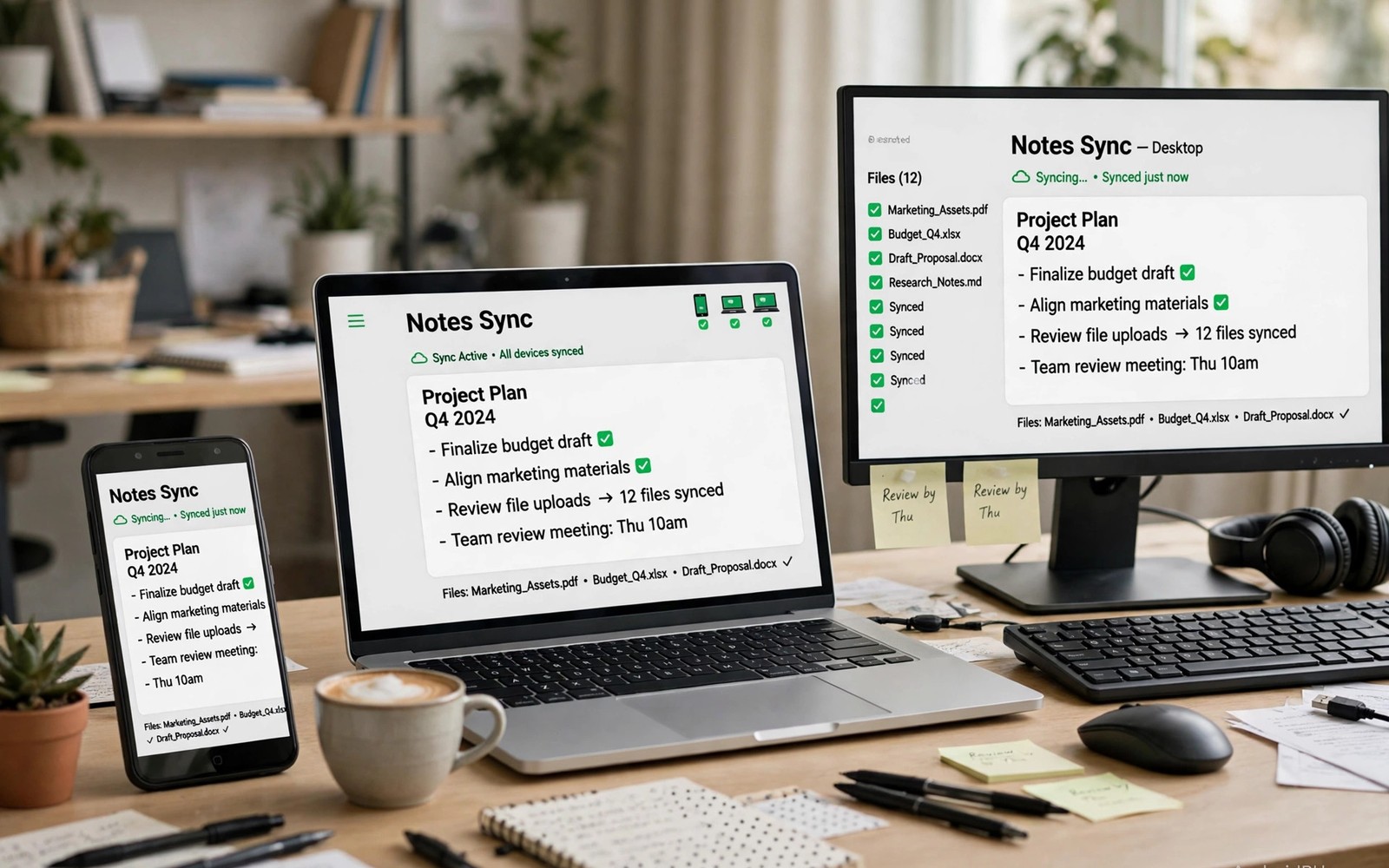
Best cross-platform apps for syncing Android with Windows and Mac remove the friction of moving between devices all day. A note started on the phone should appear on the laptop without export steps. A file saved on Windows should open on Android without cables. This article covers the sync categories that matter most and shows how to set them up so every device stays current.
Start with the sync job you repeat most often. Messages and files and notes usually top that list for owners with more than one device. Pick one service per job and use it everywhere instead of splitting the same job across two services. Owners who travel without internet should also consider offline apps for seamless use without internet for gaps when sync cannot reach the cloud. One service per job keeps sync simple and reliable.
Use this article as a checklist rather than a shopping list. Pick the ideas that match your routine and ignore the rest until your needs change.
A simple home screen layout makes good apps easier to reach. Put daily tools on the first screen and move rarely used apps into folders. Fewer taps mean you finish tasks faster and you are less likely to open a distraction by accident.
Protect your accounts with a second factor wherever the app offers it. A second factor blocks most automated attacks even when a password leaks. Enable it on mail and cloud and banking apps first because those guard the rest.
Set a reminder to revisit a new app after thirty days. A month of use shows whether the app became a habit or a forgotten icon. Remove habits that faded and keep tools that proved their worth.
Messages across every device
Cross-platform messaging apps let you reply from a laptop keyboard while the phone stays in a pocket. That convenience matters during long work sessions when switching devices breaks focus. Choose a messenger that encrypts messages and syncs history across devices without manual backup. Test message delivery on each device before you move important chats.
Notification mirroring extends messaging sync by showing phone alerts on the computer. Reply to a message from the desktop and the phone marks it read at once. Turn off mirroring for noisy apps so the desktop stays calm. Mirroring should reduce device switching and not multiply interruptions.
Permissions deserve a quick review before you trust a new app with daily work. Grant only the access the app truly needs for its main job and leave the rest off until a feature asks for it. You can change any permission later in system settings without losing your data.
Share a useful app with a friend only after you have used it for a week. A recommendation based on real use carries more weight than one based on a store page. Honest recommendations help friends avoid the same trial and error you already did.
Write down the settings you change when you set up a new app. A short note helps you restore the setup after a reset or a new phone. Good notes turn a one time setup into a repeatable routine.
Files that follow you
Cloud drives sync files across Android and Windows and Mac with a shared folder on each device. Save a document on the laptop and it appears on the phone ready to read on the train. Choose a service with selective sync so a huge desktop folder never fills phone storage. Selective sync keeps the phone light while the full archive stays available on demand.
Version history protects files when a sync conflict overwrites a document. Check that your drive keeps older versions for at least thirty days. Restore a version from the drive web view when a conflict appears and never overwrite blindly. History turns a sync accident into a quick fix. Travellers can also use travel apps for flights and navigation alongside the tools above.
Updates matter because developers fix bugs and close security gaps in each release. Turn on automatic updates for trusted apps and read the changelog when an update changes a feature you rely on. Skip an update only when you have a clear reason and a backup plan.
Protect your accounts with a second factor wherever the app offers it. A second factor blocks most automated attacks even when a password leaks. Enable it on mail and cloud and banking apps first because those guard the rest.
Share a useful app with a friend only after you have used it for a week. A recommendation based on real use carries more weight than one based on a store page. Honest recommendations help friends avoid the same trial and error you already did.
Notes and tasks everywhere
Notes apps with fast sync turn the phone into a capture tool and the computer into an editing station. Capture a thought on the phone and expand it on a full keyboard later. Tags and search must work identically on every device or the system breaks under real use. Test search on the phone after creating a note on the computer.
Task apps with shared lists help families and teams coordinate without extra meetings. Assign a task on the computer and the phone shows it with a reminder at the right time. Keep shared lists short so every member trusts the list. Shared trust matters more than shared features.
Try one change at a time when you rebuild your phone setup. Install two or three apps first and use them for real tasks before you add more. A slow start reveals problems early while a rushed setup hides them until they hurt.
Storage and battery shape how well any app performs over time. Check storage use once a month and clear cached files that grow without adding value. A phone with free space runs smoother and updates install without errors.
Permissions deserve a quick review before you trust a new app with daily work. Grant only the access the app truly needs for its main job and leave the rest off until a feature asks for it. You can change any permission later in system settings without losing your data.
adb shell dumpsys jobscheduler
adb shell settings get global sync
adb shell cmd account list
The sync commands above follow the pattern used in Android developer guides for inspecting scheduled jobs and account sync state. The same guides explain that sync settings control when data moves between device and cloud.
Clipboard and link sharing
Shared clipboards copy text on one device and paste it on another without retyping. Copy an address on the laptop and paste it into maps on the phone in seconds. Enable clipboard sync only on devices you own and protect it with account security. Convenience never justifies syncing clipboard text to a shared computer. For planning work you may also add daily organization apps for the same routine.
Link sharing tools send a web page from phone to computer with one tap. That single tap beats emailing yourself a link and hunting for it later. Keep the sharing tool inside the browser or system share menu so it stays one tap away. Friction kills a sharing habit fast.
Test an app with your real routine before you judge it. A demo on a quiet afternoon hides problems that appear during a busy commute or a low battery day. Real use shows speed and reliability in a way that screenshots never can.
Try one change at a time when you rebuild your phone setup. Install two or three apps first and use them for real tasks before you add more. A slow start reveals problems early while a rushed setup hides them until they hurt.
Notifications decide whether an app helps you or interrupts you all day. Keep alerts on for messages that need a fast reply and silence the rest. A quiet phone still delivers urgent news while it protects your focus.
Photos and media sync
Photo sync backs up phone photos to the cloud and makes them viewable on any computer. Turn on backup over Wi-Fi only so mobile data never suffers. Check the backup status weekly because a paused backup can hide for months. Photos deserve the most reliable sync of any category because they cannot be recreated.
Media sync for music and podcasts needs offline downloads on each device. Download playlists on Wi-Fi before a trip so playback never depends on a weak signal. Keep the same library structure on phone and computer so a playlist means the same thing everywhere. Consistent libraries reduce confusion across devices.
A simple home screen layout makes good apps easier to reach. Put daily tools on the first screen and move rarely used apps into folders. Fewer taps mean you finish tasks faster and you are less likely to open a distraction by accident.
Check how an app handles your data before you sign in. Read the privacy screen inside the app and look for clear controls to export or delete your content. Strong defaults beat long promises when you compare two similar apps.
Write down the settings you change when you set up a new app. A short note helps you restore the setup after a reset or a new phone. Good notes turn a one time setup into a repeatable routine.
Common mistakes
A common mistake is using two cloud drives for the same files which creates conflicts and duplicate folders. Another mistake is syncing everything including huge video folders to a phone with small storage. A third mistake is ignoring account security while sync carries sensitive files across devices. One service per job and selective sync and strong account protection prevent most sync pain.
A good setup starts with a clear purpose for each app on your phone. Open the app once a day for a week and notice whether it saves time or adds noise. Keep the apps that earn their place and remove the ones that only fill space on the home screen.
Share a useful app with a friend only after you have used it for a week. A recommendation based on real use carries more weight than one based on a store page. Honest recommendations help friends avoid the same trial and error you already did.
Check how an app handles your data before you sign in. Read the privacy screen inside the app and look for clear controls to export or delete your content. Strong defaults beat long promises when you compare two similar apps.
Frequently asked questions
Which sync service should I choose?
Choose the service that already covers most of your devices and your storage needs. A service you already pay for beats a new service with a slightly better feature list.
Does sync drain battery?
Sync uses battery mainly during large uploads over mobile data. Restrict big uploads to Wi-Fi and sync becomes a small background cost.
What happens when two devices edit the same file?
Most services keep both versions or create a conflict copy. Check the conflict copy promptly and merge the changes by hand.
What to do next
Your concrete next step is to pick one sync job such as notes or files and set it up on phone and computer today. Create a test note or file on one device and confirm it appears on the other. One verified sync builds trust for the whole system.
Storage and battery shape how well any app performs over time. Check storage use once a month and clear cached files that grow without adding value. A phone with free space runs smoother and updates install without errors.
The best setup is the one you actually use every day. Choose tools that fit your routine and let the rest go without regret.

