

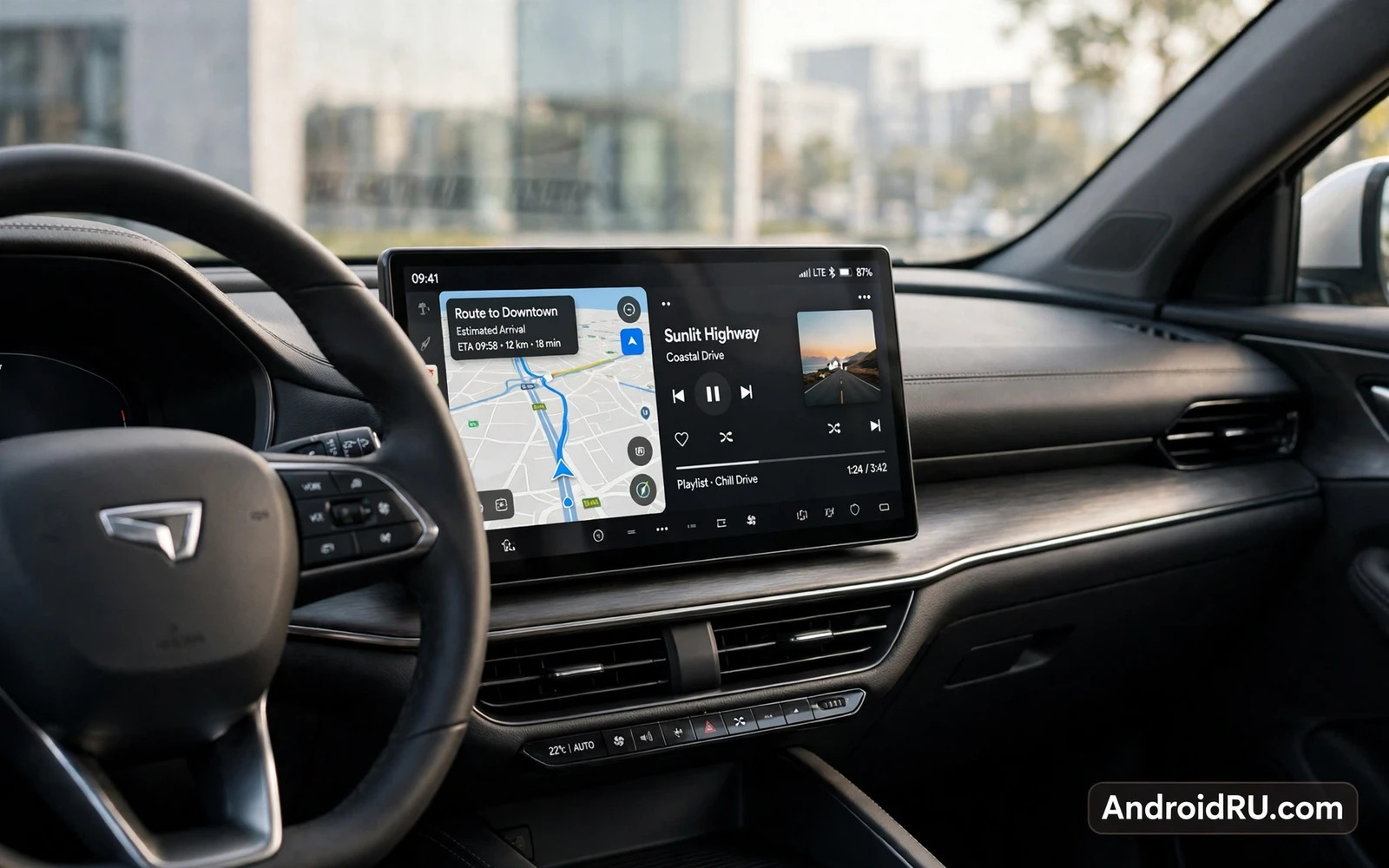
An Android Auto head unit can bring modern maps and music and messages to an older car. It replaces an old stereo with a screen that mirrors key phone functions safely. Wired and wireless Android Auto differ in convenience and in connection stability. Screen size and installation fit decide whether an upgrade feels factory made or feels awkward. This guide explains head unit choice and installation in plain language. It helps drivers avoid a unit that fits poorly or connects unreliably. It also helps you plan for steering controls and cameras and sound. Start with your car model and your daily driving needs.
What Matters Most
Android Auto shows maps and music and calls through a driving safe interface. Wireless Android Auto frees you from cables but it needs stable wireless hardware. Wired Android Auto often connects more reliably and charges the phone. Screen size affects map readability and dashboard fit. Steering wheel controls need an adapter on many cars. Reverse camera support varies by unit and by car wiring. Sound quality depends on the unit amplifier and on your speakers. Installation complexity varies from simple swaps to custom dash work. Wrist notifications reduce the need to touch a phone while driving and smartwatches compatible with Android phones covers watches that pair well.
Wired Versus Wireless
Wired Android Auto gives a stable link and charges while driving. Wireless Android Auto gives cable free entry and exit. Test wireless stability on your phone model before you choose wireless only. Think about wired versus wireless in your normal day rather than in a short store demo. Compare wired versus wireless across shortlisted models on the same task so the result stays fair. A weakness here can matter more than a strength elsewhere when you use the head unit every day. Check the full detail for wired versus wireless and ask what it means for your routine. Spend extra time on wired versus wireless if it touches your main daily task. Note your verdict on wired versus wireless for each shortlisted model before you move on.
Screen Size and Fit
A larger screen helps maps but it may block vents or controls. A standard size unit fits more cars with less custom work. Measure your dash opening before you shortlist any unit. Think about screen size and fit in your normal day rather than in a short store demo. Compare screen size and fit across shortlisted models on the same task so the result stays fair. A weakness here can matter more than a strength elsewhere when you use the head unit every day. Check the full detail for screen size and fit and ask what it means for your routine. A small weakness in screen size and fit becomes a daily annoyance over time. Compare screen size and fit on the exact model you will buy rather than on a related model.
Maps and Navigation
Offline maps help in areas with weak signal. Live traffic helps city driving and route changes. Test map readability in daylight glare. Think about maps and navigation in your normal day rather than in a short store demo. Compare maps and navigation across shortlisted models on the same task so the result stays fair. A weakness here can matter more than a strength elsewhere when you use the head unit every day. Check the full detail for maps and navigation and ask what it means for your routine. Compare maps and navigation on the exact model you will buy rather than on a related model. A small weakness in maps and navigation becomes a daily annoyance over time.
Music and Calls
Music apps should launch quickly and stay stable on the road. Call clarity depends on microphone placement and noise handling. Test hands free calls at highway speed if possible. Think about music and calls in your normal day rather than in a short store demo. Compare music and calls across shortlisted models on the same task so the result stays fair. A weakness here can matter more than a strength elsewhere when you use the head unit every day. Check the full detail for music and calls and ask what it means for your routine. Note your verdict on music and calls for each shortlisted model before you move on. Spend extra time on music and calls if it touches your main daily task.
Steering Controls and Cameras
Steering controls should keep working after an upgrade. An adapter may be needed for your car brand. Reverse camera input should match your camera wiring. Think about steering controls and cameras in your normal day rather than in a short store demo. Compare steering controls and cameras across shortlisted models on the same task so the result stays fair. A weakness here can matter more than a strength elsewhere when you use the head unit every day. Check the full detail for steering controls and cameras and ask what it means for your routine. Spend extra time on steering controls and cameras if it touches your main daily task. Note your verdict on steering controls and cameras for each shortlisted model before you move on.
Sound Quality
A better amplifier can improve clarity even with stock speakers. Equaliser options help tune sound for your car cabin. Check speaker compatibility before you upgrade the unit alone. Think about sound quality in your normal day rather than in a short store demo. Compare sound quality across shortlisted models on the same task so the result stays fair. A weakness here can matter more than a strength elsewhere when you use the head unit every day. Check the full detail for sound quality and ask what it means for your routine. A small weakness in sound quality becomes a daily annoyance over time. Compare sound quality on the exact model you will buy rather than on a related model.
Installation and Wiring
Simple installs suit standard dash openings and common wiring. Complex installs may need a professional for safety and fit. Keep original parts in case you sell the car later. Think about installation and wiring in your normal day rather than in a short store demo. Compare installation and wiring across shortlisted models on the same task so the result stays fair. A weakness here can matter more than a strength elsewhere when you use the head unit every day. Check the full detail for installation and wiring and ask what it means for your routine. Compare installation and wiring on the exact model you will buy rather than on a related model. A small weakness in installation and wiring becomes a daily annoyance over time.
Safety and Driving Focus
Android Auto limits distracting apps while driving. Voice control should handle most tasks without touching the screen. A safe upgrade reduces phone handling on the road. Think about safety and driving focus in your normal day rather than in a short store demo. Compare safety and driving focus across shortlisted models on the same task so the result stays fair. A weakness here can matter more than a strength elsewhere when you use the head unit every day. Check the full detail for safety and driving focus and ask what it means for your routine. Note your verdict on safety and driving focus for each shortlisted model before you move on. Spend extra time on safety and driving focus if it touches your main daily task.
How to Choose Step by Step
List your car year and model and dash size. Shortlist head units that fit your dash and your phone. Decide between wired and wireless Android Auto. Check steering control adapter needs for your car. Check reverse camera compatibility. Test screen readability in daylight. Test music and call quality. Check amplifier power against your speakers. Get an installation quote from a trusted installer. Compare total cost with adapters and camera wiring. Keep your phone cable as a backup for long trips. Choose the unit that fits well and connects reliably. Drivers who use Google services at home will recognise the same system ideas in Smart TVs with Google TV versus Android TV for television.
Risks and Limits to Watch
Do not buy a head unit without checking dash fit. A poor fit looks bad and can block controls. Do not assume that wireless Android Auto works perfectly with every phone. Do not install wiring yourself if you lack car electrical experience. Do not ignore steering control loss because it affects driving safety. Do not choose the largest screen if it blocks vents. Do not forget that some cars need a dash kit and a wiring harness. Do not skip a test of calls at road speed. Do not buy a unit without checking Android Auto support for your phone. A careful fit and connection check prevents an expensive mistake.
A Simple Ownership Plan
A simple ownership plan helps any device last longer and cost less over time. Plan ownership in years rather than in launch excitement. Set a total budget that includes accessories and a possible repair. Keep a list of the features you must have and the features you can skip. Test the device in your real environment before the return period ends. Save the purchase receipt and the warranty document in one safe place. Learn the update schedule for the exact model you bought. Keep software updated but read update notes before a major change. Back up data that matters to you on a regular schedule. Review settings once a month and remove apps you no longer use. Check battery or power behaviour over time and note sudden changes. Protect the device from drops and dust and heat with suitable accessories. Use only chargers and cables that match the device requirements. Seek authorised repair for serious faults rather than a risky home fix. Consider resale value when you choose colour and storage and condition. A well kept device sells easier and keeps more of its value. Plan the next upgrade only when the current device fails a real need. Avoid buying a replacement for a single minor annoyance. Share the device care basics with anyone else who uses it. Ownership success comes from steady care rather than from a perfect launch choice.
Final Decision
A commuter should weight wireless convenience and map clarity. A long distance driver should weight wired reliability and charging. A music lover should weight sound quality and amplifier power. An older car owner should weight dash fit and steering control support. A good head unit makes an older car feel modern and safer. It should reduce phone handling rather than add screen distraction. Choose fit and reliability over screen size alone. Then enjoy maps and music with less fuss on every drive. The best upgrade is one that feels like it belongs in your car. Let your car and your driving routine decide the head unit. Long trips often involve a tablet for passengers and Android tablets for digital artists and note-takers helps choose one that complements the car screen.

