

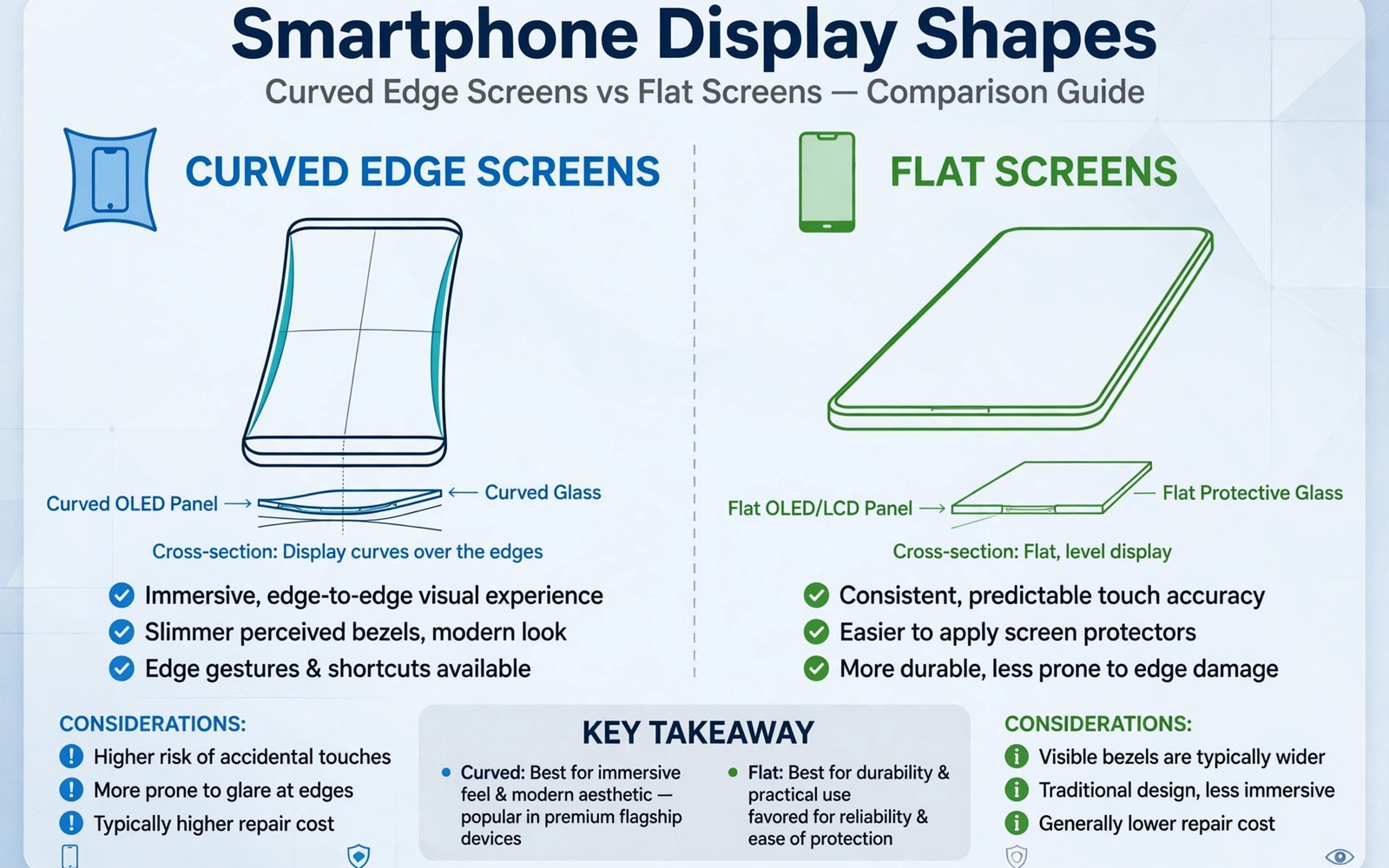
Curved edges once signalled a premium flagship and now many makers quietly return to flat screens because buyers grew tired of accidental touches and fragile edges.
The industry shift did not happen overnight. Early curved screens impressed in stores with their flowing design. Daily use exposed glare at the edges and case fitting problems and higher repair costs. Flat screens solve those problems while keeping most display quality.
This guide explains the trend honestly. It covers design and durability and usability and the cases where curved screens still make sense.
Why Curved Screens Rose
Curved screens helped makers differentiate flagships when bezels shrank. A curved edge made a phone look borderless and futuristic. Marketing images loved the effect because light flowed across the edge beautifully.
Edge panels also offered quick tools and notifications. Swiping from the edge could open apps or contacts. Those features sounded useful but many users ignored them after the first week.
Curved glass also felt premium in the hand. The smooth transition from front to side removed sharp edges. That tactile benefit kept curved screens popular even as practical complaints grew.
Why Flat Screens Returned
Accidental touches plagued curved phones. Palms triggered edge areas during gaming and typing and one handed use. Software palm rejection improved but never fully solved the problem for every hand size.
Screen protectors fit flat screens far better. Curved protectors peel at edges and trap dust and cost more. A flat screen with a cheap tempered protector offers better real protection than a curved screen with a poor protector.
Repair costs also favour flat screens. Curved panels cost more to replace and break more easily at the edge. A flat screen spreads impact differently and often survives corner drops better.
Display Quality Differences
Curved edges distort colour and brightness at the extreme edge. Text near the edge can look stretched or dim. Flat screens keep text uniform across the full width.
Glare follows curved edges in bright light. A curved edge catches reflections from windows and lamps that a flat screen avoids. Outdoor readability suffers most on curved designs.
Video viewing also differs. Curved edges crop or distort the outer pixels of a video slightly. Flat screens show the full frame without edge distortion. That difference matters for users who watch many videos.
Who Still Benefits from Curves
Some users still love curved screens for their look and feel. A curved phone feels slimmer and more elegant in the hand. Buyers who prioritise design over practicality may still choose curves happily.
Large phones benefit slightly from curved edges because curves reduce perceived width. That effect helps one handed grip on very large models. Flat large phones can feel wider and harder to hold.
Check your own habits before deciding. If you use a case and a protector and play games one handed then flat screens suit you better. If you use no case and value design then curves may still please you.
python3 - << 'PY'
designs = {"flat": "uniform text", "curved": "edge distortion"}
for name, trait in designs.items():
    print(name, "-", trait)
PY
The code above is an original illustration that summarises the main display trait for flat and curved designs. It is a simple comparison aid rather than a measurement tool.
Case and Protector Reality
Cases for curved phones must wrap the edge without lifting. Many cases lift at the curved edge and trap dust underneath. That trapped dust scratches the edge over time. Test a case for several days before judging its fit.
Screen protectors for curved phones use adhesive only at edges or full adhesive film. Edge adhesive protectors often peel and collect dust. Full adhesive protectors fit better but cost more and need careful installation. Flat protectors avoid both problems entirely.
Repair shops charge more for curved screens partly because replacement panels cost more. Labour also takes longer because curved panels need careful alignment. Those costs add up over the life of a phone that gets dropped even once.
Users who prefer no case face higher risk with curved screens. An unprotected curved edge strikes surfaces directly during drops. A flat screen with no case still risks damage but the edge impact spreads differently.
Design Trends Beyond Curves
Flat screens now dominate new flagships across most brands. Makers focus differentiation on materials and camera design rather than screen curvature. That shift signals that the industry sees flat design as the practical standard.
Slightly curved edges remain on some premium models as a compromise. A gentle curve softens the hand feel without creating strong edge distortion. That middle ground may satisfy users who liked curves but disliked their problems.
Bezel design also changed alongside screen shape. Thin uniform bezels now signal premium design more than curves did. A flat screen with thin bezels looks modern without usability costs.
Future foldable phones complicate the trend further. Foldables use flexible screens with different edge challenges. Their inner screens stay flat while outer screens vary. Flat design lessons from slab phones still apply to outer displays.
Flat Screen Advantages for Everyday Tasks
Flat screens improve typing accuracy because thumbs rest naturally without triggering edge areas accidentally. Typing on a curved phone often produces stray characters when palms touch the edge during fast typing. Flat screens remove that frustration and make messaging faster for many users. That daily benefit outweighs the visual flair of curves for most buyers.
Gaming also benefits from flat screens because thumbs grip the edges firmly during intense play without accidental inputs. Curved edges make grip less secure and trigger edge gestures at critical moments. Competitive mobile gamers increasingly prefer flat screens for control reliability rather than for appearance.
Reading long documents feels more comfortable on flat screens because text lines end cleanly at the edge without distortion. Curved edges bend the final characters of long lines slightly and that distortion tires eyes during long reading sessions. Readers who spend hours on a phone notice that difference quickly.
When Design Still Favours Curves
Design focused buyers may still prefer curves because a curved phone looks distinctive in a market full of similar flat slabs. That distinctiveness matters for users who value appearance as a personal expression. A phone is a daily object and its look affects satisfaction beyond pure function.
Premium materials pair well with curved glass because the smooth transition from glass to metal feels luxurious in the hand. That tactile luxury explains why curves persisted on flagship models long after practical complaints appeared. Luxury feel remains a legitimate buying reason when the buyer accepts the trade offs knowingly.
Some users never experience curved screen problems because they use cases that cover the edges completely. A thick case neutralises accidental touches and protector issues by covering the curved area. For those users curves offer beauty without daily penalty.
Protector and Case Choices for Flat Screens
Flat screens accept standard tempered glass protectors that fit edge to edge without lifting. That perfect fit gives flat phones a protection advantage that curved phones cannot match easily. A cheap flat protector often outperforms an expensive curved protector.
Case selection for flat screens is broader and cheaper because makers need no special edge engineering. That broader choice lets buyers pick cases for grip and style and protection without compromise. Flat phone owners enjoy better accessory value overall.
Screen replacement for flat phones costs less and completes faster at most repair shops. That practical advantage matters after the first drop when repair bills arrive. Flat screen owners face lower lifetime repair costs on average.
Flat screens also suit stylus use better because the stylus moves smoothly to the edge without rolling off a curve. Note takers and artists benefit from that edge stability. That benefit grows for users who annotate documents daily.
Flat design ages gracefully because it avoids the fashion cycle that curves followed. A flat phone from five years ago still looks modern while a curved phone from the same era looks dated. Timeless design adds resale appeal.
Test a flat demo phone and a curved demo phone back to back in the same store light before you decide because direct comparison reveals glare and grip differences that specification sheets cannot convey. Hold each phone as you normally would and type a short message and open a video. That hands on test takes five minutes and prevents a two year regret over a design choice.
Common mistakes
The biggest mistake is choosing a curved phone for looks without testing palm rejection. Hold the phone as you normally would and type for several minutes. Accidental touches appear quickly in real use.
Another mistake is assuming that a curved screen protector will fit like a flat one. Budget for a quality curved protector or accept weaker protection. Durability buyers should also read the ceramic stress test on whether ceramic backs are really scratchproof because materials affect repair risk.
FAQ
Are curved screens completely gone?
No curved screens still appear on some models. They are far less common than during their peak and many flagships now use flat or nearly flat designs.
Do curved screens break more easily?
Curved edges concentrate impact and cost more to repair. They do not break from normal use but they face higher risk in drops than flat screens.
Can I disable edge features?
Most phones let you disable edge panels and reduce edge sensitivity. Disabling features helps but does not remove glare or protector problems.
Conclusion
Curved screens are fading because flat screens offer better usability and protection and repair costs. Curves remain a design choice rather than a performance advantage. Your concrete next step is to type and game for ten minutes on a curved demo phone before you decide. Shoppers should also check the ceramic test on whether ceramic backs are really scratchproof and the senior guide on smartphones for seniors with big displays and easy UI and the value ranking of smartphone brands ranked from worst to best value before finalising a display choice.

