

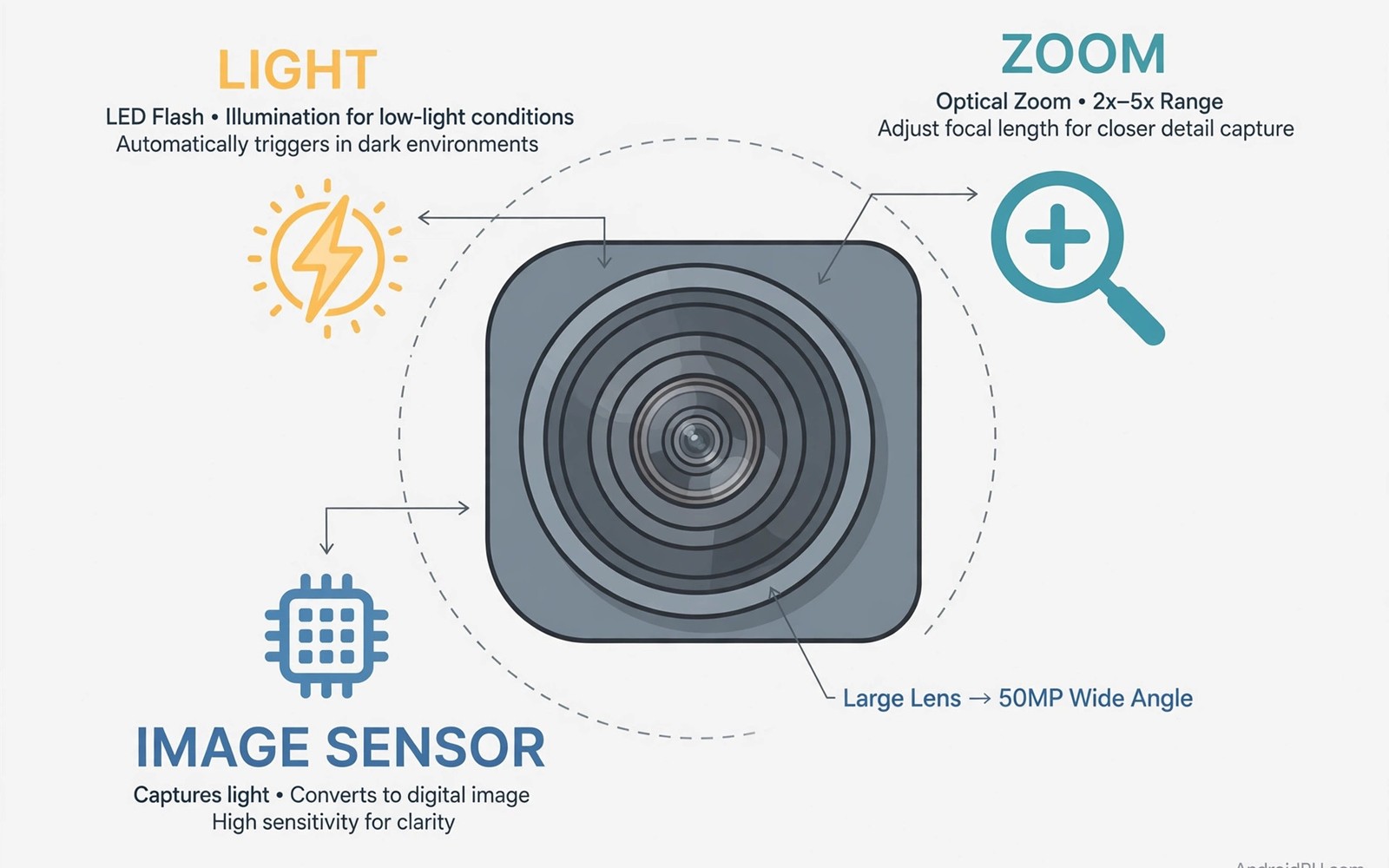
Camera marketing favors megapixel counts and new features. Real photo quality depends on sensors and lenses. Older flagships carry superior optics. New budget phones carry smaller sensors. The older flagship wins in most real scenes. This guide explains why.
Judge cameras by photos rather than spec sheets. Test in dim light and bright light. Test zoom and motion and portraits. Real tests reveal gaps fast. Marketing numbers hide those gaps well.
Sensor Size Decides Light Capture
Larger sensors gather more light per pixel. More light means cleaner photos at night. Budget sensors gather less light. Their photos show noise in shadows. Noise reduction then smears fine detail.
Flagship sensors also offer better dynamic range. Bright skies and dark shadows coexist better. Budget sensors blow out skies often. They crush shadows into black patches. Dynamic range matters in every outdoor photo.
Pixel size matters as much as sensor size. Flagship pixels are larger and more sensitive. Budget pixels are smaller and noisier. Megapixel counts cannot fix small pixels. A 12 megapixel flagship often beats a 50 megapixel budget phone.
Lenses And Zoom Tell The Truth
Flagship phones include optical zoom lenses. Optical zoom magnifies without quality loss. Budget phones rely on digital zoom. Digital zoom crops and enlarges pixels. Distant subjects turn soft quickly.
Flagship main lenses use wider apertures. Wider apertures gather more light. They create natural background blur. Budget lenses use narrower apertures. Their portraits rely on software blur edges.
Lens coatings also differ by tier. Flagship coatings reduce flare in backlight. Budget coatings flare more easily. The flagship value case in sensor test codes covers optics alongside chips. Test zoom outdoors before trusting camera claims.
Stabilization And Video Quality
Flagship phones use optical stabilization in hardware. Hardware stabilization smooths walking video. Budget phones rely on electronic stabilization alone. Electronic stabilization crops the frame. It also struggles in dim light.
Flagship video captures cleaner audio too. Better microphones reduce wind noise. Better processing balances speech and background. Budget video audio sounds thin and harsh. Video viewers notice audio gaps instantly.
Slow motion and high frame rates favor flagships. Their chips process high frame video smoothly. Budget chips drop frames under load. Action videos stutter on weaker hardware.
Processing Maturity And Consistency
Older flagships received years of camera updates. Their processing is tuned and stable. Colors look natural across scenes. Budget phones launch with immature tuning. Their colors shift unpredictably between updates.
Flagship portrait modes handle hair edges better. Flagship night modes preserve detail better. Flagship HDR handles mixed light better. These advantages come from mature algorithms. They also come from better training data.
Consistency matters for everyday shooting. A flagship delivers good photos repeatedly. A budget phone delivers occasional great photos. The buying framework in maximum trade-in value helps you test consistency. Shoot the same scene ten times and compare.
- Sensor: larger sensor gathers more light.
- Zoom: optical zoom preserves distant detail.
- Stabilization: hardware smoothing beats cropping.
- Audio: better mics improve video sound.
- Processing: mature tuning gives consistent colors.
- Test: dim light and zoom and motion scenes.
Camera test scenes
- Dim room portrait with window light
- Outdoor zoom at 3x and 5x
- Walking video for stabilization
- Backlit portrait for flare check
- Night street scene for noise check
These five scenes expose the real gap between tiers. Run them on both phones when possible. Side by side photos convince faster than any spec sheet.
When Budget Cameras Suffice
Budget cameras suffice for bright daylight snapshots. They suffice for social posts at small sizes. They suffice when photos stay on phone screens. Heavy cropping and printing expose their limits.
Choose an older flagship when photos matter daily. Choose budget when cameras matter rarely. The trade-in plan in refurbished phone accessories can fund a flagship later. Photography lovers should never settle for weak sensors.
Flagship Camera Features That Age Well
Optical image stabilization ages well because it is hardware. Hardware stabilization works regardless of software support. Electronic stabilization improves with updates but needs processing power. Old flagships combine both systems effectively. Their video remains smooth years after launch. Stabilization hardware gives lasting value that software cannot replace.
Large aperture lenses age well for the same reason. Aperture is physical and never becomes obsolete. A wide aperture gathers light in every generation. Budget lenses cannot match that physics through software. Night photography therefore favors old flagships permanently. Physics beats marketing in low light every time.
Manual camera controls age well for enthusiasts. Flagships offer RAW capture and manual focus. Budget phones often omit these controls. RAW files allow powerful editing years later. Manual controls let skilled users overcome aging auto modes. Enthusiasts should prioritize flagships with full manual modes.
Telephoto lenses age well for travel photography. Distant subjects need optical reach. Digital zoom cannot recreate lost detail. A flagship telephoto from years ago still captures distant scenes sharply. Travelers benefit daily from this hardware. Telephoto hardware justifies used flagship prices alone for many buyers.
Testing Used Flagship Cameras Before Buying
Test cameras in a dim room first. Dim rooms expose sensor differences instantly. Take the same photo with both phones when comparing. Compare noise in shadow areas closely. Compare detail in textured surfaces. Dim tests separate flagships from budget phones reliably.
Test zoom at each optical step. Note where quality drops sharply. Optical steps should stay sharp. Digital steps beyond optical range soften quickly. A flagship with a broken zoom lens may hide faults at 1x. Zoom testing reveals lens faults that wide tests miss.
Test video while walking slowly. Watch stabilization smoothness on playback. Listen to audio quality with earphones. Check focus transitions between near and far subjects. Focus hunting suggests lens or software faults. Smooth focus suggests a healthy camera system.
Computational Photography On Old Flagships
Computational photography combines multiple frames into one photo. Old flagships pioneered multi frame processing. Their algorithms matured through years of updates. Night modes stack frames for cleaner images. HDR modes balance exposures intelligently. Mature algorithms produce consistent results across scenes. Budget phones run simpler algorithms with less tuning.
Portrait modes on old flagships use depth data effectively. Dual pixel sensors capture depth information. Telephoto lenses add depth separation. Software then blurs backgrounds naturally. Budget portrait modes guess depth from single lenses. Guessed depth creates edge errors around hair. Depth hardware gives flagships lasting portrait advantages.
Zoom processing on old flagships uses multi frame fusion. Fusion combines zoom frames for sharper detail. It reduces noise at moderate zoom levels. Budget zoom relies on single frame cropping. Single frame crops lose detail quickly. Fusion processing extends usable zoom range meaningfully. Travel photographers benefit from fusion daily.
Video processing on old flagships handles HDR effectively. HDR video balances bright and dark areas. It requires fast sensor readout and processing. Flagship chips manage HDR video smoothly. Budget chips drop frames in HDR video. Smooth HDR video remains a flagship hallmark. Video creators should prioritize flagship processing.
RAW support on old flagships empowers editors. RAW files preserve sensor data fully. Editors recover shadows and highlights flexibly. Budget phones often omit RAW capture. JPEG only capture limits editing headroom. RAW capability extends creative life for years. Photography enthusiasts value RAW highly.
When New Budget Cameras Catch Up
New budget cameras excel in bright daylight conditions. Daylight provides abundant light for small sensors. Noise stays low in bright scenes. Colors look vibrant on phone screens. Social media compression hides remaining gaps. Daylight snapshots rarely reveal tier differences. Casual daylight shooters may not need flagships.
New budget cameras improve through software updates too. Makers tune budget cameras after launch. Tuning narrows gaps over months. Gaps narrow most in easy conditions. Difficult conditions preserve flagship leads. Night and zoom and motion still favor flagships. Software cannot fully replace sensor physics.
New budget phones sometimes include flagship hand me down sensors. Previous generation sensors trickle down over time. A new budget phone may carry an old flagship sensor. Sensor trickle down blurs tier lines occasionally. Research exact sensor models before assuming gaps. Specific sensors matter more than tier labels.
Accessory lenses can help budget cameras somewhat. Clip on lenses add wide or macro views. They cannot match integrated flagship optics. They add bulk and alignment hassles. They suit hobbyists more than daily shooters. Integrated optics remain superior for spontaneous photography. Accessories complement rather than replace flagship cameras.
Quick Reference Checklist
- Test cameras in dim rooms before bright rooms.
- Compare shadow noise between flagship and budget photos.
- Compare detail in textured surfaces closely.
- Test zoom at each optical step separately.
- Note where zoom quality drops sharply.
- Test wide aperture portraits for natural blur.
- Check backlit photos for flare differences.
- Test video stabilization while walking slowly.
- Listen to video audio with earphones for clarity.
- Test slow motion for dropped frames.
- Test portrait edge accuracy around hair.
- Test night mode detail retention carefully.
- Test HDR balance in mixed bright and dark scenes.
- Shoot the same scene ten times for consistency.
- Test RAW capture when the flagship supports it.
- Test manual focus and exposure controls.
- Compare selfie backlight handling directly.
- Test focus transitions between near and far subjects.
- Test camera speed from lock screen launch.
- Judge cameras by photos not megapixel numbers.

