

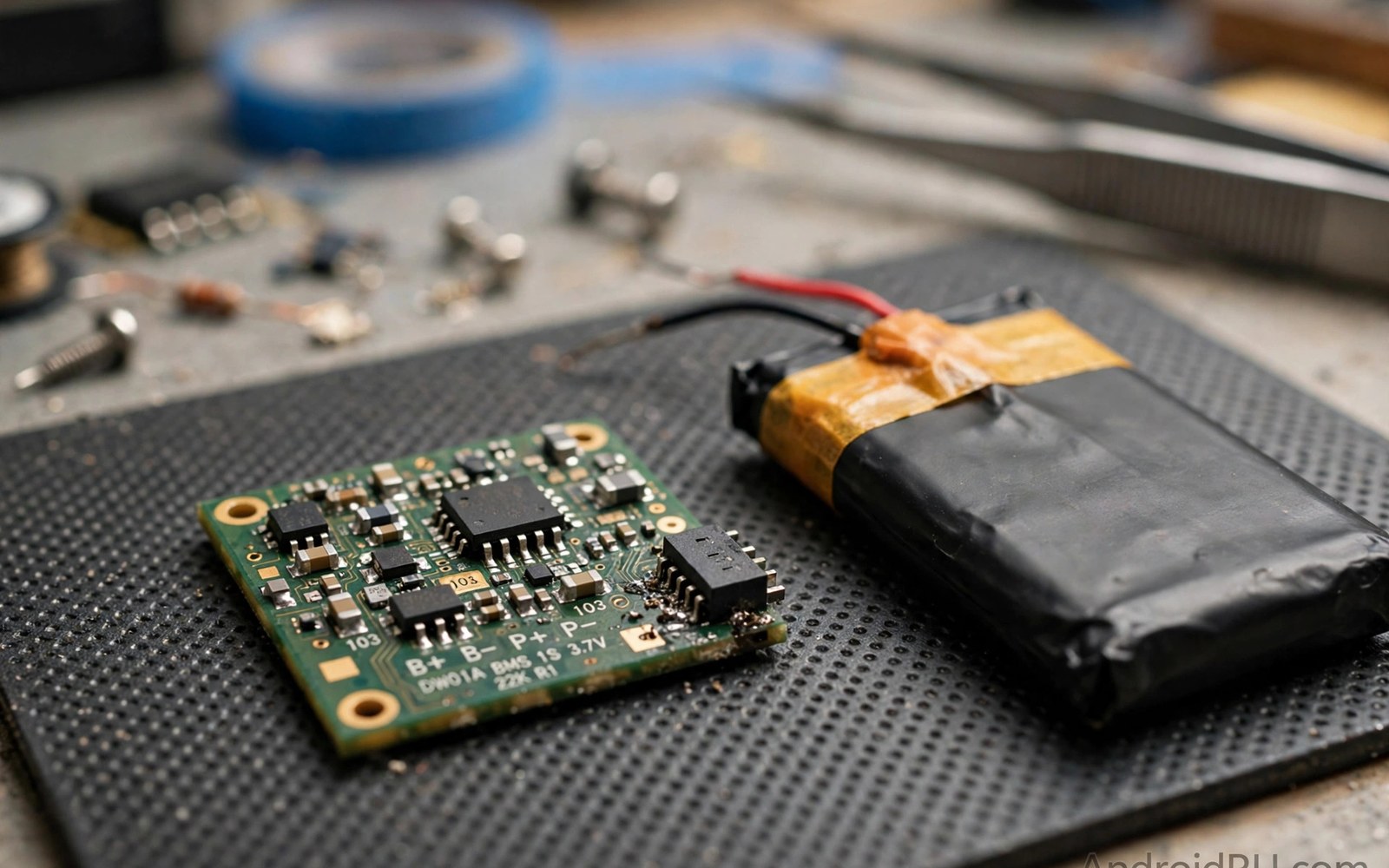
A phone battery needs a guardian. Lithium cells can fail dangerously if overcharged or overheated. Smart battery management chips serve as that guardian. They watch voltage and current and temperature constantly. They cut power when any measure leaves a safe range. Users rarely notice this protection until it saves a battery.
These chips sit between the charger and the battery cells. They measure cell voltage many times per second. They track current flowing in and out of the cells. They read temperature sensors placed near the cells. That data drives decisions about charging speed and cutoff. A chip can slow charging long before a user notices heat.
Management chips also balance cells in multi-cell batteries. Cells age at slightly different rates over time. An unbalanced pack wastes capacity and it risks overcharging one cell. Balancing circuits move small amounts of charge to equalise cells. That equalisation extends pack life and it improves safety. This guide explains each protection role clearly.
Voltage Monitoring And Overcharge Cutoff
Voltage is the clearest sign of charge level in a cell. Each cell type has a maximum safe voltage. Charging beyond that maximum damages the cell chemistry. Damage can cause swelling and in extreme cases fire. The management chip stops charging at the safe voltage ceiling. That cutoff is a hard safety limit rather than a suggestion.
The chip also guards against deep discharge. Draining a cell too low damages it permanently. The chip cuts power to the phone before voltage falls too far. Users see a dead phone but the cells retain a safe reserve. That reserve lets the battery recover on the next charge. Without it a deeply drained battery might never charge again.
Voltage monitoring runs during use as well as charging. Heavy loads can pull cell voltage down temporarily. The chip distinguishes a brief dip from true low charge. That distinction prevents false shutdowns during gaming or calls. Accurate monitoring keeps the phone usable while protecting cells.
- Stop using a phone with a swelling battery
- Avoid chargers with vague or missing ratings
- Let the phone cool before fast charging again
Current Limits And Short Circuit Protection
Current limits protect cells from excessive charging rates. A chip caps current based on temperature and cell state. Cold cells accept less current safely than warm cells. Aged cells also accept less current than new cells. The chip adapts limits as the battery ages. That adaptation keeps old batteries safe rather than pushing them hard.
Short circuit protection reacts in microseconds. A short can draw huge current and heat a cell fast. The chip detects the surge and disconnects the cell path. That fast reaction prevents thermal runaway in most faults. A damaged cable or port can trigger this protection. Repeated triggers signal a fault that needs repair rather than repeated resets.
Current sensing also feeds battery percentage estimates. The chip tracks charge flowing in and out over time. That tracking improves percentage accuracy across cycles. Users benefit from trustworthy battery readings daily. A failing sense circuit can cause jumpy percentages. Jumpy readings deserve a service check rather than a settings tweak.
Temperature Sensing And Thermal Limits
Temperature sensors sit near cells and near charging circuits. The chip slows charging when temperature rises past a safe point. It may pause charging entirely in extreme heat. That pause protects cells from heat-driven damage. Users may see a charging paused message on hot days. That message means protection is working rather than failing.
Cold temperatures also trigger limits. Charging a freezing cell can plate lithium metal inside it. Plating damages capacity and it creates safety risks. The chip reduces current until the cell warms to a safe range. Warming happens naturally from cabin heat or room heat. Patience in cold weather protects the battery from hidden damage.
Multiple sensors give a fuller thermal picture. One sensor near the charger may read hotter than cell sensors. The chip uses the highest relevant reading for safety decisions. That conservative approach favours safety over speed. A phone that charges slowly on a hot day is protecting itself. Cooling the phone restores normal speed faster than forcing a charge.
Cell Balancing In Multi-Cell Packs
Multi-cell packs need balancing because cells drift apart. Manufacturing variation and temperature differences cause drift. One cell may fill before its neighbours during charging. Without balancing that cell would overcharge while others lag. Balancing circuits bleed or transfer small charges to equalise levels. Equal cells charge safely together to full pack capacity.
Balancing happens mostly near full charge. The chip measures each cell as the pack approaches full. It trims high cells while low cells catch up. That process can extend the final charging phase slightly. Users may notice a slower finish on multi-cell phones. That slow finish is balancing at work rather than a fault.
Unbalanced packs lose usable capacity over time. The weakest cell sets the limit for the whole pack. Balancing delays that loss by keeping cells aligned. It cannot reverse ageing but it slows divergence. Good balancing is one reason modern packs last longer. It works silently in the background of every charge.
Fuel Gauging And Battery Health
Fuel gauging estimates remaining charge from voltage and current history. The chip learns battery behaviour across many cycles. It adjusts estimates as capacity fades with age. Accurate gauging prevents surprise shutdowns at low percentages. It also supports battery health reporting in phone settings. Health percentages come from chip data rather than guesswork.
Calibration drifts when phones rarely reach full or empty. Occasional full cycles help the chip relearn capacity. Users need not force deep cycles often for calibration. A monthly full charge from a low level usually suffices. Avoid daily deep cycles because they add wear. Calibration and longevity need a balance rather than extremes.
Health reports help users plan battery replacement. A battery below a healthy threshold may swell or drain fast. Replacement at that point restores daily life and safety. Use authorised repair services for battery replacement. Proper tools and handling matter for lithium cells. A careless replacement can damage the chip or the pack.
When Protection Fails Or Is Bypassed
Protection can fail if a battery is physically damaged. A punctured cell can fail faster than a chip can react. Swelling and heat after a drop deserve immediate attention. Stop charging a damaged phone and seek repair. Do not try to reset protection repeatedly after a fault. Repeated resets can mask a dangerous cell condition.
Cheap replacement batteries may lack proper management chips. A bargain battery without protection risks overcharge and heat. Always choose batteries with full protection circuits. Check repair service credentials before a replacement. A proper battery costs more but it protects the phone and the user. Safety features are not a place to save money.
Counterfeit chargers can also overwhelm protection. A charger that ignores phone requests may push unsafe power. The chip can cut power but repeated stress wears protection circuits. Use chargers with clear ratings and safety marks. A trusted charger plus a smart chip gives two layers of defence. Two layers beat one layer every time.
Battery Management In Tablets And Laptops
Battery management principles extend beyond phones to tablets and laptops. Larger devices use more cells and more complex balancing. Their management chips handle higher voltages and currents. Thermal management becomes harder with larger packs. Fans and heat spreaders assist chips in laptops. Tablets rely on passive cooling like phones but with larger areas.
Multi-cell laptop packs need sophisticated balancing circuits. Cells in series must stay aligned to avoid overcharge. A single weak cell can limit a whole laptop pack. Management chips track each cell group separately. They report health data to operating systems for user visibility. That visibility helps users plan laptop battery replacement.
Charging profiles differ across device types. Laptops may charge at higher power for longer periods. Their chips manage heat with fan assistance. Tablets charge at moderate power with passive cooling. Phones charge fastest relative to size with tight thermal limits. Each profile reflects device cooling capacity and use patterns.
Cross-device lessons still apply universally. Heat harms all lithium batteries regardless of device size. Voltage ceilings protect all cells from overcharge damage. Balancing extends all multi-cell packs. Users who understand phone chips understand tablet and laptop protection too. Battery science scales across devices with consistent rules.
Future Battery Management Advances
Future management chips will use smarter algorithms for ageing prediction. Machine learning models may predict cell failure earlier. Early prediction lets users replace batteries before swelling or failure. Smarter chips may also optimise charging for individual usage patterns. A chip that learns overnight routines can tailor charging curves. Personalised charging could extend battery life further.
Solid-state batteries may change management needs in future devices. Solid electrolytes promise higher safety margins than liquid ones. Management chips will still monitor voltage and temperature. Their thresholds may shift for new chemistries. Safety logic will adapt rather than disappear. Chips remain essential even as cell chemistry evolves.
Wireless charging integration will deepen management chip roles. Chips must coordinate wireless power with cell protection. Magnetic alignment data may feed into charging decisions. A well aligned wireless session can safely use higher power. A misaligned session needs lower power for safety. Future chips will use alignment data actively.
User visibility into battery health will likely improve. Phones may show more detailed chip data in settings. Users could see cell balance and temperature history. That transparency helps informed charging habits. It also helps repair services diagnose battery faults faster. Better data empowers users and technicians alike.
Use chargers with clear safety ratings
Stop charging if the phone swells or overheats
Let a hot phone cool before charging
Replace weak batteries through authorised repair
Avoid bargain batteries without protection
Readers who want more context on portable power can read USB-C Power Meters: Measuring Real Charging Speeds and Voltages for a related view on the same topic.
Readers who want more context on portable power can read Rugged Waterproof Power Banks Designed for Extreme Outdoor Use for a related view on the same topic.
Readers who want more context on portable power can read Why Phone Displays Show “Charging Slowly” and How to Fix It for a related view on the same topic.
The steps above follow the approach described in the official developer documentation and standard industry guidance for safe charging practice.
Smart battery chips protect phones through voltage and current and temperature control. They stop overcharging and they balance multi-cell packs. They adapt limits as batteries age. Users rarely see this work but they benefit every charge. Good chargers and cool habits support the chip rather than fighting it.
Respect charging paused messages on hot days. Replace swelling batteries promptly through proper repair. Avoid cheap batteries and chargers without protection. Those habits let the management chip do its job. A protected battery lasts longer and stays safer. The tiny chip inside the phone earns its place daily.
Battery management extends across tablets and laptops with the same principles. Larger packs need more complex balancing and cooling. Future chips will predict ageing and adapt to new chemistries. Wireless integration will deepen chip roles further. Protection logic remains central even as batteries evolve.
Apply phone battery lessons to every lithium device you own. Keep devices cool during charging. Respect charging pauses on hot days. Replace swelling batteries promptly through proper repair. Those universal habits protect all your batteries. A tiny management chip works hard in every device daily.

