

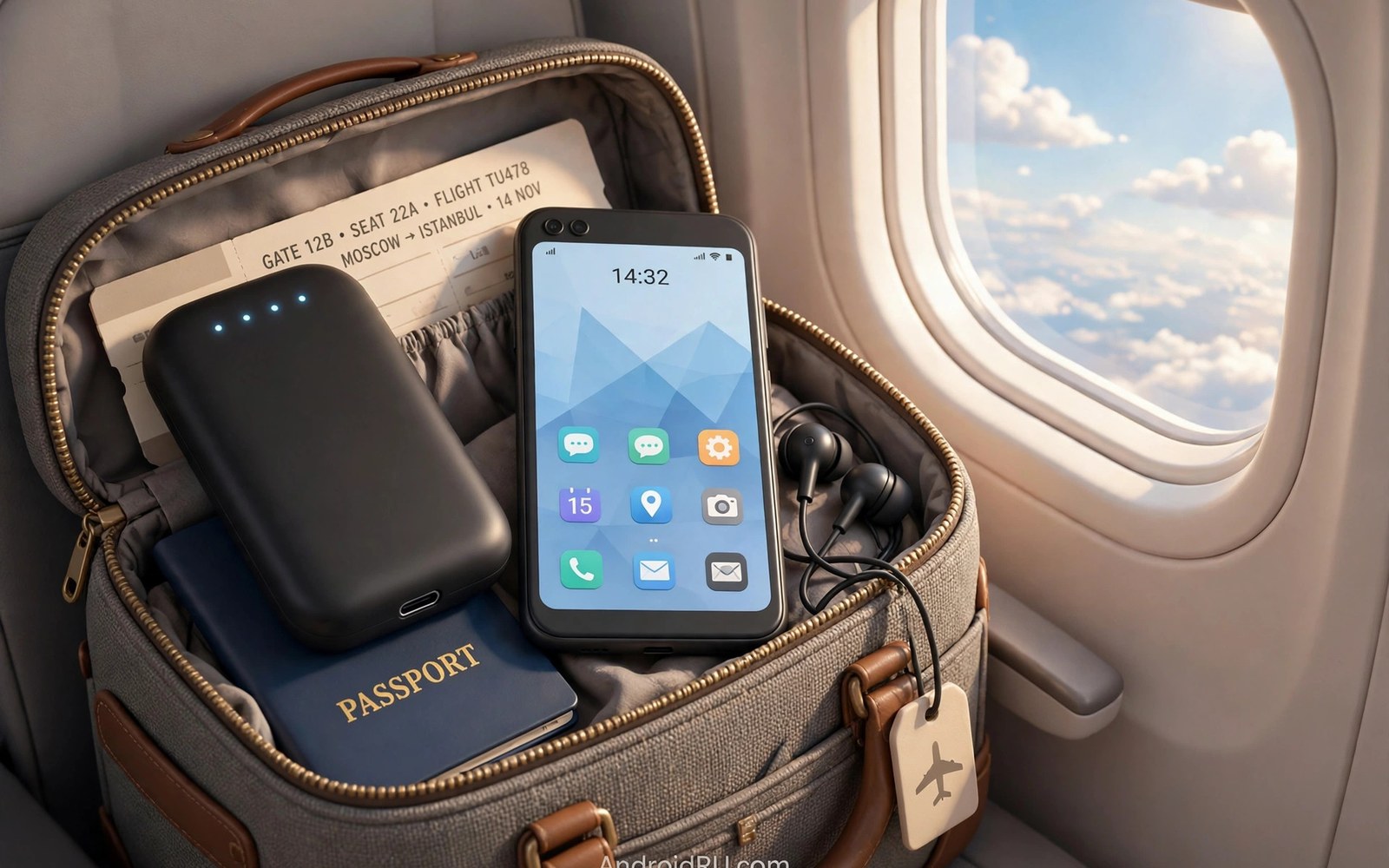
Power banks are essential for long flights. Phones need power for boarding passes and entertainment and arrival maps. Airline rules treat power banks as lithium batteries with strict limits. Those rules protect the cabin from battery fire risk. Most common banks fly without trouble when packed correctly. Very large banks need extra care and sometimes approval.
The key measure for flights is watt hours. Watt hours combine capacity and voltage into one energy figure. Airlines set limits in watt hours rather than milliamp hours alone. A bank label should state watt hours clearly. If it states only milliamp hours the figure can be worked out from voltage. Security staff use the label to judge compliance at screening.
Packing location matters as much as size. Power banks must travel in cabin baggage. They must never go in checked luggage. Cabin crew can act fast if a battery overheats in the cabin. A battery in the hold cannot be reached during flight. That safety logic drives the cabin-only rule worldwide. This guide covers limits and packing and approval steps.
Watt Hours And Common Limits
Most airlines allow banks up to a common energy threshold without approval. Banks below that threshold fly in cabin bags routinely. Banks above it need airline approval before the flight. Banks above a higher threshold are generally refused for passengers. Exact thresholds vary by carrier so check before flying with a large bank. A bank near a threshold deserves a pre-flight check with the airline.
Watt hours can be found on the bank label or packaging. Multiply milliamp hours by voltage and divide by one thousand for a rough figure. Use the cell voltage stated on the label for accuracy. A bank with a worn label may cause screening delays. Keep packaging or a photo of the label as backup proof. Clear labelling speeds every security check.
Count all lithium batteries in your cabin bag together. Spare phone batteries and camera batteries add to the total picture. Airlines may limit the number of large batteries per passenger. A traveller with several large banks should check quantity rules too. Splitting capacity across smaller banks can ease approval. Smaller banks also spread risk if one fails.
- Read the watt hour label before packing
- Keep banks in cabin bags only
- Check airline approval for large banks
Cabin Packing And Security Screening
Pack power banks at the top of a cabin bag for easy access. Security staff may ask to inspect them separately. A bank buried under clothes slows screening for everyone. Keep cables tidy so the bank is easy to show. Remove the bank from the bag when staff request a separate check. Cooperation speeds the line for all travellers.
Protect banks from damage during the flight. A hard pouch prevents pressure and puncture in a crowded bag. Keep banks away from sharp objects like keys. Tape or cover exposed terminals on loose batteries. A damaged bank should not fly until inspected. Damage plus cabin pressure changes raise fire risk unnecessarily.
Turn banks off when they have a power switch. Prevent accidental activation during the flight. Keep the bank away from metal objects that could short terminals. A shorted bank can heat fast in a bag. Good packing prevents shorts and it prevents accidental drain. Arrive with a full bank rather than a drained one.
Using Power Banks During Flight
Airlines may restrict power bank use during takeoff and landing. Follow crew instructions on device use in each phase. Use the bank during cruise when crew allow personal electronics. Keep the bank visible rather than buried under a blanket. Visible banks let crew spot overheating early. Stop use at once if the bank feels unusually hot.
Charge phones from the bank rather than relying on seat power alone. Seat power varies widely across aircraft and classes. Some seats offer only low power USB ports. A bank gives a reliable top-up regardless of seat type. It also works during delays on the ground. A charged bank is travel insurance for arrival needs.
Do not charge a power bank from seat power during flight unless the airline allows it. Some carriers restrict charging lithium banks in flight. Others allow it with crew knowledge. Ask crew when unsure rather than assuming permission. Rules exist to keep the cabin safe for everyone. A short question avoids a rule breach.
Approval For Large Banks
Large banks need airline approval well before departure. Contact the airline through its official channel with bank details. Provide watt hours and quantity and brand details. Keep the approval message accessible on the phone. Show it at check-in if staff ask about the bank. Approval does not guarantee acceptance if the bank looks damaged.
Approval timelines vary by airline. Request approval days before the flight when possible. Last-minute requests at the airport may fail. A refused bank cannot fly and it may be confiscated. Plan a backup with smaller banks for important trips. A smaller bank that flies beats a large bank left behind.
Some airlines publish a simple online form for battery approval. Others handle requests by phone or email. Note the name and reference of any approval received. A reference number helps if airport staff need to verify it. Keep a screenshot as well as the original message. Redundancy helps when connectivity fails at the airport.
Damaged Or Recalled Banks
Never fly with a swollen or damaged power bank. Swelling signals internal damage that heat and pressure can worsen. A cracked case or a loose port also signals risk. Retire damaged banks through proper recycling channels. Do not place a damaged bank in any luggage. Safety rules exist because damaged cells fail unpredictably.
Recalled banks also need care before a flight. Check recall lists for your bank model when possible. A recalled bank may be refused even if it looks fine. Contact the maker for a replacement or refund path. Travel with a different bank while the recall resolves. A replacement bank avoids screening arguments entirely.
Heat damage from a hot car can weaken a bank invisibly. A bank left on a dashboard may look fine but suffer cell stress. Replace banks exposed to extreme heat before flying. A new bank costs far less than a flight disruption. Caution with heat-damaged banks protects fellow passengers too.
Packing Checklist Before Departure
Check watt hours and airline limits a day before flying. Pack banks in cabin bags at an accessible spot. Protect banks in a pouch away from sharp objects. Charge banks fully before leaving home. Carry approval messages for any large bank. Keep a photo of each bank label as backup proof.
Tell travel companions about the cabin-only rule. A companion may pack a bank in checked luggage by mistake. A quick reminder prevents a bag search at check-in. Checked bag searches delay departure for the whole group. Shared awareness keeps the trip smooth. Everyone arrives with working phones when banks fly correctly.
Power Banks And International Flight Rules
International flights add rule variation beyond home carrier rules. Different countries enforce lithium limits with local nuances. A bank allowed by one carrier may face questions in another country. Transit airports apply their own screening rules too. A bank that passes departure screening may face transit screening again. Plan for repeated checks on multi-leg international trips.
Documentation helps across international screenings. Carry bank specifications in the phone for quick showing. A photo of the watt hour label speeds foreign checks. Approval messages should be accessible offline as well. Airport wifi may fail when a message is needed. Offline copies prevent connectivity problems at screening.
Language barriers can complicate battery discussions abroad. A watt hour label in clear numbers transcends language. Pointing to the label often resolves questions faster than explanations. Keep labels clean and legible for that reason. A worn label causes delays in any language. Clear numbers are the universal language of battery screening.
Customs rules may also affect large battery quantities. A traveller carrying many banks may face commercial import questions. Personal use quantities usually pass without issue. Carrying banks for resale changes the picture entirely. Keep bank quantities within personal travel needs. Personal quantities align with airline and customs expectations.
Power Banks For Frequent Flyers
Frequent flyers benefit from a dedicated flight bank. A medium bank under common limits flies without approval hassle. That bank becomes the trusted travel companion for every trip. Keep it charged and packed in the same cabin pouch always. Routine packing prevents last-minute checked bag mistakes. A dedicated flight bank removes decision fatigue from travel.
Flight banks should prioritise fast phone charging over huge capacity. A flight bank needs to top up a phone during a journey. It does not need to charge a tablet several times. A medium fast bank suits flights better than a huge slow bank. Weight savings also matter across many flights yearly. A lighter bank reduces carry fatigue on frequent trips.
Charge flight banks between trips as part of a routine. Return home and plug the flight bank in immediately. That habit ensures a full bank for the next departure. A bank left empty after a trip may be forgotten before the next one. Routine refills prevent empty bank surprises at airports. Frequent flyers need systems rather than memory for readiness.
Track bank health across many flights for reliability. A bank used weekly ages faster than one used monthly. Note delivered charges every few months. Replace a fading flight bank before it fails on a trip. A reliable flight bank is worth replacing early. Travel reliability outweighs squeezing extra months from a weak bank.
Read the watt hour label first
Pack banks in cabin bags only
Protect banks in a pouch
Charge banks fully before departure
Carry approval for large banks
Readers who want more context on portable power can read Fast Car Chargers: Powering Phones via Vehicle 12V Accessories for a related view on the same topic.
Readers who want more context on portable power can read How Smart Battery Management Chips Prevent Overcharging Overheating for a related view on the same topic.
Readers who want more context on portable power can read USB-C Power Meters: Measuring Real Charging Speeds and Voltages for a related view on the same topic.
The steps above follow the approach described in the official developer documentation and standard industry guidance for safe charging practice.
Airplane power bank rules are simple in practice. Keep banks in cabin bags and respect watt hour limits. Seek approval early for large banks. Pack banks accessibly and protect them from damage. Those steps cover almost every flight without trouble.
Check your bank labels before your next trip. Charge banks fully and pack them at the top of a cabin bag. Ask the airline early if a bank looks large. That preparation turns security screening into a quick step. Fly with power ready for arrival and for the journey home.
International rules and frequent flyer habits complete the flight guide. Rule variation across countries rewards clear labelling and offline documents. Frequent flyers benefit from a dedicated medium flight bank. Routine packing and refilling prevent most travel power failures. Preparation turns battery rules into a minor travel step.
Build a flight bank routine before your next trip. Choose a medium bank under common limits. Pack it in cabin baggage at an accessible spot. Keep approval documents offline for large banks. That routine makes every screening smoother. Fly with confidence that power rules are handled.

