

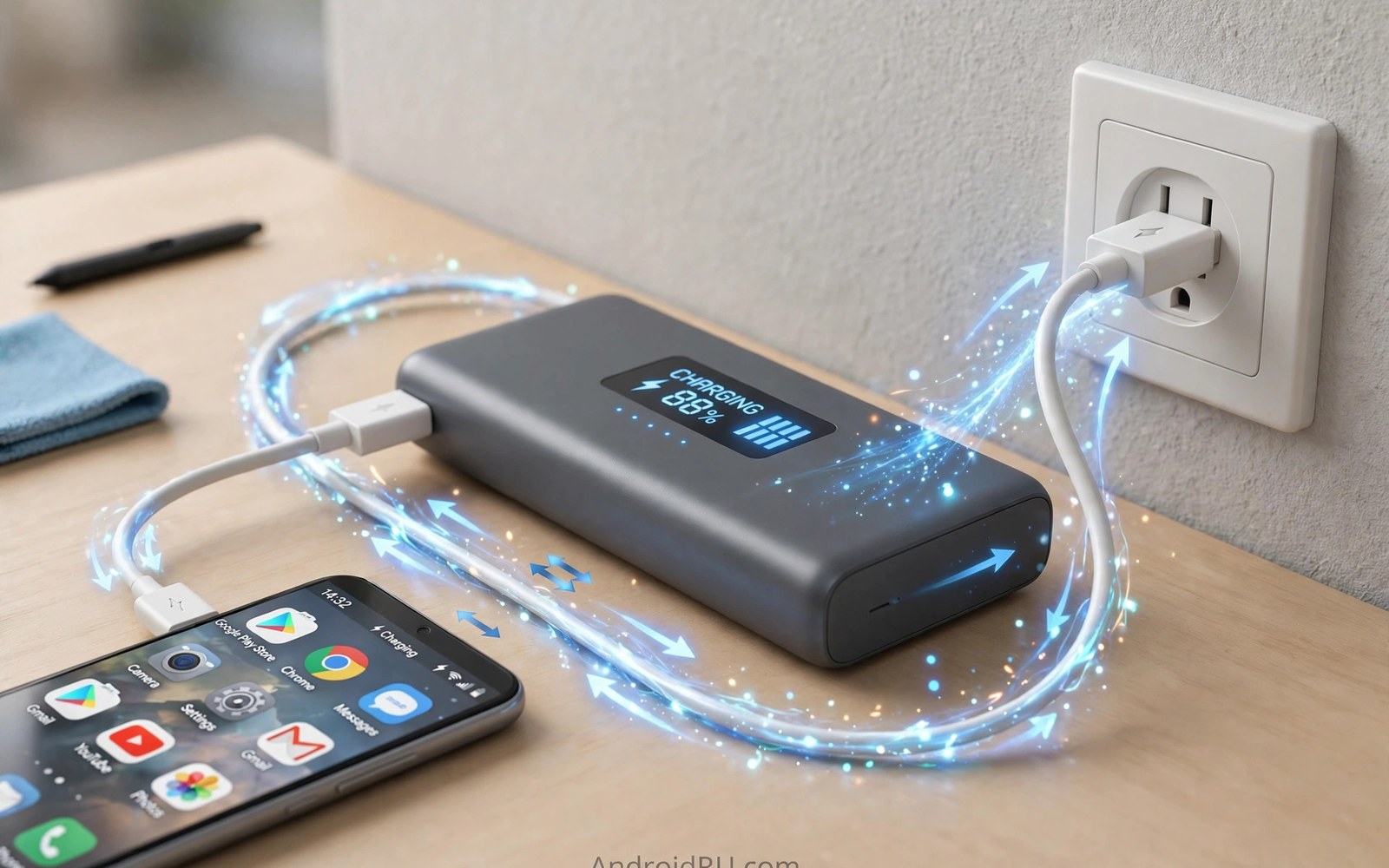
Pass-through charging sounds like a neat trick. A power bank plugs into the wall and charges a phone at the same time. One outlet serves two batteries in a single session. Hotel rooms with scarce outlets make this feature valuable. It also simplifies overnight setups where both devices must be ready by morning. Not every bank supports it safely though.
A pass-through bank manages two power flows at once. Wall power enters the bank and splits between its own cells and the phone. Smart banks prioritise the phone so it charges first. They then refill their own cells with remaining power. Dumb designs may overheat or cycle power to the phone. That cycling can confuse the phone and slow the whole session.
Heat is the central risk of pass-through use. Charging a battery creates heat and discharging one creates heat too. Doing both at once doubles the thermal load inside a small case. Good banks use thermal sensors and power limits to stay safe. Weak banks may run hot or shut down mid-session. This guide explains safe use and smart buying.
How Pass-Through Charging Works
Wall power enters through the bank input port. Internal circuits split that power between output and storage. The phone receives power first in most smart designs. Remaining power trickles into the bank cells. When the phone fills the bank gets the full input rate. That priority system keeps the phone ready fastest.
Some banks use a bypass path for the phone. Bypass power flows from wall to phone without passing through the cells. Bypass designs create less heat because the cells rest during phone charging. They also avoid extra wear on the bank cells. Bypass support is a strong feature to look for. It is not present in every bank that claims pass-through support.
Input power limits shape the whole session. A weak wall brick cannot serve both devices at full speed. The phone may charge slowly while the bank refills slowly too. A strong brick gives both flows enough headroom. Match the brick to the bank input rating for best results. A slow session often traces back to a weak brick rather than the bank.
- Use a strong brick matched to bank input
- Charge the phone first in priority order
- Check for bypass support in product notes
Safety And Heat Management
Heat management separates good pass-through banks from risky ones. Temperature sensors should slow or stop charging when the case gets hot. Ventilation also matters because a bank under bedding traps heat fast. Place the bank on a hard surface during pass-through sessions. Keep it clear of fabric and direct sunlight. A cool bank charges both devices faster and safer.
Cell wear grows when a bank charges and discharges at once. Non-bypass designs cycle their cells during phone charging. That cycling adds wear beyond normal bank use. Occasional pass-through use causes modest extra wear. Daily pass-through use as a desk hub causes more. Reserve the feature for travel and outlet shortages rather than daily hub duty.
Stop a session if the bank feels unusually hot. Unplug it and let it cool before retrying. A bank that repeatedly overheats in pass-through mode is not safe for that use. Retire it from pass-through duty and use it normally instead. Safety outranks convenience when a battery runs hot.
Overnight Use And Hotel Setups
Overnight pass-through suits hotel rooms with one free outlet. Plug the bank into the wall and the phone into the bank. Both devices refill by morning without an extra brick. Place the pair on a desk rather than on a bed. A desk surface sheds heat better than bedding. Check both levels in the morning before packing.
A pass-through bank also serves as a nightstand hub at home. It reduces cable clutter when outlets are scarce. Home use still needs ventilation and a quality brick. Do not bury the bank behind furniture where heat builds. Check the bank case temperature during the first few sessions. A cool consistent result means the setup is safe to repeat.
Speed Expectations
Pass-through sessions run slower than direct charging. Input power splits between two batteries. The phone may charge at a moderate rate rather than its peak. Total time to fill both devices can be long. Plan for an overnight window rather than a quick top-up. A lunch break rarely fills both a phone and a large bank.
Phone priority helps when time is short. The phone reaches a useful level first. The bank may still be partly empty when you leave. That partial bank still helps later in the day. Accept a partly filled bank as a fair trade for a charged phone. Direct charging remains faster when only the phone matters.
Buying A Pass-Through Bank
Look for explicit pass-through support in product notes. Vague claims without detail should raise doubt. Bypass charging support is a strong bonus feature. Check input and output ratings together for realistic speeds. A bank with fast input refills faster after the phone fills. A bank with slow input drags the whole session out.
Read user reports on heat during pass-through use. Reports of frequent shutdowns signal weak thermal design. A bank that stays cool in reports is a safer pick. Choose a capacity that fits travel needs without excess bulk. A medium bank with good pass-through beats a huge hot bank. Test the feature at home before relying on it abroad.
When To Avoid Pass-Through
Avoid pass-through when the bank is already very hot. Avoid it also when the wall brick is weak or unknown. Public outlets with unstable power suit direct phone charging better. Avoid daily pass-through as a permanent desk hub. A dedicated multi-port brick serves a desk better with less cell wear. Pass-through shines as an occasional travel tool rather than a daily hub.
Avoid pass-through with a damaged bank or cable. Swelling or fraying means the bank needs retirement not extra load. A damaged bank under dual load risks failure. Inspect the bank and cables before a pass-through session. A quick visual check costs seconds and it prevents most incidents. Safe habits keep a useful feature useful.
Pass-Through And Battery Health Over Time
Pass-through use affects bank cell health through extra cycling. Non-bypass banks cycle cells while charging a phone. Each cycle adds a little wear to bank capacity. Occasional pass-through use adds negligible wear overall. Daily pass-through use as a hub adds wear steadily. Bank capacity may fade sooner under daily dual-load use.
Bypass designs avoid most pass-through wear. Wall power flows directly to the phone without cell cycling. Bank cells rest during phone charging in bypass mode. That rest preserves bank capacity across many sessions. Bypass support therefore matters for frequent pass-through users. Occasional users gain less from bypass but still benefit.
Heat during pass-through also ages bank cells. Dual-load sessions run hotter than single-load sessions. Heat accelerates chemical wear inside cells. Cool pass-through sessions age cells slower than hot ones. Ventilation and surface choice control session temperature. A cool desk setup protects bank longevity measurably.
Bank health can be tracked through delivered charges over time. Note how many phone charges a full bank delivers when new. Repeat that test every few months under similar conditions. A falling charge count signals capacity fade. Fade from heavy pass-through use appears faster than fade from normal use. Tracking reveals when a bank needs replacement.
Pass-Through In Offices And Shared Spaces
Offices with scarce outlets benefit from pass-through banks. One outlet can serve a phone and a bank during a workday. That sharing reduces outlet hunting in meeting rooms. Place the bank visibly on a desk rather than under papers. Visible placement lets users notice heat early. Shared spaces need visible safe charging habits.
Shared banks in offices raise hygiene and ownership questions. A personal bank should not become a communal charger by default. Label personal banks clearly to avoid confusion. A shared bank needs a clear owner for safety responsibility. Damaged shared banks should be retired by the owner promptly. Shared use without ownership creates safety gaps.
Cable management in shared spaces needs care. Pass-through setups use two cables in one spot. Route cables to avoid tripping hazards in walkways. Use short cables to reduce clutter on shared desks. A tidy setup prevents accidental unplugging during sessions. Unplugging mid-session can confuse phone charging handshakes.
Power strips in offices may limit pass-through performance. A strip shared with computers and monitors may sag under load. Plug pass-through banks directly into wall outlets when possible. Direct wall power gives the most stable input. Stable input keeps both phone and bank charging steadily. Office convenience should not compromise charging stability.
Plug the bank into a strong wall brick
Connect the phone to the bank output
Place the bank on a hard cool surface
Check heat after thirty minutes
Stop if the bank feels unusually hot
Readers who want more context on portable power can read Solar Power Banks for Camping: How Effective Are Integrated Panels? for a related view on the same topic.
Readers who want more context on portable power can read Understanding Quick Charge (QC) Protocols Across Generations for a related view on the same topic.
Readers who want more context on portable power can read Wireless Charging Pads for Multi-Device Desk Setup for a related view on the same topic.
The steps above follow the approach described in the official developer documentation and standard industry guidance for safe charging practice.
Pass-through charging turns one outlet into a two-device solution. Smart priority and bypass designs make it safe and useful. Weak bricks and poor ventilation make it slow and hot. Occasional travel use suits the feature best. Daily hub duty suits a multi-port brick better.
Test any new bank at home with a full pass-through session. Watch heat and speed across the whole night. Keep the setup only if both devices fill coolly. That test turns a claimed feature into a trusted travel tool. One outlet can indeed serve two batteries when the bank is built for it.
Pass-through health and office use complete the practical picture. Bypass designs protect bank cells during frequent dual-load use. Heat control protects longevity in any pass-through session. Shared spaces need visible placement and clear ownership. Occasional travel use remains the sweet spot for this feature.
Choose a bypass-capable bank if pass-through will be frequent. Track delivered charges to spot capacity fade early. Keep pass-through setups visible and ventilated. Those practices preserve bank life and safety together. Pass-through charging rewards careful users with outlet freedom. Careless use trades that freedom for heat and wear.
Pass-through banks can also serve as uninterruptible phone power. A phone connected through a bank stays powered during outlet changes. Moving a charger between rooms need not interrupt phone charging. The bank bridges brief outlet gaps smoothly. That bridging suits users who move around a home while charging. Continuous power is a quiet pass-through benefit.
Pass-through use in vehicles needs extra caution. Vehicle sockets vary in stability during engine starts. Voltage dips during starting can disrupt pass-through sessions. A bank may reset phone charging during a start. Direct phone charging from a car charger avoids that disruption. Reserve vehicle pass-through for parked use with stable power.
Pass-through banks with display screens aid monitoring. A screen showing bank level helps plan session timing. Users can see when the bank itself needs attention. Screens also reveal input and output rates during sessions. That visibility helps diagnose slow pass-through sessions. Display banks cost more but they inform better decisions.

