

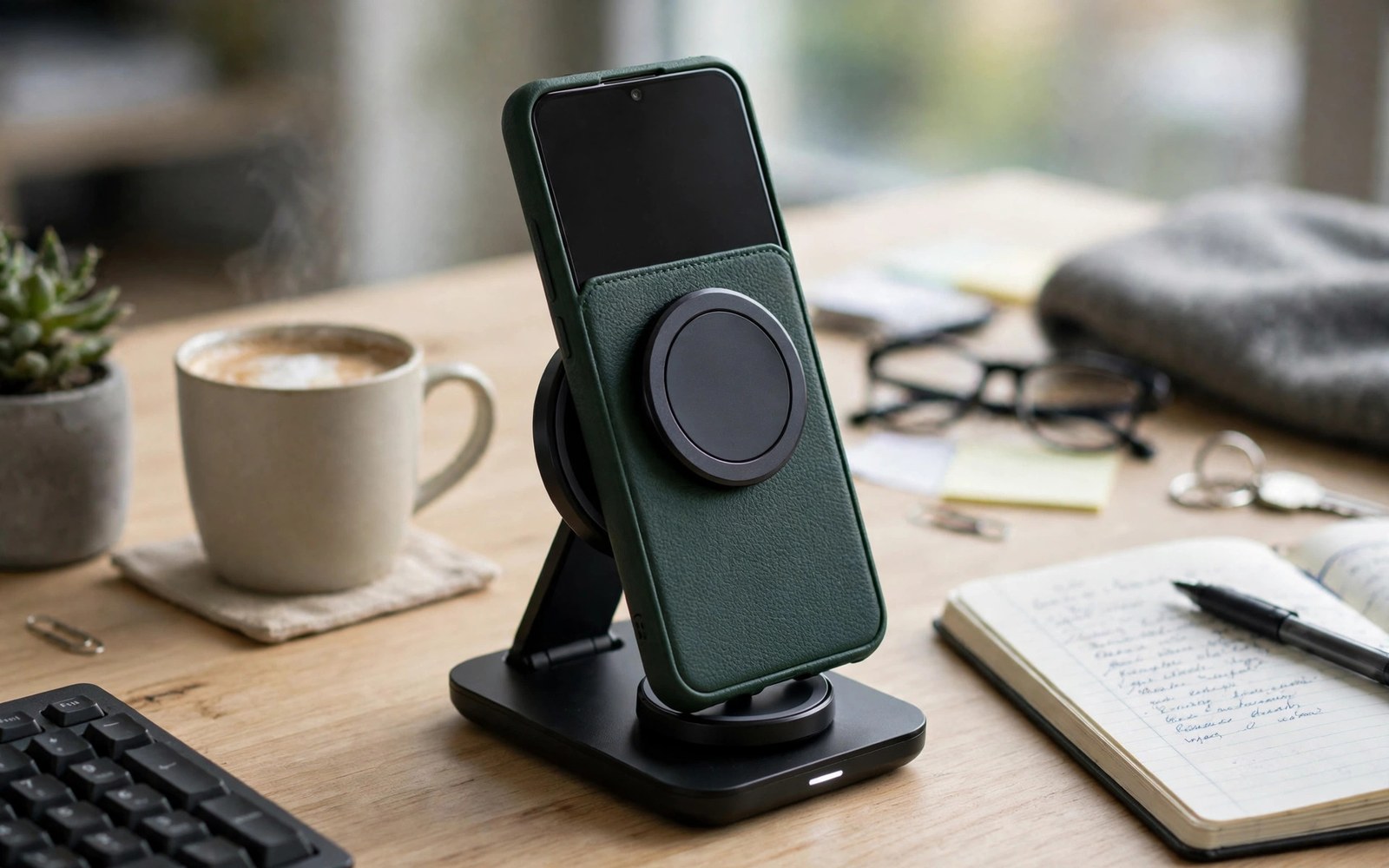
Magnetic accessories began on one phone family. They spread fast to Android through cases. A magnetic ring inside a case lets a phone snap to chargers and mounts. It also holds wallets and car holders in place. The idea is simple and the daily convenience is real. Compatibility is where buyers get confused.
Android phones lack a built in magnet ring in most models. A case adds the ring for them. Ring strength and ring position decide what works. A weak ring slips off a car mount on a bumpy road. A misaligned ring charges slowly or not at all. This guide explains how to judge magnetic cases well.
It covers magnet types and charging alignment. It covers wallets and car mounts. It covers interference with cards and sensors. For hands free viewing with magnetic stands, see kickstand cases for hands-free viewing as a related setup idea.
How Magnetic Rings Work
A magnetic ring is a circle of small magnets inside a case. The ring sits around the wireless charging coil area. Accessories carry matching magnets. The two magnet sets pull together and align the accessory. Alignment matters most for charging. A centred coil transfers power efficiently. An offset coil wastes energy as heat.
Magnet strength is measured by pull force. Stronger rings hold heavier wallets and mounts. Very strong rings can feel stiff when removing a wallet. Weaker rings suit light chargers only. Most good cases balance hold with easy removal. Check pull claims with owner reviews rather than slogans.
Ring position must match the phone coil. Android coil positions vary by model. A ring made for one model may sit off centre on another. Model specific cases align the ring correctly. Universal stick-on rings need careful placement by hand. Measure twice before sticking a ring down permanently.
Wireless Charging With Magnetic Cases
Magnetic cases should not block wireless charging. The ring sits around the coil rather than over it. Good designs leave the coil zone clear. Cheap designs use a metal plate that blocks charging. A metal plate also adds heat. Avoid plates that cover the coil centre.
Charging speed depends on alignment and case thickness. A thick case increases the coil gap. A larger gap slows charging and adds heat. Magnetic alignment reduces the gap problem by centring the phone. A snapped on charger stays centred through the whole charge. That steady alignment is the main benefit.
Test charging on day one with your own charger. Check that charging starts at once. Check that speed matches your normal rate. Check that the phone stays cool during a full charge. A hot phone signals poor alignment or a blocking plate. Return a case that fails any of these checks.
Wallets Car Mounts And Stands
Magnetic wallets snap to the case back in seconds. They hold a few cards for quick trips. Strong rings hold a wallet through a day in a pocket. Weak rings let a wallet slide off when sitting. Test a wallet by shaking the phone gently. A wallet that survives a shake will survive daily use.
Car mounts benefit most from magnetic rings. A phone snaps on with one hand. It releases with a firm pull. Vent mounts and dash mounts both work well. Bumpy roads test ring strength harshly. A mount that slips on potholes is unsafe. Choose a strong ring and a mount rated for your phone weight.
Desk stands use magnets for tidy alignment. A stand holds the phone upright for calls. It also charges while holding the phone. Magnetic stands suit video calls and bedside clocks. Check stand angle and stability before buying. A top heavy phone can tip a light stand forward.
Cards Sensors And Interference
Magnets near bank cards raise a common worry. Modern chip cards resist magnet damage well. Old magnetic stripe cards are more vulnerable. A wallet on the case back sits close to cards inside it. Most magnetic wallets shield cards adequately. Keep rare stripe only cards in a separate wallet to be safe.
Phone sensors rarely suffer from case magnets. Compasses may show a slight offset near strong magnets. Navigation apps recalibrate quickly once the magnet moves away. NFC payments work through most magnetic cases. Test tap payments after fitting a new case. A failed tap signals a blocking plate rather than a ring.
Credit card loss risk is a separate issue. A magnetic wallet holds cards outside the phone. A pickpocket can remove a wallet faster than a closed case. Use a magnetic wallet for a few cards only. Keep main cards in a closed wallet or a bag. Convenience and security need a balance here.
Choosing A Magnetic Case
Start with your exact phone model. Model specific rings align with your coil. Generic rings may sit off centre. Check that the case supports your charger type. Some rings suit only certain charger brands. Universal rings suit most chargers but they may charge slower.
Check case thickness and weight. Magnetic rings add a little weight. Thick cases add more. Total bulk should still suit your pocket. Read reviews about ring durability. Rings glued poorly can shift inside a case over months. A shifted ring ruins alignment silently.
Consider a case with a built in ring rather than a stick-on ring. Built in rings sit flush and they stay aligned. Stick-on rings work on a favourite non magnetic case. They add a bump on the back. That bump can wobble the phone on a table. Built in rings avoid that wobble. Heat during charging is covered in heat dissipation cases and thermal throttling if your phone runs warm while charging.
- Buy a model specific case so the ring aligns with your coil.
- Test wireless charging speed and heat on day one.
- Shake test any magnetic wallet before trusting it outdoors.
- Avoid metal plates that cover the charging coil centre.
- Keep stripe only cards away from strong magnets.
- Check ring alignment again after months of use.
Everyday Use Tips
Clean the ring area weekly. Dust between case and accessory weakens the hold. A quick wipe restores full grip. Check the case back for scratches from mounts. Mount grit can scuff a case over time. A scuffed case still works fine. It simply looks worn sooner.
Remove magnetic accessories before wireless charging on a flat pad if alignment fails. A snapped charger is better than a sliding pad. A flat pad without magnets may misalign a thick case. Use the charger type that matches your case design. Matching parts work better than mixed parts.
Magnetic cases suit drivers and desk workers best. Drivers gain one hand mounting. Desk workers gain tidy charging. Hikers may prefer a closed rugged case instead. Magnets add convenience rather than drop safety. Choose the feature that matches your daily routine. A magnetic case that fits your life is a joy to use daily.
Charger Compatibility Checks
Magnetic chargers vary in magnet layout. Some use a full ring layout. Others use a partial arc layout. A case ring must match the charger layout closely. A mismatched layout still holds the phone weakly. It may also misalign the coil slightly. Slight misalignment slows charging and adds heat. Test your exact charger with a new case. A case that works with one charger brand may fail another. Charger specific testing beats generic compatibility claims every time.
Charging wattage also interacts with case thickness. High wattage charging generates more heat. A thick case traps that heat near the coil. The phone may throttle charging speed to cool down. A throttled charge takes longer than a steady slower charge. A thin magnetic case charges at high wattage more reliably. A thick magnetic case may suit low wattage overnight charging better. Match case thickness to your charging speed needs. Fast chargers deserve thin cases for best results.
Car chargers add vibration to the alignment challenge. A magnetic car charger must hold through bumps. A weak ring slips during a pothole strike. A slipped phone stops charging silently. Check the charge indicator after rough road sections. A stable indicator means the ring holds well. A flickering indicator means the ring is too weak for car use. Upgrade the case or the mount when flickering appears. Silent charging failure wastes a whole journey.
Travel Use And Accessory Kits
Travel kits bundle a magnetic case with a wallet and a stand. Bundles cost less than separate parts. They also guarantee matching magnet layouts. A matched bundle avoids alignment surprises on a trip. Test the full bundle before travelling. A wallet that slips in a pocket will slip abroad too. A stand that tips on a desk will tip on a hotel desk too. Home testing prevents travel frustration. Pack a spare cable for non magnetic charging as backup. Backup charging covers any magnetic failure on the road.
Airport security rarely troubles magnetic cases. Magnets in cases are small and weak. They do not trigger security concerns. Cards in magnetic wallets pass through scanners normally. Keep cards in the wallet during screening for speed. Remove the phone from a pocket for the tray as usual. Magnetic accessories add no screening delay in practice. Travellers can use them without worry.
Pair magnetic use with heavy-duty cases compared with slim covers planning for rough travel days. A magnetic case suits cities and hotels. A rugged case suits hiking and beaches. Swap cases for the setting. That habit keeps magnetic convenience where it shines. It keeps rugged protection where it matters. Two cases cover a varied trip better than one compromise case.
Magnetic wallet ecosystems grow around ring standards. Wallets and stands from many makers share ring positions. That sharing lets users mix brands freely. A wallet from one maker fits a case from another. Standard positions make the ecosystem flexible. Non standard rings lock users into one brand. Standard rings suit buyers who like variety. Check ring position standards before committing to a brand. A standard ring keeps future accessory options open.
Android fragmentation complicates magnetic compatibility. Coil positions differ across makers and models. Ring positions must adapt per model. A universal ring cannot align perfectly for every phone. Model specific cases solve alignment best. Universal rings suit users who change phones often. They trade perfect alignment for flexibility. Frequent phone changers may accept that trade. Long term owners should choose model specific rings. Perfect alignment rewards a stable phone choice.
Magnetic case checklist:
- Model specific ring alignment: yes
- Coil zone: clear, no metal plate over centre
- Day one tests: charging speed, heat, tap payment
- Wallet shake test: survives gentle shake
- Car mount test: survives bumpy road
- Monthly check: ring position unchanged
The steps above follow the approach described in the official developer documentation for device care and accessory testing. The guidance draws on standard magnetic accessory practice and wireless charging behaviour. Compatibility varies by phone model and charger type. Test your own combination before relying on it daily.

