

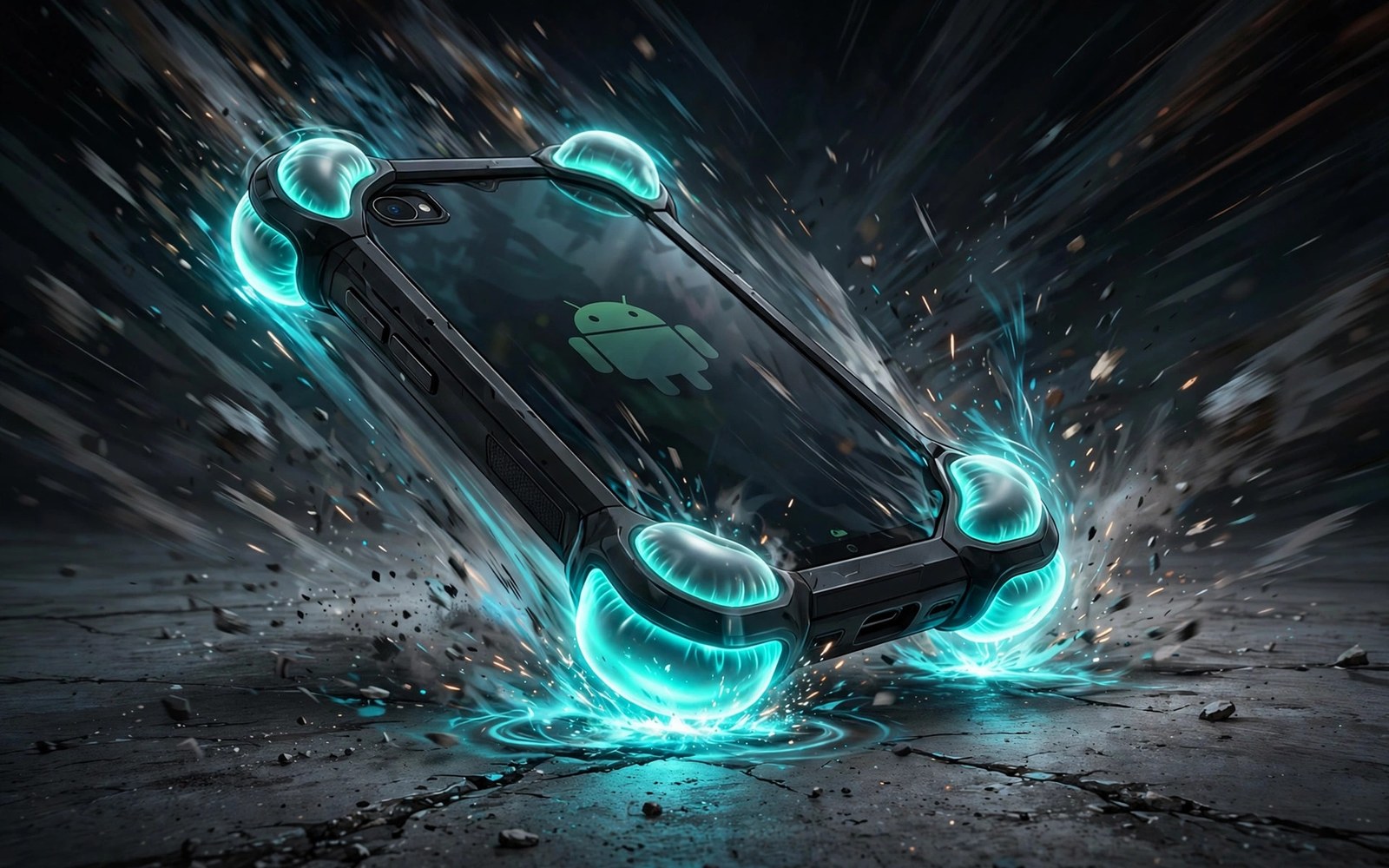
Phone corners take the worst damage in a fall. A phone rarely lands flat. It strikes one corner first and all the force concentrates there. That is why corner design matters more than any other part of a case. Air cushion corner tech tackles this exact problem. It places small pockets of trapped air at each corner of a case.
Those pockets act like tiny airbags. They compress on impact and they slow the phone down. A slower stop means a gentler force on the phone inside. The idea is simple and the physics is sound. The result depends on pocket size and case material. A well designed corner can turn a cracked screen into a harmless bounce.
This guide explains how the tech works in plain terms. It covers air pocket shapes and material choices. It covers test results and limits. It also explains what air cushion corners cannot do. For the wider case choice, compare heavy-duty cases with slim covers before you buy.
Why Corners Fail First
A falling phone gathers speed until it hits a surface. The corner strikes first because phones are rectangles. All the kinetic energy meets one small point. Glass and metal hate point loads. A tiny contact area creates huge local stress. Cracks start at that point and they spread across the screen.
Flat landings spread force over a wide area. Corner landings do the opposite. That is why a phone can survive a flat drop and crack from a corner drop. Case makers learned this long ago. They reinforce corners with extra material. Air cushion tech takes that idea one step further.
Think of a corner as a crumple zone. A car crumple zone absorbs crash energy by deforming. A case corner should do the same job at a small scale. Rigid corners pass force straight into the phone. Soft corners with air pockets absorb force before it reaches the frame.
How Air Pockets Absorb Energy
An air pocket compresses when the corner strikes a surface. The air inside cannot escape quickly. Pressure rises and the pocket pushes back. That pushback slows the phone over a few extra millimetres. A few millimetres matter a great deal. Stopping distance is the key factor in impact force.
The pocket also spreads force over time. A hard corner stops in an instant. A cushioned corner stops over a longer moment. Peak force drops even if total energy stays the same. Lower peak force means less stress on glass. It also means less shock to internal parts like the camera module.
Material around the pocket matters too. Soft TPU walls flex and rebound. Hard polycarbonate shells hold the pocket shape. The best designs mix both materials. A hard outer shell resists punctures. A soft inner cushion absorbs the shock. Together they guard better than either material alone.
Pocket Shapes And Designs
Makers use several pocket shapes. Round bubbles are common in clear cases. They compress evenly from any angle. Honeycomb cells spread force across a wider corner zone. Ribbed chambers guide air flow during compression. Each shape trades size for performance in a different way.
Larger pockets absorb more energy. They also add bulk to the corner. Slim cases use tiny pockets or none at all. Rugged cases use large chambers with thick walls. The pocket must also survive repeated drops. A pocket that bursts on the first fall is useless after that. Good walls rebound and they keep working drop after drop.
Some cases add air channels along the edges. Those channels link corner pockets together. Air moves between pockets during a complex impact. That sharing can help angled falls. It can also weaken a single corner if channels are too wide. Design balance matters more than pocket count alone.
Test Results And Real Drops
Lab drop tests show a clear benefit for cushioned corners. Phones in cushioned cases survive more drops onto concrete. Screen crack rates fall compared with plain thin cases. The benefit grows with drop height. Low falls show little difference. High falls show a large difference in survival.
Real world results match the lab in broad terms. Users report fewer corner dents with cushioned cases. Screen cracks still happen in bad falls. No case makes a phone unbreakable. A corner strike onto a sharp stone can defeat any pocket. A flat strike onto rough gravel can scratch a screen through a raised lip.
Test standards help buyers compare claims. Military style drop tests use repeated falls from set heights. They test many angles and many surfaces. A single marketing drop video proves little. Look for repeated test data and clear height figures. The method behind those claims is covered in how drop test ratings are measured for careful buyers.
Limits And Trade Offs
Air cushion corners add bulk exactly where pockets matter most. The phone becomes wider at the corners. Tight pockets and small hands may suffer. Some users dislike the look of bubble corners. Clear cases show the pockets plainly. Solid cases hide them but they still add size.
Heat can also be a minor factor. Thick corners trap a little warmth during charging. The effect is small in normal use. Gaming sessions may warm the phone slightly more. Slim cases cool faster. The trade is usually worth it for drop safety. Heavy gamers should test heat with any thick case.
Pocket wear is another limit. Soft corner walls age and they can yellow in clear cases. A worn pocket absorbs less energy than a fresh one. Replace a case once corners feel soft or misshapen. A case is a consumable item. Its protection fades with age and hard use.
- Check that all four corners have visible cushion pockets before buying.
- Prefer mixed materials with a hard shell and a soft inner cushion.
- Test grip since bulky corners can change how the phone feels in hand.
- Replace a case once a corner pocket feels flat or torn.
- Pair a cushioned case with a screen protector for full coverage.
- Remember that no case survives every fall onto sharp objects.
Choosing A Case With Air Cushion Corners
Start with your drop risk. Outdoor workers need large pockets and thick walls. Office users can choose smaller pockets and slimmer corners. Both groups gain from some cushioning. Even a modest pocket beats a rigid corner in a real fall.
Check raised lips as well as pockets. A raised lip keeps the screen off flat surfaces. Cushioned corners guard the impact point. Together they cover the two main damage paths. A case with only one feature leaves a gap. Look for both features in product photos and owner reviews.
Fit matters for corner tech to work. A loose case lets the phone shift inside on impact. A tight case holds the phone against the cushion. Test fit on day one. The phone should not rattle inside the case. Raised lips are explained further in raised bezel designs that protect lenses and displays for buyers who want full edge coverage.
Material Science Behind TPU Cushioning
TPU is a flexible plastic that returns to shape after compression. Its molecules stretch under load and they spring back when load ends. That spring back is what makes cushioning reusable. A pocket that stayed flat after one fall would be useless. TPU pockets rebound within seconds after most impacts. Repeated drops therefore meet a fresh cushion each time. Material fatigue still accumulates over many hard falls. A pocket that feels soft and slow to rebound is near the end of its life.
Hardness ratings describe TPU firmness in simple terms. Softer TPU absorbs more energy per millimetre. Harder TPU holds its shape better over time. Case makers blend hardness across the case body. Corners use softer TPU for absorption. Backs use harder material for structure. That blend gives absorption where it matters and rigidity where it counts. A single hardness case cannot optimise both jobs. Mixed hardness design is a mark of thoughtful engineering.
Temperature changes TPU behaviour noticeably. Cold TPU stiffens and it absorbs less energy. Hot TPU softens and it may deform under pressure. Normal indoor temperatures suit TPU best. Winter outdoor use slightly reduces cushioning performance. Summer heat slightly increases deformation risk. Neither extreme ruins a good case. Both extremes explain why lab results differ from winter field reports. Users in extreme climates should inspect corners more often.
Hybrid Corner Designs And Future Trends
Some makers add foam inserts inside corner pockets. Foam absorbs energy differently from air. It compresses progressively rather than all at once. Progressive compression spreads force over a longer time. That longer time cuts peak force further. Foam plus air pockets together outperform either alone. Foam adds a little weight and bulk. It also ages faster than air pockets. A foam corner that has compressed permanently loses its benefit. Check foam corners for spring back during inspection.
Other designs use gel pads at the corners. Gel flows on impact and it reforms after. Gel spreads force across a wider corner area. It feels soft and premium in the hand. Gel can leak if the pocket tears. A torn gel pocket leaves a mess and no cushioning. Air pockets avoid the leak risk entirely. Gel suits users who prioritise feel and absorption over long term durability. Air suits users who prioritise reliability over years of use.
Future cases may use smart materials that stiffen on impact. Those materials stay soft during handling. They harden instantly under a sharp blow. That behaviour would give slim feel with rugged protection. Such materials cost more today. They also need long term durability proof. Air cushion corners remain the proven affordable option for now. They use simple physics and they fail gracefully. A burst pocket still leaves TPU material as backup protection.
Drop testing history shows steady improvement in case design. Early cases used uniform plastic thickness. They guarded poorly against corner strikes. Makers then added thicker corners. They later added air pockets and foam. Each step cut crack rates further. Modern cushioned corners outperform early designs clearly. That progress explains why old case advice feels dated. A case bought five years ago guards worse than a current design. Regular upgrades track design progress well.
Case weight affects daily comfort more than buyers expect. A heavy case tires the hand during long calls. It also pulls pockets downward during walks. Light cushioned cases balance safety with comfort. Check case weight before buying online. Maker weight figures exclude the phone itself. Add phone weight for a true pocket total. A total over a comfortable threshold discourages carrying. A case left at home guards nothing at all.
Corner protection checklist:
- All four corners: cushion pocket present? yes/no
- Materials: hard shell + soft TPU cushion
- Raised lip: screen side >= 1 mm, camera side >= 1 mm
- Fit test: no rattle, no loose edge
- Drop rating: repeated drops, stated height
- Replace when: pocket flat, torn, or corner misshapen
The steps above follow the approach described in the official developer documentation for device care and accessory testing. The explanation draws on standard impact physics and common case design practice. Air cushion corners help most falls but they cannot defeat every surface. Pair them with careful handling for the best result.

