

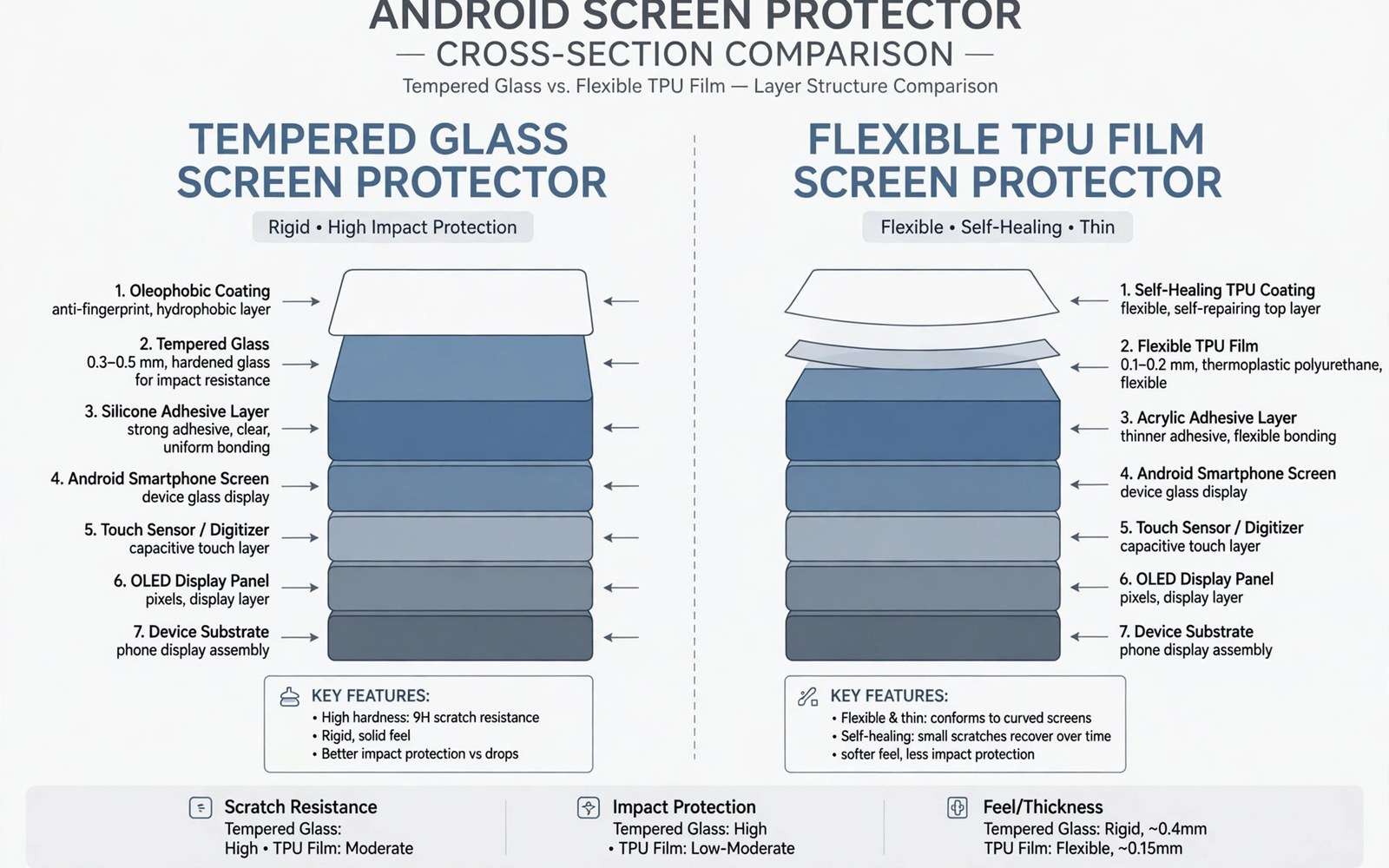
A screen protector is the cheapest insurance you can buy for a phone. It takes the scratches and small impacts that would otherwise reach the glass underneath. The two most common options are tempered glass and TPU film. They look similar inside the packet. They behave very differently once they are fitted to your phone.
Tempered glass is a thin sheet of real glass that has been heated and cooled to make it stronger. It usually measures between 0.3 and 0.5 millimetres thick. It feels like the bare screen of your phone because it is glass. TPU film is a thin sheet of flexible plastic. It is much thinner and it bends easily. It feels softer under your finger and it can stretch slightly during fitting.
This guide compares the two materials on the points that matter in daily life. Drop protection and scratch resistance come first. Touch feel and screen clarity come next. Fitting ease and price close the comparison. By the end you will know which option suits your phone and your habits. If you want a broader view of phone protection, read about heavy-duty cases compared with slim covers before you decide on a full protection setup.
How Each Material Handles A Drop
Tempered glass protects by absorbing energy and then breaking itself. A hard fall can crack the protector while the phone screen stays intact. That cracked layer is easy to replace. It costs far less than a screen repair. This sacrificial design is the main reason many repair shops recommend glass.
TPU film protects in a different way. It does not crack because it is flexible. It spreads a light impact across a wider area. It also guards well against scratches and scuffs. A hard corner drop can still pass force through the thin film to the screen. Film is therefore weaker against serious drops than glass.
Think about how you usually drop a phone. A short fall onto a desk or a pavement edge is common. Glass handles those falls with a clear margin. Film handles them only partly. If your phone often falls from hand height, glass is the safer choice. The difference becomes clear after the first real accident.
Scratch Resistance In Daily Use
Glass protectors carry a hardness rating of around 9H on the pencil scale. Keys and coins in a pocket rarely mark them. Sand can still scratch glass over time. Beach trips and building sites remain a risk for any screen. A glass layer still resists daily abrasion far better than film.
TPU film scratches more easily. A key dragged across it can leave a visible line. Some films heal tiny marks on their own within a day. Deeper marks stay visible and can catch the light. The film still protects the screen below. It simply looks worn sooner than glass.
Clarity also changes as scratches build up. A scratched film can haze the display in bright light. A glass protector keeps its clear view for longer. Replacing film is cheap and quick. Replacing glass costs a little more. Both options beat a scratched phone screen by a wide margin.
Touch Feel And Screen Clarity
Glass feels smooth and fast under a finger. Swipes glide with little friction. Games and typing feel close to using a bare screen. Most glass protectors add an oil resistant coating. That coating repels fingerprints and makes cleaning easy. It wears down after months of use but it can be refreshed by a new protector.
TPU film feels slightly rubbery by comparison. A finger can drag a little during fast swipes. Some users notice this most when gaming. Modern films are better than older ones. They still cannot match the slick feel of glass. Clarity is usually good on a fresh film. It can dull slightly as the surface ages.
Edge fit also affects feel. Glass protectors often stop just short of a curved screen edge. That leaves a small lip you can feel. Film wraps closer to the edge on curved screens. It can peel at the edge if a case pushes against it. Your case choice matters here. A case friendly protector avoids most edge conflicts.
Fitting Ease And Common Mistakes
Glass is easier to fit well on a flat screen. You align it once and lower it into place. Air escapes outward as the glass settles. Dust under the glass is the main enemy. One speck can leave a permanent bubble. A clean room and a dust sticker solve most fitting problems.
Film fitting needs more patience. The sheet is thin and it can wrinkle if handled roughly. Wet application films need a spray solution and drying time. Dry films need slow and steady placement. Both methods reward a calm hand. Rushing the job is the most common cause of bubbles. A careful method is described in the bubble-free screen protector application guide for anyone fitting a protector for the first time.
Removal differs too. Glass lifts off in one piece or in a few large shards. Film peels away cleanly in most cases. Old film can leave a slight residue. A soft cloth and a little screen cleaner remove it. Neither material should damage a healthy screen when removed with care.
Fingerprint Scanners And Special Features
In-display fingerprint scanners add a new factor to the choice. Glass thickness can weaken an ultrasonic scanner signal. Some phones ask you to re-register fingerprints after fitting glass. Optical scanners usually cope better with both materials. Test your scanner right after fitting. Re-register your prints if recognition becomes slow.
Film is thinner and it rarely disturbs a scanner. That is a genuine advantage for phones with ultrasonic sensors. Some glass makers add a special sensor window. Others tune the adhesive for scanner use. Check reviews from owners of your exact phone model. Their reports are more useful than a generic claim on a box.
Privacy and glare versions exist in both materials. Privacy glass darkens side views in public places. Matte film cuts glare in sunlight. Each extra feature trades a little clarity for its benefit. Choose the feature you truly need. A plain protector suits most people best. You can learn how side viewing is blocked in privacy protectors that block side-angle viewing if you travel or commute often.
Price And Replacement Costs
TPU film is usually the cheaper option. A pack of two or three films can cost less than one glass protector. Glass costs more per unit. It also lasts longer in daily use. The total yearly cost can end up similar for both materials. Heavy users replace film more often. Careful users keep one glass protector for a year or more.
Value is not only about price. A broken screen repair can cost many times the price of a protector. Glass gives stronger protection against that bill. Film gives good protection against scratches at a lower price. Match the material to your risk. A careful desk worker may do well with film. A commuter or a parent may need glass.
- Choose glass for the strongest drop protection and the smoothest touch feel.
- Choose film for curved screens and for phones with sensitive ultrasonic scanners.
- Replace any protector once a crack or deep scratch crosses the viewing area.
- Clean the screen fully before fitting and work in a dust-free room.
- Test the fingerprint scanner after fitting and re-register prints if needed.
- Keep a spare protector at home so a damaged one can be replaced at once.
Which Option Should You Choose
Pick tempered glass if drop protection and touch feel matter most to you. It feels like your bare screen. It absorbs hard impacts by breaking itself. It resists scratches for a long time. It costs a little more but it earns that price in protection.
Pick TPU film if you want a cheap and light layer against scratches. It suits curved screens well. It rarely disturbs fingerprint scanners. It needs replacement sooner than glass. It still guards your screen against the daily wear that ruins resale value.
Either choice is far better than no protection at all. A bare screen collects micro scratches within weeks. Those marks reduce resale value and they dull the display. Fit a protector on day one. Replace it when it wears out. Your phone screen will thank you for years.
Glass Thickness And Edge Choices
Glass thickness changes both protection and feel in noticeable ways. Thin glass near a third of a millimetre feels closest to a bare screen. It also breaks more easily under a hard corner strike. Thick glass near half a millimetre absorbs harder impacts. It can feel slightly raised at the screen edge. It may also interfere with a tight case fit. Most buyers suit the middle range best. A mid thickness glass balances feel and safety for daily use. Check the stated thickness on the packet before buying. A missing thickness figure often signals a cheap generic product.
Edge design matters as much as thickness. Full cover glass reaches near the curved screen edge. It guards more of the display. It can lift if a case presses against its border. Case friendly glass stops a little short of the edge. It leaves a small uncovered border. That border looks less neat but it stays down reliably. Users with tight cases should choose case friendly widths. Users without a case may prefer full cover glass. The choice depends on your case more than on your taste.
Curved screens complicate edge choice further. A flat glass sheet cannot follow a strong curve. It leaves a halo gap at the edges. That gap collects dust and it looks untidy. Film follows curves better than flat glass. UV liquid glass follows curves best of all. Each option trades fitting effort against edge coverage. A curved screen owner should weigh those trades carefully. A simple flat glass sheet rarely satisfies on a strongly curved display.
Daily Habits That Extend Protector Life
A protector lasts longer with a few simple habits. Keep the phone out of pockets with keys and coins. A separate pocket for the phone prevents most scratches. Clean the protector weekly with a soft cloth. A clean surface shows damage early. Early damage warnings let you replace a protector before it fails. A cracked protector still guards the screen. It also distracts the eye during reading. Replace it promptly once a crack crosses the viewing area.
Avoid pressing hard on a cracked protector. Pressure can drive glass shards toward the screen below. Remove a cracked protector gently from one corner. Peel slowly and keep the sheet as whole as possible. Clean the bare screen fully after removal. A fresh protector fits best on a truly clean screen. Keep a spare protector at home for quick replacement. A spare turns a crack into a ten minute fix rather than a week of risk.
Temperature extremes also age protectors faster. A phone left on a hot dashboard stresses adhesive bonds. Cold weather makes glass more brittle for a short time. Normal room temperatures suit protectors best. Remove the phone from a hot car when possible. That habit helps the battery as well as the protector. Small daily habits add months to protector life. They cost nothing and they protect a costly screen.
Retailer return policies deserve attention when buying protectors. A protector that fits poorly should return easily. Keep the packet until the fitting succeeds. A kept packet proves purchase date and model match. Shops often refuse returns without packets. Online sellers vary in return generosity. Check return terms before ordering a multi-pack. A generous return policy signals maker confidence. It also protects buyers from model mismatches. A wrong model protector is useless even when well made.
Seasonal use changes protector demands slightly. Summer sweat makes fingers slip more on film. Glass handles sweaty fingers better in heat. Winter dry skin drags on film surfaces. Glass feels smoother for dry fingers too. Cold weather makes film stiffer during fitting. Fit protectors indoors at room temperature in winter. Room temperature fitting gives adhesive its best bond. Seasonal habits are small but they improve daily feel noticeably.
Protector choice checklist:
- Drop risk: high -> tempered glass | low -> TPU film
- Screen shape: flat -> glass | curved -> film
- Scanner type: ultrasonic -> film or sensor-tuned glass
- Budget: lowest cost -> multi-pack film
- Touch feel priority: glass wins for gaming and fast typing
- Replace when: crack, deep scratch, or peeling edge appears
The steps above follow the approach described in the official developer documentation for device care and accessory testing. The comparison draws on standard material properties and common repair practice. No single protector suits every phone and every user. Match the material to your drop risk and your screen type for the best result.

