

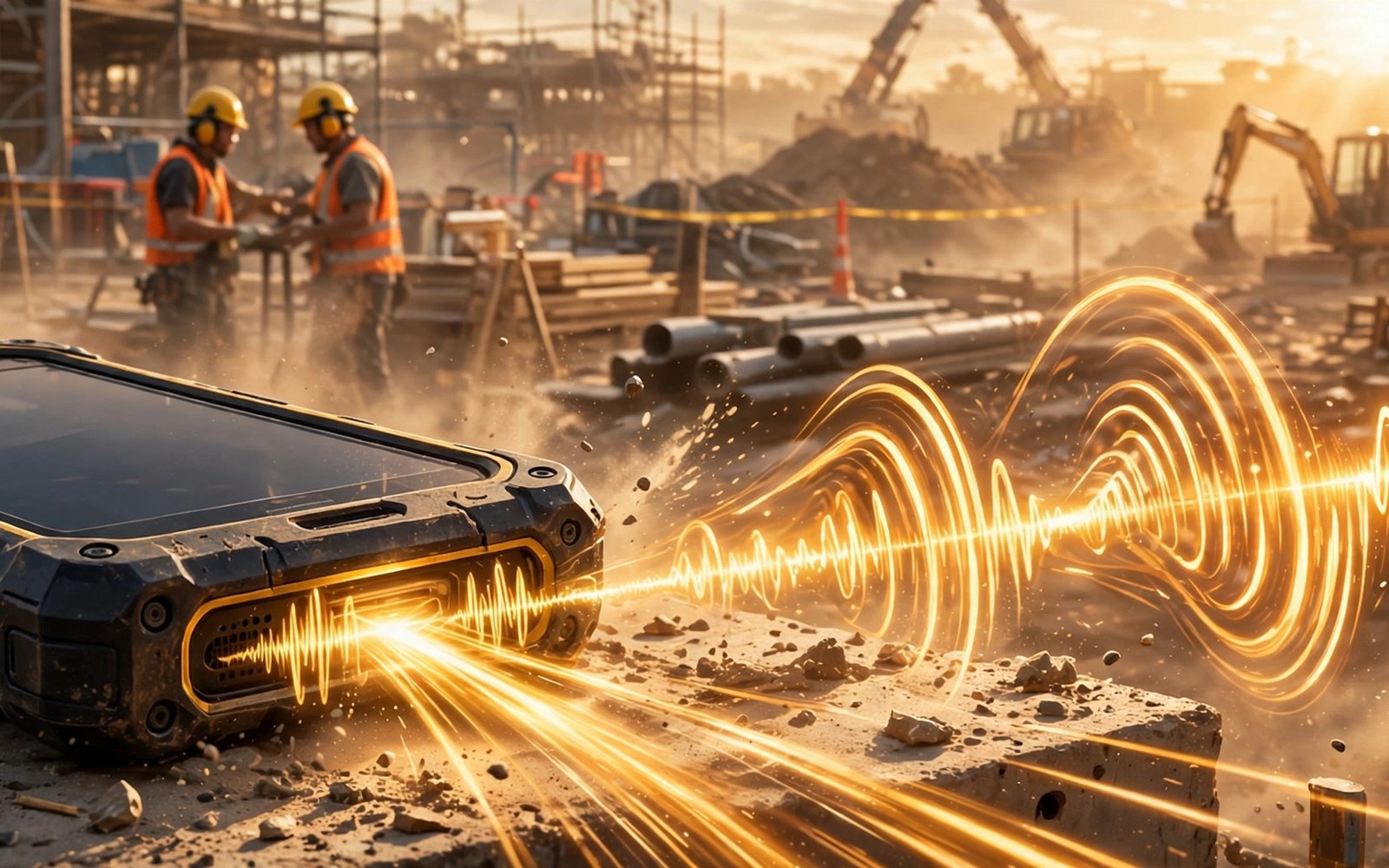
Loud speaker rugged phones noisy sites need more than a high volume number. A speaker can be loud and still unintelligible under machinery noise. Clarity and tone and placement matter as much as raw decibels. A call that you cannot understand is worse than a quiet call that you can hear clearly. This guide explains how to judge speaker performance for real site work.
Site noise often reaches 85 to 95 decibels near machines. A phone speaker must rise above that noise with clear speech. A speaker rated at 100 decibels or more can do that at close range. Distance cuts volume fast. Hold the phone near your ear for calls rather than relying on speakerphone across a room. The push to talk buttons for crews pair well with loud speakers because short voice bursts stay clear. Long calls suffer more from noise fatigue.
Speaker performance also affects alarm reliability on site. A phone alarm must wake a worker in a noisy rest area. A timer alert must cut through machine noise at a workstation. A safety siren tone must reach workers across a yard. Speaker volume and tone together decide whether alerts work. A phone with a weak speaker misses alerts that a loud phone catches. Alert reliability is a safety feature rather than a convenience.
Decibels volume and what they mean
Decibels measure sound pressure on a logarithmic scale. A rise of 10 decibels sounds about twice as loud. A speaker at 100 decibels sounds far louder than a speaker at 85 decibels. Test conditions change the number a great deal. A measurement at 10 centimetres gives a higher number than a measurement at one metre. Always ask for the test distance when you compare ratings.
Peak volume also differs from sustained volume. A speaker may hit a high peak for a second and then distort. Sustained clear volume matters for calls. Listen for distortion at full volume. A speaker that buzzes or rattles at full volume is hard to understand. A slightly quieter clean speaker often wins in real use.
Clarity tone and speech intelligibility
Speech clarity lives in mid range frequencies. A speaker that boosts bass may sound rich for music but muddy for speech. A speaker tuned for voice keeps consonants sharp. Consonants carry most speech meaning. A muffled speaker loses consonants first under noise. That is why some loud phones still fail for calls.
Dual speakers help by spreading sound and reducing distortion. A front facing speaker aims sound at your ear. A bottom speaker can be blocked by a hand or a pocket. Check speaker placement on any candidate. A phone with a front speaker and a loud rear speaker gives the best balance. Test with a real call in a noisy place when you can. A shop test in quiet air tells you little.
adb shell settings get system volume_music
adb shell settings get system volume_ring
adb shell dumpsys audio 2>/dev/null | grep -i -m 5 'speaker\|STREAM_MUSIC'
Attribution: the snippet above is an original example prepared for this article. It follows a standard public pattern for Android device checks and it does not copy code from any vendor site.
Speaker placement pockets and mounts
Placement decides how much sound reaches you. A speaker on the back loses volume when the phone lies face up on a bench. A speaker on the bottom loses volume when a hand covers it. A speaker on the front keeps sound aimed at you during calls. Mounts can help or hurt. A mount that covers the speaker grille cuts volume sharply.
Pocket carry muffles every speaker. A chest pocket with the speaker facing out works better than a deep trouser pocket. A belt clip with an open grille works well for alerts. For critical alerts use vibration plus sound together. Vibration alerts you even when sound is lost. Pair the two for safety messages on loud sites.
Ringtones alerts and vibration pairing
Choose ringtones with sharp high tones for noisy sites. Low tones vanish under machine rumble. High tones cut through low frequency noise. Set distinct tones for calls and for safety alerts. A distinct safety tone triggers faster action than a generic ring. Test tones on site rather than in an office.
Vibration strength matters beside sound. A strong vibration motor alerts you through thick clothing. A weak motor fails under a heavy jacket. Set vibration to strong for work hours. Use a smartwatch vibration as backup when the phone sits in a bag. Layered alerts catch attention when any single alert fails.
Hearing protection and safe volume habits
Loud speakers near the ear can harm hearing over time. Use speakerphone at arm length rather than pressing a loud speaker to your ear. Use ear protection rated for your site noise. Bone conduction headsets can deliver sound without blocking ear protection. They suit workers who must wear ear defenders all shift.
Keep call volume as low as clear hearing allows. Raise volume only for short alerts. Long loud calls fatigue ears and reduce understanding. Take hearing breaks in quiet areas when shifts allow. Protecting hearing is part of using loud tools safely. A loud phone should help work without damaging the worker.
Testing speakers before you buy
Test with a real call to a colleague. Stand near a noisy machine or play recorded site noise. Judge whether you can understand every word. Test ringtones from inside a pocket and from a mount. Test speakerphone at one metre distance. These tests reveal placement problems fast.
Also test the microphone. A loud speaker with a poor microphone still fails for calls. The other side must hear you clearly over your site noise. Noise cancelling microphones help a great deal. Ask your test caller to rate your voice clarity. Both directions matter for useful site communication.
Alarms timers and alerts on loud sites
Choose alarm tones with sharp attack and high pitch for noisy rest areas. A tone that rises quickly grabs attention faster than a soft fading tone. Test alarms at the actual rest location rather than in a quiet room. A tone that wakes you at home may fail beside a running generator. Site testing reveals the truth.
Timer alerts for curing or drying processes need distinct tones. A worker running several timers needs to tell them apart by sound. Assign a unique tone to each critical timer. A unique tone prevents confusion when two timers end together. Confusion at timer end can ruin a batch or a pour.
Safety alerts should use the loudest and most distinct tone available. A safety tone should differ clearly from call and message tones. Workers must recognise the safety tone instantly. Train the team on the safety tone during induction. A tone that nobody recognises cannot trigger fast action.
Vibration patterns add a second alert channel for noisy areas. A long strong vibration pattern suits safety alerts. A short pattern suits messages. Workers learn patterns quickly with practice. Pattern plus tone together catch attention even when one channel fails. Layered alerts are the standard for safety critical work.
Smartwatches extend alerts to the wrist when phones sit in bags. A wrist vibration reaches a worker faster than a bag muffled phone. Pair a rugged phone with a simple watch for critical alerts. The watch does not need full smart features. Strong vibration and clear alerts are enough for site safety.
Microphone quality on the other end of the call
Speaker loudness gets all the attention while microphone quality decides whether the other side understands you. A phone in a noisy yard must separate your voice from machine noise. Noise cancelling microphones use multiple mics to subtract background sound. The main mic captures voice plus noise. A second mic captures mostly noise. Software subtracts the noise signal and keeps the voice signal. That subtraction works well for steady machine hum. It works less well for sudden bangs and voices nearby.
Microphone placement also matters on rugged phones. A mic at the bottom edge sits near the mouth during calls. A mic on the back may face away from the speaker. A mic blocked by a case or a finger loses voice volume fast. Hold the phone so no finger covers the mic hole. Check mic hole position on any candidate phone. A well placed mic with good noise cancelling beats a loud speaker paired with a poor mic. Test both directions on every site call test.
Site managers should also test speaker performance with the phone inside its normal carry position rather than in the hand. A phone in a chest pocket sounds very different from a phone held to the ear. A phone mounted on a vehicle dashboard sounds different again because the dashboard reflects sound toward the driver. Test ringtones and call audio from each carry position used during a shift. A speaker that passes a hand held test may fail a pocket test badly. Position testing catches those failures before they affect safety alerts. Record the best volume setting for each position and share it with the team so every worker starts from a proven setup.
Common mistakes
The biggest mistake is buying on peak decibels alone. A distorted loud speaker is worse than a clean slightly quieter speaker. Another mistake is ignoring speaker placement. A covered grille can halve useful volume on site.
A third mistake is using speakerphone pressed to the ear at full volume. That habit risks hearing damage. Use arm length speakerphone or a headset rated for noise. A fourth mistake is choosing low ringtones that vanish under machine noise. High sharp tones cut through far better.
A fourth mistake is using the same default tone for calls and alarms and timers. Identical tones force workers to check the phone for every sound. Distinct tones let workers prioritise without looking. Sound design is part of site safety planning.
Frequently asked questions
How loud should a rugged phone speaker be?
Look for sustained clear output near 100 decibels at close range. Higher numbers help for alerts. Clarity matters more than the last few decibels for calls. Test understanding rather than loudness alone.
Do dual speakers help on noisy sites?
Yes when placement is good. Dual speakers reduce distortion and spread sound. A front speaker plus a rear speaker gives the best balance. Check that mounts and hands do not block either grille.
Can a loud phone damage my hearing?
Yes when used pressed to the ear at full volume for long periods. Use speakerphone at arm length or a suitable headset. Keep volume as low as clear hearing allows.
Conclusion
Loud speaker rugged phones noisy sites reward buyers who test clarity rather than chasing peak numbers. Tone and placement and microphone quality decide whether a call works under machines. Layered alerts with vibration add safety when sound alone fails. The satellite SOS for areas without signal adds useful context for this choice. The keeping signal alive in remote areas adds useful context for this choice.
Your concrete next step is to make a test call on any shortlisted phone beside real site noise. Judge word understanding from a pocket and from a mount. Keep only a phone that passes both positions clearly.
Audit your alert tones this week and assign distinct sounds to safety and timers and calls. Test them on site with the team. A ten minute audit can prevent a missed alert that costs far more than the time spent.

