

Analyzing Repair Costs: Budget Phones vs Premium Glass Devices
A cracked premium screen can cost as much as a whole budget phone. That maths changes buying choices. This guide explains repair costs for budget phones in plain language and helps you judge real value. You will learn what matters and what you can safely ignore.
Before you compare models, think about how you use a phone each day, from morning messages to evening video. A clear picture of your habits makes every spec easier to judge. how to pick a phone that fits your daily routine That detail can change a buying decision, so read it before you finalise your shortlist.
Set a total budget that includes a case and a screen protector. Those accessories protect resale value and daily durability. A good case costs little compared with a screen repair. Buy protection on day one and fit it before first use.
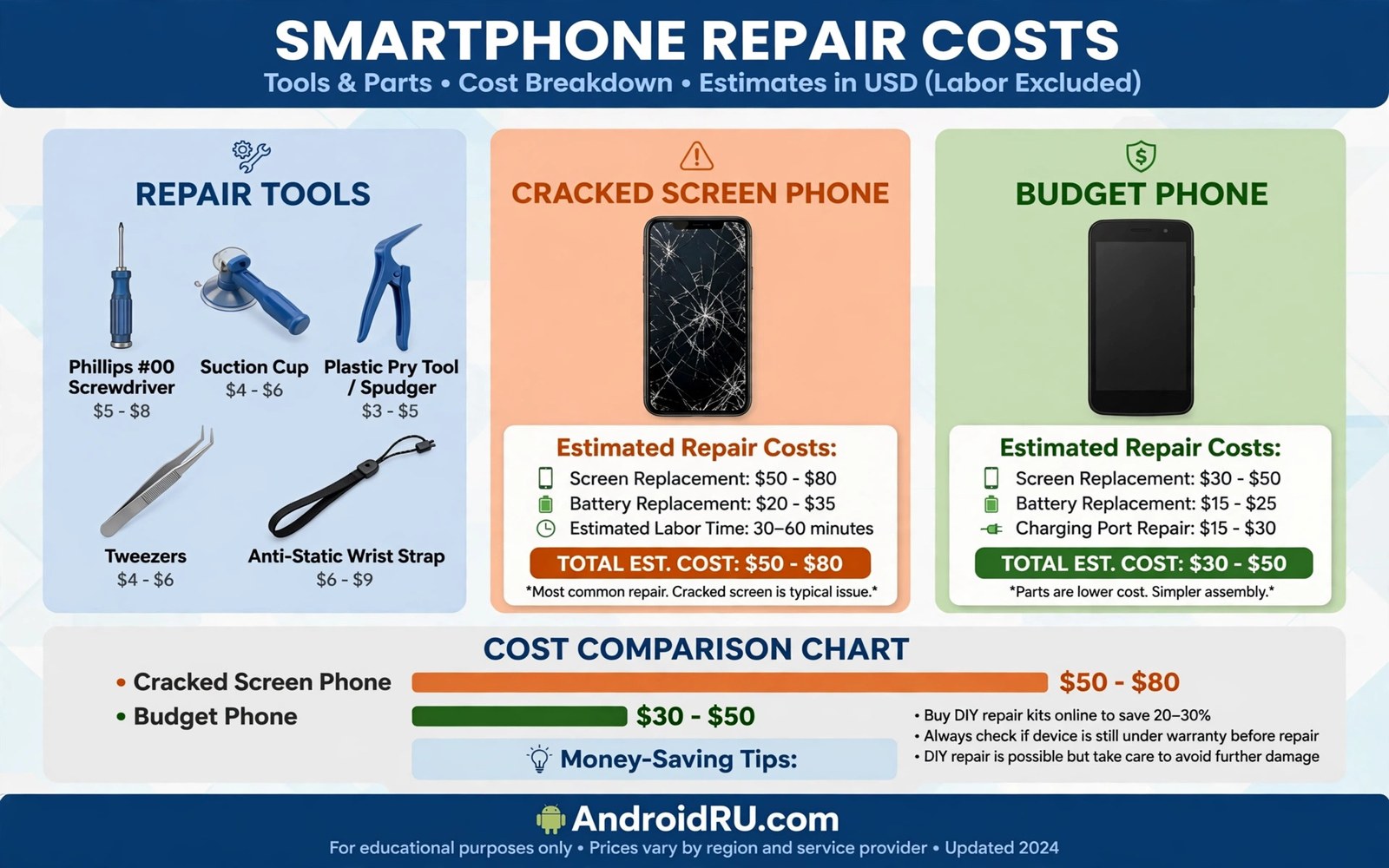
Repair prices vary by country, city, and shop, so this guide uses relative comparisons rather than fixed prices. The pattern is what matters: budget phones are cheaper to fix in almost every category, and premium glass devices cost far more when they break. Get a local repair quote for screen and battery before you buy, then add that quote to your total cost.
The Core Difference: Plastic and Flat vs Glass and Curved
Budget phones usually have flat screens and plastic backs. Premium phones usually have curved glass on the front and the back. That design difference decides almost everything about repair costs. A flat screen is simpler to remove and replace. A curved glass panel needs more labour, more expensive parts, and more care to fit without gaps.
Plastic backs cost little to replace, while curved glass backs cost much more. A plastic back can be swapped in minutes with a cheap part. A glass back often needs heat, adhesive, and careful handling, and the part itself costs far more. That point matters because it shapes daily comfort more than a headline spec.
Premium glass also breaks more easily in a drop. Glass is beautiful and it feels premium, but it cracks where plastic only scuffs. That is the trade you accept when you buy a glass phone: a nicer feel in exchange for a higher repair bill when it falls.
Why budget phones are cheaper to fix
Budget screens cost less because they use flat panels and simpler assembly. The parts are common, many shops stock them, and the labour is straightforward. Budget batteries are often cheaper and easier for shops to source for the same reason. Common parts, simple assembly, and wide availability keep the price down.
Premium parts are rarer, more expensive, and harder to fit. A curved display needs a precise fit, and a glass back needs adhesive work that takes longer. Labour costs rise with the time and skill required, and the part itself can cost several times more than a budget equivalent.
What the design means for daily use
Think about how long you plan to keep the phone. A longer plan favours update support and battery size over peak speed. Short plans favour price and immediate features. Match the phone lifespan to your real upgrade cycle. A phone you keep for three years will face more drops, more battery wear, and more chances of damage than a phone you replace in one year.
Start with your daily routine
Start with your daily routine and list the apps you open most. That list reveals the chip and battery you truly need. Test those apps on a demo unit when you can. A short hands-on test beats a long spec sheet every time.
Screen Repair Costs Compared
The screen is the most common repair, and the gap between budget and premium is the widest here. A budget screen replacement is often a routine job that a local shop finishes in under an hour. A premium curved screen replacement can take longer, cost far more, and may need an official service centre for the best result.
The table below compares the two sides on the points that decide what you actually pay. Prices are shown as relative levels, because local quotes vary widely. Use the table to see the pattern, then get a real quote in your area before you buy.
| Repair item | Budget phone | Premium glass phone | Cost gap |
|---|---|---|---|
| Screen replacement | Low, flat panel, common part | High, curved panel, costly part | Large, often several times more |
| Back panel replacement | Low, plastic, quick swap | High, curved glass, adhesive work | Large, glass costs far more |
| Battery replacement | Low, easy to source | Medium to high, sealed design | Moderate, labour and sealing |
| Charging port repair | Low to medium | Medium to high | Moderate, board access differs |
| Water damage repair | High, often not worth it | High, often not worth it | Small, both are costly |
| Camera glass repair | Low to medium | High, large lens modules | Large, premium lenses cost more |
Test this point on a demo unit when you can. A short real test reveals more than a spec table. Compare at least three phones in the same price band before you decide. Look at screen brightness, speaker quality, and update length. Small differences in those areas shape daily comfort. A phone that feels good in hand wins over a phone that only looks good on paper.
When a screen repair is worth it
Repair when the phone still gets updates and the repair costs under half its price. A budget phone with a cheap screen is almost always worth repairing. A premium phone with a costly screen is worth repairing only if the phone is recent and still supported. Check reviews and spec sheets for the exact model you plan to buy, because regional models can differ in features and support.
Original parts vs third-party parts
Good shops use quality parts, but ask about warranty before you agree. Original parts cost more and usually carry a better warranty. Third-party parts cost less, and quality varies. For a budget phone, a good third-party screen is often fine. For a premium phone, an original screen protects the resale value and the display quality.
Are third-party parts safe?
Good shops use quality parts, but ask about warranty before you agree. Check reviews and spec sheets for the exact model you plan to buy. Regional models can differ in features and support. A shop that offers a warranty on its work is worth more than a shop that offers the lowest price with no promise behind it.
Back Panel and Battery Costs Compared
The back panel is the repair most buyers forget, and it is where the glass premium shows up again. A plastic back costs little to replace, while a curved glass back costs much more. Some premium phones need the whole rear assembly replaced, not just the glass, which pushes the price higher still.
Battery replacement follows a similar pattern. Budget batteries are often cheaper and easier for shops to source. Premium batteries sit inside sealed glass bodies, so the labour costs more, and the battery itself can cost more too. The gap is smaller than for screens, but it is still real.
Check storage needs by counting your photos and offline media today. Add room for app growth over two years of use. Storage pressure slows a phone and forces constant deletions. A larger storage choice now prevents that hassle later. Storage has nothing to do with repair, but it decides whether a phone stays usable for its full life.
Battery health and when to replace it
You can check key details on your current phone with a simple command. The command below reads system info without changing any setting. Run it from a computer with developer options enabled.
adb shell dumpsys batterystats | grep -m 2 capacity
adb shell dumpsys battery | grep health
This code snippet is a generic example for checking device information on Android. It is provided for learning and testing only, and it does not modify your phone. Use it on your own device and stop if any output looks unfamiliar. A battery that holds far less than its original capacity is ready for replacement, whatever the phone costs.
The hidden cost of a sealed design
A sealed glass phone is harder to open, and every repair inside it takes longer. That labour adds up across the life of the phone. A budget phone with a simpler body is quicker to open, quicker to fix, and quicker to return to you. That speed matters when your phone is your main tool for work and messages.
How long should a battery last?
Most phone batteries stay healthy for two to three years of daily use. After that, capacity drops and the phone dies earlier in the day. A cheap battery replacement can extend a budget phone by another year or two, which is often the best value repair you can buy.
Water Damage Risk: The Repair That Costs Everyone
No phone repair is cheap after water damage, so keep phones dry regardless of price. Water reaches the board, the battery, and the connectors, and the damage is often wider than it first looks. A phone that seems fine after drying can fail weeks later, when corrosion reaches a connection.
Water resistance ratings help, but they are not a promise. A rating is tested in clean water under lab conditions, not in a pool, a sea, or a washing machine. Treat every phone as vulnerable to water, and keep it dry. Buyers who test this point in person avoid most regret after purchase.
Read recent user reviews for battery life and software bugs. Look for patterns across many reviews, not single complaints. Patterns reveal real flaws, while single posts may reflect one faulty unit. Trust consistent feedback over marketing claims in every case.
What to do if your phone gets wet
Switch it off, dry the outside, and do not charge it. Take it to a shop quickly, because corrosion starts fast. Do not use a hair dryer, and do not put it in rice, because neither helps and both can make things worse. A quick professional clean is the only step that reliably helps.
Does warranty cover water damage?
Usually not, even on phones with a water resistance rating. Check the warranty terms before you assume anything. Water damage is normally treated as accidental damage, which needs separate insurance or a paid repair.
Insurance vs Self-Pay: Which Makes Sense
Insurance may cost more than a budget repair, so compare both options. A monthly insurance plan for a budget phone can cost more over two years than a single screen replacement. For a premium phone, insurance can save money on the first big repair, but only if you actually use it.
Start with the maths. Add up two years of insurance payments, plus the excess you pay per claim, and compare that total with the local price of a screen and a battery repair. If insurance costs more than the repairs it would cover, skip it and save the money yourself. If it costs less, and you are likely to break the phone, it may be worth it.
Check warranty terms and service centres in your area before you pay. A cheap phone with no local service can cost more after a fault. Ask the seller about repair time and spare parts stock. That question saves weeks of waiting when something breaks later.
When insurance is worth it
Insurance is worth it for a costly premium phone that you carry everywhere and use heavily, especially if you have broken a phone before. It is rarely worth it for a budget phone, because the repairs are cheap and the insurance costs more than the fix.
When self-pay wins
Self-pay wins for budget phones, for careful users, and for anyone who uses a case and a screen protector from day one. A good case costs little compared with a screen repair, and it prevents most of the damage that insurance would cover. Buy protection on day one and fit it before first use.
A simple insurance test
Ask yourself whether you have broken a phone in the last three years. If the answer is no, self-pay is probably cheaper. If the answer is yes, twice, insurance may save you money. Your own history is the best guide here.
Total Cost of Ownership Over Two Years
The purchase price is only the start. The table below adds up the likely costs over two years for a careful user and for a user who breaks one screen. The numbers are relative, because local prices vary, but the pattern holds in most markets.
| Cost over two years | Budget phone | Premium glass phone |
|---|---|---|
| Purchase price | Low | High |
| Case and screen protector | Low | Low to medium |
| One screen repair | Low | High, can equal a budget phone |
| One battery replacement | Low | Medium |
| Insurance, if bought | Often more than repairs | Can save money if used |
| Resale value after two years | Low | Medium, if undamaged |
The lesson is simple: a premium phone costs more to buy and more to fix, and it only pays off if it stays undamaged and holds its resale value. A budget phone costs less to buy and less to fix, and its low resale value matters less because you paid less in the first place.
For a closer look at what to check before spending, see what to check before you spend money on a new phone That detail can change a buying decision, so read it before you finalise your shortlist.
Resale value and the case habit
A phone with a case and a screen protector from day one keeps its resale value far better than a bare phone. Those accessories protect resale value and daily durability. A good case costs little compared with a screen repair, and it is the cheapest insurance you can buy.
Buying Checklist for Budget and Premium Phones
Think about how long you plan to keep the phone. A longer plan favours update support and battery size over peak speed. Short plans favour price and immediate features. Match the phone lifespan to your real upgrade cycle.
Compare at least three phones in the same price band before you decide. Look at screen brightness, speaker quality, and update length. Small differences in those areas shape daily comfort. A phone that feels good in hand wins over a phone that only looks good on paper.
Test call quality and signal strength in your usual places when possible. A phone with weak reception frustrates daily use more than a slower chip. Ask friends on the same network about their experience. Real world signal beats lab numbers in daily life.
What to test before you keep the phone
Start with your daily routine and list the apps you open most. That list reveals the chip and battery you truly need. Test those apps on a demo unit when you can. A short hands-on test beats a long spec sheet every time. For more ideas, see practical tips for getting more value from a mid-range phone That detail can change a buying decision, so read it before you finalise your shortlist.
Questions to ask the seller
Ask about repair time and spare parts stock. Ask about warranty terms and service centres in your area. Ask whether the shop uses original or third-party parts. Those three questions save weeks of waiting when something breaks later, and they tell you whether the seller stands behind the phone.
Check the return policy before you pay
A common mistake is to ignore return policy and warranty terms until a fault appears. Read those terms before you pay and keep the receipt safe. A clear return window gives you time to test the phone properly at home.
Common Mistakes to Avoid
Many buyers skip case and screen protection to save money. That saving vanishes after one drop. Check the full spec sheet and recent reviews before you trust a headline feature. That habit protects you from weak cameras and short support.
A common mistake is to trust one review or one benchmark alone. That single source can miss heat and battery issues that appear after weeks of use. Another mistake is to ignore return policy and warranty terms until a fault appears. Read those terms before you pay and keep the receipt safe.
Another mistake is to buy the largest storage or fastest screen without checking battery life. Balance matters more than any single spec at this price. A balanced phone stays pleasant after months of daily use.
- Skipping a case and screen protector to save money, then paying for a screen repair.
- Trusting one review or one benchmark alone, and missing problems that appear after weeks.
- Ignoring warranty, return policy, and local service centres until a fault appears.
- Buying the fastest screen or largest storage without checking battery life.
- Choosing a premium glass phone without budgeting for its repair costs.
The protection habit that saves the most money
Buy protection on day one and fit it before first use. A case and a screen protector cost little, and they prevent the single most common repair. That habit alone saves more money than any insurance plan for most users.
Repair Costs FAQ
Should I repair or replace a budget phone?
Repair when the phone still gets updates and the repair costs under half its price. A budget screen is cheap, so repair is usually the right call. Replace when the phone no longer gets updates, or when the repair costs more than half the price of a new one.
Are third-party parts safe?
Good shops use quality parts, but ask about warranty before you agree. Check reviews and spec sheets for the exact model you plan to buy. Regional models can differ in features and support. A shop that offers a warranty on its work is worth more than a shop that offers the lowest price with no promise behind it.
Does repair void warranty?
Unauthorised repair can void warranty, so check terms first. An official service centre keeps the warranty intact, while an independent shop may not. Check the terms before you pay, and keep the receipt safe either way.
Is a premium phone worth it if repairs cost so much?
It can be, if you value the camera, the screen, and the build, and you protect it from day one. A premium phone with a case, a screen protector, and careful use can last years without a repair. The risk is real, but good protection reduces it sharply.
How do I find a trustworthy repair shop?
Look for a shop with recent reviews, a written warranty on its work, and clear prices before the repair starts. Ask about spare parts stock and repair time. A shop that answers those questions openly is usually a safe choice.
Conclusion
Get a local repair quote for screen and battery before you buy. Then add that quote to your total cost. Compare battery life, update support, and real camera samples before you choose. Those three checks reveal most of the value in this class.
A budget phone wins on repair costs in almost every category: screen, back, battery, and labour. A premium glass phone wins on camera, display, and feel, but it costs far more when it breaks. The right choice depends on your habits, your budget, and whether you protect the phone from day one.
Visit a store or read trusted reviews this week and test your top choice in person. That single step turns research into a confident purchase. And whatever you buy, fit a case and a screen protector before first use, because the cheapest repair is the one that never happens.

