

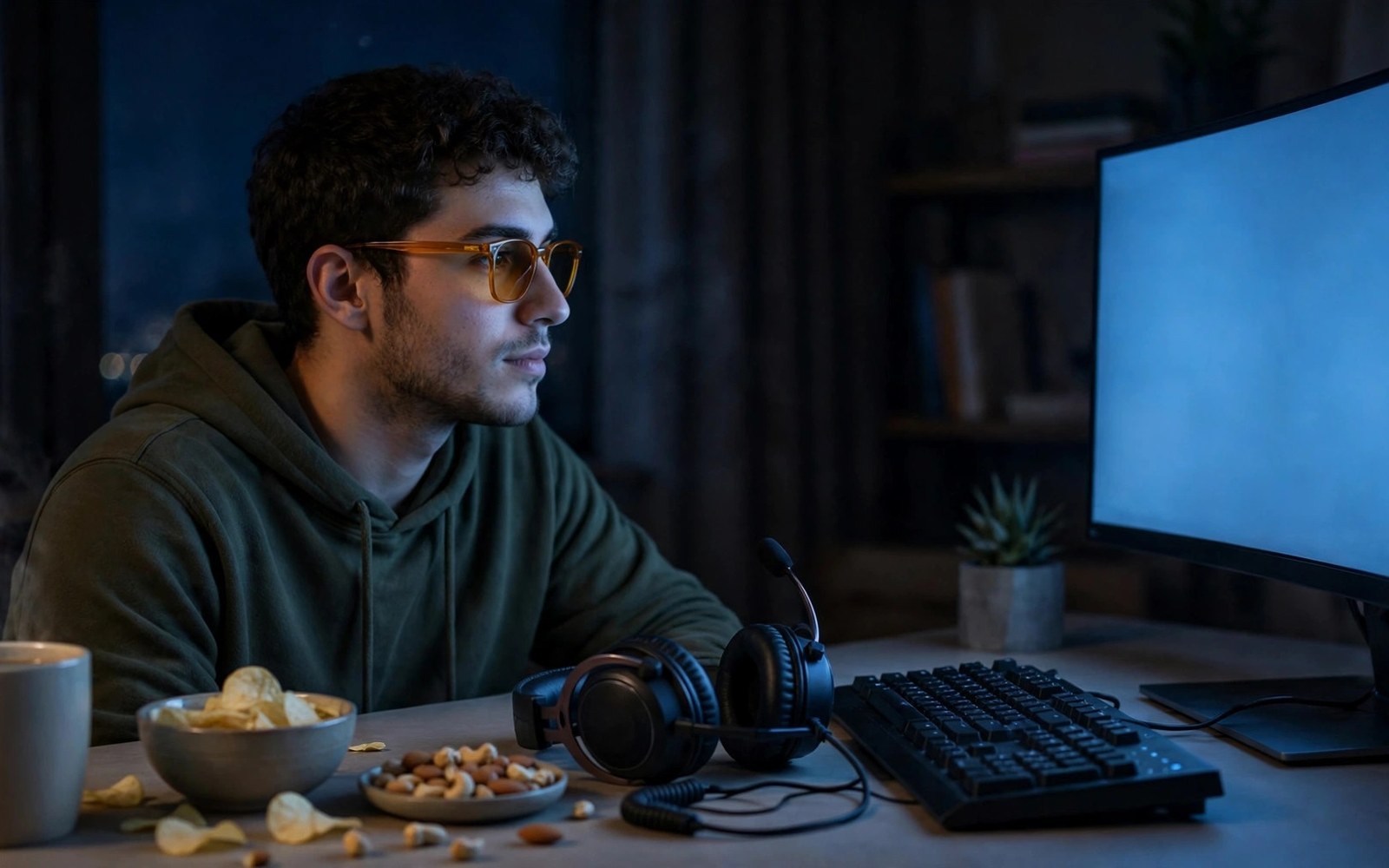
Blue light glasses gaming accessories long sessions attract players who feel eye strain after hours of play. Screens emit blue light as part of normal display output. Long exposure can tire eyes and disturb sleep after late sessions. Glasses with blue filtering lenses aim to cut that strain.
Evidence for blue light glasses stays mixed for eye strain relief. Many players report less fatigue with filtered lenses. Others notice no change beyond placebo comfort. Screen habits like breaks and brightness matter at least as much. Glasses work best as one part of a wider comfort plan rather than a magic fix.
This article explains how these glasses work and what they can and cannot do. You will learn how to judge lens quality. You will learn habits that protect eyes during long play. You will also learn when to seek eye care instead of buying accessories.
How blue light filtering lenses work
Blue filtering lenses absorb or reflect part of blue wavelengths from screens. Yellow tinted lenses filter more blue than clear lenses. Clear lenses filter less but look more natural indoors. Tint strength trades colour accuracy for filtering power. Competitive players may prefer clear lenses to keep game colours true.
Lens coatings also cut glare from bright screens and room lights. Anti reflective coatings help players in lit rooms a lot. Glare reduction alone can ease strain even without strong blue filtering. Check coating quality when comparing glasses. A good coating matters as much as tint strength for daily comfort.
What glasses can and cannot fix
Glasses may ease fatigue linked to glare and long screen focus. They cannot fix poor posture or dry eyes from rare blinking. They cannot replace breaks or proper room lighting. Players who stare without blinking still strain eyes with any glasses. Combine glasses with blinking and breaks for real relief.
Sleep benefits depend on evening light habits beyond gaming. Bright screens late at night can delay sleep for some players. Glasses may soften that effect slightly. Stopping intense play earlier helps sleep more reliably. Use glasses as support rather than permission for endless late sessions.
Choosing glasses for gaming comfort
Fit matters most for long sessions since heavy frames press on ears and nose. Light frames with flexible arms suit hours of play. Check frame weight and nose pad comfort before buying. Try frames at home for a full session before judging comfort. A comfortable frame gets worn daily while a heavy frame gathers dust.
Pair glasses with screen habits for the best results. Lower brightness to match room light during play. For heat and frame stability during long sessions read about cooling fans for mobile gamers and keep your phone cool while you protect your eyes.
Eye habits that beat accessories alone
Follow a simple break rhythm during long sessions. Look away from the screen every twenty minutes for a short rest. Focus on a distant object to relax eye muscles. Blink fully several times during each break. These habits cost nothing and help more than many accessories do.
Match screen brightness to room brightness to reduce eye work. A very bright screen in a dark room strains eyes fast. A dim screen in a bright room forces squinting. Adjust brightness when room light changes. Comfortable brightness keeps eyes relaxed across long play.
Accessories that pair well with this setup
A comfortable headset completes eye care kits for long gaming sessions. Good audio reduces the need for high volume and screen focus strain. Low latency earbuds keep sound synced with visuals. Choose earbuds that fit gently for hours. Comfortable audio plus glasses together support long sessions better than either tool alone for many players.
Proper room lighting matters as much as glasses for eye comfort. A soft lamp behind the screen reduces contrast strain. Avoid playing in total darkness with a bright screen. Match room light to screen brightness for relaxed eyes. That lighting habit costs little and helps every player regardless of glasses choice or lens tint strength.
Low latency audio deserves attention alongside eye comfort for long sessions. Synced sound improves awareness without extra visual effort. Learn the audio options in low latency earbuds for gamers before choosing earbuds. That article covers codecs and gaming modes clearly. Good audio plus eye habits together make marathon sessions far more comfortable overall.
A weekly routine that keeps everything working
Review screen time habits weekly and note strain levels after long sessions. A simple log reveals patterns linked to session length and lighting. Strain that grows weekly may signal a need for shorter sessions. Adjust habits based on log patterns rather than guesses. That evidence based routine protects eyes better than accessory purchases alone ever will.
Clean glasses lenses weekly with proper cloths to preserve coating quality. Dirty lenses scatter light and increase strain instead of reducing it. Avoid rough fabrics that scratch coatings over time. Store glasses in a hard case between sessions. Clean lenses and safe storage keep filtering performance consistent across months of daily use.
Review thumb comfort monthly since long sessions strain hands as well as eyes. Smooth thumb movement reduces grip tension during play. The sleeve options are clear in thumb sleeves for precision aim for players with sweaty thumbs. Monthly review keeps hand comfort matched to session length alongside eye care habits.
How this plays out in real life
An office worker games during lunch breaks with blue light glasses on. Afternoon eye fatigue decreases noticeably with filtered lenses plus breaks. That worker pairs glasses with proper room lighting for best results. Lunch gaming stays enjoyable without afternoon headaches. That workplace habit shows glasses help most alongside sensible screen routines daily.
A student pulls late night gaming sessions before exams with glasses as support. Glasses soften evening screen glare slightly during long study breaks. That student still stops gaming earlier for sleep quality. Glasses never justify endless late sessions despite marketing claims. Sleep discipline matters more than any lens tint for exam performance and health.
A parent buys clear lens glasses for a teenager who games after homework. Clear lenses preserve game colours while filtering some blue light. That teenager wears them comfortably for hours without complaints. Parents pair glasses with session time limits for balance. That family approach treats glasses as one tool among many healthy habits.
A competitive player chooses clear lenses to keep colours accurate in shooters. Colour accuracy matters for enemy visibility in fast games. Yellow tints shift colours and distract aim slightly. That player prioritises performance over maximum filtering. Competitive needs shape glasses choice differently from casual comfort needs for serious players.
A sceptical gamer tries glasses for a month while logging strain levels daily. The log shows modest improvement linked mostly to glare reduction. That gamer keeps glasses for evening sessions only. Honest self testing beats marketing promises for personal decisions. That evidence based approach suits accessory choices across all gaming gear categories well.
A practical check you can run
You can check screen brightness and night mode settings with a short device check. Run the checks below on a computer linked to the phone. The output shows brightness and night light status.
adb shell settings get system screen_brightness
adb shell settings get secure night_display_activated
adb shell dumpsys display
The commands above are adapted from public platform documentation for Android developer tools. They are included here as a teaching example for checking device behaviour and not as copied product code.
Common mistakes
A common mistake is expecting glasses to fix all eye strain alone. Strain also comes from posture and blinking and breaks. Glasses help only part of the problem. Add breaks and brightness habits for real relief. A combined plan beats any single accessory purchase.
Another mistake is buying heavy fashion frames for long gaming sessions. Heavy frames ache after one hour of play. Choose light frames with comfortable nose pads. Test comfort for a full session before keeping any pair. Comfort decides whether glasses help daily or sit unused.
A third mistake is ignoring persistent eye pain or vision changes. Glasses cannot treat eye disease or strong prescriptions. See an eye professional for lasting pain or blurred vision. Early care protects vision far better than accessory shopping does.
Frequently asked questions
Do blue light glasses really reduce eye strain?
Results vary by player and by strain cause. Some players feel relief from glare reduction and filtering. Others notice little change when strain comes from blinking or posture. Combine glasses with breaks and brightness control. That combination gives the best chance of real relief.
Should I choose yellow tinted or clear lenses?
Yellow lenses filter more blue light but shift game colours. Clear lenses preserve colour accuracy with lighter filtering. Competitive players often prefer clear lenses for true colours. Casual players may enjoy stronger filtering for evening sessions.
Can children use blue light glasses for gaming?
Children can wear them but habits matter more for young eyes. Limit session length and encourage outdoor breaks. Ensure proper room lighting and screen distance. Consult an eye professional for any vision concerns in children rather than relying on glasses alone.
Conclusion
Blue light glasses can support comfort during long gaming sessions when chosen well. Light frames and good coatings matter most. Breaks and brightness habits matter even more. Treat glasses as one tool in a wider eye care plan rather than a cure alone.
Your next step is a habit trial this week. Use timed breaks and matched brightness for three long sessions. Add glasses only if strain remains after habits improve. That order shows whether glasses add real value for your eyes.
Plan your first eye care week around habits before judging glasses value. Use timed breaks on day one with a twenty minute look away rhythm. Match screen brightness to room light on day two and note strain changes. Test glasses on day three during a long session with breaks maintained. Compare strain logs on day four between glasses days and no glasses days. Adjust room lighting on day five with a soft lamp behind the screen. Review sleep quality on day six after evening sessions with and without glasses. Decide on day seven whether glasses add real value beyond habits alone. An honest week separates genuine help from placebo comfort for your eyes.

