

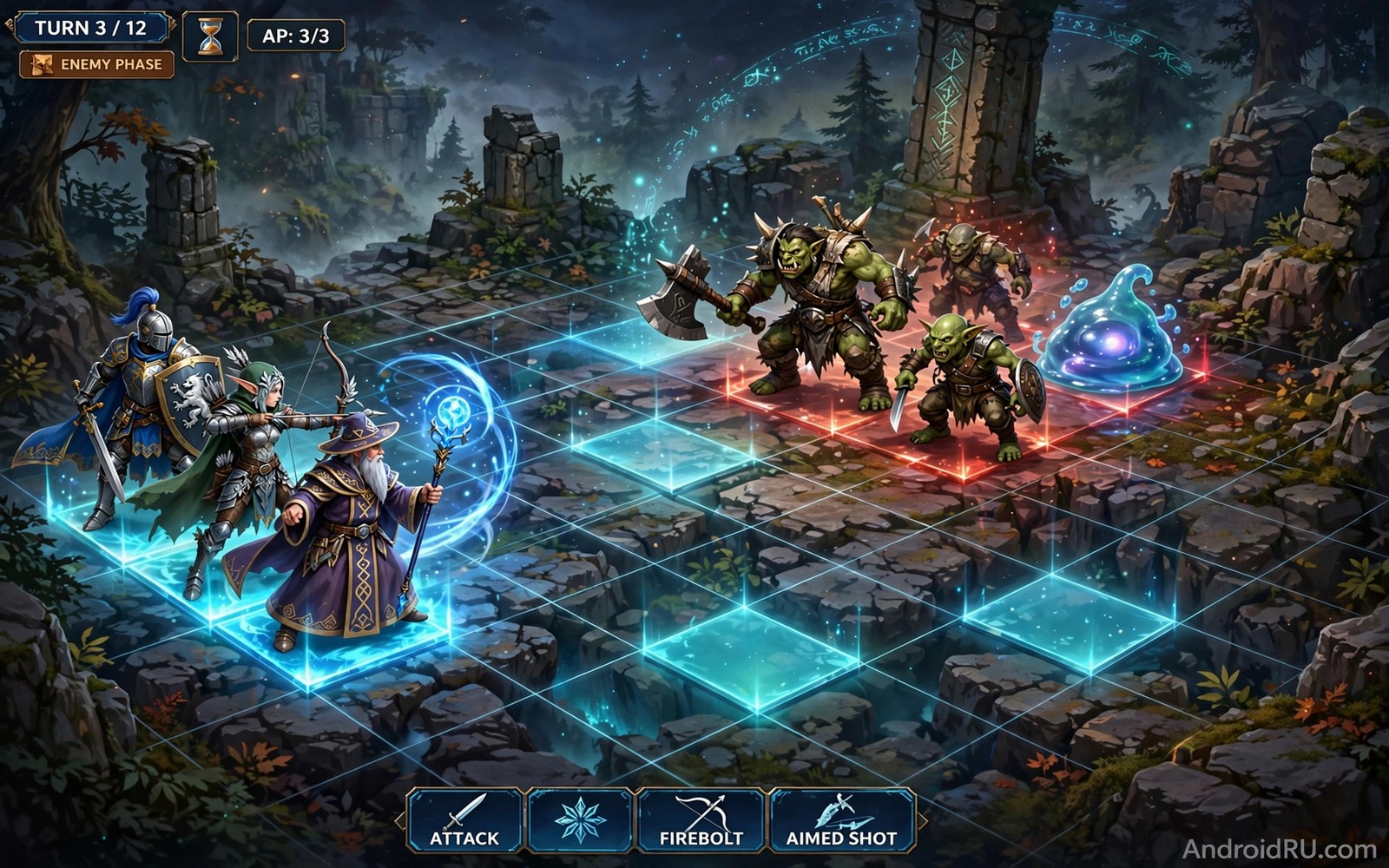
Turn-based strategy RPGs give you time to think. Every move matters and every mistake stays visible on the board. You study enemy positions and weigh risks and plan three turns ahead. That slower pace suits phones perfectly because you can play in short bursts without losing the thread of a battle.
The genre blends role playing growth with chess-like positioning. Units level up and gain skills and gear while terrain and cover shape each fight. If you enjoy grid combat in general then you will also like the wider family of grid tactics games and you can explore that style further through this look at grid-based tactics for sharp thinkers: tactical grid-based RPGs. This guide explains what makes turn-based strategy RPGs special and how to pick the right one.
What defines a turn-based strategy RPG
The core loop is simple. You command a party on a map and each unit acts in turn order. Position decides damage and survival. A unit on high ground hits harder. A unit behind cover takes less damage. Flanking can break a strong enemy fast. These rules turn every battle into a puzzle with many valid answers.
Progression adds the RPG layer. Units gain experience and unlock skills and equip better gear. Team composition becomes a strategy of its own. You might build a tank to hold a choke point and an archer to punish clustered enemies and a healer to sustain long fights. The best games force tradeoffs so no single team wins every map.
Tactics that win battles
Focus fire beats spreading damage. A half dead enemy still attacks at full power while a dead enemy attacks never. Remove one threat completely before you wound three others. This rule alone will carry you through most early campaigns and it stays true in late game boss fights.
Control the map before you chase kills. Hold high ground and choke points and keep your healer out of enemy range. Bait enemies into your range rather than rushing into theirs. Patience wins more battles than aggression in this genre. Count enemy movement range by tapping each foe before you commit your own units.
Free-to-play traps to watch
Many turn-based RPGs use energy systems and summon banners. Energy limits how many battles you can play per session. Banners tempt you to chase rare units with real money. A fair game lets a skilled free player clear content with patience and planning. An unfair one gates story progress behind rare units only.
Check the pity system before you spend anything. Pity guarantees a rare unit after a set number of pulls. Games with clear pity and generous free currency respect your time. Games that hide rates or reset pity between banners deserve skepticism. If a game also runs a player market then the economy can shift power fast and you can learn how those markets work through this comparison of player economies in online RPGs: player economies in mobile MMORPGs.
Building a team that lasts
Balance roles before you chase rarity. A team needs damage and sustain and control. A five star damage dealer without a healer will fall in long fights. A strong tank without damage will stall and lose to timers. Build around synergy rather than raw stats and your team will survive content shifts.
Invest in versatile units first. A buffer who boosts the whole team stays useful across many maps. A debuffer who slows enemies helps against bosses and mobs alike. Save rare upgrade materials for units you use daily. Spreading materials thin across ten units leaves you with ten weak fighters instead of five strong ones.
Reading enemy intent before it hurts you
Skilled tactics players read battles like a language, and enemy intent is its grammar. Most games telegraph attacks through target lines or highlighted squares or warning icons before damage lands. A red zone on the ground means an attack arrives next turn, not now, which gives you one precious turn to move. Learn the telegraph vocabulary of your game during easy battles, because hard battles reuse the same signals at higher speed and higher stakes.
Enemy AI also follows patterns that reward observation. Some enemies always target the weakest unit in range. Others always chase the nearest target regardless of danger. A few hold position and punish anyone who enters their zone. Spend your first two turns of a new map watching rather than attacking, and the pattern usually reveals itself. That patience feels slow, but it prevents the ambush deaths that force restarts and waste far more time than scouting ever costs.
Terrain mastery beyond high ground
High ground gets all the attention in tactics guides, yet other terrain shapes battles just as strongly. Forests block line of sight and let fragile units hide from archers. Rivers slow movement and split armies into manageable pieces. Bridges create choke points where one strong unit can hold back many. Lava or poison tiles punish careless positioning turn after turn. A player who reads the whole map, rather than only the hills, finds advantages everywhere.
Destructible terrain adds another layer in some games. Exploding barrels and collapsing walls turn the map itself into a weapon. Position enemies near hazards before triggering them, and you deal damage without spending your own attacks. Conversely, keep your own units away from obvious hazard clusters, because enemy AI loves to exploit them too. Terrain is never just decoration in a good tactics game. It is a silent party member that helps whichever side understands it better.
The economy of actions and turns
Every turn is a budget, and good players spend it like money. Movement and attacks and skills all draw from the same limited pool, so wasting a move on a pointless reposition is like throwing gold away. Before moving a unit, ask what that move earns. Does it gain range on a target, claim cover, or secure an objective? If the answer is nothing, then the unit is better off waiting or defending where it stands.
Waiting itself is a powerful action that beginners underuse. A unit that waits often gains a defensive bonus or a counterattack chance, which turns patience into damage. Delayed actions also let you react to enemy moves rather than guessing them. Try building a habit of ending turns with at least one unit on wait or defend, and watch how many enemy attacks bounce off your prepared line instead of breaking through a scattered advance.
When to retreat and regroup
Retreat feels like losing, but in tactics games it is often the winning move. A squad that pulls back to a choke point can turn a losing fight into a slaughter of overextended enemies. Healing and regrouping during a retreat costs turns, yet it saves units that would otherwise die holding a bad position. The best players retreat early, while their squad is still strong enough to punish pursuit, rather than late when retreat becomes a rout.
Recognize the retreat signal before disaster strikes. If two of your units fall below half health while enemies still arrive fresh, then your position is failing. If your healer is exposed and your damage dealers are out of range, then the formation has already broken. Pull back to high ground or a narrow passage and rebuild the line there. A battle won from a second position counts exactly the same as a battle won from the first.
Learning from defeats without frustration
Every defeat in a tactics game contains a lesson, but only if you examine it calmly. After a lost battle, replay the turning point in your mind and find the single decision that broke your plan. Usually it is one overextended unit or one ignored telegraph or one wasted turn. Fixing that one decision often flips the whole battle, which means you were closer to victory than the defeat screen suggested.
Use defeat as a scouting report rather than a punishment. You now know enemy positions and compositions and reinforcements that were hidden before. That knowledge is worth more than a perfect first attempt, because it lets you deploy the right team for the real battle instead of guessing. Many veteran tactics players deliberately sacrifice a first run to learn a map, then crush it on the second attempt with a tailored plan.
Gear progression and team power
Gear progression in tactics RPGs differs from other genres, because a single weapon can change a unit’s entire role on the battlefield. A spear that adds range turns a frontline fighter into a flexible threat, while armour that grants immunity to a status effect removes an enemy’s main weapon. Smart players treat gear as team building rather than stat chasing, choosing items that fill gaps in their strategy instead of merely raising the highest number.
Upgrade gear gradually across the whole team rather than maxing one hero immediately, because tactics battles punish weak links far more than they reward single stars. A team where every unit carries decent gear survives focus fire and bad luck, while a team built around one hero collapses when that hero falls. Spend upgrade materials on your core five units evenly, and keep a reserve for new recruits who join mid-campaign with outdated equipment.
Plan a battle before you start
Serious tactics players keep a simple battle checklist. This plain text template works in any notes app. Copy it before a hard map and fill it in during your first scouting run.
MAP: name / objective / turn limit
ENEMIES: types / range / biggest threat
MY TEAM: tank / damage / healer / control
PLAN: turn 1 position / focus target / retreat point
RISKS: reinforcements / terrain / timer
This checklist is an original planning template written for this guide. It borrows nothing from any single game. It simply organizes what experienced tactics players already check before a fight. Use it to slow down and spot threats early. Over time you will internalize the steps and need the list less.
Common mistakes
The biggest mistake is rushing the first turns. New players move every unit forward at once and trigger several enemy groups together. Scout with one fast unit instead. Trigger one group at a time and clean it up before you advance. Map control always beats speed in turn-based combat.
Another mistake is hoarding upgrade materials forever. Players save everything for a perfect unit that never arrives. Upgrade your current core team now. A strong team earns more rewards and those rewards fund future upgrades. Waiting only slows your progress.
FAQ
Are turn-based strategy RPGs good for short sessions?
Yes. Battles pause cleanly between turns and many maps take ten to twenty minutes. You can stop mid battle and resume later without losing progress in most titles.
Do I need to spend money to compete?
Not in fair games. Skill and team synergy matter more than rarity in story content. Competitive modes may favour spenders but most campaigns stay clearable for free players.
What is the difference from auto battlers?
Turn-based strategy RPGs give you direct control of every move. Auto battlers let units act on their own after setup. The first rewards tactical decisions during battle and the second rewards preparation before battle.
Conclusion
Turn-based strategy RPGs reward patience and planning. Learn the map and focus your fire and build a balanced team. Those three habits will carry you through almost any campaign in the genre.
Your next step is to pick one title and play its first ten battles with the checklist above. Watch how position changes outcomes and note which units you rely on most. If grid combat clicks for you then the wider tactics family offers even more depth and you can continue with grid-based tactics games that sharpen the same skills: grid-based RPGs to exercise your brain.

