

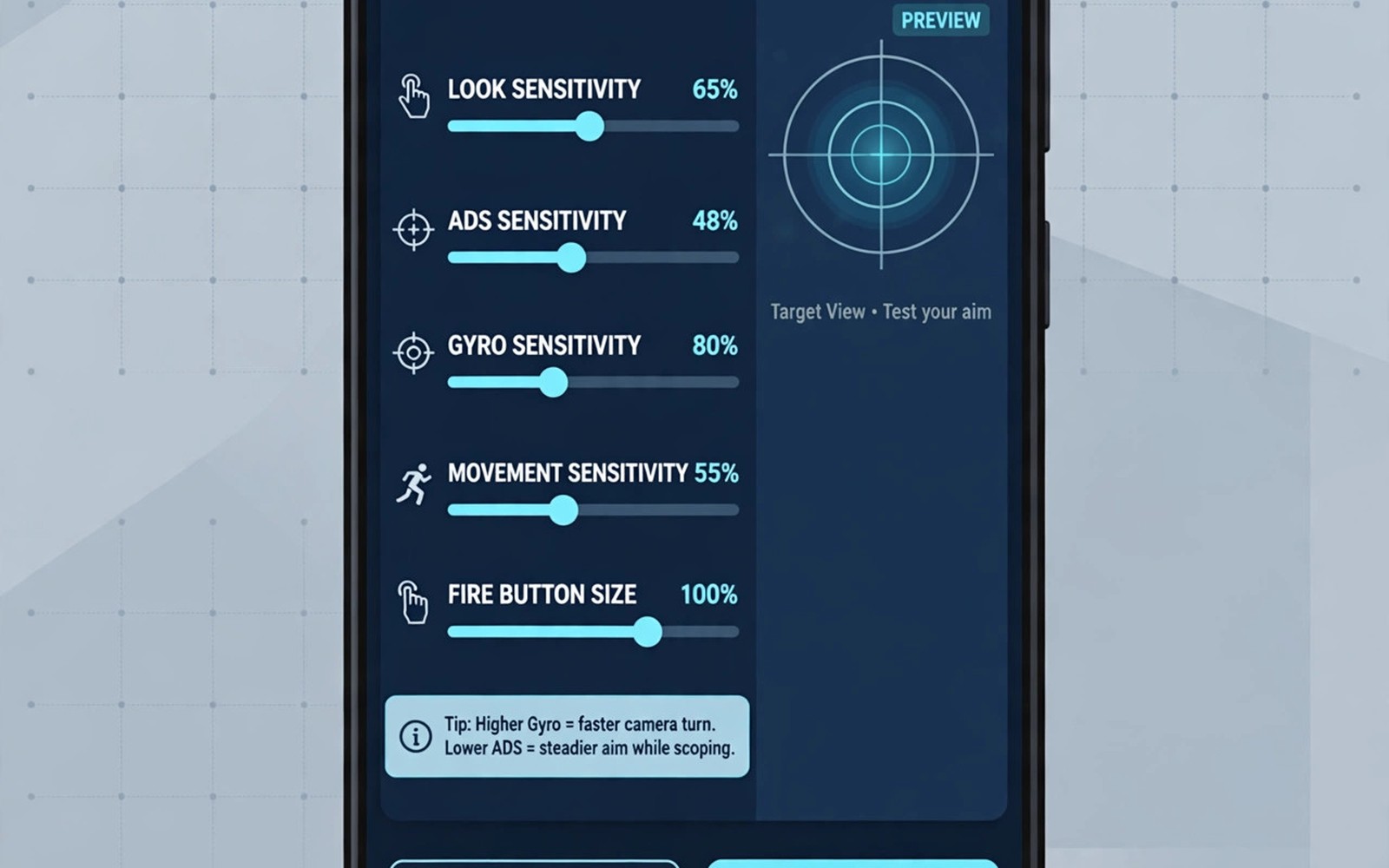
How Touch Sensitivity Settings Impact Your Aim in Mobile Games
One sensitivity cannot serve every range, because a fast turn setting will overshoot a distant headshot. That single fact shapes how you should judge a game or a setup. I spent a week copying a pro player’s layout and wondering why my aim got worse, until I realised the layout was built for a bigger phone and a different grip. My own settings, tuned slowly over a month, beat the copied preset in the first evening.
This guide explains how touch sensitivity settings impact your aim in mobile games, how to tune hip fire, aim-down-sights, and gyro values separately, and how to build a routine that improves your aim week by week. Small changes beat big jumps, because a ten percent shift is easy to adapt to while a doubled value destroys muscle memory.
Why Aim Sensitivity Tuning Deserves a Proper Look
Marketing often promises power and speed, but the lived feel on your phone tells the real story. Test with your own hands and trust what you feel in a real match more than a feature list. New players often focus on the wrong upgrade first: they buy a new phone or a new accessory while keeping a bad layout or a bad setting, when a calm review of the basics usually delivers more progress than any purchase.
Start with comfort and clarity and let gear follow skill. A name tells you nothing about feel or fairness, so you need to know how a game treats your time and your mistakes. The sections below give you that practical view so you can choose with confidence.
Three Sensitivity Styles That Cover Most Games
Three styles cover most aim sensitivity tuning well. They are hip fire swipe speed for fast turns, aim down sights sensitivity for tracking, and gyro sensitivity for micro corrections. Each style suits a different mood and a different session length, so try one style for a few days before you judge it, because first matches always feel awkward.
Look for clear feedback in every action you take. A good game shows damage and movement in a way you can read at a glance. If you cannot tell why you lost a fight then the game hides too much. Fans of classic side scrolling runs value the same clarity, because readable fights make losses useful lessons.
Hip Fire, ADS, and Gyro: What Each One Controls
Hip fire sensitivity controls how fast your view turns when you are not aiming down sights, and it decides how quickly you can react to a flanker. ADS sensitivity controls tracking while scoped, and it should be lower than hip fire because a scope magnifies every small hand tremor. Gyro sensitivity controls how much tilting the phone moves the crosshair, and it is the tool for tiny corrections that a thumb swipe cannot make cleanly.
Settings and Setup That Change Your Results
Scope settings deserve separate values, because a 4x scope magnifies every small hand tremor on screen. Settings are not magic, but they remove friction between intent and action. Change one setting at a time and play three matches before you judge it, because changing five things at once leaves you unsure which change helped and which change hurt.
A clean setup starts with display and sound. Set brightness high enough to spot movement in dark corners, set volume so quiet cues stay audible without pain, and turn off flashy effects that hide enemies behind particles. Small cuts here pay off in every single match.
A Sensible Starting Preset to Test
Use the values below as a starting point for your own testing, not as a final answer. Treat each value as a suggestion and adjust it after real matches on your own phone, because no single preset fits every hand and every device.
{ "sensitivity": 62, "adsSensitivity": 48, "gyroEnabled": true, "gyroSensitivity": 35, "buttonOpacity": 80 }
Keep notes on what feels better and what feels worse. A notebook line per session beats a memory that blames the wrong setting, and a preset you tuned yourself will always beat one you copied from a video.
How to Change One Setting at a Time
Pick the single setting that bothers you most, change it by ten percent, and play three casual matches. If the change helps, keep it and move to the next setting. If it hurts, revert it at once. That loop takes an evening and it produces a setup that fits your hands instead of someone else’s.
A Practical Routine You Can Follow Before Ranked Play
Warm up for ten minutes before ranked play. Use a training range or a casual match to wake up your aim and your movement. Players who explore claw grip layouts with the same warm up habit often report steadier first matches, because cold hands miss easy shots.
Break practice into short blocks with a clear goal for each block. One block can target movement and cover use, and the next block can target aim at mid range. Short focused blocks beat long unfocused grinding, because attention fades fast during repeat play.
Review One Loss Per Session
Review one loss per session and ask what single choice changed the outcome. A bad push or a missed reload often matters more than raw aim, so write the lesson down in one line and test the fix in your next session. This loop turns losses into steady progress, and it works because it fixes decisions rather than chasing reflexes.
The Ten-Minute Warm-Up That Actually Works
Three minutes in the training range for tracking, three minutes in a casual match for movement, and four minutes reviewing your button layout for anything that felt awkward yesterday. That is the whole routine, and it fits before any ranked session without turning into a second game.
How to Judge Quality in a Real Match
Judge aim sensitivity tuning by how a loss feels and not by how a win looks. A fair loss teaches you a clear lesson about position or timing, while an unfair loss feels random and leaves you with nothing to fix. Keep a mental note of which kind of loss you meet most often.
Watch how the game treats new players in the first hour. Good onboarding teaches movement and aim without long text walls, and it lets you fail safely and retry fast. A game that throws you into hard ranked matches at once values queue speed over player growth.
Check Update Health Before You Invest Months
Check update health before you invest months into a title. Regular balance patches show a live team that cares about fairness, while long silence often means stale metas and unfixed bugs. A quick look at recent patch notes tells you more than any trailer can, and it tells you whether your time will be respected.
Fair Losses Teach, Random Losses Frustrate
After each session, count how many losses taught you something and how many felt random. When fair losses dominate, your settings and your skill are the limit, and practice pays. When random losses dominate, the game or the matchmaking is the limit, and no sensitivity value will fix it.
Gear, Battery, and Comfort During Long Sessions
Comfort decides how long you can enjoy a game without strain. Hold your phone the way you play and notice where your thumbs rest. If a grip forces your fingers into a claw shape all match then your hands will tire before your skill does. Players who enjoy story driven action RPGs face the same comfort test, because long sessions punish bad ergonomics first.
Battery and heat shape real performance more than spec sheets suggest. A phone that throttles after twenty minutes will drop frames in the late game, so lower shadows and cap background apps before a ranked session. Play near a charger for long sessions but avoid a hot phone in direct sun.
Accessories Should Solve a Real Problem
Accessories should solve a real problem you have felt in matches. A grip helps if your hands cramp, a headset helps if you miss audio cues, and a cooler helps if heat drops your frame rate. Buy one item at a time and test it for a week before adding another, because a stack of new gear hides which item actually helped.
Heat, Throttling, and Frame Drops
Heat is the hidden enemy of aim. A phone that throttles drops frames exactly when a fight gets busy, and a dropped frame at the wrong moment looks like a missed shot. Keep the phone cool, lower the graphics one notch, and close background apps before ranked play. A steady 60 frames beats a spiky 90 frames every time.
Building Skill Week by Week
Week one should focus on comfort and the core loop only. Learn the map flow and the basic controls without ranked pressure, and end each session by naming one thing that felt smooth and one thing that felt awkward. That simple habit builds awareness fast.
Week two can add one advanced skill such as better positioning or cleaner reload timing. Practise that skill in casual matches where a mistake costs little, and record a short clip of your play if your phone supports it, then watch one fight back with fresh eyes.
Week Three: Test Yourself in Ranked Play
Week three is the time to test yourself in ranked or harder modes. Bring the single skill you trained and judge the session by that skill alone, because a win with sloppy habits teaches less than a loss with clean execution. Keep the long view and let skill compound.
Tracking One Skill Per Week
Pick one skill, write it on a note, and judge every session by that skill alone. Tracking one thing keeps progress visible and honest, and it stops you from chasing five improvements at once and finishing none of them.
Common Mistakes That Hold Your Aim Back
Most players repeat the same few errors for months without noticing them. Naming the error is half the fix, because you can watch for it in your next match. The list below covers the traps that hurt new and returning players most, so read it before your next session and pick one trap to eliminate first.
- Copying a pro layout without testing it on your own hands and screen size.
- Chasing maximum graphics while frame rate drops during the fights that matter.
- Skipping warm up matches and jumping straight into ranked play while cold.
- Blaming gear for losses that came from poor positioning or rushed decisions.
- Raising sensitivity to fix a tracking problem that is actually a gyro problem.
Advanced Tactics Worth Learning
Once the basics feel automatic you can add tactics that win close fights. Pre aiming common angles saves the half second that decides a duel, sound cues tell you when to push and when to hold, and map knowledge tells you which routes are safe and which routes invite an ambush.
Play the objective before you chase kills. Kills feel good but a lost objective loses the match, and a player who holds a key angle for the team often contributes more than a player with a high kill count and no plan. Learn one counter for every tactic that beats you: if a rush beats you then learn a defensive setup that slows it, and if a camper beats you then learn a flank route that bypasses the angle.
Counters Turn Frustration Into Homework
Counters turn frustration into homework and homework into wins. Write down the tactic that beat you, find one counter in a training match, and test it in three casual games before you trust it in ranked play. That loop is the whole game, repeated for years.
Keeping the Game Fun Long Term
Burnout kills more players than any skill gap. Take short breaks between ranked sessions and mix casual modes into your week, because a fresh mind aims better than a tired mind that has played for five straight hours. Fun is a performance tool and not a luxury.
Play with friends when you can, because shared sessions teach faster than solo grinding. A teammate can spot a habit you cannot see yourself. Celebrate small gains together and keep ranked pressure in perspective, since games should add energy to your day and not drain it.
Phone Settings Beyond the Game
System settings outside the game can quietly change your results. Turn on game mode if your phone offers it so calls and alerts stop breaking your focus mid match, and close heavy apps before ranked play so memory stays free for the game itself. These small steps cost a minute and save many frustrating deaths.
Check storage space each week, because a nearly full phone slows installs and updates. Keep at least a few gigabytes free so patches download without errors, and update your system software when a stable release is ready, but avoid updating minutes before an important ranked session.
Game Mode and Do Not Disturb Before Ranked
Two toggles, one minute, and your focus stays intact for the whole session. Game mode blocks calls and dims notifications, while Do Not Disturb silences the rest. Make them part of the warm-up routine so you never lose a fight to a phone call again.
Frequently Asked Questions About Touch Sensitivity and Aim
Do I need a flagship phone to aim well in mobile games?
No flagship is required to aim well. A mid range phone with a stable frame rate and enough storage handles most action games fine, so spend on comfort first and upgrade only when your phone clearly limits your play. Test on your own device before you spend money on upgrades.
How long does it take to improve my aim in mobile games?
Most players feel real gains within two weeks of short daily practice. Focus on one skill at a time and keep sessions near thirty minutes, because steady short practice builds reflex faster than rare long marathons. Track one skill per week so progress stays visible and honest.
Is touch sensitivity tuning friendly for new players?
Yes, tuning welcomes new players when you start with casual modes and fair settings. Learn the core loop before ranked play and use training modes without shame, because every strong player started with awkward first matches. Casual modes teach the loop without ranked pressure or stress.
Should I use gyro aim or stick with thumb only?
Gyro helps most players once they pass the awkward first week, because it handles tiny corrections that a thumb swipe cannot make cleanly. Start with gyro sensitivity low, around 30 to 40, and raise it slowly over two weeks. If gyro feels worse after two weeks of honest practice, turn it off and invest that time in thumb control instead.
Touch sensitivity settings become far more fun once you treat skill as a system and not as luck. Tune one setting, practise one drill, and review one loss at a time, because progress will feel slow on some days but the trend over weeks will be clear. The players who improve fastest are rarely the most talented at the start. They are the players who keep a simple routine, protect their comfort and their frame rate, review losses without blame, and change one thing at a time. Your concrete next step is simple: open your game tonight, change one layout setting, and play three casual matches with it. Note what felt better and keep only the change that earned its place.

