

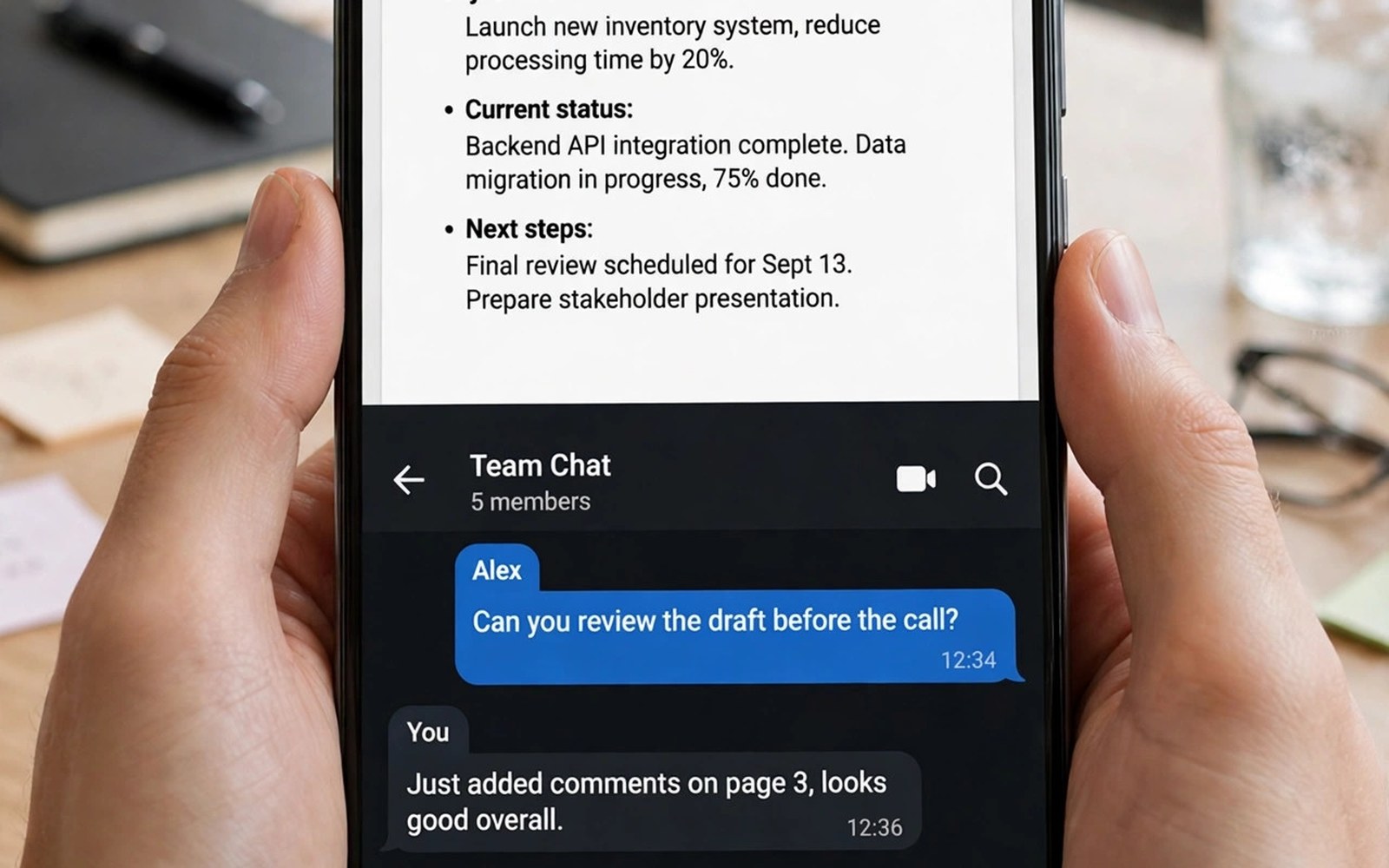
How to use Android split-screen multitasking for work apps starts with pairing the right two apps on one screen. A document beside a browser or a chat beside a task list can save hundreds of switches each day. This article shows split screen setups that help work without turning a phone into a cramped mess.
Many people try split screen once with the wrong pair and decide it never works. A phone screen suits short reference beside writing and a tablet screen suits two full work apps. The right pair and the right device size decide whether split view helps or hurts.
Start with one pair that matches a real daily job. Research beside writing and messages beside tasks cover most work needs. A pair chosen for a real job will prove value in one day. A closer look at calendar and scheduling apps can help you compare daily tools before you commit to one setup.
What matters most
App pairing matters because some apps support split view well and others resize badly. A reading app beside a notes app works well because both adapt to narrow widths. A video app beside a spreadsheet may feel cramped and slow on a phone.
Window size control matters because equal halves rarely suit both apps. A writing app often needs more width than a chat app beside it. Drag the divider to give the main app more room and the reference app less room.
App pairs can save on some devices so a favourite pair opens in one tap. A saved pair removes setup friction that stops split use. Create a saved pair for your top work combination on day one.
How to choose the right setup
Phones suit split view for quick checks such as a code beside a message or a map beside notes. Tablets suit split view for sustained work such as research beside drafting. Use a phone for short split sessions and a tablet for long split sessions.
Landscape orientation gives each split app more width on a phone. Portrait split view suits a tall reading app beside a short chat app. Rotate the device to match the pair rather than forcing one orientation for all pairs.
Floating windows suit a third app that needs occasional glances such as a calculator. A floating calculator over a spreadsheet saves switching without splitting the screen further. Use floating windows sparingly because too many windows clutter a small screen.
A practical daily routine
Start work by opening the saved app pair for the job at hand. A saved pair opens both apps in the right sizes without manual setup. A fast start makes split view a habit rather than a chore. A related look at mobile spreadsheet apps can show how a second tool fits the same workday without adding clutter.
Keep the main task in the larger window and reference material in the smaller window. A clear main window prevents attention from drifting to the reference app. Switch window sizes only when the job changes, not every few minutes.
End a split session by saving both apps and closing the pair together. A clean close prevents half finished work hiding in a background app. A routine close also keeps the home screen calm for the next job.
Costs and privacy and limits
Split screen costs battery and memory because two apps run in the foreground at once. A phone with limited RAM may slow down with heavy apps in split view. Close other apps before a long split session on a modest phone.
Split view can expose private content on one side of the screen during sharing. A chat app beside a document may reveal messages during a screen share. Check both windows before sharing a screen or showing the phone to someone else.
Learning split gestures takes a day of practice before it feels natural. Gestures for entering and exiting split view differ by phone maker. Learn the gestures for your phone on day one and practice with a simple pair.
A useful example
A quick window check confirms display size and split screen state on the device. The commands below show window size and split related window info. Use the same check when split view behaves differently after an update.
adb shell settings put global enable_freeform_support 1
adb shell wm size
adb shell dumpsys window windows | grep -i split
This window check pattern follows the approach described in the official Android developer documentation for window management and display settings. The same documentation explains how split screen divides the display between two apps.
What to check after a week
After a week check whether split sessions actually reduced app switching. A split setup that still needs constant switching has the wrong pair. Change the pair rather than abandoning split view altogether.
After a week check battery and speed during long split sessions. A slow phone during split work needs lighter apps or shorter sessions. A tablet may suit long split work better than a phone with limited RAM. A practical look at note-taking apps can help you judge whether your current setup still earns its place on your phone.
After a week check whether saved pairs still match daily jobs. A saved pair for a finished project should leave the list. Keep only pairs that serve current work to avoid clutter.
Deeper checks for careful users
Drag and drop between split apps can move text and images without copy and paste. A drag from a browser to a notes app feels fast when both apps support it. Test drag support for your pair because not every app supports it.
Clipboard sharing between split apps speeds copying of quotes and data. A copied line in one window should paste at once in the other window. A clipboard manager can extend that sharing across more than two apps.
Focus modes can pair with split view by silencing other apps during a session. A focus mode that blocks social apps keeps split work on task. Combine focus and split view for deep work sessions on a tablet.
Making the choice stick
A split screen habit sticks when the saved pair opens with one tap from the home screen. Create a shortcut for your top pair on day one. A pair that needs manual setup each time will lose to single app use. A one tap pair turns split view into a reflex for research work. Test the shortcut for a week and move it if you keep forgetting it.
A split session needs a clear main app and a clear reference app before it starts. Decide which app deserves more width before opening the pair. A session without a main app will drift between windows and lose focus. A main app with more width keeps attention on the real task. Switch the main app only when the job itself changes.
A tablet split session can include a third floating app for quick tools such as a calculator. Keep the floating app small and close it when the calculation ends. A floating app left open will clutter the screen and distract attention. A temporary floating tool saves switching without splitting the screen further. Use floating tools sparingly and close them promptly.
A split view on a phone needs shorter sessions than on a tablet to avoid eye strain. Limit phone split sessions to thirty minutes and take a break away from the screen. A long phone split session will strain eyes because text stays small. A tablet suits longer split sessions with larger text. Match session length to device size rather than forcing long work onto a phone.
A split pair for travel needs offline apps that work without signal. Pair an offline document app with an offline notes app for flights. A pair that needs signal will fail when connection drops. An offline pair keeps work going on planes and in rural areas. Test the offline pair before a trip rather than during it.
Split view earns a permanent place when it reduces switching measurably for a week. Count app switches with and without split view for a sample task. A real reduction proves the pair works for your job. A pair with no reduction needs a different partner app. Keep pairs that prove a reduction and delete pairs that do not.
A week of practice
Day one of practice should create one saved pair for research beside writing. Use the pair for a real task and note switching saved. A pair that saves switching proves split view works for your job. A pair that still needs switching shows a wrong partner app. Change the partner rather than abandoning split view.
Day three of practice should test window sizes by giving the main app more width. Work for an hour and note comfort and focus. A larger main window should improve focus measurably. A cramped main window shows a size problem to fix. Adjust the divider until the main task feels comfortable.
Day five of practice should test a floating calculator over a spreadsheet for a short task. Note whether the floating tool saved switching. A floating tool that saves time deserves a place in the routine. A floating tool that clutters the screen should close promptly. Use floating tools sparingly for short tasks only.
Day seven of practice should review the week and count pairs that proved useful. A pair used daily deserves a permanent shortcut. A pair unused for a week should leave the list. Keep only pairs that serve current work to avoid clutter.
Common mistakes
Most split screen failures come from wrong pairs rather than from the feature itself. The list below names the mistakes that make split view feel cramped.
- Pairing two heavy apps on a phone with limited memory.
- Using equal halves when the main app needs more width.
- Forcing portrait split view for a pair that needs landscape.
- Sharing a screen without checking both split windows.
- Opening a third floating window until the screen clutters.
- Saving pairs for finished projects that no longer matter.
Each mistake above is easy to avoid with a real job pair and a larger main window. Split view that matches the job will feel natural within a week. Keep pairs few and sizes tuned to the main task.
Frequently asked questions
Does split screen work on all Android phones?
Split screen works on most modern Android phones but gestures and saved pairs differ by maker. Some apps resize poorly in split view. Test your favourite pair on your phone before relying on it.
Is split screen better on a tablet than a phone?
Split screen suits tablets better for sustained work because each app gets more room. Phones suit short split sessions such as reference beside notes. Use the device that matches the session length.
Can I save app pairs for split screen?
Some Android phones and tablets let you save app pairs for one tap launch. A saved pair removes setup friction for daily work. Check your phone settings for app pair options.
Conclusion and next step
Split screen works when the pair matches a real job and the main app gets more room. A phone suits short split sessions and a tablet suits long split work. Saved pairs will turn split view from a trick into a habit.
Your concrete next step is to create one saved pair today for research beside writing and use it for seven days. Tune window sizes to the main task and note switching saved. A proven pair will grow into a daily multitasking habit.

