

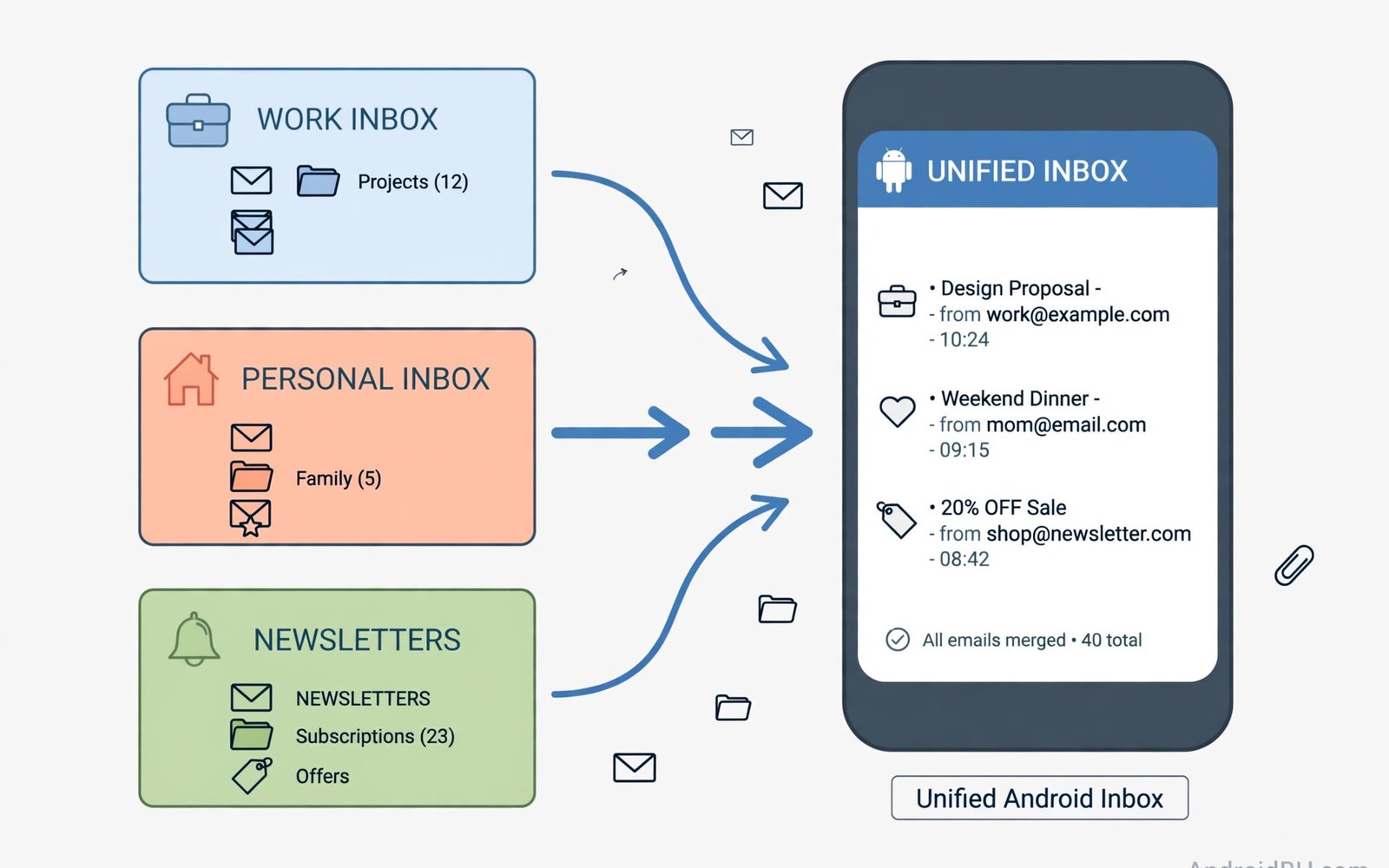
Email client apps for Android managing multiple inboxes effortlessly must solve inbox overload rather than add another inbox. A good client shows all accounts in one unified view and it filters noise without hiding important mail. This article compares the features that keep many inboxes calm on one phone.
Many people check mail in three apps and miss messages because each app has its own badges and rules. A unified inbox reduces checking to one place and one routine. A unified view only helps when filters and folders still separate work and personal mail clearly.
Start by listing every account you actually check each day. Work and personal and school accounts each need a role in the client. An account you never check should leave the phone rather than add noise to a unified view. A closer look at voice recorder apps can help you compare daily tools before you commit to one setup.
What matters most
A unified inbox must show account colour or label beside each message. A message without an account marker can cause a personal reply from a work account. Test unified view with messages from two accounts side by side before you trust it.
Smart filters and rules should sort newsletters and alerts away from people. A filter that moves bulk mail to a folder keeps the main inbox for human messages. A filter that is too aggressive will hide important mail and create anxiety.
Search must span all accounts and attachments and senders at once. A search limited to one account will fail when you forget which account received a message. Test search with a sender and a file name across all accounts.
How to choose the right setup
Work users need calendar integration and focused inbox and snooze for busy days. Personal users need a clean design and easy unsubscribe and simple folders. A client that tries to serve both without profiles will feel cluttered for everyone.
Security matters because mail holds password resets and sensitive documents. A client with a lock and phishing warnings and safe attachment handling protects daily use. Check whether the client downloads images automatically because images can track opens.
Offline access matters for travel and poor signal areas. A client that caches recent mail lets you read and draft replies offline. Drafts should sync when connection returns without creating duplicates.
A practical daily routine
Start the day by checking the unified inbox once and processing messages in batches. Processing means replying or snoozing or archiving or deleting each message. A batch routine prevents mail from pulling attention all day long. A related look at clipboard manager apps can show how a second tool fits the same workday without adding clutter.
Use snooze for messages that need action later rather than leaving them unread. A snoozed message returns at a time when you can act on it. Unread messages left for days become a pile that nobody trusts.
End the day by archiving processed mail and clearing the inbox to zero or near zero. A clear inbox at night makes tomorrow calmer. A pile that carries over daily will grow until checking mail feels stressful.
Costs and privacy and limits
Many email clients are free with basic features for multiple accounts. Advanced features such as snooze and smart filters may need a paid tier. Pay only when a feature saves daily time rather than for a nicer design.
Mail data can include sensitive messages that deserve care in a third party client. Some clients route mail through their servers for features such as push or search. Check data handling before adding a work account to a new client.
Switching clients costs time because filters and folders and signatures must move. A switch during a busy week will lose rules that took months to build. Export or note key filters before switching clients.
A useful example
A quick account check shows which mail apps are installed and whether sync is active. The commands below list mail related packages and show the global sync setting. Use the same check when mail stops arriving after an update.
adb shell dumpsys account | grep -i mail
adb shell pm list packages | grep -E "mail|gmail|outlook"
adb shell settings get global auto_sync_data
This account check pattern follows the approach described in the official Android developer documentation for account and sync settings. The same documentation explains how sync settings control when mail arrives on a device.
What to check after a week
After a week check whether any important message hid in a filtered folder. A filter that hides real mail needs loosening at once. Trust in filters grows only when important mail always reaches the main inbox.
After a week check send and reply behaviour from the correct account. A reply sent from the wrong account can embarrass a work user. Account markers in compose view prevent most of those errors. A practical look at split-screen multitasking can help you judge whether your current setup still earns its place on your phone.
After a week check battery and sync behaviour for all accounts. A client that syncs every account constantly can drain battery fast. Tune sync intervals for low priority accounts to save power.
Deeper checks for careful users
Signatures should differ by account so work replies and personal replies look right. A single signature for all accounts will look wrong in one context or the other. Set a signature per account on day one.
Aliases and plus addressing can sort incoming mail automatically. An alias for shopping and an alias for newsletters can feed filters without manual sorting. Use aliases sparingly so filters stay simple and predictable.
Encryption options matter for sensitive work mail and personal records. Some clients support message encryption with setup steps that need care. Use encryption for sensitive mail rather than for every casual message.
Making the choice stick
An email habit sticks when inbox zero is a daily target rather than a perfect state. Aim for a clear inbox at night and accept a few items on busy days. A perfect zero every night will create stress when work piles up. A near zero inbox still feels calm and achievable. Track inbox count each evening without judging a busy day harshly.
A filter rule needs a test with real mail before it runs on all incoming messages. Create a filter and watch it for a week with a small set of senders. A filter tested on real mail reveals false positives early. A filter applied blindly can hide important mail for weeks. Loosen any filter that hides a real message even once.
An unsubscribe habit saves more time than any smart filter over months. Unsubscribe from newsletters you have not opened in a month. A newsletter that arrives daily but never gets read is pure noise. An unsubscribe takes seconds and it prevents hundreds of future messages. Review subscriptions quarterly and unsubscribe ruthlessly.
A signature per account prevents the classic wrong account reply embarrassment. Set a work signature and a personal signature on day one. A reply with the wrong signature signals carelessness to a recipient. A correct signature also helps recipients reply to the right account. Check signatures after a client switch because settings can reset.
A mail backup matters because an account loss can hide years of messages. Export important mail yearly to a local archive file. A local archive protects against account closure and sync errors. A backup never tested may fail when you need it most. Test the archive by opening a sample message on a computer.
An email client earns a permanent place when it survives a busy week with no missed important mail. Test the client during a week with many messages and note any missed item. A client that misses mail during busy weeks has failed its main job. Fix filters and sync settings before judging the client itself. Keep the client that passes busy weeks reliably.
A week of practice
Day one of practice should set up one unified inbox with account markers and one newsletter filter. Process mail in two batches during the day. A batch routine that feels calm proves the client setup works. A batch routine that still feels chaotic shows a filter problem. Loosen any filter that hides a real message.
Day three of practice should test search across all accounts with a sender and a file name. A search that finds the message fast proves unified search works. A search limited to one account shows a client limit to fix. Note any message that search missed and why it happened.
Day five of practice should test snooze by snoozing five messages that need later action. Check that each message returns at the right time. A snooze that returns reliably will replace unread piles. A snooze that fails will create missed follow ups. Fix snooze settings before relying on them for important mail.
Day seven of practice should review the week for missed important mail and wrong account replies. A week with no misses proves the client and routine work. A week with a miss shows a filter or marker problem to fix. Decide on evidence and keep the client that passed busy weeks.
Common mistakes
Most multi inbox failures come from filters and account mixups rather than from app quality. The list below names the mistakes that cause the most mail trouble.
- Adding every old account to a unified inbox without a role.
- Creating aggressive filters that hide important mail.
- Replying from the wrong account because markers were ignored.
- Leaving messages unread for days instead of snoozing them.
- Switching clients without noting filters and signatures.
- Allowing automatic image loading that tracks mail opens.
Each mistake above is easy to avoid with account markers and a daily batch routine. A unified inbox that you trust will reduce checking to a few calm sessions. Keep accounts few and filters gentle and review them monthly.
Frequently asked questions
Can one Android email app handle many accounts?
One email app can handle many accounts well when unified view shows account markers clearly. Filters should separate work and personal mail even inside a unified view. Remove accounts you never check to reduce noise.
Is a unified inbox better than separate inboxes?
A unified inbox suits users who check mail in batches and want one routine. Separate inboxes suit users who need a strict boundary between work and personal mail. Many clients offer both views so you can switch by need.
Are third party email clients safe?
Third party clients vary in whether mail passes through their servers for features. Check data handling and permissions before adding a work account. A client with local sync and clear privacy rules suits sensitive mail better.
Conclusion and next step
An email client works for many inboxes when unified view shows account markers and filters stay gentle. Batch processing and snooze will keep mail calm far better than constant checking. A trusted client will reduce mail stress within a week.
Your concrete next step is to set up one unified inbox today with account markers and one filter for newsletters. Process mail in two batches tomorrow and snooze anything that needs later action. A calm inbox routine will beat a new app alone.

