

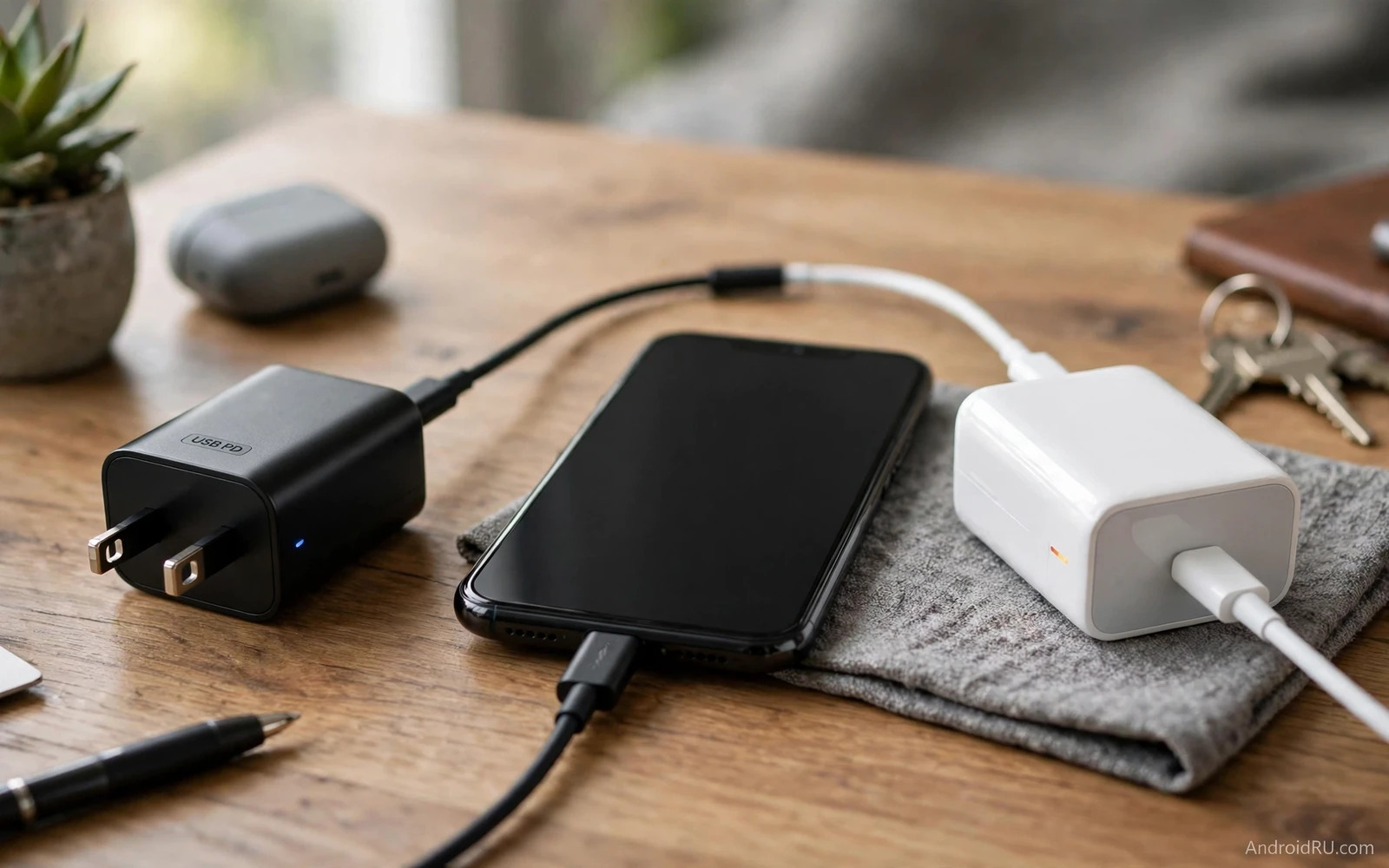
Why Charging Became Complicated
Charging used to mean plugging any cable into any brick and waiting. Modern fast charging changed that simplicity completely. Phones now negotiate voltage and current with chargers through digital protocols. A charger that speaks the wrong protocol charges slowly even when its wattage number looks impressive. A cable that lacks the right wiring can throttle speed silently. A phone that supports one proprietary standard may charge slowly on a universal charger that otherwise looks powerful.
Two philosophies compete today. USB Power Delivery offers a universal standard that works across phones and laptops and tablets and accessories. Proprietary standards offer extreme speeds tuned to one maker ecosystem. Each philosophy carries real benefits and real costs. Universal charging simplifies travel and reduces waste. Proprietary charging can refill a phone dramatically faster within its own ecosystem. This comparison explains both paths in plain terms.
How USB Power Delivery Works
USB Power Delivery negotiates power between charger and device. The charger offers voltage and current profiles and the phone picks a safe profile that matches its battery design. Modern USB PD supports a wide power range that covers phones and tablets and many laptops from the same brick. Programmable power supply extensions allow finer voltage steps that reduce heat during charging. That finer control helps phones sustain high speeds longer without overheating the battery.
Compatibility is the great strength of USB PD. One good USB PD charger can charge a phone and a tablet and a laptop and earbuds across brands. That universality reduces cable clutter and it makes travel packing simpler. It also future proofs a charger purchase because new devices from many makers adopt the same standard. A USB PD charger bought today will likely serve several future devices rather than one phone generation.
How Proprietary Charging Works
Proprietary charging tunes every part of the chain for one maker. The charger and the cable and the phone battery and the charging chip work as a matched system. Some proprietary systems move voltage conversion into the charger so the phone stays cooler during very fast charging. Some use dual cell batteries that split charging load across two cells. These tricks enable headline speeds that universal standards rarely match on phones.
The cost is lock in. A proprietary charger may charge rival phones slowly because rivals lack the matching protocol. A rival charger may charge a proprietary phone slowly for the same reason. Travellers who carry one charger for many devices feel this cost most sharply. Replacement cost also rises because a lost proprietary brick cannot be replaced by any generic brick at full speed. Households with mixed brands may need several bricks where one universal brick would suffice.
Speed In Real Conditions
Headline wattage misleads because charging speed follows a curve. Phones charge fastest when nearly empty and they slow down as the battery fills to protect long term health. A phone advertising extreme wattage may charge from empty to half in minutes but still need a long tail to reach full. A phone with moderate USB PD charging may reach half only slightly slower and may finish full in a comparable total time. Compare time to half and time to full rather than wattage alone.
Heat shapes the curve strongly. A phone that heats during fast charging must slow down to protect the battery. A cool charging environment and a charger that handles conversion externally can sustain speed longer. Background apps and screen use during charging also slow progress because the phone consumes power while it charges. For the fastest refill keep the screen off and avoid gaming during charging. Charger hardware context appears in the GaN chargers versus traditional adapters guide where charger design affects heat and size.
Cables The Hidden Bottleneck
Cables cause more charging disappointment than any other part. A cable that looks identical to a fast cable may lack the wiring for high current or for protocol negotiation. Long thin cables can drop voltage and slow charging. Damaged cables can charge intermittently and can heat at the connector. Buy cables rated for your charging standard and replace cables that feel loose or warm during use.
USB-C cable ratings deserve attention. Check current rating and check data speed separately because a cable can excel at one and fail at the other. A charging focused cable may transfer data slowly. A data focused cable may still charge well when its current rating suffices. Keep one known good cable as a reference when troubleshooting. Swap the reference cable in before blaming the charger or the phone. That simple test saves many unnecessary charger purchases.
Battery Health And Long Term Cost
Fast charging raises battery health questions fairly. Heat is the main enemy of battery longevity. Very fast charging generates more heat unless the system manages it carefully. Modern phones mitigate heat with dual cells and with charger side conversion and with adaptive charging that slows overnight charging. Battery health still declines faster under constant extreme fast charging than under moderate charging. Users who keep phones for many years should weigh that trade.
Adaptive charging features help greatly. A phone that learns your wake time can charge slowly overnight and finish just before you wake. That behaviour reduces time spent at full charge and at high heat. Use fast charging when you need speed and use slower overnight charging when time allows. That habit gives you speed on busy days without paying a daily health cost. Wireless charging adds heat as well and the wireless charging pads Qi versus Qi2 comparison explains how wireless standards manage heat and alignment.
Travel And Multi Device Reality
Travel rewards universal charging strongly. One USB PD brick plus one or two cables can serve a phone and a tablet and a laptop and earbuds. Proprietary charging rewards single brand households strongly. A household that uses one phone maker for every device can enjoy extreme speeds everywhere with matched bricks. Mixed households gain less from proprietary speed because each brand needs its own fast brick.
Power banks follow the same logic. A USB PD power bank serves many devices at good speed. A proprietary power bank serves its maker fastest but may serve rivals slowly. Check power bank output profiles carefully because a power bank that lists a high total wattage may split that wattage across ports. A single device may receive far less than the headline number when two devices charge at once. Battery runtime context also matters for travel planning and the longest battery runtime comparison helps travellers pick phones that need fewer charges per day.
Choosing Your Charging Path
- Choose USB PD when you own devices from several makers
- Choose USB PD when you travel light with one charger
- Choose proprietary when you stay within one maker ecosystem
- Choose proprietary when fastest half charge time matters daily
- Buy rated cables for your standard and keep a known good spare
- Use adaptive overnight charging to protect long term battery health
Final Verdict
USB PD wins for universality and for travel and for future proofing. Proprietary charging wins for raw speed within one ecosystem. Most users should build around USB PD as the core and add a proprietary brick only when their main phone benefits daily from its extreme speed. That hybrid approach gives you fast refills at home and universal charging everywhere else. Charging peace comes from carrying the right cable and the right brick rather than from chasing the largest wattage number on a box.
Charging Safety And Certification
Charging safety starts with certification marks that many buyers ignore. Reputable chargers carry safety certifications from recognised testing bodies for their region. Counterfeit chargers often fake these marks or omit them entirely while looking identical externally. A charger without proper certification can overheat and can damage a phone battery and can pose a fire risk in rare cases. Buy chargers from reputable makers and from reputable sellers rather than chasing the lowest price from an unknown listing. Saving a small amount on a charger is a poor trade against phone or safety risk.
Heat monitoring protects both safety and battery health. A charger that stays cool during fast charging indicates good conversion efficiency. A charger that becomes too hot to touch signals poor design or overload. A phone that becomes excessively hot during charging signals a cable problem or a charger mismatch or a battery problem. Stop using any charger or cable that smells of burning plastic or shows melted deformation. Those warning signs demand immediate retirement rather than continued testing.
Overnight charging safety has improved greatly through smart charging features. Modern phones slow charging near full and learn wake times to finish charging just before use. Those features reduce heat exposure and battery stress during long overnight sessions. Users can help further by charging on a hard surface with airflow rather than under bedding where heat accumulates. Avoid charging a phone under a pillow because trapped heat harms battery and creates unnecessary risk even with modern protections.
Public charging deserves caution as well. Unknown USB ports in airports and cafes can theoretically deliver malicious data connections as well as power. Use a charge only cable or a USB data blocker when charging from an untrusted port. Better still use your own power bank or your own wall charger when possible. Public wireless pads carry less data risk but they can still deliver poor power quality that heats a phone. Carry a trusted charger as part of travel kit rather than relying on unknown infrastructure.
Future Charging Standards To Watch
Charging standards keep evolving toward higher universal power and smarter negotiation. New USB Power Delivery revisions promise more flexible voltage steps and better laptop and phone sharing from one brick. Wireless standards promise better magnetic alignment and higher efficiency for desk and car use. These trends favour universal charging further because each revision widens the gap between universal convenience and proprietary lock in. A good universal charger bought today should serve several device generations as standards evolve backward compatibly.

