

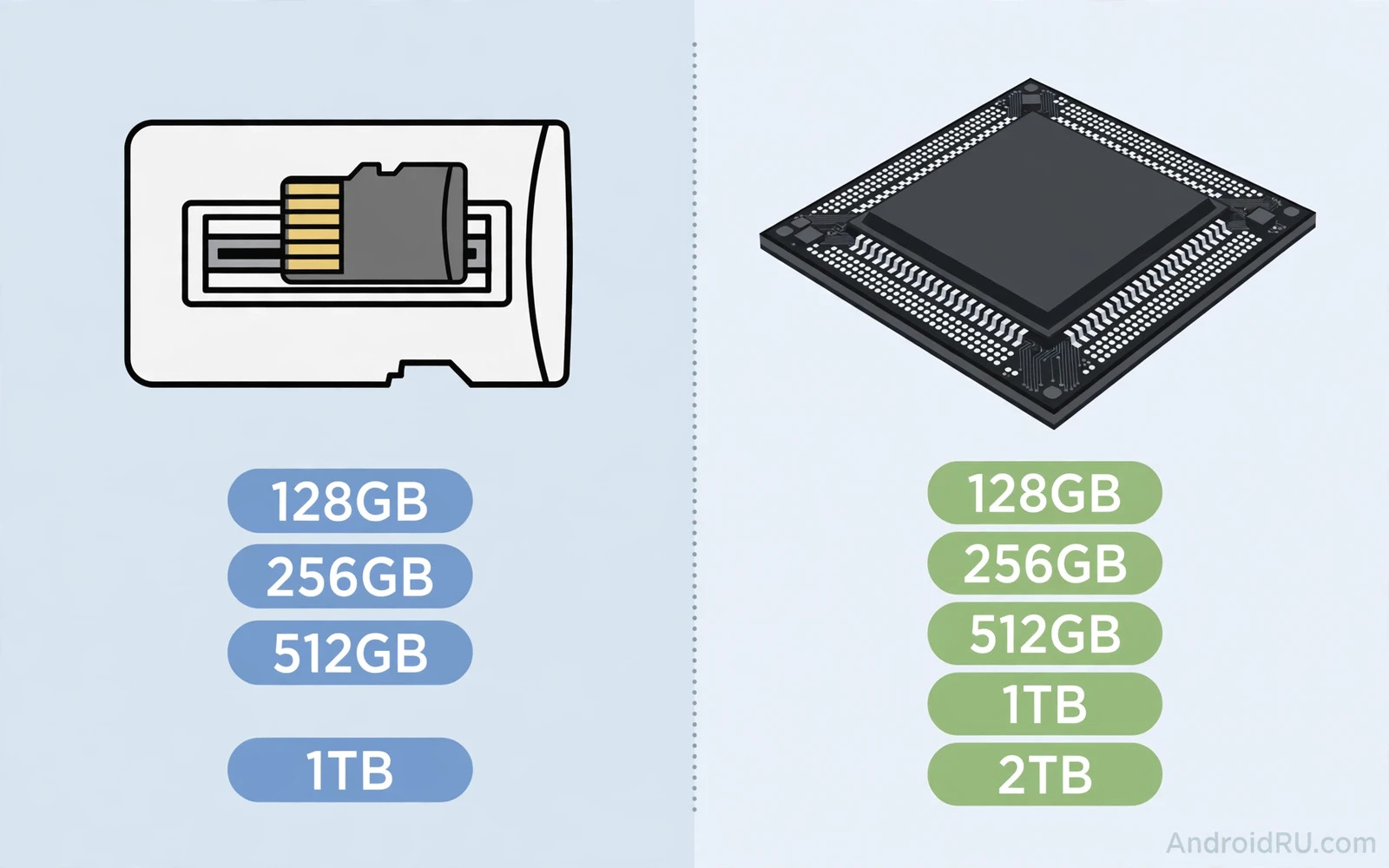
Best Phones with Expandable Memory vs Large Internal Storage
Phone storage forces a choice that lasts for years. Expandable memory lets you add a card later when space runs low. Large internal storage gives you a big, fast pool from day one with no extra purchase. Both paths can work beautifully, and both can frustrate you when mismatched to your habits. A photographer who shoots huge video files needs different storage than a streaming fan who keeps little on the device, and a traveller without reliable internet needs different storage than a city user who streams everything.
The market has shifted toward large internal storage on flagships, and many premium phones dropped the card slot entirely. Mid range phones and rugged phones kept the slot more often. That split means budget and mid range buyers still enjoy real choice, while flagship buyers often must pay upfront for a larger tier. This comparison walks through speed, flexibility, failure risk, camera workloads, and budget math, so you pay for the right tier rather than the largest tier by default.
Expandable Memory vs Large Internal Storage at a Glance
The table below compares the two paths on the criteria that actually decide daily experience. Read it as a whole before you dig into the sections that follow, because no single row settles the question on its own.
| Criteria | Expandable memory (microSD) | Large internal storage |
|---|---|---|
| App launch and system speed | Slower for apps; cards trail internal storage on random access | Fastest; instant launches and smooth 4K recording |
| Flexibility and upgrades | Add or swap cards any time; move media by moving the card | Fixed at purchase; moving data needs a cable or cloud transfer |
| Failure risk | Cards fail more often; cheap cards corrupt files after heavy writes | Failure is rarer but more catastrophic when the chip dies |
| Camera and video | Fine for photos; high bitrate video may be restricted to internal | Best for long 4K clips and high speed bursts |
| Total cost | 128 GB phone plus a large card often beats the next flagship tier | No extra purchase, but the next tier up costs a premium |
| Simplicity | Needs formatting, file decisions, and backup habits | Nothing to buy, format, or lose; the phone simply works |
| Best for | Media collectors, travellers, and budget buyers | App heavy users, video creators, and simplicity seekers |
Speed Differences That Matter in Daily Use
Internal storage is fast. It reads and writes at speeds that support instant app launches, smooth 4K video recording, and quick photo bursts. A good microSD card is slower in most cases, and the gap matters most for apps and for video recording. Apps installed on a card can load slower and can stutter under heavy use, while video recording to a card can struggle at very high bitrates on a slow card.
Photos, music, and documents rarely show a meaningful gap, because their access patterns are lighter. Card speed classes help but they confuse many buyers: a card labelled for video use still trails internal storage for the random access tasks that apps demand. Treat the card as media storage rather than app storage. Keep apps, the system, and the camera cache on internal storage when possible, and keep photos, videos, music, and offline maps on the card where speed demands stay modest. That split gives you flexibility without sacrificing daily responsiveness.
Why random access speed decides app performance
Apps do not read one big file in order. They read many small files scattered across storage, and that pattern is called random access. Internal chips handle random access far better than cards, which is why an app on a card can feel sluggish even when the card claims a high sequential speed on the box. Judge a card by its random access rating, not by its headline number.
When card speed is genuinely enough
For music libraries, photo archives, and offline maps, a reputable card is genuinely enough. These files are read in large, steady chunks, and a mid tier card handles them without drama. The gap only bites when the card is asked to behave like system storage, so keep the card in its lane and it will serve you well for years.
Flexibility and Upgrade Path: Where Cards Win
Expandable memory wins on flexibility. You can start with a cheaper phone and add storage later when a trip or a project demands it. You can swap cards between devices, or move a media library to a new phone by moving the card. You can carry a second card for a specific media collection. That freedom appeals to travellers, to media collectors, and to users who dislike paying flagship tier prices upfront.
Large internal storage wins on simplicity. No card to buy, no card to format, no card to lose. No worry about card quality or card failure. No decision about which files live where. For users who want a phone that simply works, the simplicity premium can be worth it. Internal storage also survives phone changes less gracefully, because moving hundreds of gigabytes takes time and a cable or a cloud transfer, while card users move media in seconds by moving the card itself.
The upgrade math that favours a card slot
A phone with a card slot plus a mid tier card can cost far less than the next internal storage tier on a flagship. The saving grows when you compare a 128 gigabyte phone plus a large card against a 512 gigabyte flagship tier. The gap shrinks when card prices rise or when you need top tier card speed, so compare total cost rather than phone price alone. Mid range buyers gain the most from card slots because mid range internal tiers stay modest, and students, travellers, and outdoor workers often gain the most because their media libraries grow fast and their budgets stay tight. Budget context also appears in the phones under 500 value comparison, where storage tier choices affect total value strongly.
Failure Risk and Data Safety on Both Paths
Cards fail more often than internal storage. A cheap card can corrupt files after heavy writes. A card removed during a write can lose data. A card exposed to heat or moisture can degrade faster than sealed internal chips. These risks are manageable with good habits: buy cards from reputable makers, avoid suspiciously cheap high capacity cards, keep a backup of card contents on a computer or in cloud storage, and never remove a card while the phone writes to it.
Internal storage failure is rarer but more catastrophic when it happens. A dead internal chip can take the whole phone down, and recovery becomes difficult. A dead card usually leaves the phone working, with only the card files at risk. That asymmetry favours cards for replaceable media and favours internal storage for critical app data. Backups remain the real safety net for either path, and the cloud storage pricing breakdown explains how subscription value changes when a family shares one pool.
Card care that prevents most corruption
Format a new card in the phone that will use it, rather than on a computer with different allocation settings. Phone formatting aligns the card file system with phone expectations and reduces weird errors later. Eject the card through system settings when the phone offers that option, because safe ejection flushes pending writes. Heat is a quiet enemy, so keep cards out of hot cars and direct sun, and never force a card that resists insertion.
High endurance cards suit heavy writers
High endurance cards suit dashcams and security cameras that write constantly. Standard cards suit phones that write photos intermittently. Video focused cards suit 4K recording better than bargain cards that claim high capacity at suspiciously low prices. Buy from reputable sellers, because counterfeit cards with fake capacity labels remain common online, and a counterfeit card may report huge capacity while overwriting old files silently once its real capacity fills.
Backup discipline decides whether failure matters
A card that holds the only copy of baby photos is a risk regardless of brand. A card that holds a copy synced to cloud storage or to a computer is a convenience rather than a danger. Schedule a monthly card backup during a quiet evening and verify it by opening a few random files. That habit turns card failure from a tragedy into a minor purchase of a replacement card.
Camera and Video Workloads Separate the Two Paths
Camera workloads separate the two paths clearly. Casual photographers will notice no difference between card and internal storage. Enthusiasts who shoot long 4K clips or high speed bursts will notice card limits sooner, and some phones restrict high bitrate video recording to internal storage for reliability reasons. Check the camera settings on a phone you consider, because a card slot does not guarantee card recording at every quality level.
Photo libraries also grow differently. A phone that saves every photo to a card keeps internal space free for apps and updates. A phone without a card needs a larger internal tier to hold years of photos comfortably. Cloud photo backup changes the math again, because photos can leave the device after upload. Users with fast internet and automatic backup need less local space than users who keep everything on device for offline access.
App Storage Rules on Modern Android
Modern Android treats card storage more restrictively than older versions did. Apps cannot freely move fully to a card in many cases. Adoptable storage exists on some devices, but it encrypts the card to one phone and removes the swap freedom that makes cards attractive. Most users should assume the card serves media only. That assumption keeps expectations honest and prevents disappointment when an app refuses to move.
Scoped storage rules also affect file managers and backup apps. A file manager may need extra permission to write to a card, and a backup app may need specific folder access. These steps are manageable, but they add friction for casual users. Internal only phones avoid this friction entirely. Users who enjoy file management will tolerate it gladly, while users who never open a file manager may prefer to avoid it.
Which Storage Style Fits You: A Verdict Per Use Case
Choose expandable memory when you collect large media libraries on a budget, when you travel offline and need media without internet, or when you want to move a library between phones by moving a card. Choose large internal storage when you want maximum app speed and zero file juggling, or when you record high bitrate video regularly. Buy a reputable card and keep a backup regardless of which path you pick, and compare total cost including card price before you call one path cheaper.
The expandable memory versus internal storage debate has no single winner, because the right answer follows your largest file type. Media collectors should chase the slot. App heavy users and video creators should chase fast internal tiers. Either choice works when paired with a real backup habit, and storage peace of mind comes from backups and from honest habit matching rather than from a single specification number. The tablets for students guide reinforces the same lesson, because student devices also balance local space against cloud space for study files.
Frequently Asked Questions About Phone Storage Choices
Can I install apps on a microSD card?
Mostly no on modern Android. Apps generally stay on internal storage, and adoptable storage is the exception rather than the rule. Plan on the card holding media only, and buy enough internal storage for your apps.
Does a fast microSD card match internal storage speed?
No. Even a fast card trails internal storage on random access, which is the pattern apps use most. A fast card is excellent for photos, music, and video playback, but it will not make apps launch like internal storage does.
How do I know if a card is counterfeit?
Buy from reputable sellers, test the card with a capacity check tool before trusting it with photos, and be suspicious of huge capacity at a tiny price. A genuine card reports its true capacity and holds data across a full write test.
When does paying for a larger internal tier make sense?
It makes sense when your largest file type grows steadily and you dislike managing files manually. Photo libraries grow every month for parents and travellers, and a larger tier absorbs that growth without monthly cleanup sessions. Compare the tier price against a year of cloud subscription plus the time cost of file juggling before deciding.
Your Next Step: Match Storage to Your Largest File Type
Before you buy, list your three largest file types and how fast they grow. If the list is photos, videos, and offline maps, a card slot plus a reputable card will likely serve you best. If the list is apps, games, and 4K video projects, pay for the larger internal tier. Then set up a backup on day one, because the best storage choice is the one you never have to think about again, and a backup is what makes that possible. Check your current storage use in settings today, and you will know within a minute which path your habits actually demand.

