

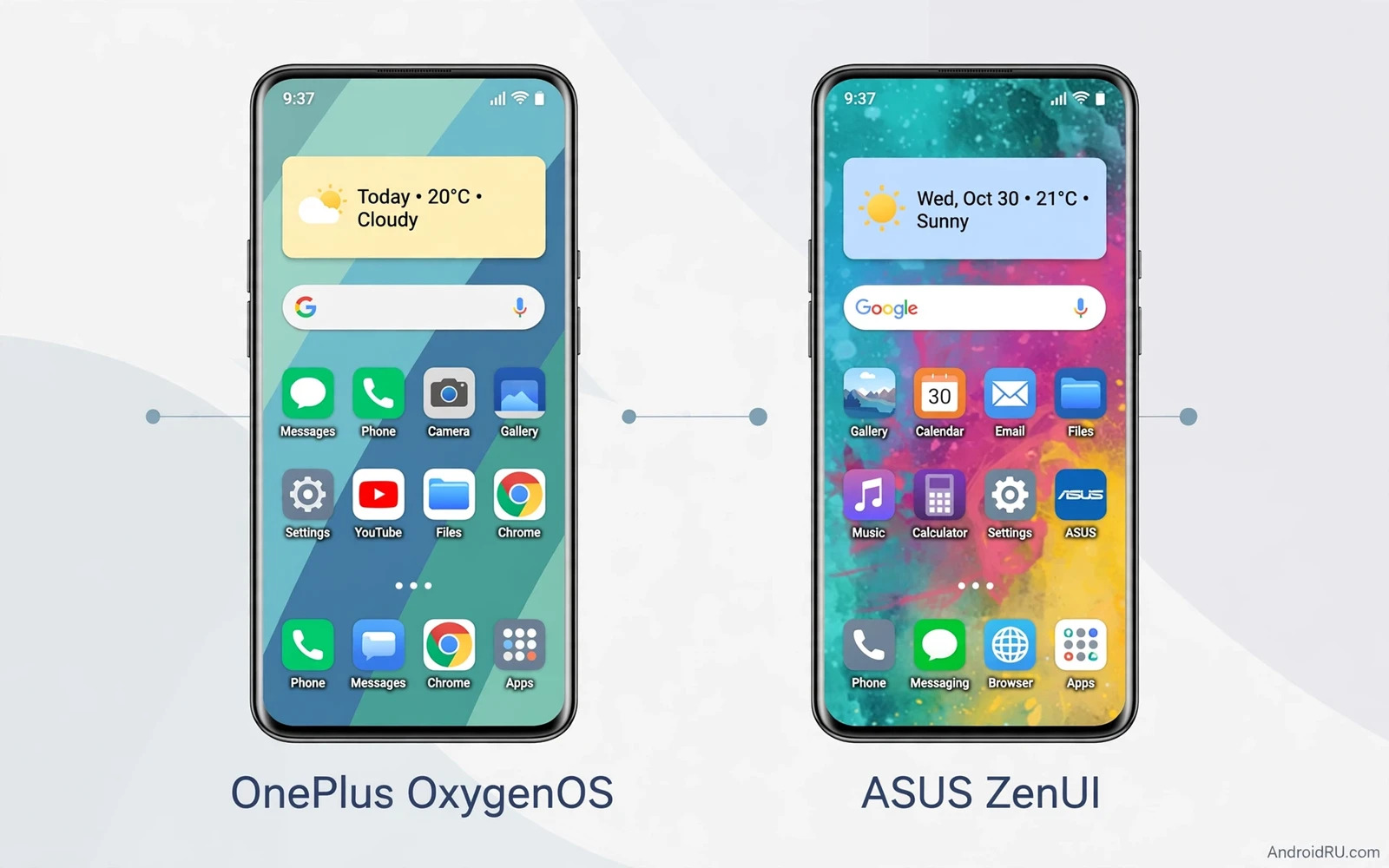
This guide to OnePlus OxygenOS vs ASUS ZenUI fast clean interface compares feel and speed and clutter in plain terms.
OnePlus OxygenOS and ASUS ZenUI both promise a fast and clean Android experience. The OnePlus OxygenOS vs ASUS ZenUI comparison is about feel and speed and clutter and control. OxygenOS leans toward fluid motion and simple design. ZenUI leans toward practical tools and quiet customisation. Both skins run on Android and both keep core Android strengths. The winner depends on what clean means to you. This guide compares them in plain terms.
Start with your definition of clean. Some users define clean as few apps and few menus. Some users define clean as fast motion with no waiting. Some users define clean as a calm home screen with no noise. Some users define clean as full control without bloat. OxygenOS and ZenUI score differently on each definition. Your definition will point to the winner faster than any feature count.
Speed also has several meanings on a phone. Launch speed means apps open fast. Motion speed means animations feel fluid. Long term speed means the phone stays smooth after months of use. Both skins aim for all three kinds of speed. They reach them through different design choices. A skin that feels fast on day one must also feel fast on day five hundred.
Design And Daily Feel
OxygenOS design feels light and airy with rounded shapes and soft colours. Menus use generous spacing and clear text. Animations flow smoothly between screens. The home screen stays tidy by default. The overall feel is calm and modern. Users who love minimal design often enjoy OxygenOS at first sight.
ZenUI design feels practical and grounded with clear icons and useful widgets. Menus favour function over flourish. Tools sit close at hand rather than hidden in deep menus. The home screen can feel busier but also more capable. Users who love handy tools often enjoy ZenUI after a week of use. Practical design grows on users who value function daily.
Customisation differs in tone between the two skins. OxygenOS offers theme colours and icon shapes and always on styles in a tidy package. ZenUI offers layout tweaks and gesture options and tool shortcuts in a practical package. Neither skin forces heavy themes on users. Both skins let users shape the phone without root or complex tools. The difference is polish versus practicality.
Speed And Smoothness
OxygenOS has a strong reputation for fluid motion. Scrolling feels smooth and app switching feels quick. Animations rarely stutter on capable hardware. The system keeps background tasks tidy to preserve that fluid feel. Users often describe OxygenOS as fast even on mid range hardware. That reputation comes from years of focus on motion quality.
ZenUI focuses on steady speed rather than showy motion. Apps open promptly and multitasking stays stable. The system avoids heavy visual effects that can slow older hardware. The result feels reliable rather than flashy. Users who value steady work over animation flair often prefer this approach. Steady speed matters during long work days.
Long term smoothness depends on updates and storage care as well as skin design. A skin that adds features with each update can grow heavier over time. A skin that keeps features lean can stay light for years. Both brands have faced this balance in different ways. Read long term user notes for the exact model before you judge long term speed. Model history beats brand slogan.
Apps Clutter And Control
Preinstalled apps shape the clean feeling strongly. OxygenOS ships with a modest set of system apps and few duplicates. ZenUI ships with a practical set of ASUS tools alongside Google apps. Some users welcome ASUS tools for audio and battery and file care. Some users see any extra tool as clutter. Count the apps you will actually use weekly. Ignore apps that you can disable or hide easily.
Duplicate apps cause the most clutter frustration. A phone with two galleries and two browsers and two file managers feels messy. Both skins have reduced duplicates over time but some overlap remains. Check the app drawer of the exact model before you buy. A clean drawer on day one predicts a calm phone for months. A messy drawer predicts weekly tidying.
Control options let power users shape either skin deeply. Gesture navigation and quick settings and notification controls matter daily. OxygenOS offers smooth gestures and tidy quick settings. ZenUI offers flexible gestures and practical shortcuts. Readers who care about brand support behind these skins may also enjoy Best Android Phone Brands Ranked by Reliability and Support because update policy shapes how long a clean skin stays clean. A skin that receives steady updates stays tidy longer.
Battery And Performance Balance
A clean skin should also help battery life. Lean systems waste less power on background services. Heavy systems can drain battery with duplicate services and animations. OxygenOS leans lean and often helps battery life. ZenUI leans practical and its tools can add small background costs. The difference is usually modest on modern hardware. Battery habits and screen use matter more than skin alone.
Gaming and heavy apps test skin overhead in a different way. A lean skin leaves more resources for games. A practical skin may offer game tools that help focus and cooling. Gamers should weigh game tools against raw leanness. Casual users should weigh battery and calm design over game tools. Your heaviest app decides which balance suits you.
Thermal behaviour also links to skin and hardware together. A phone that manages heat well stays smooth during long sessions. A phone that overheats will throttle and stutter regardless of skin. Skin cannot rescue weak cooling design. Hardware and skin must work together for sustained speed. Judge sustained speed by long session reports and not by short tests.
Mistakes To Avoid
One mistake is judging a skin from screenshots alone. Screenshots hide motion quality and menu depth and app clutter. Another mistake is judging a skin from one model and applying it to all models. Skin versions differ by model and by region and by update. Always check the skin version on the exact model you plan to buy.
Another mistake is equating clean with empty. An empty skin that lacks useful tools can force you to install many third party apps. Those apps can add clutter and battery cost of their own. A practical skin with good built in tools can feel cleaner in daily use. Judge cleanliness by daily effort and not by app count alone.
A final mistake is ignoring update history for the skin. A skin that stops receiving polish updates can grow stale and buggy. A skin that receives steady polish stays fresh. Check recent update notes for the exact model. Steady polish is a sign that the brand still cares about that phone.
How To Choose
Choose OxygenOS when you love fluid motion and minimal design and a calm home screen. Choose OxygenOS when you want a phone that feels fast at a glance. Choose ZenUI when you love practical tools and flexible shortcuts and steady performance. Choose ZenUI when you want handy features close at hand. Let daily feel decide rather than launch marketing.
Test both skins in a shop when possible. Open settings and switch apps and scroll a long feed. Notice motion and menu depth and app drawer tidiness. Notice how quickly you find common settings. A few minutes of real use reveals the feel that screenshots hide. Your hands and eyes will pick a winner quickly.
If you want a wider comparison habit then Amoled vs IPS LCD Displays on Budget Android Phones shows how to weigh one hardware trade carefully. Screens and skins both shape daily feel in quiet ways. A phone with a screen you love and a skin you love feels right every time you pick it up. That double match is worth waiting for.
Gestures And One Handed Use
Gesture navigation shapes daily speed more than most users expect. A smooth back gesture and a reliable home gesture reduce taps across a day. A gesture system that misfires will frustrate even patient users. Both OxygenOS and ZenUI offer gesture options with different feels. Test gestures with one hand and with a case fitted. A case can change edge swipe feel in surprising ways.
One handed mode helps users with large phones and small hands. A good one handed mode shrinks the screen reachably without hiding key controls. A poor one handed mode feels like a cramped afterthought. Users who commute with one hand free will use this mode daily. Users who always use two hands may ignore it entirely. Match this feature to your real grip habits.
Quick settings layout also shapes daily speed. A tidy quick settings panel puts Wi-Fi and torch and rotation within one swipe. A cluttered panel buries common toggles under extra swipes. Both skins let users reorder tiles to some degree. Spend ten minutes arranging tiles on day one. That small setup pays back every day through faster toggles.
Notification handling differs in tone between the two skins. One skin may group notifications more aggressively. The other may show each alert more openly. Grouping reduces noise but can hide urgent messages. Open display keeps everything visible but can overwhelm. Choose the grouping style that matches your message volume. Heavy message users benefit from smart grouping and quiet hours.
Foldable software raises similar skin questions at a larger scale. A skin must handle screen transitions and multitasking layouts cleanly on a folding device. That is why Best Foldable Phones Comparison: Flip Style vs Fold Style offers useful context for skin lovers. It compares flip and fold shapes on daily usability and software polish. Skin quality plus shape quality together decide whether a foldable feels premium or unfinished.
Update notes reveal skin priorities better than launch slogans. A brand that fixes animation bugs quickly cares about daily feel. A brand that adds useful shortcuts with each update cares about practical users. A brand that only adds marketing features may neglect core smoothness. Read the last few update notes for your exact model before you buy. Those notes predict how the skin will feel after a year of use.

