

Isolation Without Batteries Or Processing
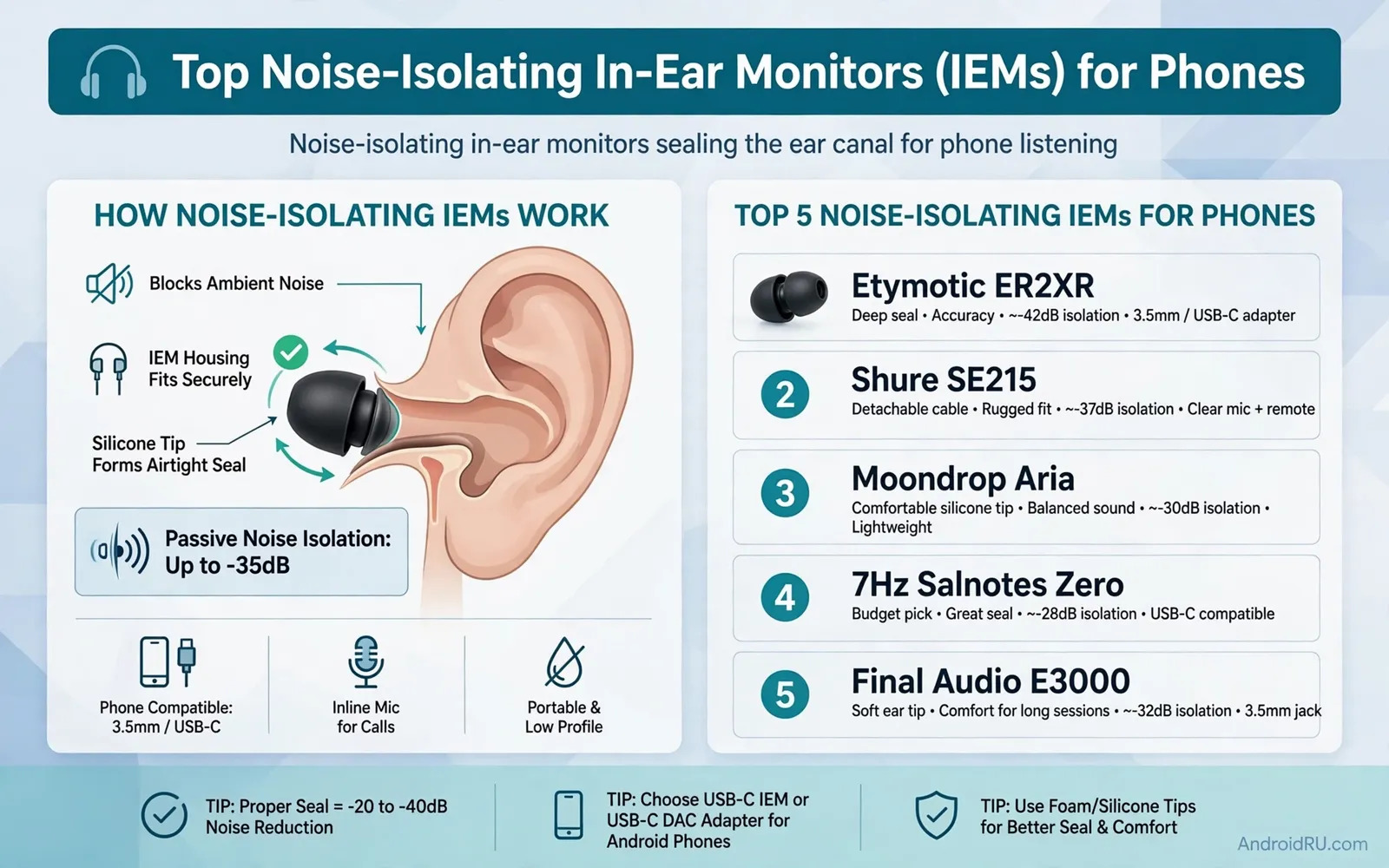
Noise-isolating in-ear monitors block outside sound with a physical seal in the ear canal rather than with electronic cancellation. A well fitting ear tip fills the canal and reduces traffic noise and office chatter and engine hum before sound reaches the eardrum. Music can then play at lower volume with greater detail because the listener does not need to overpower the environment. Battery life never limits isolation because no power is needed for the seal itself. That simplicity appeals to listeners who want reliable quiet without charging another device.
Isolation differs from active noise cancelling in character as well as technology. Active cancelling excels at steady low frequency drone such as aeroplane engines. Passive isolation excels across a broader range when the seal is excellent and it adds no processing artefacts to music. Voices and sudden sounds still leak through to some degree because no seal is perfect. Listeners who need awareness of surroundings should choose a looser fit or a transparency feature on a wireless product rather than forcing isolation in unsafe situations. Readers comparing wireless listening options can explore wireless earbuds for Android with active noise cancelling tested to weigh passive and active approaches.
Fit Is The Sound Quality
Ear tip fit decides isolation and bass and comfort more than any driver specification. A tip that seals well delivers full bass and clear detail. A tip that leaks loses bass first and lets outside noise flood in. Silicone tips suit many ears and last well and clean easily. Foam tips expand in the canal and seal irregular shapes superbly but they wear faster and need replacement. Flange tips with multiple ridges suit deep canals and stage performers. Try every included tip size and shape before judging an IEM because the wrong tip makes an excellent monitor sound thin and disappointing.
Insertion technique matters as much as tip size. Pull the ear gently upward and outward while inserting the tip and hold it briefly while foam expands. The monitor should feel secure without pressure pain. A seal test is simple because a good seal makes your own voice sound fuller and makes outside sounds noticeably duller. If one ear seals and the other leaks then try different sizes per ear because ears are rarely identical. Custom moulded tips offer the ultimate fit for dedicated listeners but they cost more and require ear impressions. Most listeners achieve excellent results with careful tip selection alone.
Sound Character And Phone Compatibility
In-ear monitors vary in sound character from neutral and detailed to warm and bass rich. Neutral monitors reveal recording detail and suit listeners who value accuracy. Warm monitors add enjoyable weight to bass and suit pop and electronic music. Bright monitors emphasise treble detail but can sound harsh on poor recordings. No character is objectively best for every listener. Personal taste and music genre and listening volume shape the right choice. Read descriptions of sound character rather than chasing a single driver count because more drivers do not guarantee better sound.
Phone compatibility has become a practical question as headphone jacks disappear from many phones. Wired IEMs need a USB-C adapter or a dedicated digital audio converter on phones without a jack. Adapter quality affects sound because a poor adapter adds noise or limits volume. Readers weighing adapter options can review USB-C DAC headphone adapters for audiophile sound for guidance on clean phone audio. Cable quality matters too because a tangled fragile cable frustrates daily use while a detachable cable lets a listener replace a worn cable without replacing the monitors.
- Silicone tips for durability and easy cleaning
- Foam tips for maximum seal in irregular ear canals
- Flange tips for deep secure stage style fit
- Detachable cable so a worn cable does not end the product
- Quality USB-C adapter for phones without a headphone jack
Using IEMs Safely And Comfortably
Isolation allows lower listening volumes and lower volume protects hearing over years of listening. Resist the habit of raising volume to overcome a poor seal and fix the seal instead. Take listening breaks during long sessions and keep volume at a level where conversation remains possible when the music pauses. Clean tips regularly because earwax buildup changes sound and hygiene. Replace foam tips when they lose expansion and replace silicone tips when they tear or harden. A clean well fitting tip protects both sound and ears.
Safety awareness matters because strong isolation removes traffic and announcement sounds. Do not wear isolating monitors while cycling in traffic or walking near vehicles or working in environments where warning sounds matter. Use one earbud or a looser fit in those situations or choose a product with an awareness mode. Enjoyment should never override awareness where safety depends on hearing the surroundings. A thoughtful listener chooses isolation for safe places and awareness for shared roads and workplaces.
Care Storage And Longevity
Store IEMs in a case rather than wrapping cables tightly around a phone because tight wraps strain cable joints. Coil cables loosely and keep tips clean and dry. Avoid leaving IEMs in hot cars where adhesives and tips degrade. Clean the nozzle mesh gently with a dry brush because blocked mesh dulls treble. Check cable connectors periodically for looseness and replace cables at the first sign of intermittent sound rather than waiting for a complete failure during a favourite song.
Readers curious about wireless audio quality trade-offs can explore audio codecs on mobile covering LDAC and aptX HD and AAC for background on how phone audio reaches the ears. Wired IEMs avoid codec compromises entirely when paired with a good adapter. That direct path appeals to listeners who value consistency and detail above wireless convenience.
Choosing IEMs And A Final Checklist
Choose by fit first and by sound character second and by cable and adapter needs third. A monitor that fits superbly with a sound character you enjoy will outperform a technically superior monitor that leaks and hurts. Test with your own music at normal volume in a realistic environment rather than in a silent shop alone. A shop test reveals comfort but a street test reveals isolation. Use the return window for real world listening before committing.
The best IEMs disappear during listening and leave only music and quiet. They should seal without pain and sound detailed without harshness and survive daily pocket life with a case and a replaceable cable. Achieve that combination and phone listening becomes a private concert that travels anywhere without batteries or noise cancelling circuitry.
- Try every tip size and shape before judging sound quality
- Test seal in a noisy real environment not only indoors
- Choose a sound character that matches your music taste
- Pack a case and keep volume low thanks to good isolation
IEM Listening Habits And Hearing Health
Hearing health deserves a central place in any IEM guide because isolating monitors make high volume listening deceptively comfortable. A sealed ear canal delivers detail at lower volume but it also removes environmental cues that normally prompt listeners to lower volume. Set a personal volume limit in phone settings when available and respect it during long sessions. Take a break every hour and let ears rest in quiet. A listener who protects hearing today preserves music enjoyment for decades while a listener who chases loudness daily pays for it gradually and irreversibly.
Music discovery also changes with good IEMs because detail reveals production choices that cheap earbuds hide. Acoustic instruments gain texture and vocal harmonies separate clearly and bass lines gain definition. Listeners often revisit favourite albums after upgrading IEMs and hear layers they missed for years. That rediscovery is one of the genuine pleasures of better listening gear. Explore different genres with a good seal because a monitor that excels at one genre may reveal surprising strengths in another.
Travel listening benefits from IEM simplicity because no charging case is needed for passive isolation. A small pouch with IEMs and spare tips fits any bag and works on any flight without battery anxiety. Keep a second pair of tips in the pouch because a lost tip can end a listening session otherwise. A wired IEM with a good adapter remains a dependable travel companion even as wireless products dominate shop shelves. Reliability and simplicity often matter more than novelty on long journeys.
- Set a personal volume limit and respect it during long sessions
- Take hourly breaks and let ears rest in quiet
- Revisit favourite albums to hear detail good IEMs reveal
- Carry spare ear tips in the travel pouch always
- Keep wired IEMs as a dependable no-battery travel option
IEM Use For Study And Focus Work
IEMs suit study and focus work because passive isolation creates a quiet bubble without the pressure sensation some listeners feel from active cancelling. A good seal blocks office chatter and library noise while music or ambient sound fills the remaining background. Volume should stay low enough that a nearby colleague can still gain attention with a tap on the shoulder. Long study sessions need comfortable tips because a painful seal distracts more than it helps. Foam tips often suit long stationary study because they seal gently and stay put without constant adjustment.
Focus playlists and ambient sounds work well through IEMs because detail and separation help the brain treat background sound as a consistent environment rather than as distraction. Avoid lyrics during reading-heavy work when lyrics compete with text processing. Instrumental music or steady ambient sound supports concentration better for most readers. Take listening breaks between study blocks so ears rest and focus resets. A study routine with IEMs should support concentration rather than becoming another source of fatigue.
- Use passive isolation for a quiet study bubble without pressure
- Keep volume low enough that a shoulder tap still gains attention
- Choose foam tips for long stationary study sessions
- Prefer instrumental sound for reading-heavy work

