

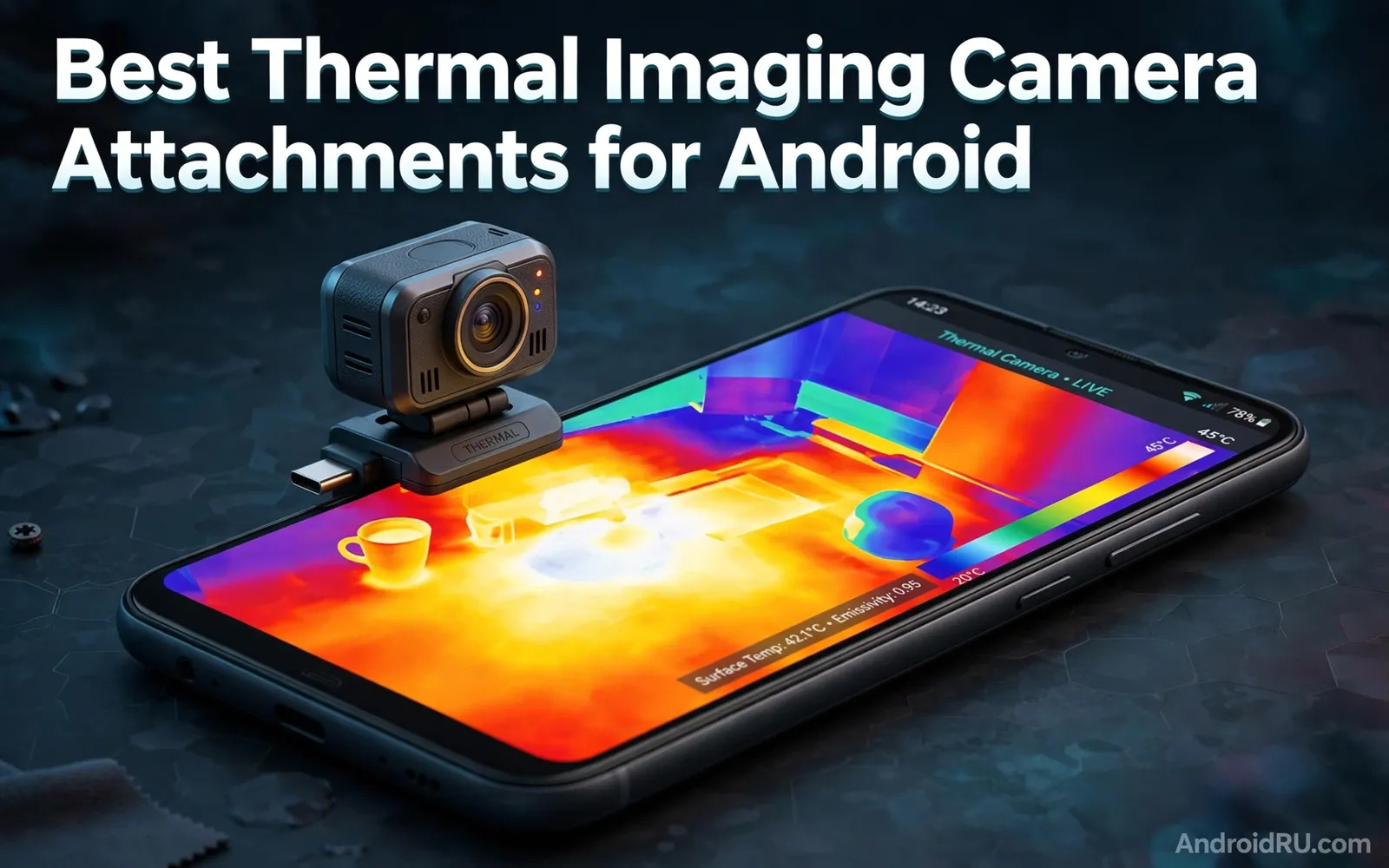
Seeing Heat Instead Of Light
A thermal imaging attachment detects infrared radiation and turns temperature differences into a colour image on your phone screen. Hot objects appear in warm colours and cold objects appear in cool colours and the pattern reveals problems that look identical in normal light. A warm patch on a wall can reveal a hidden pipe and a cold patch can reveal missing insulation and a hot spot on a circuit board can reveal a failing component. The phone provides the screen and the processing and the storage while the attachment provides the sensor and the lens. Together they turn a familiar device into a diagnostic tool for homes and workshops and outdoor use.
Thermal images are not photographs in the usual sense and they should not be read like photographs. Colour scales can be adjusted and the same object can look dramatic or dull depending on the scale chosen. Emissivity matters too because shiny metal and matte plastic radiate heat differently even at the same temperature. A reflective surface can mirror nearby heat and mislead an untrained reader. Learning the basics of scale and emissivity prevents confident misreadings and keeps the tool useful rather than merely impressive. Readers interested in how phone cameras interpret a scene may enjoy smartphone camera sensor sizes and why megapixels mislead buyers as a companion to thermal basics.
Resolution And Measurement Range Explained
Thermal resolution describes how many temperature points the sensor captures across the image. Higher resolution shows finer detail and separates small hot spots that a low resolution sensor would blur into one warm blob. For home checks a modest resolution can still reveal draughts and damp patches and overheating plugs. For electronics work finer detail helps isolate a single hot component on a crowded board. Range matters as well because an attachment built for building checks may not measure very high temperatures safely or accurately and an industrial attachment may lack fine sensitivity at room temperature. Match the range to the job rather than assuming that a wider range is always better.
Accuracy claims deserve careful reading. A stated accuracy applies under controlled conditions and at a stated distance and on suitable surfaces. Distance changes the size of the measured spot and a distant reading averages a larger area than a close reading. That averaging can hide a small hot spot or dilute a cold leak. Move closer for detail and confirm important readings from more than one angle and more than one distance. A thermal attachment supports investigation but it does not replace a qualified inspection for electrical safety or structural problems or gas leaks or medical questions. Treat alarming findings as a reason to seek expert help rather than as a final diagnosis.
Practical Uses Around Homes And Workshops
Home users often start with insulation and draughts and heating. A thermal view can show cold air entering around a window frame and heat escaping through a thin wall section and radiators warming unevenly. Plumbers and electricians use the same view to trace warm pipes behind surfaces and to spot overloaded connections before they fail. Outdoor users use thermal views to check a vehicle engine after a drive and to inspect a campsite at night and to understand how a shelter loses heat. Each use shares the same skill of comparing patterns rather than trusting a single colour at a single moment.
Photographers and creators use thermal attachments for a different reason because heat patterns create striking visual stories. A thermal portrait or a thermal landscape looks unlike any normal photograph and can illustrate energy stories in a vivid way. Recording thermal video adds another layer because heat changes over time as a machine warms up or as a room cools down. Stabilisation helps here because shaky thermal footage is hard to read. Readers planning steady mobile footage can look at mobile tripods and gimbals for smooth video shooting for support options that also suit thermal recording sessions.
- Check insulation gaps and cold draughts around windows and doors
- Trace warm pipes and uneven radiators without opening walls
- Spot hot electrical connections and overloaded plugs early
- Inspect engines and outdoor gear after use in cold weather
- Record heat changes over time for energy and repair stories
Choosing An Attachment For Your Phone
Connector type is the first practical filter. Some attachments use USB-C and plug directly into the phone while others connect wirelessly and use their own battery. A direct attachment is compact and simple but it occupies the charging port during use. A wireless attachment frees the port and suits longer sessions but it needs charging of its own and pairing can add friction. Check the app situation before buying because the attachment is only as good as its software. Look for clear temperature readouts and adjustable colour scales and image capture and video capture and simple sharing. A powerful sensor trapped in a clumsy app will frustrate daily use.
Build quality matters for a tool that travels to roofs and workshops and building sites. A rugged housing and a protective cap for the lens and a secure connector reduce the risk of damage in a bag. Consider whether the attachment works with your phone case because a thick case can block a direct plug or strain the connector. Some users keep a short adapter cable for case compatibility while others remove the case for thermal sessions. Either approach works if it is planned in advance rather than discovered on a cold roof with a job waiting. Readers comparing creator hardware more broadly can explore mobile devices for content creators and vloggers to see where thermal tools fit a wider kit.
Safety Limits And Responsible Use
Thermal imaging has clear safety limits that every buyer should respect. It cannot see through solid walls in the way that popular imagination suggests and it cannot diagnose illness and it cannot prove that wiring is safe. A cool reading does not guarantee safety and a warm reading does not prove danger on its own. Electrical work carries shock risk and roof work carries fall risk and no camera removes those risks. Use thermal views to decide where to look closer and when to call a professional and never use a thermal image as permission to touch a suspect circuit or to ignore a burning smell or to delay an urgent repair.
Privacy deserves attention as well because a thermal camera can reveal activity inside a home through heat patterns in some situations. Do not point a thermal attachment at neighbours or at private spaces without a clear and lawful reason. Keep recordings of other people private and delete thermal footage that you do not need. Responsible use keeps a powerful diagnostic tool welcome in homes and workplaces and protects the trust that makes it useful for honest inspection work.
Care Storage And A Buying Checklist
Protect the lens above all else because scratches and dirt distort thermal readings and reduce image quality. Keep the cap on during storage and clean the lens only with a soft cloth and the method recommended by the maker. Store the attachment in a padded pouch away from extreme heat and away from moisture and away from heavy objects that could bend the connector. Update the companion app when updates arrive because measurement features and stability often improve after launch. Test the attachment soon after purchase during the return window with known warm and cold objects so any defect appears early.
Choose in this order to avoid an expensive mistake. Confirm connector compatibility with your exact phone first. Match resolution and temperature range to your main job second. Judge the app by its readouts and scales and capture options third. Check ruggedness and case compatibility fourth. A careful order keeps the purchase grounded in real tasks and turns a fascinating sensor into a tool that earns its place in your kit again and again.
- Confirm USB-C or wireless compatibility with your exact phone model
- Match resolution and range to home or workshop or outdoor tasks
- Test the app scales and capture options during the return window
- Protect the lens with its cap and a padded pouch between jobs
Thermal Imaging Practice And Interpretation Skills
Thermal skill grows through comparison rather than through single snapshots. Photograph the same wall in morning and evening and note how sun exposure changes the pattern. Photograph a known warm object beside an unknown object so the scale has a reference point. Photograph a circuit before and after load so the change reveals the stressed component. Each comparison teaches how ambient temperature and material and distance shape a thermal image. A beginner who compares systematically learns faster than a beginner who collects dramatic single images without context.
Documentation turns thermal findings into useful records for repairs and energy work. Save images with notes about location and time and ambient conditions and distance. A thermal image without notes becomes a mystery within weeks because the same wall looks different across seasons. Share images with professionals together with normal photographs of the same area so the professional can orient the thermal pattern to real structure. Clear documentation also helps when a landlord or a contractor needs evidence for a repair decision. A thermal attachment becomes a communication tool as much as a diagnostic tool when records stay organised.
Seasonal use reveals patterns that a single session misses. Winter cold exposes insulation gaps clearly while summer heat exposes overheating equipment clearly. A roof leak may appear as a cool damp patch after rain while the same area looks normal when dry. Repeat inspections across seasons build a fuller picture of a building or a machine. Patience and repetition matter more than sensor specifications alone because the best thermal work combines a decent sensor with disciplined observation over time.
- Compare the same area across morning and evening and seasons
- Include a known warm reference object in important images
- Save thermal images with location and distance and conditions noted
- Pair thermal images with normal photographs for clear orientation
- Repeat inspections after rain and after load changes for hidden issues

