

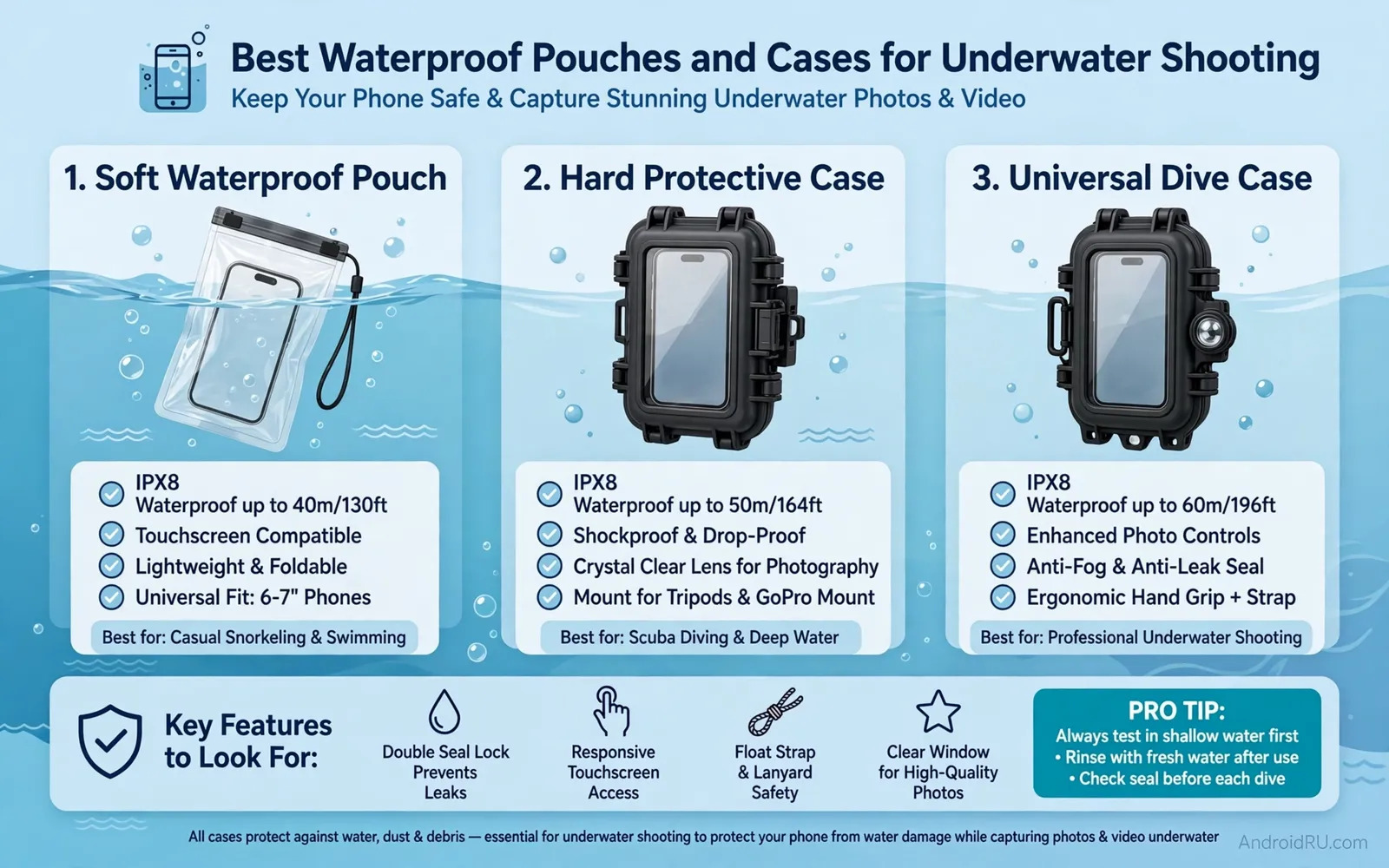
Pouches Versus Hard Cases For Water Protection
A waterproof pouch is a soft sealed bag for your phone. A hard case is a rigid shell that seals around the phone. Pouches cost less and fit many phone sizes. Hard cases cost more and fit one phone model precisely. Pouches suit casual pool photos and beach days. Hard cases suit frequent divers and serious underwater shooters. A pouch lets you use the touchscreen through soft plastic. A hard case often uses buttons and a clear window instead. Your shooting frequency should guide this first choice. Occasional splash protection needs a pouch. Repeated deep use deserves a hard case.
Depth ratings matter more than marketing words on packaging. A pouch rated for shallow swimming is not a diving tool. A case rated for deeper use has stronger seals and locks. Never trust a depth claim without checking the test standard behind it. Salt water and pool chemicals stress seals differently from fresh water. Rinse any case in fresh water after sea or pool use. Dry the seals fully before you open the case. A single grain of sand in a seal can flood a phone. Careful sealing habits matter as much as the product rating itself.
Seal Testing Before Every Water Session
Test every pouch or case before it touches water with a phone inside. Place a tissue inside the empty case and seal it fully. Submerge the sealed case in a sink for several minutes. Open the case and check the tissue for any dampness. A dry tissue means the seal passed this basic test. A damp tissue means the seal failed and the case needs attention. Repeat this test after any drop or long storage period. Seals age and warp over time even without use. A five minute test can save a phone worth far more than the case.
Inspect seals visually before every single use without exception. Look for sand and hair and lint along the seal line. Look for cracks or flat spots in rubber gaskets. Clean the seal groove with a soft brush when needed. Apply maker approved lubricant only when the maker suggests it. Never force a latch that resists closing. A resisting latch often signals trapped material in the seal. Clear the material and try again gently. A latch that still resists may signal a damaged case. Retire a damaged case rather than risking a phone to save its price.
Touchscreen Use Underwater
Touchscreens behave strangely underwater on most phones. Water on the screen creates false touches. Pressure changes can trigger random taps. Capacitive screens were never designed for underwater taps. This is why many shooters set the camera before entering water. Volume buttons often work as shutter buttons underwater. Set that option in the camera app before the session. Lock the screen orientation to avoid flips mid shoot. Start video before you submerge when possible. These habits give you control despite touchscreen limits.
A hard case with physical buttons solves many underwater control problems. Buttons give a real shutter press without screen taps. A pouch with a soft window still relies on screen taps through plastic. Some pouches add a shutter button through the plastic. Test that button on land before a water session. Test it with wet hands as well for realism. A button that works dry may fail when wet. Know your control limits before you enter the water. A calm shooter with preset controls captures better photos than a frustrated shooter fighting a screen.
Photo And Video Quality Through A Window
A plastic window can soften photos if it is scratched or foggy. Keep the window clean and scratch free for best results. Wipe the inside window with a soft cloth before sealing. Wipe the outside window after any sand contact. Fog inside a pouch ruins photos fast in warm water. Anti fog inserts absorb moisture inside the case. A small insert can save a whole shoot in humid conditions. Store inserts dry between uses for full effect. Replace inserts that feel damp or worn. Clear windows and dry air are the two secrets of sharp underwater shots.
Light behaves differently underwater and colors shift fast. Reds fade first as depth increases. Photos taken deep look blue and green without correction. Shoot near the surface for natural colors with a pouch. Use the phone flash carefully since it can light particles in front of the lens. Particles create bright spots known as backscatter in photos. A steady hand reduces blur in dim underwater light. A tripod on land helps framing skills that transfer to water. For framing practice you can study smartphone camera lens attachments for photography to learn how optics change framing and light. That framing sense helps you compose stronger shots even through a pouch window.
Salt Water Pools And Fresh Water Care
Salt water is the harshest environment for cases and phones alike. Salt crystals can jam seals after drying. Salt can corrode metal parts on a case over time. Rinse the sealed case in fresh water right after sea use. Rinse before you open the case for any reason. Pool chemicals can also attack seals with repeated exposure. Rinse after pool sessions just as you would after sea sessions. Fresh water lakes pose fewer chemical risks but still carry grit. Grit in a seal is dangerous in any water type. A fresh rinse after every session is a cheap habit with huge value.
Drying matters as much as rinsing for long case life. Dry the case fully before storage in a bag. Store the case open so seals can breathe between trips. Store it away from sun and heat that warp plastic. Check seals again before the next trip after long storage. A case stored compressed can develop flat seal spots. A case stored open keeps its seal shape longer. These storage habits extend case life by years. They also reduce the chance of a surprise flood on a holiday.
Choosing Size And Fit For Your Phone
Fit decides whether a pouch protects or merely surrounds a phone. A pouch too large lets the phone slide and stress the seal. A pouch too small strains the seal at closing time. Measure your phone with its case on if you plan to keep the case. Some pouches require a bare phone for a safe seal. Remove bulky cases when the maker guidance says so. A hard case must match your exact phone model. A near match is not good enough for a hard case. Button positions and camera positions must align perfectly. A misaligned camera window ruins every photo through the case.
Think about lanyards and floats for open water use. A floating strap can save a phone dropped in a lake. A wrist lanyard keeps a pouch close in waves. A neck lanyard frees hands between shots on a boat. Bright colors help you spot a floating phone fast. A pouch that sinks with a heavy phone is lost without a float. Test the float with the phone inside in shallow water first. That test proves the float can hold your exact setup. Safety gear for the phone deserves the same care as safety gear for the swimmer.
Safety Limits And Responsible Water Shooting
Never dive deeper than your case rating allows. Never trust a phone water rating as a substitute for a case. A phone rating covers accidents rather than planned underwater use. Planned underwater shooting always deserves a dedicated case. Never open a case while still in or near water. Water on your hands can drip inside during opening. Dry your hands and the case exterior before opening. Remove the phone only in a dry safe place. These rules sound strict because floods happen fast. One careless opening can end a phone in seconds.
Protect yourself as well as the phone during water shoots. Never chase a photo into a dangerous current. Never dive alone to capture a shot. Keep your attention on water safety first and photos second. A great photo is never worth a dangerous swim. Tell someone on shore about your shooting plan. Keep sessions short in cold water to avoid fatigue. Warm up and dry gear between sessions. Responsible habits keep water photography fun for years. They also keep your phone alive for the next adventure.
Final Advice For Waterproof Case Buyers
Buy a pouch for casual splash and pool photos on holiday. Buy a hard case for repeated or deeper underwater work. Test every case with tissue before first use. Test again before every trip after storage. Clean seals and windows as part of your packing routine. Pack anti fog inserts and a fresh rinse bottle for sea trips. Keep a float strap on any pouch used in open water. These habits cost little and they protect a lot. A waterproof case is a safety tool before it is a photo tool. Treat it with the seriousness it deserves.
Choose a case that fits your phone exactly and your habits honestly. Do not buy a deep diving case for one pool afternoon. Do not buy a cheap pouch for a diving holiday. Match the tool to the real water you will enter. Read recent user feedback for flood reports with your phone model. A pattern of floods is a clear warning to avoid that case. With the right case and careful habits your Android phone can capture stunning water moments. Those moments are worth protecting with patience and proper preparation.
Underwater Shooting Techniques For Beginners
Beginner underwater shooters should start in shallow calm water. A pool offers a safe classroom for pouch skills. Practice sealing and framing and shutter control in the shallow end. Learn how colors shift even in a few feet of water. Learn how slowly you must move to avoid stirring particles. Slow movement keeps water clear in front of the lens. Fast movement clouds the shot with bubbles and debris. Take many photos and review them poolside between sessions. Poolside review teaches faster than any manual can. Confidence built in a pool transfers directly to the sea.
Buoyancy and balance matter as much as camera skill underwater. A pouch adds slight float that changes how your hands behave. A hard case changes balance in a different way. Practice holding the phone steady while floating calmly. Use both hands when possible for maximum stability. Tuck elbows close to your body to reduce shake. Breathe slowly and shoot between breaths for calm frames. Rugged gear thinking also helps water shooters plan wisely. You can study rugged smartphones built for harsh outdoor use to learn how tough design handles drops and dust and shocks. That toughness mindset pairs with pouch care for adventures beyond the pool. Protection habits from heavy duty cases for extreme drop protection also teach how layers of defense save phones in rough places. Water shooting rewards the same careful preparation as any outdoor adventure.

