

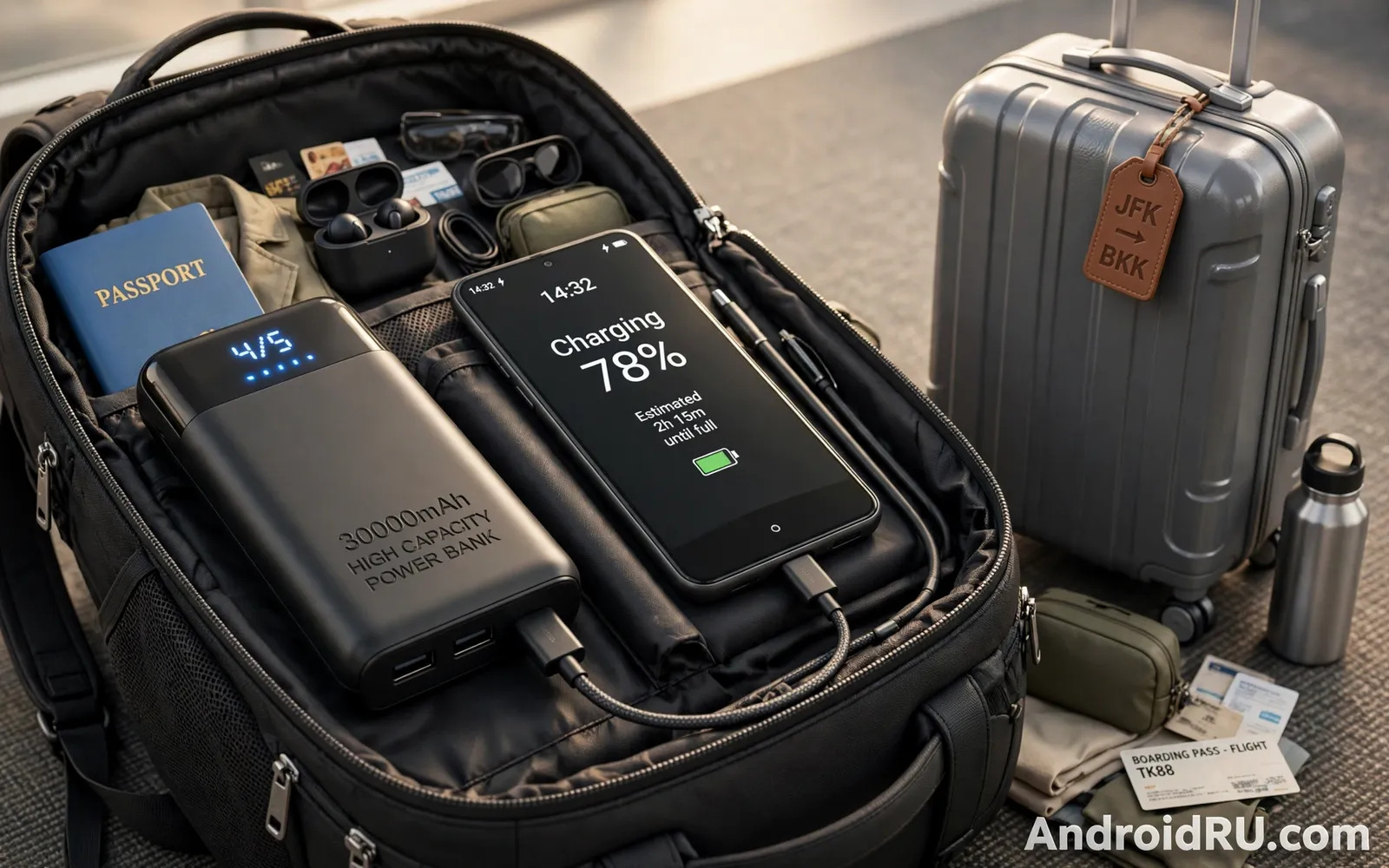
Why Capacity Alone Does Not Tell The Story
Capacity numbers look simple on a box. A large number promises many charges. Real charges fall below that promise for clear reasons. Power banks store energy at a lower internal voltage. Phones charge at a higher voltage through conversion. Conversion loses some energy as heat. Cable losses add further small losses. A power bank rated for a large capacity may deliver less usable energy. That gap surprises first time buyers. Expect usable energy below the headline number. Expect roughly two thirds to three quarters in many real cases. That range varies by design and cable and phone. It is not a defect in most cases. It reflects conversion physics. Plan trips with that gap in mind. A bank that looks enough on paper may fall short on a long day.
Phone battery size also shapes how many charges you get. A phone with a large battery needs more energy per charge. A phone with a small battery needs less energy per charge. Count your own daily use before you choose capacity. A heavy navigation day drains a phone fast. A light reading day drains it slowly. A travel day often mixes navigation and photos and video. That mix drains faster than a normal office day. Add a safety margin for delays and detours. A delayed flight can add hours of use. A missed connection can add a full day. A power bank should cover worst days not average days. That planning prevents a dead phone at a critical moment.
Reading Capacity Output And Port Labels
Capacity appears in milliamp hours on most labels. Watt hours give a clearer energy measure for travel rules. Airlines often use watt hours for limits. Convert capacity to watt hours when you check rules. Divide milliamp hours by one thousand first. Multiply the result by the internal voltage on the label. That math gives an approximate watt hour figure. Check the printed watt hour figure when available. Printed figures beat rough math for airline checks. Output wattage matters as much as capacity. A low output bank charges slowly. A high output bank charges faster when the phone supports it. Check output per port on the label. Check total output when several ports run together. A bank may advertise high total output. It may still limit each port to a lower level. That limit affects charging time directly.
Input speed matters for refilling the bank itself. A large bank takes hours to refill with a slow charger. A fast input port shortens that refill time. Check input wattage on the label. Match it with a charger that supports that input. A weak charger turns a large bank into a slow refill burden. Plan refill windows during travel. Refill overnight at hotels when possible. Refill during long meals when sockets exist. Carry a charger that matches bank input needs. Do not rely on a phone charger alone for a huge bank. A phone charger may refill it very slowly. That slow refill can leave you short the next morning.
Weight Size And Bag Reality
High capacity banks weigh more than small banks. That weight adds up in a backpack over long days. A very large bank may feel like a small brick. A medium bank may feel like a phone in weight. Test weight in your actual bag before a trip. Walk with the bag for an hour if possible. Note shoulder strain and balance. A bank that stays in luggage matters less for weight. A bank that rides in a pocket matters more. Size also affects pocket fit. A thick bank may not fit a slim pocket. A wide bank may block nearby items in a bag. Measure your pocket and bag sleeve before buying. Compare bank dimensions to those measures. A bank that fits well gets used more often. A bank that fits poorly stays in the hotel room.
Build quality affects travel durability. A metal shell resists scratches in a bag. A plastic shell weighs less for the same size. A rugged shell survives drops better. Check button placement for accidental presses. A button that presses in a bag can waste energy. A bank with a clear battery indicator helps planning. Four lights give a rough level estimate. A digital display gives a precise percentage. Precise displays help on multi day trips. They help you decide when to refill. They help you ration energy across days. Choose display type based on trip length. Short trips need less precision. Long trips reward precise information.
Charging Phones Tablets And Accessories Together
Travel often means several devices at once. A phone and earbuds and a watch may all need power. A bank with two ports handles that mix better. A bank with three ports handles family devices too. Check total output before you rely on many ports. Several devices at once can slow each port. Prioritize the phone when time runs short. Charge earbuds from the phone or bank later. Charge a tablet overnight when possible. Tablets need more energy than phones. A bank sized for phones may only partly charge a tablet. Plan tablet charging around hotel sockets. Use the bank for phones during the day. Use hotel power for tablets at night. That split keeps both devices useful.
Cable selection shapes bank performance on the road. A short cable suits pocket charging well. A long cable suits bag charging well. The USB C cable ratings for data speeds and wattage helps you match cable wattage to bank output. A low rated cable can cap fast charging from a strong bank. A high rated cable lets the bank work at full speed. Carry a spare cable for travel days. A broken cable can strand a full bank uselessly. Keep cables in a small pouch to avoid tangles. Label cables by length if several look alike. That small habit saves time in dark hotel rooms.
Airline Rules And Safe Transport
Airlines limit power bank size for cabin safety. Most airlines allow banks below a common watt hour threshold. Larger banks may need airline approval in advance. Very large banks may face a ban on flights. Check your airline rules before you pack. Check rules for each airline on multi leg trips. Rules can differ between carriers. Pack power banks in cabin bags only. Do not place them in checked luggage. Cabin crew can respond faster to battery problems in the cabin. Keep banks accessible during security checks. Security staff may ask to inspect them. Keep labels visible for inspection. A label worn off can cause delays. Protect banks from short circuits in bags. Use a pouch or cap for exposed ports. Keep metal objects away from terminals.
Heat and damage demand caution during travel. Do not use a swollen power bank. Do not use a bank with a cracked shell. Do not use a bank that smells burnt. Stop use and seek proper disposal for damaged units. Do not charge a bank in extreme heat. Do not leave a bank in a hot car for hours. Do not charge a bank under bedding. Heat buildup harms battery health and safety. Store banks at partial charge for long storage periods. Full charge storage adds stress over months. Empty storage also adds stress over months. A middle charge level suits storage best. Check stored banks every few months. Top them up to a middle level if needed.
Solar Pass Through And Extra Features
Solar charging sounds ideal for outdoor trips. Real solar panels on banks charge very slowly. A small panel may take days to refill a large bank. Solar works as a trickle top up in strong sun. It does not replace wall charging for travel. Treat solar as an emergency feature only. Do not plan a trip around solar refill speed. Pass through charging lets a bank charge a phone while the bank charges. That feature helps when only one socket exists. It can add heat during use. It can also slow both charging paths. Check whether your bank supports pass through safely. Some makers warn against long pass through use. Follow maker guidance for that feature. Wireless charging on a bank adds convenience. It also adds weight and heat. It charges slower than a cable in most cases. Use wireless for overnight top ups. Use cable for fast daytime charging.
Extra features can help or distract. A built in flashlight helps in campsites. A built in cable reduces forgotten cable risk. A built in cable limits replacement options if it breaks. A digital display helps energy planning. A rugged rating helps outdoor use. A low current mode helps earbuds and watches. Small devices may shut off a bank that needs higher draw. Low current mode keeps power flowing for those devices. Check for that mode if you charge wearables. Do not pay for features you will not use. A simple reliable bank beats a complex fragile bank. Focus on capacity and output and weight first. Add features only after those basics pass.
Real Travel Day Planning
Plan energy use like you plan routes. List devices and their battery needs for the day. Estimate screen time for navigation and photos. Add extra use for delays and sharing. Choose a bank that covers that estimate plus margin. Start travel days with a full bank. Start with a full phone as well. Top up the phone during meals and waits. Small top ups prevent deep drains later. Deep drains take longer to recover from. Keep the bank in an easy pocket during transit. A bank buried in luggage helps no one. Keep a cable ready in the same pocket. That readiness turns short waits into charging chances. Turn on battery saver during long navigation stretches. Lower screen brightness when safe to do so. Download offline maps before you leave wifi. Offline maps reduce data and battery drain.
Desk and wall charging still anchor travel plans. A strong wall charger refills a bank overnight. The GaN chargers and traditional adapters explains compact options that pack well for trips. Pair that charger with your bank input rating. A matched pair refills faster and cooler. Test the full chain before departure. Charge the bank with the travel charger. Charge the phone from the bank. Note times for both steps. That test reveals weak links early. Replace weak links before you travel. A test at home costs little time. A failure on the road costs much more.
Choosing By Trip Type
Choose a medium bank for day trips and city travel. A medium bank covers one or two phone charges. It stays light in a pocket or small bag. Choose a large bank for multi day and remote travel. A large bank covers several charges across days. It weighs more but prevents dead phone risk. Choose a huge bank only for group or tablet heavy trips. A huge bank may face airline limits. It may also feel heavy for daily carry. Consider two medium banks instead of one huge bank. Two banks share weight across bags. Two banks also provide backup if one fails. A single huge bank creates a single point of failure. Redundancy matters on remote trips. Balance redundancy against total weight and cost.
Car travel changes the equation again. A car socket can refill devices during drives. The car mounts and wireless charging holders for Android combine navigation viewing with charging on the road. A bank still helps when you leave the car. Use car power for driving hours. Use bank power for walking hours. That split extends total coverage across a trip. Test your chosen bank on a normal weekend first. Note real charges and real weight in your bag. A weekend test predicts a long trip well. Keep receipts and warranty details for travel gear. Good gear earns trust through repeated use.

