

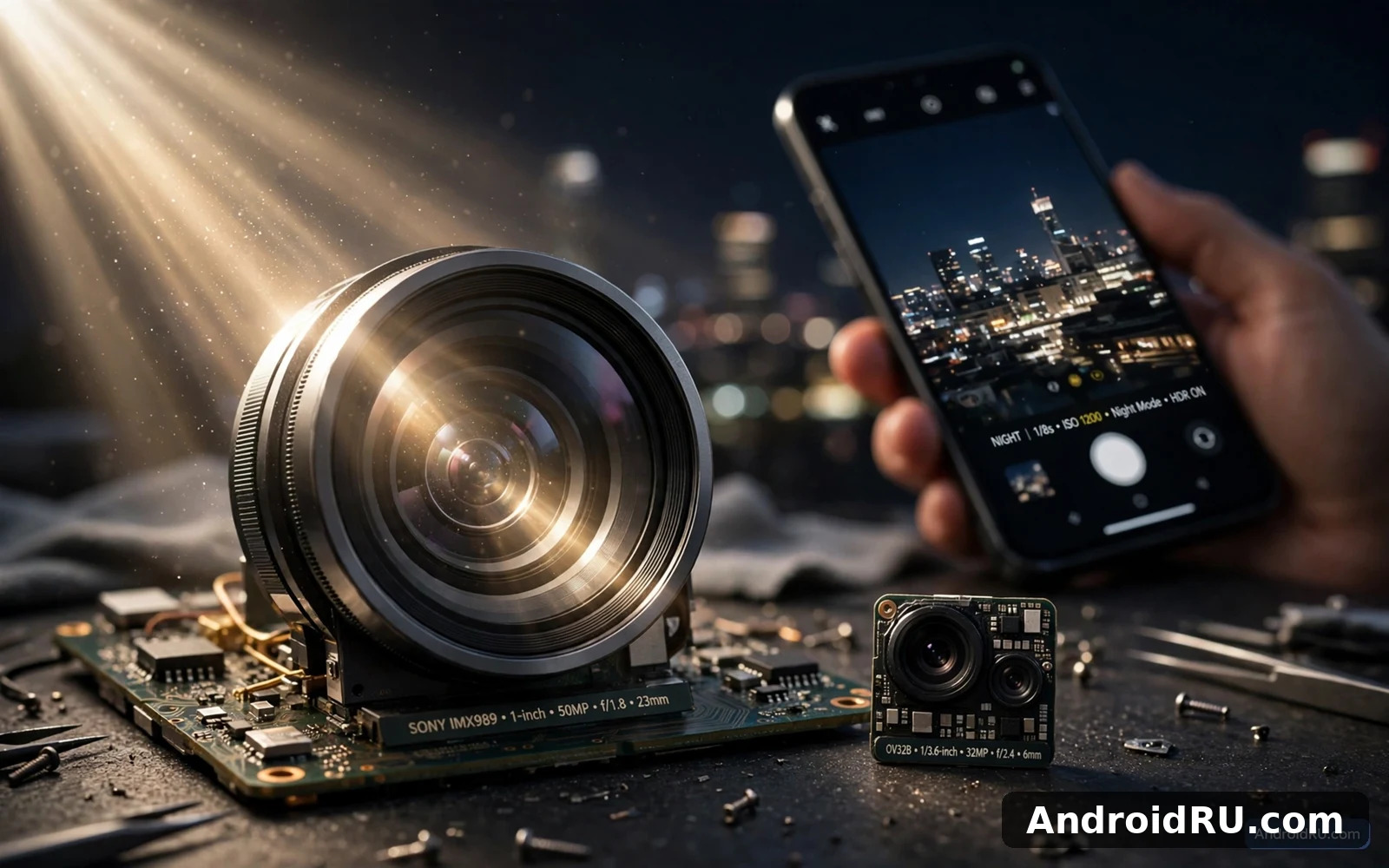
The Megapixel Trap
Megapixels count how many tiny picture elements make up a photo. A higher count can capture more detail in perfect light. A higher count alone cannot guarantee a better photo. When makers squeeze more pixels onto a small sensor each pixel becomes smaller and gathers less light. Smaller light gathering pixels struggle in dim rooms and produce noisier images despite the larger number on the box.
Marketing loves megapixels because the number is easy to compare. Camera quality is harder to summarise in one number. A phone with a modest pixel count on a larger sensor often produces cleaner and more detailed photos than a phone with a huge pixel count on a tiny sensor. The headline number therefore misleads buyers who judge cameras by count alone. Judge the whole camera system instead.
What Sensor Size Actually Changes
Sensor size describes the physical area that gathers light for a photo. A larger sensor gathers more total light for the same scene. More light means cleaner shadows and richer colour and less noise in dim conditions. A larger sensor also gives more natural background blur for portraits because depth of field behaves differently with a larger light gathering area.
Sensor size also affects dynamic range. Dynamic range is the ability to hold detail in bright skies and dark shadows at the same time. A larger sensor with good processing preserves both extremes better than a tiny sensor pushed to its limits. That is why a larger sensor phone often looks better in difficult light even when its pixel count looks modest beside a rival. The value of balanced hardware over headline numbers also drives Best Value for Money Android Smartphones of the Year where real results beat specification races.
Pixel Size And Pixel Binning
Pixel size matters because each pixel is a tiny light bucket. A larger bucket collects more light before noise overwhelms the signal. A smaller bucket fills quickly and struggles when light is scarce. That is why pixel size often predicts low light quality better than total pixel count. A sensor with larger pixels can produce cleaner night photos even at a lower total count.
Pixel binning combines several small pixels into one larger virtual pixel. Binning trades resolution for cleaner light gathering. A phone that bins pixels can deliver a sharp and clean standard photo while keeping a high resolution mode for bright daylight. Binning helps explain why many high count phones output a lower resolution photo by default. The default output often looks better because it uses the light gathering advantage of combined pixels.
Lens Aperture And Processing
The lens controls how much light reaches the sensor. A wider aperture lets in more light and helps low light photos and portrait blur. A narrower aperture keeps more of the scene sharp but gathers less light. Lens quality also affects sharpness at the edges and flare when shooting toward bright lights. A great sensor behind a weak lens cannot reach its potential.
Image processing shapes the final photo just as much as hardware. Processing merges multiple frames and reduces noise and balances colour and sharpens detail. Good processing preserves natural texture while cleaning noise. Aggressive processing can smear fine detail and create waxy skin tones. That is why two phones with similar sensors can produce very different photos. Always judge finished photos rather than hardware lists alone.
Why Small Sensors Can Still Shine
Small sensors are not useless. They allow slim phones and long zoom designs and lower costs. Modern processing has narrowed the gap in daylight where light is plentiful. A small sensor phone with excellent processing can produce lovely daylight photos that satisfy most users. The gap widens mainly in dim light and in extreme dynamic range scenes where physics favours larger light gathering.
Secondary cameras often use smaller sensors by design. An ultrawide camera or a telephoto camera trades sensor size for a different view. Judge each lens on its own results rather than expecting every lens to match the main camera. A phone with one excellent main camera and decent secondary lenses often serves daily life better than a phone with several mediocre lenses. The creator view of that trade appears in Best Mobile Devices for Content Creators and Vloggers where main camera trust matters most.
How To Judge A Phone Camera
Start with the main camera in your real life. Photograph a dim restaurant and a bright street and a moving subject and a portrait in shade. Compare skin tones and shadow detail and colour accuracy across phones at the same scene. Look at photos on a large screen because a small phone screen hides noise and soft detail. Real scenes reveal more than studio samples.
Check focus speed and shutter lag as well. A camera that focuses slowly misses moments even when still photos look great. Check video stabilisation and audio quality when you film often. Check how the camera behaves after many shots in a row because heat and processing can slow a phone during long sessions. A camera system that stays fast and consistent earns trust over time.
Sensor Size In Buying Decisions
Use sensor size as a strong clue rather than a final verdict. A larger sensor usually signals a maker investment in camera quality. It does not guarantee great processing or a great lens. A smaller sensor with superb processing can still beat a larger sensor with poor tuning. Weigh sensor size together with lens quality and processing reputation and real photo samples.
Ignore pixel count as a ranking tool. Use it only to know the maximum detail available in bright light. Ask instead how large the sensor is and how large the pixels are and how the phone handles low light. Those questions lead to better photos and fewer disappointments. A display comparison that applies the same eyes first rule is How OLED and AMOLED Screens Differ on Modern Phones where panel labels also mislead without real viewing.
The Bottom Line
Megapixels lie when they hide small pixels on a small sensor. Sensor size and pixel size and lens quality and processing together decide photo quality. A larger sensor gathers more light and preserves more detail in difficult scenes. Judge cameras by real photos in real light and the numbers will fall into their proper place.
Computational Photography And Sensor Limits
Computational photography merges several frames into one final photo. Merging reduces noise and expands dynamic range beyond what a single frame can capture. It helps small sensors punch above their physical size in many scenes. It cannot fully replace light gathering in extreme darkness where every frame remains noisy. Physics still sets a ceiling that software can approach but cannot erase.
Multi frame merging also needs a still subject and a steady hand for best results. Moving subjects can blur across merged frames. Fast action therefore tests sensor and shutter behaviour more than still scenes do. A camera that handles motion well gives more keepers during family events and sports. Judge computational claims by moving subject results rather than by still life samples alone.
Sensor Generations And Marketing Names
Sensor generations improve light handling and readout speed over time. A newer small sensor can outperform an older larger sensor in some situations because of better design and processing. Marketing names hide these generational differences behind simple size labels. That is why direct photo comparisons matter more than generation claims alone. A newer design may win in one scene while an older larger design wins in another.
Read detailed camera reviews that show identical scenes across phones. Identical scenes reveal noise and colour and detail differences that specification lists hide. Look for low light scenes and high contrast scenes in particular. Those difficult scenes separate strong camera systems from average ones. A review that only shows bright daylight photos tells you little about real camera quality.
Zoom Lenses And Sensor Trade Offs
Zoom lenses use separate sensors that rarely match the main sensor size. A telephoto lens gathers less light because its sensor and optics prioritise reach over light gathering. That trade gives sharp daylight zoom but noisier low light zoom. An ultrawide lens faces a similar trade because its wide view spreads light across a broad scene. Expect zoom and ultrawide results to trail main camera results especially after sunset.
Digital zoom crops the main sensor image and enlarges it. Optical zoom uses a dedicated lens to capture a closer view without cropping. A dedicated zoom lens usually beats digital cropping in daylight. In low light a cropped main sensor photo can sometimes beat a dedicated zoom photo because the main sensor gathers more light. Test zoom in your typical light before trusting a zoom claim.
Video Sensors And Still Photo Sensors
Video and still photography stress a sensor differently. Video needs fast readout to avoid rolling shutter distortion during motion. Still photography needs maximum light gathering for a single frame. A sensor tuned for video may prioritise readout speed over still quality. A sensor tuned for stills may show more distortion during fast video pans. Most phone sensors balance both needs but the balance varies by maker priorities.
Check video results separately from photo results when you buy a camera phone. A phone with lovely photos can still show shaky or distorted video. A phone with smooth video can still show noisy stills in low light. Judge both outputs in your real use because a creator and a photographer may rank the same phone very differently. The full camera system matters more than any single sensor number.
Comparing Cameras Fairly
Fair camera comparisons need identical scenes and identical light. Photograph the same subject from the same spot with each phone. Use default settings first because most buyers shoot on defaults. Then test night mode and portrait mode separately because those modes change processing heavily. A fair comparison reveals real differences while a random sample comparison hides them behind scene variation.
Also compare photos after sharing them through your usual platform. Social platforms compress photos and change colour slightly. A photo that looks stunning on a phone screen may look softer after compression. A photo that looks modest originally may survive compression better. Judge cameras by the final shared result when social sharing is your main use. That final step completes the camera story.
When Megapixels Actually Help
Megapixels help when you crop heavily or print large photos. A high resolution photo survives a strong crop while keeping detail. A high resolution photo prints large without visible softness. Wildlife and landscape photographers who crop often benefit most. Everyday social sharing rarely needs maximum resolution because platforms downscale images anyway. Match pixel count to your output rather than chasing it blindly.
High resolution modes also help in bright daylight where light is plentiful and noise stays low. A detailed daylight landscape can reward a high count sensor beautifully. The same sensor may struggle at night where binning produces a cleaner result. Use high resolution mode selectively for bright detailed scenes. Use binned mode for general use and low light. Smart mode switching gives the best of both worlds from one sensor.

