

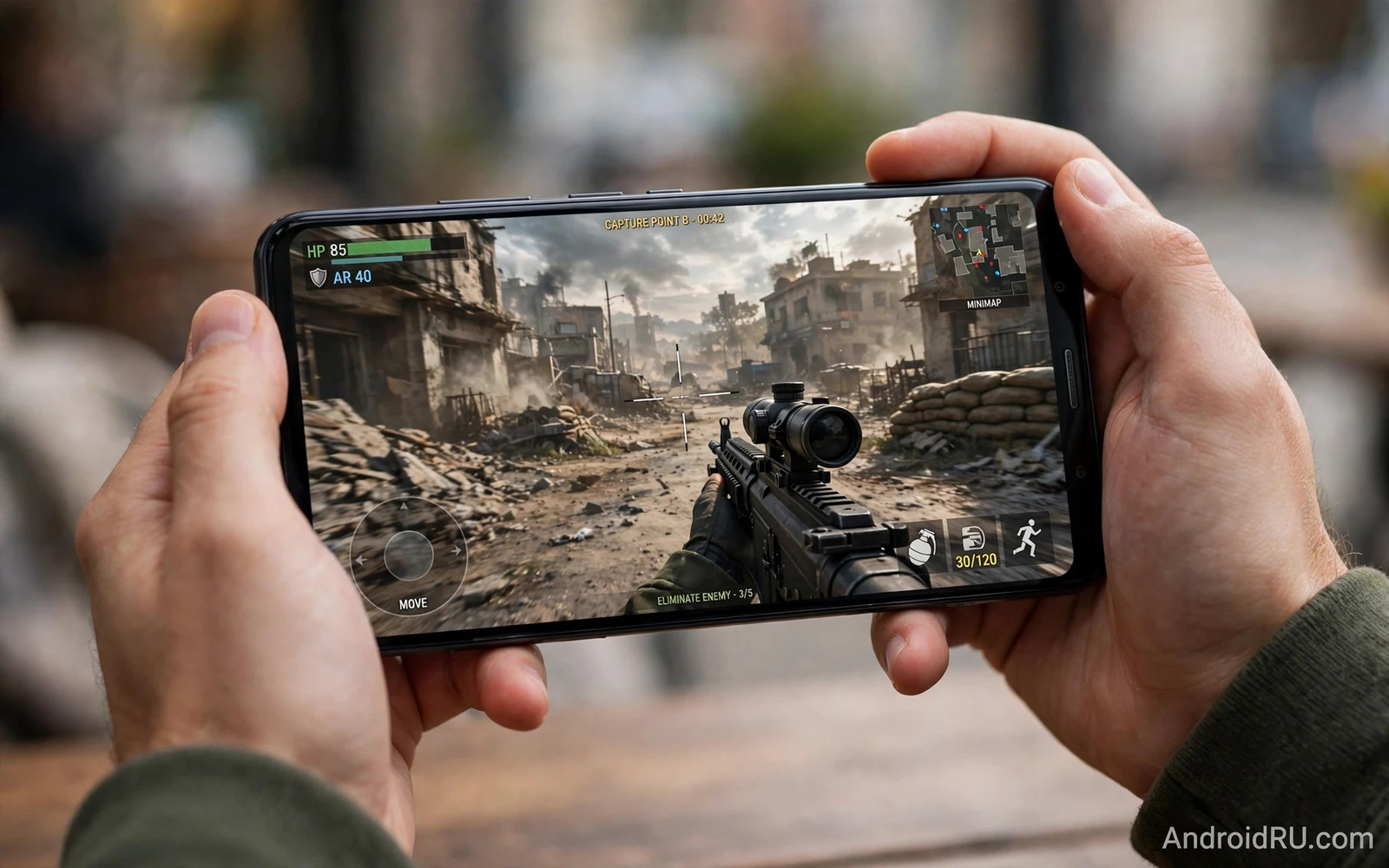
Why FPS Games Feel Different On A Phone
First person shooters put the camera behind the eyes of the character so every turn and every aim movement feels personal. On a phone that view fills a small screen and your thumbs must do the work of a mouse and a keyboard at the same time. One thumb moves the character while the other thumb aims and fires. That split takes practice but it becomes natural after a few sessions. Players who accept a learning curve will enjoy a depth that few mobile genres can match.
Touch aim rewards smooth movement rather than fast flicks. Small adjustments beat wild swings because a small screen punishes overshoot. Sensitivity settings matter more than raw speed. A lower sensitivity gives steadier aim at medium range. A higher sensitivity helps when an enemy appears behind you. Most skilled players start in the middle and adjust in tiny steps after each match rather than copying a famous setting blindly.
Team shooters add communication and role awareness to raw aim. A player who covers a doorway can help the team more than a player who chases kills alone. A player who shares enemy positions through voice or quick signals helps the whole squad survive longer. FPS games on Android reward that awareness because maps are compact and fights happen quickly. A calm player who holds a good angle often beats a fast player who runs into open ground.
Styles Of Shooter Worth Knowing
Team based shooters split players into attackers and defenders or into squads that fight for control points. Matches feel structured because each round has a clear goal beyond personal score. Tactical shooters slow the pace further and reward careful movement and sound awareness. Run and gun shooters favour speed and reflexes with shorter matches and more frequent respawns. Battle royale shooters drop many players onto a large map and shrink the safe zone until one squad remains.
Single player campaign shooters offer story and set piece moments without pressure from other players. They suit players who want to learn aim and movement at their own pace. Arcade shooters offer short bursts of action with simple goals and bright visuals. They suit short breaks and new players who want fun without complex rules. Knowing these styles helps you avoid a mismatch where a calm player joins a frantic mode or a competitive player joins a relaxed mode.
Esports minded players can study the competitive side in Best Multiplayer Esports Games for Android Competition before they enter ranked play. Ranked modes demand map knowledge and consistent aim. Casual modes let you experiment with weapons and roles without fear of losing rank. Playing both modes in balance keeps improvement steady and keeps the game enjoyable.
Controls Aim And Movement
Control layout is personal and it deserves time. Place the fire button where your aiming thumb can reach it without stretching. Place jump and crouch near the movement thumb if you use them often. Keep the layout stable for at least a week so muscle memory can form. Changing layout every day prevents progress because your thumbs must relearn positions instead of refining aim.
Gyroscope aim can help players who struggle with touch aim alone. Tilting the phone slightly for fine adjustments can feel more natural than dragging a thumb across glass. Not every player likes it and it can feel strange at first. Try it in a practice range with slow targets before you use it in a live match. A hybrid approach with touch for large turns and gyro for fine aim works well for many players.
Controller players gain an edge in comfort during long sessions. A physical stick gives smoother movement and physical triggers give clearer fire control. Controller support varies by title so check the control options before you commit to a game. The setup steps in How to Set Up PS5 DualSense Controller on Your Android Phone show how a console style pad can pair with a phone for steadier sessions. A controller does not replace practice but it removes touch fatigue from long matches.
Weapons Maps And Roles
Weapon choice should follow range and play style rather than damage numbers alone. A close range weapon shines in tight corridors but struggles across an open field. A medium range rifle suits most maps because it balances damage and control. A long range weapon rewards patience and map knowledge but punishes poor positioning. Learning one weapon deeply beats switching weapons every match because recoil and handling become predictable.
Map knowledge turns a new player into a useful teammate. Learn the main lanes and the common hiding spots on one map before you move to another map. Learn where fights usually start and where a safe retreat path exists. Learn which doors and windows give vision without exposing your full body. That knowledge lets you plan movement instead of reacting to every sound with panic.
Roles give structure to a squad. An entry player leads a push and clears corners. A support player covers angles and watches the rear. A sniper or long range player holds open ground and punishes careless movement. A flexible player fills gaps when a teammate falls. Talking about roles before a match prevents a squad where everyone rushes the same lane and leaves the objective empty.
Graphics Performance And Battery
Shooter games demand a stable frame rate more than maximum visual detail. A smooth picture helps tracking because enemy movement stays readable. A beautiful picture that stutters makes tracking harder. Lowering shadows and effects often gives a steadier match without hurting readability. Players should test a full match at a chosen setting rather than judging from a menu screen.
Heat and battery drain rise during long shooter sessions because the screen and processor stay busy. A phone stand improves airflow compared with holding a hot phone tightly. Short breaks between matches let the phone cool and let your focus reset. A charger can help at home but a cable can snag during fast movement. Wireless charging pads or a stand with a short cable keep the area tidy.
Racing fans who love speed and reaction can also explore Best Android Racing Games for Speed Enthusiasts for a different kind of reflex challenge. Racing rewards smooth lines and braking points. Shooters reward aim and positioning. Both genres build reaction speed but they train different habits. Mixing genres during a week keeps practice fresh.
Improving Without Burning Out
Improvement comes from focused practice rather than endless matches. Spend a short warm up in a practice range working on tracking a moving target. Play a few live matches with one clear goal such as holding angles or checking corners. Review one mistake after each match instead of blaming teammates or the game. That single habit compounds over weeks into visibly better play.
Watching your own matches can reveal habits you cannot feel during play. You may notice that you reload in open ground or that you ignore sound cues. Fix one habit at a time. A player who fixes reloading habits this week and corner checking next week will improve faster than a player who tries to fix everything at once. Patience is a skill in shooters just as aim is a skill.
New players should start in casual modes and learn one map and one weapon well. Intermediate players should join a regular squad and learn callouts and roles. Advanced players should study ranked maps and practice under pressure. Every level has fun to offer. The best shooter for you is the one that matches your current level while still giving room to grow.
Choosing Your First Shooter
Choose a shooter with a control layout you can adjust and a practice mode you can revisit. Choose a mode that matches your available time because a long ranked match needs focus while a short arcade match fits a break. Choose a community that feels welcoming because teammates shape enjoyment as much as mechanics. A game with clear tutorials and fair matchmaking will keep you playing longer than a game with flashy visuals but harsh early matches.
Try two or three styles before you settle. Play a team shooter for squad play. Play a battle royale shooter for survival tension. Play a campaign shooter for story and relaxed aim practice. Your favourite style will emerge from play rather than from a list. Once you find it then invest time in maps and weapons and enjoy the climb from new player to reliable teammate.
Practising Aim And Staying Calm Under Pressure
Aim practice works best in short focused blocks rather than long unfocused sessions. Spend a few minutes tracking a moving target in a practice range before live matches. Focus on smooth crosshair movement and on stopping exactly on the target rather than sweeping past it. That stopping skill matters more than raw speed because a clean stop lets you fire accurately. Repeat the drill with different ranges and different movement speeds so aim stays reliable in varied fights.
Pressure changes aim because hands tense and decisions speed up. A calm breathing habit between rounds helps reset tension. A short pause after a lost round helps you review what happened instead of rushing into the next fight angry. A player who stays calm after a mistake will recover faster than a player who chases revenge immediately. Calm play also improves team communication because callouts stay clear and useful.
Watching skilled players can teach positioning and timing without copying their exact sensitivity. Notice where they stand before a fight and how they use cover between shots. Notice when they retreat instead of pushing a lost angle. Notice how they reload only in safe spots. Those habits are transferable to any shooter and any control scheme. Apply one habit at a time in your own matches and let it become natural before adding another habit.
A shooter journey should stay enjoyable from first match to ranked play. Celebrate small wins such as a cleaner aim day or a better callout habit. Avoid comparing your early progress with veteran players who have practised for years. Progress in shooters comes from steady habits and patient review rather than overnight transformation. Keep sessions fun and improvement will follow naturally over weeks of regular play.

