

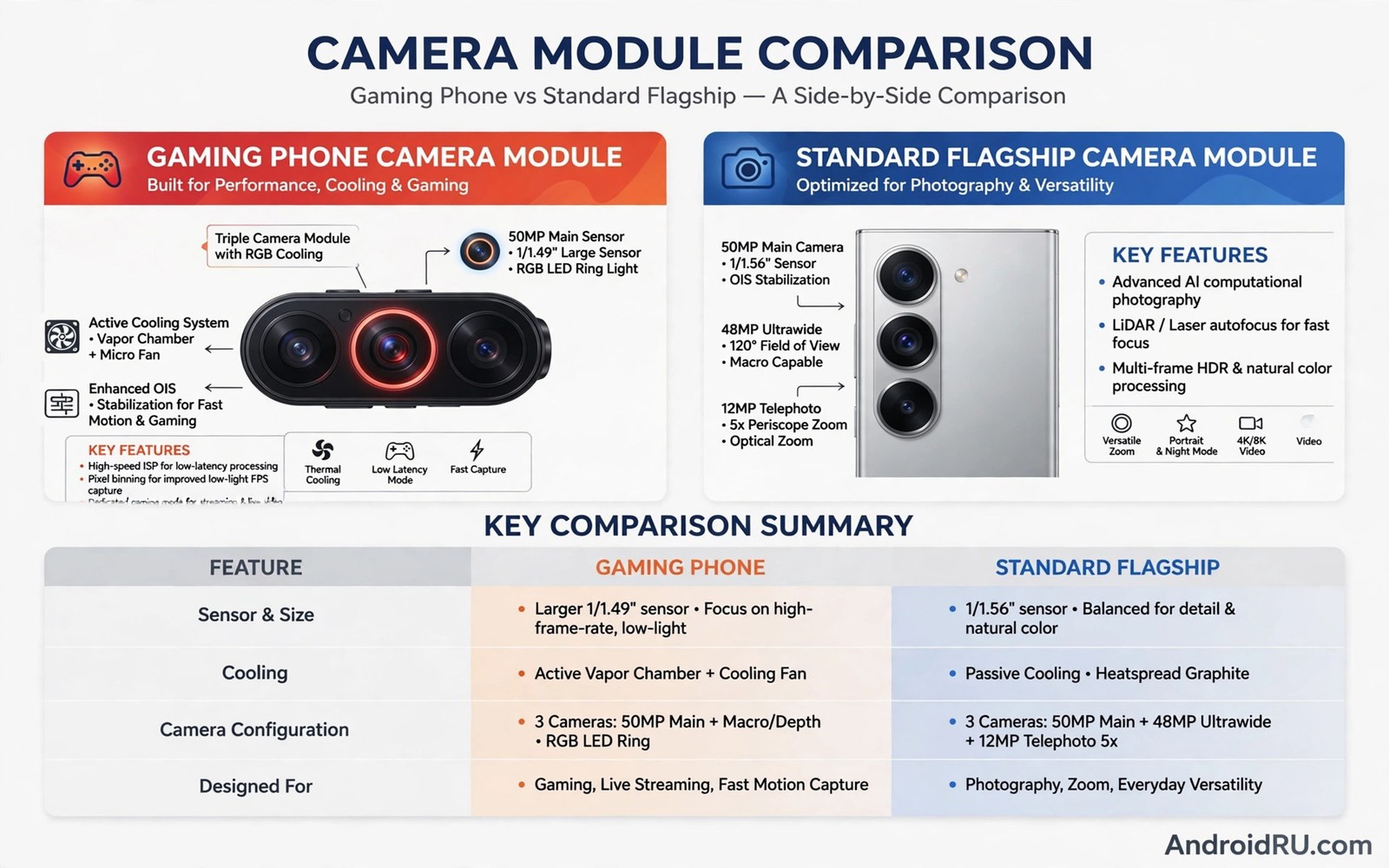
camera performance in gaming smartphones matters when you play for more than a few minutes at a time and when heat and controls start to shape every match. Gaming phone cameras have improved but they still trail flagships in processing and sensor size in many cases. This article explains camera quality on gaming phones in plain steps so you can test it yourself before you spend money. You will learn what to check and what to ignore and how photo quality in low light and daylight reveals the truth in a normal session.
Camera gaps matter most if you also use the phone as your main camera for travel and family photos. For a closer look at Wi-Fi antenna placement during play, see Wi-Fi antenna placement during play and test the same idea during your next long session so you can judge it from your own results and not from a claim alone. This kind of direct comparison saves money and it also prevents a purchase that looks strong on paper and feels weak in a real match.
Start with your own habits and not with a flagship list because a gaming phone spends its budget on cooling and triggers and that leaves less for camera hardware. If you play short casual rounds then camera quality on gaming phones may matter less than battery life and comfort. If you play ranked matches for hours then camera quality on gaming phones can decide whether your phone stays fast and steady. Write down your longest session and your main game before you read the sections below.
Where gaming phone cameras lag
Gaming phones often use smaller main sensors than flagships. This point shapes daily play more than a spec sheet suggests because a gaming phone spends its budget on cooling and triggers and that leaves less for camera hardware. Test it in your own routine and watch how photo quality in low light and daylight changes over a full session. Keep notes on photo quality in low light and daylight so your next choice rests on evidence and not on habit.
Image processing may lack the tuning of a flagship camera team. Players notice this first during long matches when photo quality in low light and daylight starts to drift. A small change here often beats a bigger upgrade elsewhere because a gaming phone spends its budget on cooling and triggers and that leaves less for camera hardware. Keep notes on photo quality in low light and daylight so your next choice rests on evidence and not on habit.
Low light photos show noise sooner on many gaming phones. Think about your longest session and ask whether photo quality in low light and daylight held up from start to finish. The answer tells you more than a benchmark score because a gaming phone spends its budget on cooling and triggers and that leaves less for camera hardware. Keep notes on photo quality in low light and daylight so your next choice rests on evidence and not on habit.
Daylight results are closer
Daylight photos from gaming phones can look strong. Think about your longest session and ask whether photo quality in low light and daylight held up from start to finish. The answer tells you more than a benchmark score because a gaming phone spends its budget on cooling and triggers and that leaves less for camera hardware. Keep notes on photo quality in low light and daylight so your next choice rests on evidence and not on habit.
Good light hides sensor gaps and processing gaps. Use this as a buying check and not as a marketing claim because a gaming phone spends its budget on cooling and triggers and that leaves less for camera hardware. Repeat the same test on two phones and compare photo quality in low light and daylight under equal conditions. Keep notes on photo quality in low light and daylight so your next choice rests on evidence and not on habit.
Social media compression hides small gaps further. This point shapes daily play more than a spec sheet suggests because a gaming phone spends its budget on cooling and triggers and that leaves less for camera hardware. Test it in your own routine and watch how photo quality in low light and daylight changes over a full session. Keep notes on photo quality in low light and daylight so your next choice rests on evidence and not on habit.
Video and stabilization
Video stabilization on gaming phones varies widely. This point shapes daily play more than a spec sheet suggests because a gaming phone spends its budget on cooling and triggers and that leaves less for camera hardware. Test it in your own routine and watch how photo quality in low light and daylight changes over a full session. Keep notes on photo quality in low light and daylight so your next choice rests on evidence and not on habit.
Some models lack strong optical stabilization. Players notice this first during long matches when photo quality in low light and daylight starts to drift. For a closer look at protective cases that fit external coolers, see protective cases that fit external coolers and compare it with what you see on your own phone in the same kind of session. A small change here often beats a bigger upgrade elsewhere because a gaming phone spends its budget on cooling and triggers and that leaves less for camera hardware. Keep notes on photo quality in low light and daylight so your next choice rests on evidence and not on habit.
Test walking video before you trust a gaming phone for vlogs. Think about your longest session and ask whether photo quality in low light and daylight held up from start to finish. The answer tells you more than a benchmark score because a gaming phone spends its budget on cooling and triggers and that leaves less for camera hardware. Keep notes on photo quality in low light and daylight so your next choice rests on evidence and not on habit.
Selfie and front cameras
Front cameras on gaming phones are often basic. Think about your longest session and ask whether photo quality in low light and daylight held up from start to finish. The answer tells you more than a benchmark score because a gaming phone spends its budget on cooling and triggers and that leaves less for camera hardware. Keep notes on photo quality in low light and daylight so your next choice rests on evidence and not on habit.
Video calls look fine in good light. Use this as a buying check and not as a marketing claim because a gaming phone spends its budget on cooling and triggers and that leaves less for camera hardware. Repeat the same test on two phones and compare photo quality in low light and daylight under equal conditions. Keep notes on photo quality in low light and daylight so your next choice rests on evidence and not on habit.
Low light calls show noise and soft detail. This point shapes daily play more than a spec sheet suggests because a gaming phone spends its budget on cooling and triggers and that leaves less for camera hardware. Test it in your own routine and watch how photo quality in low light and daylight changes over a full session. Keep notes on photo quality in low light and daylight so your next choice rests on evidence and not on habit.
Software and camera modes
Gaming phones may lack night mode polish. This point shapes daily play more than a spec sheet suggests because a gaming phone spends its budget on cooling and triggers and that leaves less for camera hardware. Test it in your own routine and watch how photo quality in low light and daylight changes over a full session. Keep notes on photo quality in low light and daylight so your next choice rests on evidence and not on habit.
Portrait mode edge detection can lag flagships. Players notice this first during long matches when photo quality in low light and daylight starts to drift. A small change here often beats a bigger upgrade elsewhere because a gaming phone spends its budget on cooling and triggers and that leaves less for camera hardware. Keep notes on photo quality in low light and daylight so your next choice rests on evidence and not on habit.
Check mode lists for your exact model. Think about your longest session and ask whether photo quality in low light and daylight held up from start to finish. The answer tells you more than a benchmark score because a gaming phone spends its budget on cooling and triggers and that leaves less for camera hardware. Keep notes on photo quality in low light and daylight so your next choice rests on evidence and not on habit.
scores = [('daylight', 82), ('low light', 64)]
for name, s in scores:
    print(name, 'score:', s)
print('Gap:', scores[0][1] - scores[1][1])
The code compares daylight and low light scores so a camera gap becomes a clear number. The snippet above is an original example written for this article and it is meant for learning and for simple local checks on your own device. Run it only on data you own and stop if a reading looks wrong because a bad input gives a bad result.
Testing cameras fairly
Shoot the same scene on two phones at the same time. Think about your longest session and ask whether photo quality in low light and daylight held up from start to finish. The answer tells you more than a benchmark score because a gaming phone spends its budget on cooling and triggers and that leaves less for camera hardware. Keep notes on photo quality in low light and daylight so your next choice rests on evidence and not on habit.
Compare low light and daylight and moving subjects. Use this as a buying check and not as a marketing claim because a gaming phone spends its budget on cooling and triggers and that leaves less for camera hardware. Repeat the same test on two phones and compare photo quality in low light and daylight under equal conditions. Keep notes on photo quality in low light and daylight so your next choice rests on evidence and not on habit.
View photos on a large screen and not only on the phone. This point shapes daily play more than a spec sheet suggests because a gaming phone spends its budget on cooling and triggers and that leaves less for camera hardware. Test it in your own routine and watch how photo quality in low light and daylight changes over a full session. Keep notes on photo quality in low light and daylight so your next choice rests on evidence and not on habit.
Workarounds for better photos
Use a camera app with manual controls for tricky light. This point shapes daily play more than a spec sheet suggests because a gaming phone spends its budget on cooling and triggers and that leaves less for camera hardware. Test it in your own routine and watch how photo quality in low light and daylight changes over a full session. Keep notes on photo quality in low light and daylight so your next choice rests on evidence and not on habit.
Use good light and steady hands for sharper shots. Players notice this first during long matches when photo quality in low light and daylight starts to drift. A small change here often beats a bigger upgrade elsewhere because a gaming phone spends its budget on cooling and triggers and that leaves less for camera hardware. Keep notes on photo quality in low light and daylight so your next choice rests on evidence and not on habit.
Edit photos lightly to lift shadows without noise. Think about your longest session and ask whether photo quality in low light and daylight held up from start to finish. The answer tells you more than a benchmark score because a gaming phone spends its budget on cooling and triggers and that leaves less for camera hardware. Keep notes on photo quality in low light and daylight so your next choice rests on evidence and not on habit.
Who should accept the trade-off
Gamers who rarely photograph can accept a weaker camera. Think about your longest session and ask whether photo quality in low light and daylight held up from start to finish. The answer tells you more than a benchmark score because a gaming phone spends its budget on cooling and triggers and that leaves less for camera hardware. Keep notes on photo quality in low light and daylight so your next choice rests on evidence and not on habit.
Travel photographers should pick a flagship instead. Use this as a buying check and not as a marketing claim because a gaming phone spends its budget on cooling and triggers and that leaves less for camera hardware. Repeat the same test on two phones and compare photo quality in low light and daylight under equal conditions. Keep notes on photo quality in low light and daylight so your next choice rests on evidence and not on habit.
A second camera or a compact camera can fill the gap. This point shapes daily play more than a spec sheet suggests because a gaming phone spends its budget on cooling and triggers and that leaves less for camera hardware. Test it in your own routine and watch how photo quality in low light and daylight changes over a full session. Keep notes on photo quality in low light and daylight so your next choice rests on evidence and not on habit.
Common mistakes
Judging a camera from daylight samples only. This point shapes daily play more than a spec sheet suggests because a gaming phone spends its budget on cooling and triggers and that leaves less for camera hardware. Test it in your own routine and watch how photo quality in low light and daylight changes over a full session. Keep notes on photo quality in low light and daylight so your next choice rests on evidence and not on habit.
Ignoring video stabilization until after a trip. Players notice this first during long matches when photo quality in low light and daylight starts to drift. A small change here often beats a bigger upgrade elsewhere because a gaming phone spends its budget on cooling and triggers and that leaves less for camera hardware. Keep notes on photo quality in low light and daylight so your next choice rests on evidence and not on habit.
Assuming a high megapixel count means a better camera. Think about your longest session and ask whether photo quality in low light and daylight held up from start to finish. The answer tells you more than a benchmark score because a gaming phone spends its budget on cooling and triggers and that leaves less for camera hardware. Keep notes on photo quality in low light and daylight so your next choice rests on evidence and not on habit.
Frequently asked questions
Are all gaming phone cameras weak?
No. Some are solid in daylight. Most lag flagships in low light and processing. Check samples for your exact model. In short, judge camera quality on gaming phones by photo quality in low light and daylight in your own sessions and not by a single headline number.
Can software updates improve a gaming camera?
A little. Updates can tune processing. They cannot change sensor size. Expect small gains and not a transformation. In short, judge camera quality on gaming phones by photo quality in low light and daylight in your own sessions and not by a single headline number.
Should I buy a flagship for photos and a gaming phone for games?
That split works if budget allows. Most buyers pick one phone. Choose by the use that matters daily. In short, judge camera quality on gaming phones by photo quality in low light and daylight in your own sessions and not by a single headline number.
Conclusion
Camera quality is worth weighing when photos matter daily and when a gaming phone will also serve as your main camera. For a closer look at thermal paste and vapor chamber cooling, see thermal paste and vapor chamber cooling and test the same idea during your next long session so you can judge it from your own results and not from a claim alone. This kind of direct comparison saves money and it also prevents a purchase that looks strong on paper and feels weak in a real match.
Your concrete next step is simple and it takes one evening. Pick your main game and play one full session while you watch photo quality in low light and daylight. Note the moment when comfort or speed changes and then decide whether camera quality on gaming phones deserves a place in your next purchase. That single test gives you a clear answer that no advertisement can replace.

