

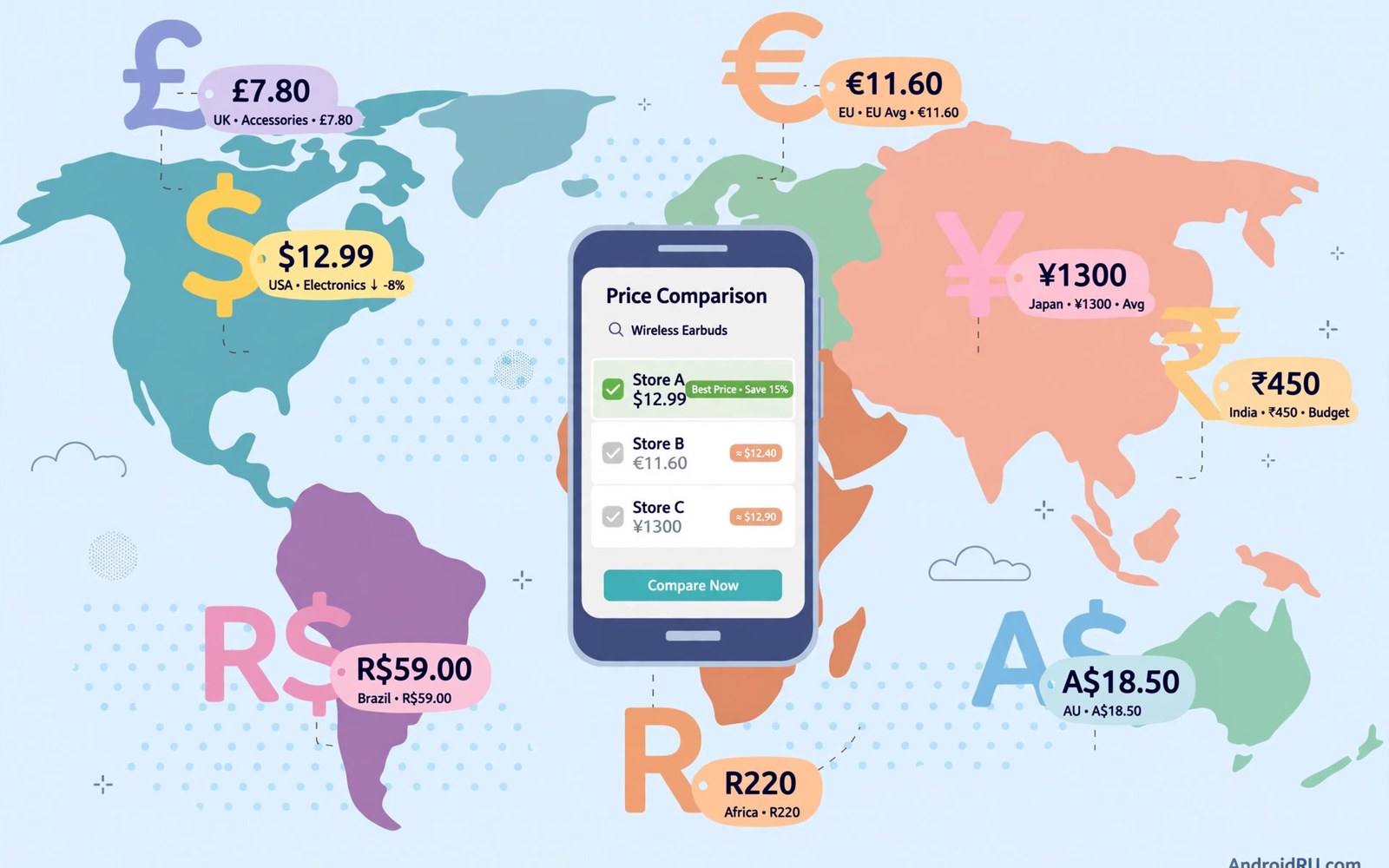
The same app can cost very different amounts in different countries. A subscription priced at five dollars in one country may cost far less or far more elsewhere. Currency values and local pricing tiers and taxes all shape the final charge. Understanding regional pricing helps you judge whether your price is fair.
This guide explains how regional pricing works. It covers price tiers and exchange rates and taxes and purchasing power. It also explains legal ways to manage costs across regions. Price differences are not random and they are not always unfair.
How Price Tiers Work
App stores use price tiers rather than direct currency conversion. A developer picks a tier for each product. The store maps that tier to a local price per country. Tier prices approximate equivalent value rather than exact exchange conversion.
Tiers round to familiar local price points. A tier that equals five dollars may map to a rounded local amount. That rounding creates small differences between countries. Larger differences come from deliberate regional adjustments rather than rounding alone.
Purchasing Power Adjustments
Developers adjust prices for local purchasing power. Average incomes vary enormously across countries. A price affordable in one country may be impossible in another. Lower regional prices expand the market to users who otherwise could not buy.
That adjustment benefits users in lower income regions. It also means users in higher income regions effectively subsidize lower prices elsewhere. Some users view that as unfair. Others view it as sensible market segmentation that grows the user base for everyone.
Exchange Rate Fluctuations
Exchange rates move constantly and tier prices move slower. A currency that weakens suddenly makes foreign priced apps more expensive locally. Stores update tiers periodically rather than daily. That lag creates windows where prices feel misaligned.
Subscription renewals feel exchange effects most sharply. A yearly plan renews at the current tier price. A weakened local currency raises that renewal unexpectedly. Users in volatile currency regions should expect subscription prices to shift over time.
Taxes and Their Effect on Price
Taxes vary by country and sometimes by region within a country. Some stores include tax in the displayed price. Others add tax at checkout. That difference confuses international price comparisons. Always compare final charged amounts rather than displayed prices.
Digital services taxes add another layer in some countries. Governments levy specific taxes on digital purchases. Those taxes raise local prices above tier equivalents. They also change over time as tax policy evolves. Check your receipt breakdown to see tax components clearly.
Why Developers Choose Regional Prices
Developers balance revenue against market size per region. A high price maximizes revenue per user but shrinks the buyer pool. A low price expands the pool but earns less per user. The optimal price differs by region income and competition.
Piracy risk also influences regional pricing. Affordable local prices reduce piracy incentives. Expensive prices push users toward unofficial sources. Smart developers price to convert pirates into customers. That strategy benefits both developers and users.
Subscription Pricing Across Regions
Subscriptions amplify regional differences over time. A small monthly gap compounds across twelve renewals. A yearly plan gap can reach substantial sums. Users comparing subscriptions internationally should annualize the difference before judging fairness.
Family plans complicate regional comparison further. A family price in one region may cover different member counts elsewhere. Always compare per person costs rather than headline family prices. That per person view reveals the true regional gap.
Changing Regions: Rules and Risks
Stores restrict region changes for good reasons. Your account region determines pricing and content availability. Changing regions usually requires a local payment method and address. Frequent changes trigger fraud prevention measures.
Attempting to exploit regional pricing violates store terms in many cases. Accounts may lose access to purchases after improper region changes. Payment methods from mismatched regions often fail verification. The risks outweigh savings for most users. Stay in your genuine region for account safety.
Legal Ways to Manage Regional Costs
Several legal strategies reduce regional cost burdens. Annual billing often costs less than monthly billing everywhere. Family plans spread costs across members in any region. Student discounts apply in many regions for eligible users. Check all three before accepting standard pricing.
Free and open source alternatives bypass regional pricing entirely. They cost nothing in every region. For categories with strong free options regional price gaps matter less. Readers can explore open-source free alternatives for categories where free tools compete well.
Currency Conversion Fees
Some payment methods add conversion fees on foreign currency charges. A subscription billed in another currency may incur bank conversion charges. Those fees add a hidden percentage to every renewal. Check your card terms for foreign transaction fees.
Local currency billing avoids conversion fees entirely. Stores usually bill in your account region currency. That local billing is one reason to keep your account region accurate. Mismatched billing currencies create avoidable extra costs.
Price Transparency Tools
Third party sites track app prices across regions. Those trackers show tier mappings and historical price changes. Use them to understand whether your price recently changed. A recent increase may reflect tier updates rather than developer greed.
Store receipts also provide transparency. Each receipt shows the charged amount and tax breakdown. Compare receipts across renewals to spot price changes early. Early detection gives time to cancel or downgrade before the next renewal.
Regional Pricing and Fairness
Fairness in regional pricing is genuinely debatable. Equal nominal prices ignore income differences completely. Equal purchasing power prices feel fairer to lower income users. But they feel like discrimination to higher income users paying more.
No system satisfies everyone. Developers choose the system that sustains their business globally. Users choose whether each local price justifies purchase. That individual judgment matters more than abstract fairness debates. Compare local prices against local alternatives rather than foreign prices.
What to Do When Your Price Rises
First check whether the rise reflects tier updates or tax changes. Receipt comparisons reveal the cause quickly. Then evaluate the new price against the value you receive. Cancel or downgrade if the new price fails your value test.
Contact developer support about large unexplained increases. Developers sometimes adjust tiers mistakenly for specific regions. Polite inquiries occasionally reverse errors. If the increase stands then free alternatives or competitors may offer better local value. Broader subscription control steps appear in how to manage subscriptions for users ready to act.
Price Tier History and Changes
Price tiers change over years as economies shift. A tier that matched local incomes a decade ago may misalign today. Stores update tier mappings periodically to reflect new realities. Those updates can raise or lower local prices suddenly.
Track tier changes for subscriptions you hold long term. A tier update may raise your renewal without developer action. Store notifications about tier changes deserve attention. They explain price shifts that otherwise look arbitrary.
App Store Competition Across Regions
Alternative app stores in some regions create price competition. Developers may price lower where competing stores exist. Monopoly store regions see less pricing pressure. That competition gap contributes to regional price differences beyond income factors.
Sideloading availability also affects pricing in some markets. Regions with easy sideloading see lower prices as developers compete with free unofficial versions. Regions with restricted sideloading see higher prices. Market structure shapes price as much as income does.
Subscription Bundles and Regional Value
Bundles that include multiple services vary regionally in value. A bundle with music and storage and video may include different services per region. Licensing restrictions remove some bundle components in certain countries. The same bundle price then buys less value regionally.
Check bundle components for your region specifically. Marketing materials sometimes show global bundle contents inaccurately. Your account region determines actual included services. A bundle missing key components deserves a lower personal valuation.
Exchange Rate Hedging by Developers
Large developers hedge currency exposure to stabilize revenue. Hedging smooths exchange fluctuations across quarters. Small developers cannot hedge easily and face raw exchange volatility. That difference explains why small developer prices shift more abruptly.
Users in volatile currency regions benefit from stable tier pricing. Tier systems absorb short term exchange swings. Only sustained currency moves trigger tier updates. That stability is a hidden benefit of tier pricing over direct conversion.
Tax Residency and Digital Purchases
Your tax residency determines which digital taxes apply. Travelers buying apps abroad may face different tax rates temporarily. Stores usually apply taxes based on account region rather than physical location. That consistency prevents travel based tax arbitrage.
Keep your account region aligned with your tax residency. Mismatches can complicate refunds and tax documentation. Accurate region settings also ensure correct consumer protection rules apply. Those protections vary significantly across jurisdictions. Broader context on pricing fairness appears in value analysis of pricing models across regions and app types.
Gift Cards and Regional Pricing
Gift cards carry region restrictions that affect pricing. A gift card bought in one region usually works only there. Redeeming foreign gift cards may fail or convert unfavorably. Buy gift cards only for your account region to avoid complications.
Gift cards also lock funds to one store ecosystem. That lock in reduces flexibility compared to card payments. Use gift cards for budgeted spending control rather than for price arbitrage. Their value lies in spending discipline rather than savings.
Monitoring Price Changes Over Time
Track subscription prices across renewals systematically. A spreadsheet of renewal amounts reveals gradual increases clearly. Compare each renewal against the original signup price. That comparison quantifies price creep that memory misses.
Set alerts for price change notifications from stores. Those emails often hide among promotions. Filter store billing emails into a dedicated folder for easy review. Early detection of increases enables timely cancellation decisions.
Regional Price Comparison Script
The snippet below compares the same subscription price across regions. It converts local prices to a common reference for comparison. Replace the sample prices with real prices from your regions of interest. The comparison reveals gaps worth investigating.
prices = [
    {"region": "Region A", "price": 4.99},
    {"region": "Region B", "price": 2.99},
    {"region": "Region C", "price": 6.99},
]
for item in prices:
    print(item["region"], "pays", item["price"], "per month")
The snippet above is a simple illustration of regional price comparison. It uses sample figures only. Substitute real prices from store listings for an accurate personal comparison.

