

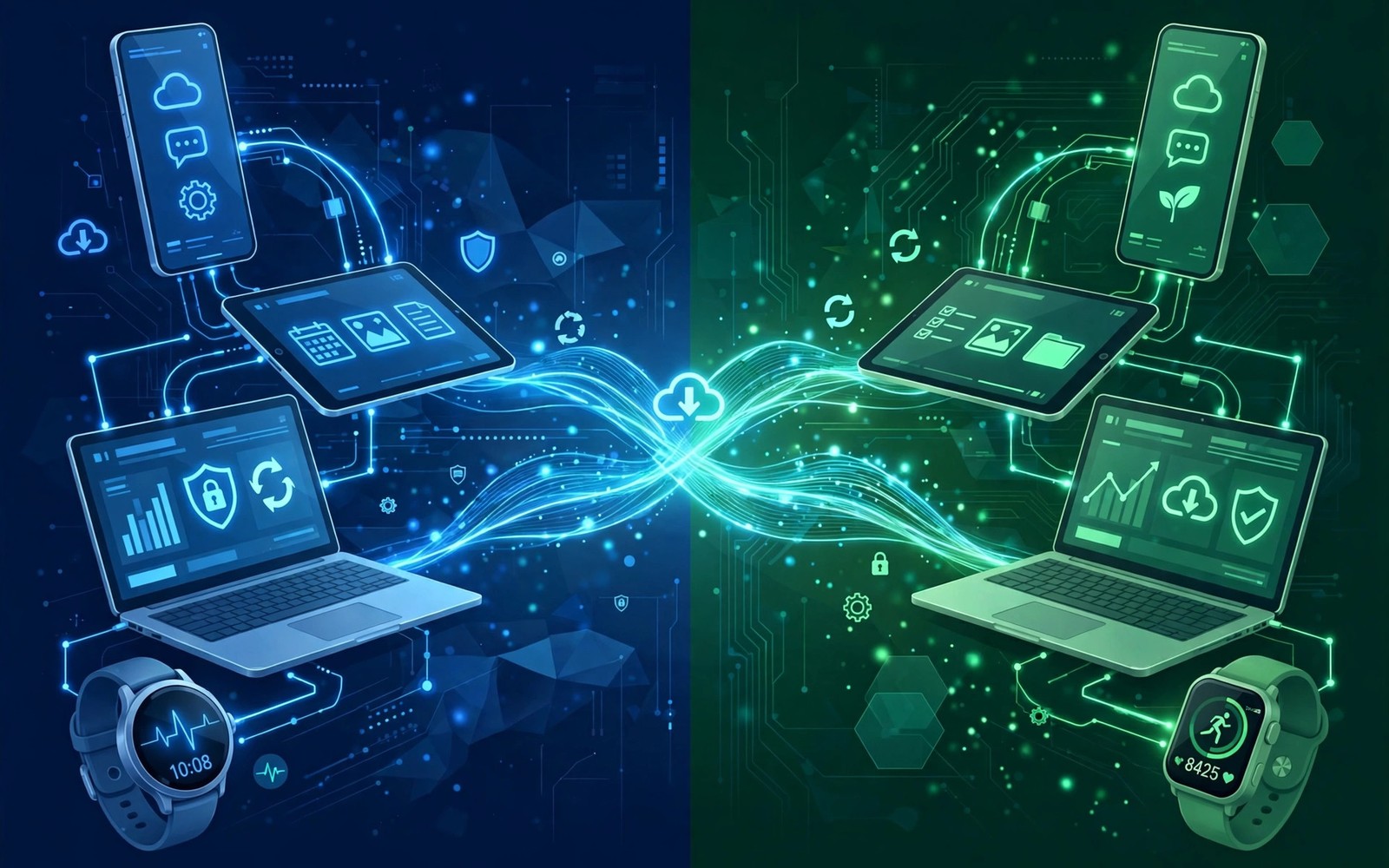
Apple users praise how devices hand work to each other. Android users enjoy choice across many brands. Both ecosystems chase the same goal. They want your phone and computer to feel like one system.
Apple builds continuity inside one brand family. Android builds bridges across many brands. Each path has real strengths. This comparison keeps the focus practical. Readers who want a wider view can also explore Phone Link setup for a related setup.
Continuity Inside One Brand
Apple devices share clipboard and calls with ease. Handoff moves a task from phone to laptop. AirDrop moves files with a tap. The tight hardware control makes setup almost invisible.
This polish comes with a narrower choice of devices. You stay inside one brand for full features. Switching brands means losing some magic. Many users accept that trade gladly.
Android Bridges Across Brands
Android links phones to Windows and Mac PCs. Standards like Bluetooth and Wi-Fi carry the links. Many brands add their own link apps too. Choice grows but setup varies more.
Open standards let you mix phone and PC brands. You can pick a phone for camera and a laptop for work. No single vendor locks every choice. That freedom appeals to many buyers.
File Sharing Compared
Nearby sharing on Android mirrors AirDrop basics. It sends files to nearby Android and PC devices. Speed depends on network and device support. Apple sharing feels smoother inside its own family.
Cloud folders bridge both worlds for larger files. They work across brands and operating systems. Upload time is the main cost. Local sharing wins for quick nearby transfers.
adb shell settings list global
# inspect Android system settings only
# continuity features live in link apps
# compare toggles across your devices
The snippet above follows standard operating system documentation and widely shared setup guides. It shows a typical pattern rather than a vendor specific promise. Results can vary by device model and system version. Always test a small change before you rely on it daily.
Calls Messages and Clipboard
Apple routes calls and texts across its devices natively. Android routes them through link apps on Windows. Both let you answer from a larger screen. Setup effort differs more than daily use. A related workflow is covered in Android Mac file transfer for readers who want more depth.
Clipboard sharing exists on both sides today. Apple syncs clipboard across its devices quietly. Android link tools sync clipboard to Windows PCs. Privacy controls matter on either path.
Watches Earbuds and Accessories
Apple accessories pair and switch devices with ease. Earbuds move audio between phone and laptop. Watches unlock laptops and show alerts. The accessory web feels unified.
Android accessories vary by brand and chip. Some earbuds switch devices smoothly. Others need manual reconnection each time. Check switching behavior before buying accessories.
Choosing Your Ecosystem Path
Pick Apple if you value seamless setup above choice. Pick Android if you value device freedom above polish. Mixed homes can use cloud tools as bridges. No choice is wrong for every person.
Test continuity features before you commit fully. Borrow a friend device for a weekend trial. Real use reveals friction faster than specs. Your daily habits should drive the decision.
The Gap Is Narrowing
Android bridges improve every year. Apple opens some features to other platforms slowly. The practical gap shrinks for common tasks. Most users can build a good multi device life either way.
Handoff Features Side by Side
Handoff moves active tasks between devices seamlessly. Apple handoff works across phone tablet and laptop. Android handoff works through link apps and browsers. Browser tabs transfer easily on both sides. App state transfer varies more widely. Document handoff works best through cloud apps.
Clipboard handoff feels instant on Apple devices. Android clipboard handoff needs link app setup. Both require same account sign in. Both require devices on trusted networks. Setup effort differs but daily use converges. Users adapt to either flow within weeks.
Ecosystem Lock In Costs
Lock in grows with each accessory purchase. Watches earbuds and tablets deepen ties. Switching ecosystems means replacing accessories too. Total switching cost exceeds the phone price. Budget for accessory replacement when switching. Honest cost math prevents regret later.
Data portability eases switching pain somewhat. Photos and contacts export through standard formats. App purchases rarely transfer across ecosystems. Paid apps need repurchase after switching. Factor repurchase costs into decisions. Ecosystems profit from this friction deliberately.
Open Standards as a Middle Path
Open standards reduce lock in without losing features. Bluetooth accessories work across ecosystems well. USB-C charging unifies cables across brands. Cloud services bridge data across platforms. Standards give users freedom to mix devices. Freedom is the core Android advantage.
Standards sometimes lag behind proprietary features. New features appear proprietary first. Standards catch up over following years. Early adopters pay a polish penalty. Patient users gain freedom without sacrifice. Timing determines which tradeoff you face.
Privacy Models Compared
Apple markets on device processing heavily. Much data stays on the device itself. Google processes more data in the cloud. Cloud processing enables smarter features. It also creates larger data exposure. Users must weigh smarts against exposure personally.
Privacy controls exist on both platforms today. Both offer permission dashboards and tracking limits. Android offers more granular sideload controls. Apple offers stricter default app review. Neither platform is private by magic. User settings determine real privacy outcomes.
Developer Freedom and App Choice
Android allows sideloading and alternative stores. Developers reach users without store approval. Apple restricts installs to its store mostly. Restriction improves malware screening somewhat. Freedom enables niche apps stores reject. Each model serves different user values.
Alternative stores carry malware risks too. Users must vet alternative sources carefully. Official stores offer safer defaults for most. Power users accept vetting effort for freedom. Casual users benefit from curated stores. Match store freedom to your skill level.
Future Direction of Both Ecosystems
Apple slowly opens features to other platforms. Android slowly polishes cross device features. Convergence benefits users on both sides. Proprietary advantages shrink over time. Standards and regulation accelerate convergence. Future users may mix devices freely.
AI features may become the next ecosystem battleground. On device AI favors tight hardware control. Cloud AI favors vast data scale. Both giants invest heavily in AI. User choice may hinge on AI trust. Watch AI privacy promises critically.
App Store Policies and User Choice
App store policies shape available software greatly. Apple reviews apps strictly before listing. Google reviews apps with lighter scrutiny. Strict review reduces malware prevalence somewhat. Lighter review enables faster app releases. Users trade safety against novelty differently. Personal risk tolerance guides platform preference.
Alternative app stores expand Android choice further. Users install stores beyond Google Play. Alternative stores host niche apps often. Niche apps serve specialized communities well. Vetting alternative stores requires user diligence. Diligent users gain unique software access. Casual users should stay with official stores.
Messaging Interoperability Challenges
Messaging apps fragment across platforms frustratingly. Apple messages use proprietary protocols primarily. Android messages use RCS standards increasingly. Cross platform messaging loses features often. Reactions and encryption vary by pairing. Universal messaging standards remain elusive today. Users juggle multiple apps for contacts.
RCS adoption grows among carriers globally steadily. Apple RCS support improves cross platform messaging. Full feature parity remains distant though. Encryption across platforms needs standardization urgently. Users should not need app trivia for messaging. Messaging should work universally like email eventually.
Cloud Service Portability
Cloud photos export through standard download tools. Google Takeout exports vast account data. Apple data exports offer similar functionality. Exported data formats vary in usability. Photos export cleanly in standard formats. App data exports prove less portable often. Portability varies by data type significantly.
Switching cloud providers costs time and effort. Years of photos need careful migration. Metadata preservation matters during migrations. Dates and albums must survive transfers. Test migrations with small batches first. Small tests reveal format problems early. Careful migration preserves digital memories.
Hardware Longevity and Updates
Apple supports devices with updates for many years. Long support extends device useful life. Android update duration varies by manufacturer. Flagship Android phones now promise longer support. Budget phones receive shorter support windows. Update longevity affects purchase value greatly. Buyers should check update promises explicitly.
Longevity also depends on repair availability. Apple repair networks are extensive globally. Android repair availability varies by brand. Parts availability determines repair feasibility. Repairable devices last longer sustainably. Sustainability favors repairable designs strongly. Consumers increasingly value repair options.
Ecosystem Choice for Families
Families benefit from shared ecosystem choices. Shared platforms simplify parental controls greatly. Location sharing works within ecosystems easily. Mixed ecosystems complicate family controls. Parents manage one platform more easily. Simplicity matters for busy families enormously. Family harmony favors unified platforms often.
Teenagers may prefer different platforms than parents. Peer pressure influences teen device choices. Family plans accommodate mixed devices sometimes. Cloud services bridge platform gaps partially. Compromise balances teen preferences and management. Family tech decisions need negotiation and empathy.
Wearable Integration Across Ecosystems
Wearables integrate tightly within native ecosystems. Apple watches pair best with iPhones. Android watches pair best with Android phones. Cross pairing loses features significantly often. Health data syncs within ecosystems smoothly. Cross ecosystem health sync needs third apps. Health data portability remains imperfect today.
Fitness communities span ecosystems through apps. Strava and similar apps unite athletes cross platform. Social fitness transcends device ecosystems happily. Community features matter more than native integration. Athletes choose apps over ecosystems often. App communities bridge hardware divides effectively. Social layers soften ecosystem boundaries greatly.
Ecosystem Switching Stories
Switchers report adjustment periods lasting weeks. Muscle memory for gestures needs retraining. App replacements require discovery effort. Cloud data migration takes planning time. Patience eases switching frustrations considerably. Most switchers adapt within a month. Adaptation stories encourage hesitant switchers reassuringly.
Switching back happens when expectations mismatch reality. Missing features drive return switches sometimes. Social messaging gaps frustrate switchers particularly. Evaluate must have features before switching. Must have lists prevent regretful switches. Honest evaluation beats enthusiastic impulse switching. Deliberate switches succeed more often.
Start with one small change today and build from there. A steady setup beats a rushed overhaul every time. You can also read driver connection fixes to round out your plan. Once the basics feel natural you can add more advanced options at your own pace.

