

Why Screen Glass Matters More Than Spec Sheets Suggest
A phone screen takes more punishment in one normal week than most buyers expect. Keys rub against glass inside a pocket. Sand grains press into glass on a beach towel. A phone slides face down across a cafe table more often than anyone admits. Each small contact leaves a mark or it leaves nothing at all. The difference between those two outcomes is the cover glass and the way it handles hard sharp particles. A good cover glass keeps the display clear for years. A weak cover glass turns a bright screen into a web of fine lines that catch light at every angle.
Two names dominate serious talk about tough phone glass. Corning Gorilla Glass Victus is the strengthened glass found on many Android flagships and mid range phones. Sapphire glass is the extremely hard crystal used on watch faces and on camera lens covers. Both materials promise protection. They protect in very different ways. Victus is designed to survive drops and to resist scratches from everyday objects. Sapphire is designed to resist scratches from almost anything short of diamond. The trade off sits in toughness and cost and weight and manufacturing difficulty. Understanding that trade off helps you choose a phone and helps you decide whether a screen protector still makes sense.
Scratch tests on video often mislead buyers because they use picks and tools that do not match pocket life. A metal pick is not sand. A key is not quartz. A coin is softer than most screen glass. Real damage usually comes from tiny mineral grains that are harder than glass and smaller than a grain of rice. Those grains hide in pockets and bags and car seats. A fair comparison must focus on hardness and fracture behaviour and everyday contact. It must also separate a scratch on the surface from a crack that runs through the whole panel. A surface scratch annoys the eye. A crack threatens the whole display.
What Gorilla Glass Victus Is Built To Do
Gorilla Glass Victus is an aluminosilicate glass that Corning strengthens through an ion exchange process. Smaller ions in the glass surface are swapped for larger ions during manufacturing. The larger ions squeeze the surface into compression. That compressed layer resists the start of a crack and slows a crack that does begin. Victus was developed to improve both drop survival and scratch resistance in one material. Earlier generations often improved one trait at the expense of the other. Victus tries to hold both traits at a high level for thin phone glass.
In daily use Victus feels like normal glass. It is clear and smooth and responsive to touch. It accepts oleophobic coatings that repel finger oil. It works with under display fingerprint sensors. It bends slightly before it breaks which helps it absorb impact energy. That slight flex is a feature rather than a flaw. Rigid materials can be harder yet they can shatter when a sharp impact finds a weak point. Victus gives a little and that give can save a screen from a corner drop onto concrete.
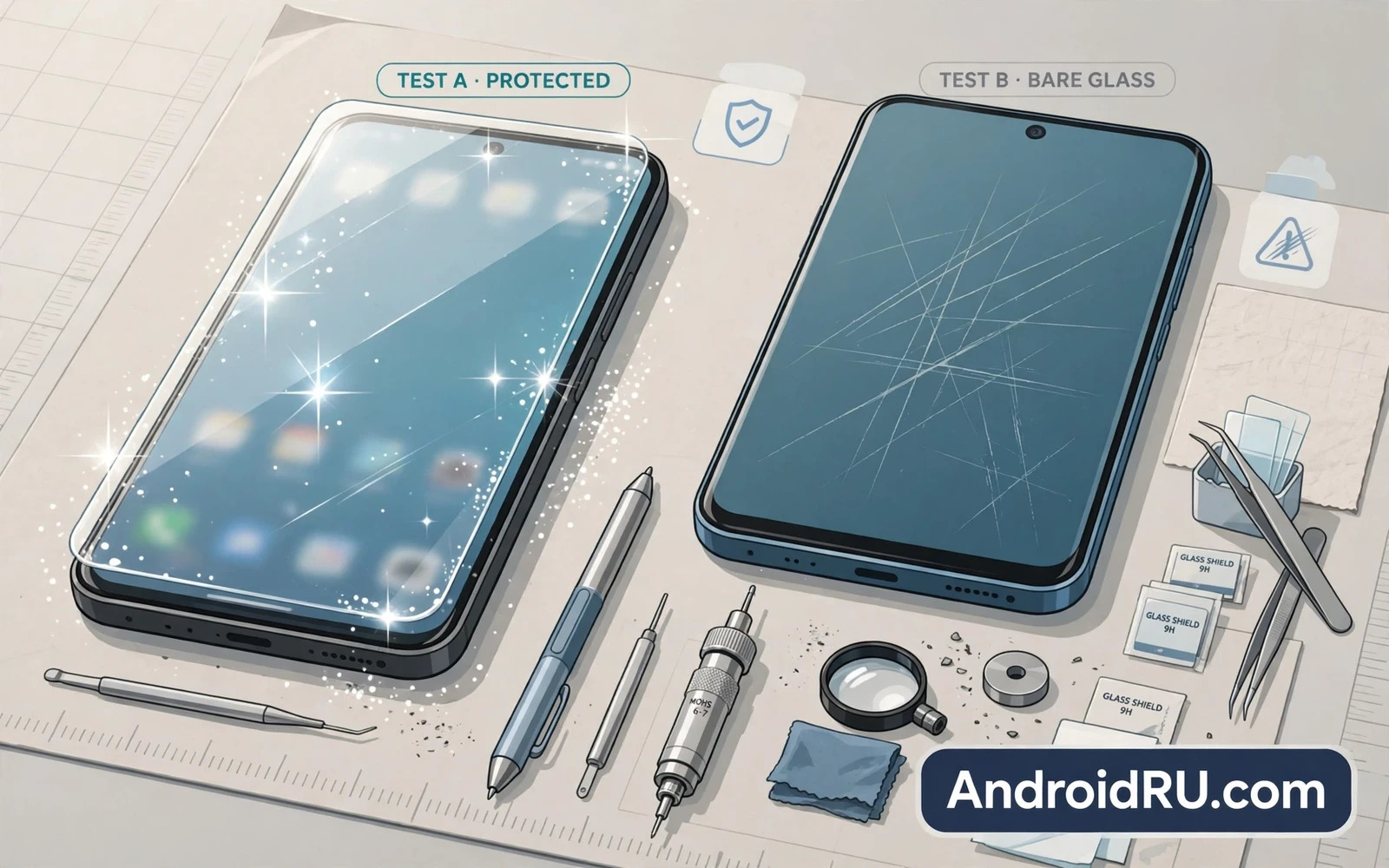
The limits of Victus appear when hard minerals meet the surface with pressure. Quartz sand is harder than Victus. A single sand grain dragged across a pocket can score a fine line. Repeated contact builds a pattern of hairline scratches that show under bright light. A screen protector can take that damage instead of the glass. Many phone owners therefore add a thin protector even on a Victus phone. The protector is cheap and easy to replace. The display glass underneath stays clear for resale and for long term use.
What Sapphire Glass Brings To The Fight
Sapphire glass is not glass in the usual sense. It is a single crystal of aluminium oxide grown in a lab and cut into thin sheets. Its hardness sits just below diamond on the mineral hardness scale. That hardness makes it extremely resistant to scratches from sand and keys and coins and most metal tools. A sapphire watch face can stay clear after years of knocks against door frames and desks. That record explains why buyers ask for sapphire on phones. A phone screen that never scratched would solve one of the most common cosmetic complaints in mobile life.
Sapphire pays for its hardness with brittleness in thin large sheets. A crystal that resists scratching can still crack when it flexes past its limit. Phone screens are large and thin and they take corner impacts that watch faces rarely face. Making a large sapphire sheet thin enough and light enough and clear enough for a phone display is difficult and costly. Yields are lower than glass yields. Cutting and polishing take longer. A cracked sapphire panel would also cost far more to replace than a glass panel. Those practical facts keep full sapphire phone screens rare even though small sapphire parts are common.
Small sapphire parts already prove the material in phones. Camera lens covers use sapphire on many flagships because the lens sits proud of the body and meets keys and tables first. Watch faces use sapphire because the watch face is small and thick relative to its size. A phone maker can protect the most exposed small part with sapphire while keeping the large display in strengthened glass. That mixed approach gives scratch resistance where it matters most without the cost and weight penalty of a full sapphire display. Buyers should check which part of a phone actually uses sapphire before assuming the whole screen is covered.
A Fair Scratch Test In Plain Terms
A useful scratch test starts with the materials that damage phones in real life. Sand and grit matter more than keys. A pocket test with sand grains gives a better picture than a pick set. A test should press the grain with realistic force and drag it in a straight line. It should repeat the drag across fresh areas. It should inspect the surface under bright angled light after each pass. It should record whether the mark wipes away or stays after cleaning. A mark that wipes away is residue from the softer object. A mark that stays is a groove in the cover material itself.
Drop testing belongs in a separate category from scratch testing. A material can win one test and lose the other. Sapphire wins a pure scratch test against Victus in almost every honest comparison. Victus wins a drop test from pocket height onto a hard floor more often because it flexes and absorbs energy. A buyer who drops phones often should weight drop results heavily. A buyer who keeps a phone in a sandy pocket or a tool bag should weight scratch results heavily. A buyer who does both needs a case and a protector no matter which glass the phone ships with.
Coatings complicate every scratch result. An oleophobic coating wears away with cleaning and time. A worn coating can look scratched even when the glass below is fine. A fresh coating can hide fine marks for a while. Testers should clean the surface gently before judging a result. Owners should judge their own screens after cleaning rather than in a dusty state. A screen that looks marked under a desk lamp may look clean in normal daylight. That gap between lab light and daily light explains many arguments about whether a phone scratched at all.
Daily Life With Each Material
Victus suits buyers who want a balanced phone without a large price premium. The phone stays light and the screen stays bright and touch stays fast. Repairs stay within normal phone repair pricing. Replacement glass is widely available. A tempered glass protector adds a sacrificial layer for sand and grit. A good case with a raised lip keeps the screen off flat surfaces when the phone lands face down. That combination covers most daily risk at low cost and low weight.
Sapphire suits buyers who prize a pristine surface above all else and who accept higher cost. A sapphire watch or a sapphire lens cover stays clear through contact that would mark glass. A full sapphire phone screen would appeal to the same buyer if makers could solve cost and drop risk. Until that point the smart sapphire buy is a device where sapphire covers a small exposed part. A watch face and a camera cover gain the most from sapphire because they are small and they meet hard surfaces often. A phone display gains less because drop risk rises with size.
Reading about protective layers in a guide to tempered glass and TPU protectors helps explain why a thin added layer often beats a more expensive cover material for daily scratch defence. The protector takes the sand damage and the display glass stays untouched beneath it. A scratched protector can be swapped in minutes at home. A scratched display needs a repair shop and a larger bill. That simple economics shapes the best advice for most Victus owners.
Protection Strategy That Actually Works
Start with a case that lifts the screen edge above flat surfaces. A raised lip of even a millimetre changes the outcome of a face down slide. Add a tempered glass protector if you carry sand or grit near your phone. Clean the screen with a soft cloth and plain water rather than abrasive pads. Keep the phone in a pocket without loose sand and sharp metal when you can. These four habits protect Victus and sapphire alike. No cover material removes the need for basic care.
Check your phone habits before you pay extra for a material claim. A desk worker who keeps a phone on a clean desk faces low scratch risk. A builder or a beach walker faces high scratch risk from grit. A parent whose phone is handled by small hands faces drop risk above scratch risk. Match the material to the risk you actually face. A Victus phone with a case fits the drop prone buyer. A sapphire covered watch fits the scratch prone buyer. A phone with both traits needs both layers of protection rather than a single magic material.
Durability stories from folding phones in long term durability findings for foldable phones show the same lesson from a different angle because hinges and flexible layers add failure points that no cover glass can fix on its own. A display system is only as strong as its weakest layer. A strong outer glass cannot save a weak hinge or a weak inner layer. Buyers should judge the whole device build rather than a single glass brand name on a spec sheet.
Repairs And Replacement Costs
Victus display replacement follows normal flagship repair pricing. Parts are common and many repair shops stock them. A repair usually restores touch and brightness fully when done with a quality part. Sapphire replacement would cost more because the material is harder to cut and polish and because fewer shops stock large sapphire panels. A small sapphire lens cover is cheap to replace relative to a full display. That cost gap matters for insurance decisions and for long term ownership cost. A cheaper repair can outweigh a small scratch advantage over three years of use.
Warranty terms rarely cover cosmetic scratches. A maker may replace a cracked screen under an accident plan. A maker will usually decline a claim for fine scratches from normal use. Buyers should read the accident cover terms before assuming a premium material brings premium cover. A screen protector and a case remain the cheapest insurance against cosmetic damage. They also protect resale value because a clear screen photographs well and reassures a second buyer.
Case choices for rough use in heavy duty cases built for extreme drop protection matter more than glass marketing for people who work outdoors because a thick bumper absorbs corner energy before it ever reaches the glass. A case with strong corners and a raised lip turns many would be cracks into harmless bounces. Glass choice then becomes a second line of defence rather than the only defence. That layered view is the honest way to judge durability claims.
How To Judge Marketing Claims
Marketing often presents a single lab result as a general promise. A drop from a set height onto a set surface proves only that result. A scratch test with a set tool proves only that result. Real life mixes heights and surfaces and angles and grit. A phone that survives a lab drop may crack on a kerb edge. A phone that resists a pick may scratch on beach sand. Buyers should look for independent tests that use varied surfaces and realistic forces. They should also look for long term owner reports after months of use rather than launch week impressions.
Hardness numbers alone mislead because toughness matters too. Hardness measures resistance to a scratch. Toughness measures resistance to a crack spreading. Sapphire leads on hardness. Victus leads on toughness for large thin panels. A good phone glass needs enough of both traits. A material that is hard but brittle can fail suddenly. A material that is tough but soft can look worn quickly. The best daily compromise today is strengthened glass plus a protector plus a case. That stack gives hardness at the surface and toughness underneath.
Water and dust ratings in an explanation of water and dust ratings for phones add another layer to durability judgement because a sealed phone resists grit entry even when the outer glass takes a mark. A sealed body keeps sand out of speakers and ports and buttons. That protection keeps the phone working well even after cosmetic wear appears. Durability is a system trait rather than a single material trait and ratings help buyers see the full system.
Verdict For Android Buyers
Choose Victus when you want a balanced flagship or mid range phone at a normal price with normal repair costs. Add a tempered glass protector and a case with a raised lip. Clean the screen gently and keep grit out of the pocket when possible. That setup handles drops and daily scratches well for most people. It also keeps resale value high because the display stays clear under the protector.
Choose sapphire where it is actually offered on a small part such as a watch face or a camera cover. Enjoy the scratch resistance on that part without expecting the same material across a large display. Do not pay a large premium for a sapphire claim that covers only a lens cover if your main worry is the display. Put that money toward a better case and a pack of quality protectors instead. The practical result will be a clearer screen for longer at lower total cost.
The scratch test winner is sapphire on hardness alone. The daily life winner for most Android buyers is Victus plus sensible protection. That verdict may change if makers solve large sheet sapphire cost and drop risk at scale. Until then the smart buy is the balanced material with a layered protection plan. Your screen will thank you every time it slides across a table and comes up clean.

