

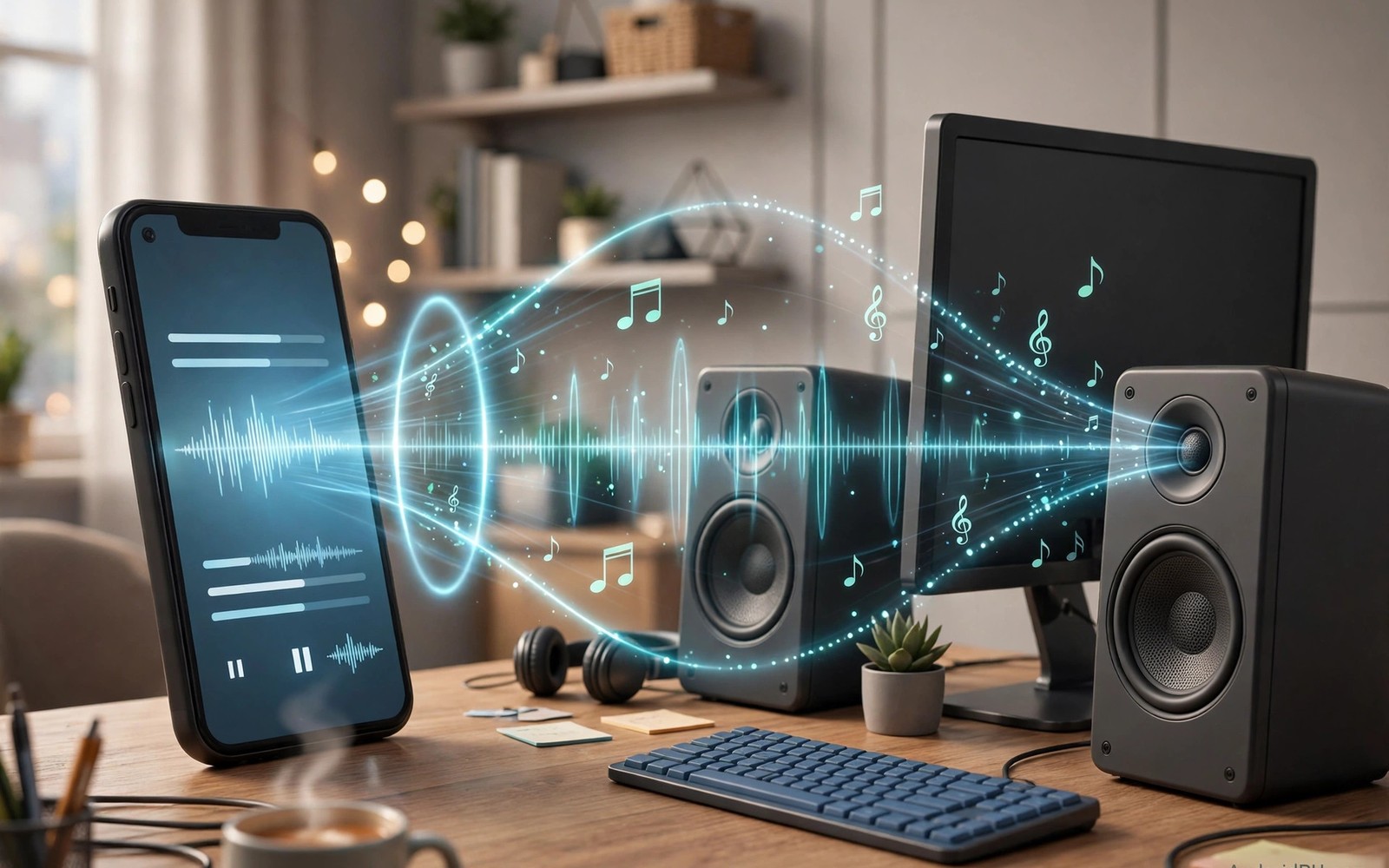
Phone speakers sound thin for music and video. Your PC speakers likely sound far better. Streaming phone audio to your PC bridges that gap. You keep phone apps and gain room filling sound.
Several methods stream audio over Wi-Fi or cable. Some focus on music quality. Others focus on low delay for video. Pick by what you listen to most. Readers who want a wider view can also explore phone as PC webcam for a related setup.
How Audio Streaming Works
The phone sends audio data over the local network. The PC receives it and plays it through its speakers. The link adds a tiny delay. Music tolerates delay well but video needs sync care.
Some tools use Bluetooth for a simple link. Bluetooth is easy but can compress sound. Wi-Fi tools often keep higher quality. Wired tools give the most stable result.
Best Options for Music Lovers
Music streaming apps can cast audio to a PC receiver. A receiver app on the PC catches the stream. Sound quality stays high on a good network. You control playback from the phone as usual.
Local network audio tools also work without cloud accounts. They keep traffic inside your home. Setup takes a few minutes the first time. After that playback feels almost native.
Low Delay for Video and Calls
Video needs audio and lips in sync. High delay ruins dialogue fast. Choose a low latency tool for video apps. Wired USB audio often beats wireless here.
Calls need two way audio and not just playback. A headset on the PC handles calls better. Stream phone call audio only if you must. Test delay before an important meeting.
pactl list sinks short
# list PC audio outputs on Linux
# pick the speaker sink for playback
# test volume before a long session
The snippet above follows standard operating system documentation and widely shared setup guides. It shows a typical pattern rather than a vendor specific promise. Results can vary by device model and system version. Always test a small change before you rely on it daily.
Setup Steps for Wireless Audio
Install the receiver on your PC first. Then install the sender on your phone. Connect both to the same Wi-Fi network. Pick the PC receiver inside the phone app. A related workflow is covered in remote phone control for readers who want more depth.
Set PC volume to a middle level before streaming. Loud sudden audio can surprise you. Test with a calm song first. Adjust balance once the link sounds stable.
Fixing Crackle and Dropouts
Crackle often means a weak Wi-Fi signal. Move closer to the router or switch bands. Close heavy downloads on the network. A stable network fixes most audio glitches.
If audio drops then restart the receiver app. Check that no other app stole the audio device. Some systems route audio to a headset silently. Confirm the output device in system settings.
Privacy and Household Sharing
A shared PC speaker can broadcast private audio. Pause streams before others enter the room. Use headphones for calls and voice notes. Household speakers suit music more than messages.
Turn off auto connect when guests use your network. Auto connect can hijack your speaker unexpectedly. Manual connect keeps control in your hands. It takes one extra tap and saves surprises.
Choosing Your Audio Path
Music fans should pick Wi-Fi streaming. Video fans should pick low delay wired audio. Casual users can start with Bluetooth. Upgrade only when you hear a real limit.
Bluetooth Audio Versus Wi-Fi Audio Quality
Bluetooth codecs compress audio before transmission. Modern codecs sound good for casual listening. Wi-Fi streaming preserves more detail for critical ears. Audiophiles notice the difference on good speakers. Casual listeners may not notice at all. Match the method to your ears and gear.
Bluetooth range limits movement around the house. Walls degrade Bluetooth faster than Wi-Fi. Wi-Fi covers a whole home more reliably. A phone can stream from another room over Wi-Fi. Bluetooth demands closer proximity to the receiver. Range needs should guide your choice.
Receivers You Can Install on a PC
Receiver apps turn a PC into an audio target. Some receivers support only music streams. Others support system audio from the phone. Check supported stream types before installing. A music only receiver frustrates video users. Match receiver type to your main use case.
Free receivers often limit quality or session length. Paid receivers unlock lossless audio and longer sessions. Test free versions for basic compatibility first. Pay only after the free version proves stable. A stable free test predicts paid success well. Avoid paying before a real trial.
Streaming Podcasts and Audiobooks
Podcasts tolerate delay better than video does. Audio sync issues barely matter for speech. Stream podcasts to PC speakers freely. Control playback from the phone app as usual. Sleep timers on the phone still work during streams. The PC simply plays what the phone sends.
Audiobook chapters need reliable position memory. Streaming does not affect bookmark positions. The phone app tracks position independently. Pause on the phone and resume later seamlessly. PC speakers only change output location. Your listening progress stays safe on the phone.
Multi Room Audio with a PC as One Zone
A PC can join a multi room audio setup. Phone audio plays in the office zone only. Other zones continue their own playback. Zone control lives in the phone app usually. Keep zone names clear for family members. Clear names prevent music in the wrong room.
Delay differences between zones can cause echo. Wired zones play slightly ahead of wireless zones. Some systems offer delay compensation settings. Tune delay by ear in the doorway between zones. Perfect sync matters less in separate rooms. Adjacent rooms need closer tuning.
Recording PC Audio from Phone Streams
Recording streamed phone audio raises legal questions. Record only audio you own or have rights to. Personal voice notes are safe to record. Music streams carry copyright restrictions. Respect those limits in every recording. When unsure do not record the stream.
Loopback recording tools capture PC output cleanly. They suit podcast production workflows. Route phone audio through the PC mixer. Monitor levels to avoid clipping distortion. Test recordings at low volume first. Clean levels beat loud distorted captures always.
Choosing Speakers for Phone Audio
PC speakers vary hugely in quality and price. Small USB speakers suit desk listening fine. Larger speakers fill a room better. A subwoofer adds depth for music lovers. Match speaker size to room size sensibly. Oversized speakers overwhelm tiny desks.
Speaker placement affects streamed audio quality greatly. Keep speakers away from walls for clarity. Angle them toward your listening position. A simple placement tweak can transform sound. Experiment for ten minutes after setup. Your ears will thank you daily.
Streaming Audio to Smart Speakers via PC
PCs can forward phone audio to smart speakers. The PC acts as a bridge device. Audio routes from phone to PC to speaker. Each hop adds slight delay potentially. Music tolerates multi hop delay well. Video audio may drift out of sync. Test video sync before relying on bridges.
Smart speaker groups complicate routing further. Groups play audio across many rooms. PC bridging to groups needs compatible software. Check group support before building setups. Simple single speaker setups work most reliably. Complexity increases failure points quickly.
Audio Quality Settings on PC Receivers
Receiver apps offer quality settings for streams. High quality settings need more bandwidth. Low quality settings tolerate weak networks. Match quality to network strength realistically. Strong home networks support high quality easily. Weak networks need lower quality settings. Adaptive quality balances both automatically sometimes.
Sample rate mismatches can cause pitch problems. Ensure receiver and sender rates align. Most modern tools negotiate rates automatically. Manual settings exist for troubleshooting only. Leave sample rates on auto normally. Manual tweaks suit advanced users exclusively.
Streaming System Sounds from Phone
System sounds include taps and keyboard clicks. Streaming system sounds annoys listeners quickly. Disable system sound streaming by default. Stream media audio only for pleasant listening. Media only mode keeps streams clean. Clean streams suit shared speakers especially. Household harmony benefits from media only streams.
Notification sounds during music streams interrupt playback. Music ducks or pauses for notifications. Frequent notifications ruin music enjoyment. Enable do not disturb during music sessions. Music sessions deserve uninterrupted playback time. Protect listening time like work focus time.
Using PC Equalizers for Phone Audio
PC equalizers shape phone audio to taste. Boost bass for dance music enjoyment. Cut harsh treble for long listening sessions. Save presets for different music genres. Genre presets switch with one click. Personalized sound improves daily listening pleasure. Experiment with presets over several weeks.
Equalizers cannot fix poor source recordings. Low quality phone recordings stay low quality. Equalizers only reshape existing frequencies. Accept source limits realistically always. Good speakers matter more than equalizer tricks. Invest in speakers before equalizer obsession.
Audio Streaming for Language Practice
Language learners stream lessons to PC speakers. Room filling audio aids pronunciation practice. Learners repeat phrases aloud comfortably. PC speakers allow group practice sessions. Classrooms benefit from phone lesson streaming. Teachers control lessons from phones easily. Streaming turns phones into classroom audio tools.
Slow playback helps beginners catch difficult sounds. Some receiver apps support playback speed control. Slowed audio preserves pitch in good tools. Practice with slowed audio then normal speed. Gradual speed increases build listening skill. Structured practice beats passive listening always.
Streaming Audio for Fitness Workouts
Workout music from phones fills home gyms easily. PC speakers deliver stronger bass than phones. Strong bass motivates intense workout sessions. Playlists control from phones during exercise. Sweaty hands avoid PC keyboards entirely. Phone control suits workout environments perfectly. Music powered workouts feel more energetic consistently.
Workout timers and music compete for audio attention. Music apps and timers share PC speakers. Timer alerts duck music briefly helpfully. Configure timer volumes for audibility clearly. Missed timers disrupt interval training badly. Test timer audibility before workouts start. Preparation prevents mid workout frustrations.
Audio Streaming Latency Explained
Latency measures delay between phone and speaker. Bluetooth latency ranges widely by codec. Wi-Fi latency varies with network congestion. Wired latency stays lowest consistently. Video lip sync needs latency under thresholds. Music tolerates higher latency gracefully. Match latency expectations to content type.
Latency compensation exists in some receiver apps. Receivers delay video to match audio. Compensation works only within app ecosystems. Cross app compensation remains imperfect today. Test compensation with dialogue heavy video. Dialogue reveals sync problems most clearly. Sync testing takes seconds and saves annoyance.
Start with one small change today and build from there. A steady setup beats a rushed overhaul every time. You can also read calls and texts on PC to round out your plan. Once the basics feel natural you can add more advanced options at your own pace.

