

alcatel Go Play at a Glance: Review and Detailed Specifications
The alcatel Go Play was a phone with a clear job: survive the kind of day that would worry a normal handset. Announced at IFA in September 2015 and released in the fourth quarter of 2015, it arrived at a time when most budget phones were slim, glossy and fragile. As an alcatel Go Play IP67 water resistant rugged phone, it was built from the start to handle water, dust and drops rather than to chase thinness. This one went the other way. It was colourful, chunky, sealed against water and dust, and built to take a knock. This alcatel Go Play full specifications and review looks at what the phone offered, who it suited, and how its hardware holds up when judged on its own 2015 terms.
Readers searching for an alcatel Go Play review usually want the same things: the rugged rating, the screen, the camera, the battery and the price. This alcatel Go Play overview covers all of them in one place, with the complete specification table further down the page. The short version is that the Go Play traded flagship speed for toughness and colour, and that trade made sense for its target buyers. It was not a phone for heavy gaming or for people who needed large internal storage, but it was a sensible pick for outdoor use, for work on a building site, for festivals, and for anyone who kept breaking ordinary phones.
The alcatel Go Play release came as part of a busy alcatel line-up in 2015, alongside the Pop series. An alcatel Go Play vs alcatel Pop Star comparison shows the difference in philosophy at once: the Pop Star was a slim, everyday phone, while the Go Play was the tough sibling with sealed ports and a shock-resistant shell. That contrast runs through this whole article, because the Go Play only makes sense once you accept that protection, not raw speed, was its headline feature.
At a Glance: What the alcatel Go Play Was
The alcatel Go Play was a 5-inch Android phone built around the Qualcomm Snapdragon 410, with 1GB of RAM, 8GB of internal storage, an 8-megapixel rear camera and a 2500mAh battery. It ran Android 5.0 Lollipop and carried the model number 7048X. Its defining feature was IP67 certification, which meant it was protected against dust and against immersion in water up to one metre deep for up to 30 minutes. On top of that, the body was shockproof, so drops and bumps that would crack a glass slab were far less of a worry.
The alcatel Go Play price in 2015 budget phone conversations placed it in the affordable bracket, roughly in line with other entry-level and lower mid-range phones of the year. It was never meant to compete with flagships. Instead it offered something those phones did not: peace of mind. A phone that could survive rain, a splash, a dusty pocket or a fall onto concrete had real value for people who worked outdoors or spent their weekends hiking, cycling and camping.
This alcatel Go Play specs summary gives the shape of the device, but the details matter. The 5.0-inch TFT display had a resolution of 720 by 1280 pixels, the rear camera recorded 1080p video, and the front camera was a 5-megapixel unit that was generous for a budget phone in 2015. The alcatel Go Play features list also included 4G LTE, Wi-Fi, Bluetooth 4.0, GPS and a microSD card slot, so the basics of a modern smartphone were all present, just wrapped in a tougher package.
Design and Build: A Rugged Phone With Colour
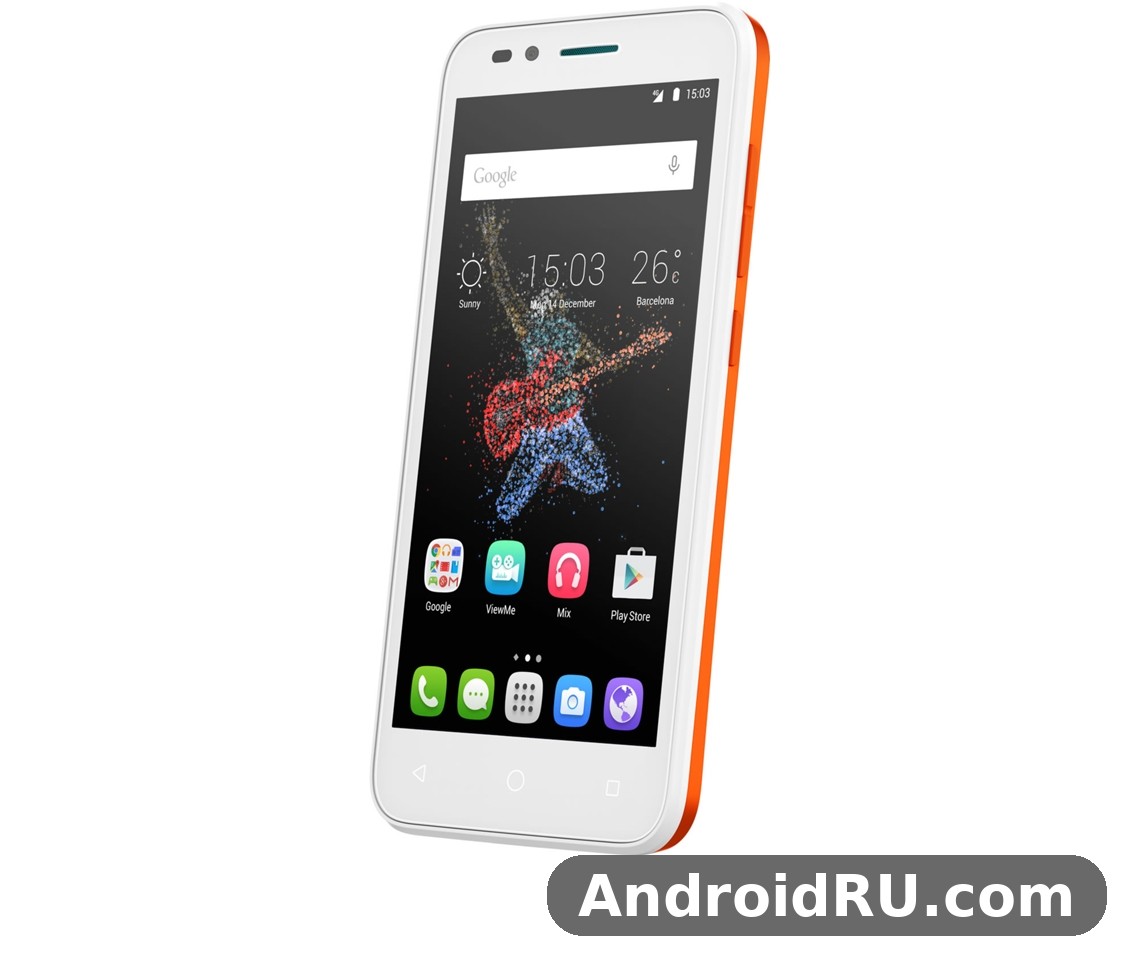
The alcatel Go Play design is the first thing anyone noticed. Where rugged phones of the era were usually black and grim, the Go Play came in a bright palette: Dark Grey, Dark Red, Dark Green, Orange, Pink, Lime Green and Blue. The alcatel Go Play colours Dark Grey Orange Pink line-up gave buyers a real choice, and the bright options made the phone easy to spot in a bag or on a beach towel. The body measured 143.3 by 73.3 by 9.2 millimetres and weighed 155 grams, so it was thicker than a slim phone but still comfortable to hold in one hand.
The alcatel Go Play durability was its headline selling point, and the alcatel Go Play rugged character came from more than colour. The sealed body kept dust and water out, the corners were shaped to absorb impact, and the whole phone felt solid rather than hollow. This is a tough everyday companion in the literal sense: it was designed to be used without a case, in places where a case would be a nuisance. The alcatel Go Play durable phone for outdoor use idea was the point of the product, and the hardware backed it up with a certified rating rather than a marketing claim.
Colours and Finishes
Seven colour options were offered, which was unusual for a rugged phone and for a budget phone alike. Dark Grey was the safe choice, Dark Red and Dark Green added a little personality, while Orange, Pink, Lime Green and Blue were bold enough to stand out. The finish was matte plastic with a slight grip to it, which helped when hands were wet. The alcatel Go Play colours were not just decoration: on a phone meant for the outdoors, a bright shell is easier to find if you set it down on grass or sand.
IP67 Protection Explained
The IP67 rating is worth explaining properly, because it is the heart of this phone. The 6 means the phone was dust-tight, so fine dust could not get inside the body. The 7 means it could be immersed in water up to one metre deep for up to 30 minutes. This alcatel Go Play waterproof test IP67 rating explained in plain terms means rain, splashes and an accidental drop in a puddle or sink should not kill the phone. It does not mean the phone was made for swimming or for use in deep water, and the rating assumed the ports and covers were properly closed.
Shockproofing was the other half of the promise. The alcatel Go Play rugged design shockproof body used a reinforced frame and a thickened shell to spread the force of a drop. No phone is unbreakable, and a hard fall onto a sharp corner can damage any handset, but the Go Play was built to survive the everyday accidents that crack ordinary screens. For buyers who had already broken a phone or two, that was the whole sales pitch.
Display and Everyday Viewing
The alcatel Go Play display was a 5.0-inch TFT panel with a resolution of 720 by 1280 pixels, giving a pixel density of about 294 pixels per inch. For a budget phone in 2015, that was a respectable figure: text looked reasonably sharp, photos looked clear, and video was pleasant to watch. The alcatel Go Play 5 inch display specifications put it in the mainstream of its class, where 720p was the standard for affordable 5-inch phones and 1080p was still reserved for more expensive models.
The alcatel Go Play screen was protected by the same rugged thinking as the rest of the phone, and its size hit a useful balance. Five inches was large enough for maps, messages and video, yet small enough to use one-handed. The alcatel Go Play TFT screen viewing angles review angle is worth noting: TFT panels of this era lost some contrast when viewed from a sharp angle, and colours could shift a little, but straight-on viewing was bright and clear. Outdoors, the screen was readable in daylight, though like most phones of its time it could struggle in direct sunlight.
Performance and Software
The alcatel Go Play performance was modest but steady, and it came from the Qualcomm Snapdragon 410, model number MSM8916, a quad-core chip running four Cortex-A53 cores at 1.2GHz with Adreno 306 graphics. The alcatel Go Play Snapdragon 410 performance review picture is one of modest, steady capability: the chip handled calls, messaging, web browsing, maps and social apps without drama, and it did so while sipping power. The alcatel Go Play quad core Cortex A53 processor was a common sight in affordable phones of 2015, and it earned that place by being efficient and reliable rather than fast.
The alcatel Go Play processor was paired with 1GB of RAM and 8GB of internal storage, with a microSD card slot for expansion. The alcatel Go Play storage situation was tight by any measure, which is why the card slot mattered so much. The alcatel Go Play 1GB RAM multitasking performance was the main limit on the phone: switching between several heavy apps could cause reloads, and 1GB was already tight by late 2015 standards. The alcatel Go Play memory setup suited light use, and buyers who kept many apps open at once would have felt the limit. The alcatel Go Play 8GB storage microSD expansion story was similar: 8GB filled up fast once apps and photos were counted, so the microSD card slot up to 32GB was not a luxury, it was a practical necessity, and the alcatel Go Play microSD card slot up to 32GB support made it easy to add room for music and photos.
Snapdragon 410 and Memory
The Snapdragon 410 was built on a 28nm process and was designed for efficiency. In daily use that meant the phone stayed cool and the battery lasted well, even if demanding games were not its strength. The alcatel Go Play gaming performance casual games verdict is simple: light games, puzzle games and older titles ran fine, while heavy 3D games of the era ran at low settings or struggled. The alcatel Go Play gaming experience was never the selling point; the phone was for people who played occasionally, not for people who bought a phone to play.
Everyday Multitasking
With 1GB of RAM, the sensible way to use the Go Play was to keep a small number of apps open and to close what was not needed. Email, browser, music and maps could run together happily, and the phone switched between them at a reasonable pace. Heavy multitasking, such as editing photos while streaming video in the background, would slow it down. That was normal for its class and its price, and the phone was honest about it: it never promised flagship speed.
Android Lollipop and Software
The phone shipped with Android 5.0 Lollipop, with alcatel’s own light interface on top. The alcatel Go Play Android Lollipop software features included the Material Design look of Lollipop, a cleaner notification shade, lock-screen notifications and the ART runtime that made apps launch a little faster than on older Android versions. The alcatel Go Play software was close to stock in feel, with a few alcatel apps and customisations added. The alcatel Go Play software update Android version history is short: like most budget phones of its generation, it received little in the way of major version upgrades, and buyers should think of it as a Lollipop-era device rather than a phone that kept pace with newer Android releases.
Camera and Video
The alcatel Go Play camera setup was straightforward and, for its price, capable. The rear camera used an 8-megapixel sensor with autofocus and an LED flash, and it recorded video at 1080p and 30 frames per second. The alcatel Go Play 8 megapixel camera photo quality was good in daylight, where the sensor had plenty of light to work with: photos were detailed enough for social sharing and for prints at small sizes, with natural colours and decent contrast. In low light, noise crept in and detail softened, which was true of nearly every budget phone camera in 2015.
The alcatel Go Play photos taken outdoors were the phone’s strong suit, which fitted its character. A rugged phone is a phone that goes outside, and the camera was good enough to record a walk, a campsite or a day at the beach. The alcatel Go Play video recording was equally practical: 1080p footage looked smooth and clear in good light, and the phone could capture memories without the owner worrying about rain or dust while filming.
Rear Camera in Detail
The 8-megapixel rear camera had autofocus, an LED flash, HDR mode and panorama, and it could record 1080p video at 30 frames per second. The alcatel Go Play 1080p video recording quality held up well for casual clips, with steady exposure and sound captured through the built-in microphone. The alcatel Go Play camera interface was simple, with the usual modes for stills, video and panorama, and it launched quickly enough to catch a moment rather than miss it.
Photo Modes and Focus
Autofocus on the rear camera worked by tapping the screen to pick a subject, and HDR helped in scenes with bright sky and dark foreground. Panorama mode stitched wide scenes together for landscapes. These were standard features in 2015, and they worked as expected: no surprises, no gimmicks, just a camera that did its job in the conditions its owner was most likely to meet.
Front Camera and Selfies
The front camera was a 5-megapixel unit, which was generous for a budget phone in 2015, when many rivals still shipped 2-megapixel front cameras. The alcatel Go Play 5 megapixel front camera selfies came out clear and bright in good light, and the camera handled video calls well. For selfies and for video chat, it was one of the stronger points of the phone, and it made the Go Play a better social phone than its rugged label might suggest.
Battery Life and Connectivity
The alcatel Go Play battery was a 2500mAh non-removable lithium-ion unit. The alcatel Go Play 2500mAh battery life test picture, judged by the standards of 2015, was solid: a day of normal use, including calls, messaging, some browsing and a little music, was realistic, and light users could stretch it further. The Snapdragon 410 was efficient, the 720p screen was not greedy, and the phone was tuned for endurance rather than speed. Heavy use, especially navigation with the screen on and mobile data active, would drain it faster, but that was true of every phone of its size.
The alcatel Go Play battery removable or sealed design question has a clear answer: the battery was sealed inside the rugged body, so it could not be swapped by the owner. That was the price of the IP67 sealing, and it was a fair trade for a phone whose main promise was protection. Charging was through a micro USB port, and the phone supported the usual wired charging of its era rather than fast charging.
Charging and Daily Use
With a 2500mAh cell and efficient hardware, the Go Play was a phone you charged overnight and used through the day without hunting for a socket. Standby drain was low, and the phone was well suited to weekends away, where a charger might not be handy. The alcatel Go Play battery life was one of its quiet strengths: it did not set records, but it did not let its owner down either.
Connectivity and Sound
The alcatel Go Play connectivity covered the essentials of 2015: 4G LTE, Wi-Fi 802.11 b/g/n, Bluetooth 4.0 with A2DP, GPS with A-GPS, an FM radio and a micro USB 2.0 port. The alcatel Go Play GPS WiFi Bluetooth connectivity options made it a capable travel companion, with navigation, wireless headphones and mobile data all supported. The alcatel Go Play headphone jack and micro USB port were both present, so standard headphones and chargers worked without adapters. The alcatel Go Play SIM slot took a micro-SIM, and the phone supported GSM, HSPA and LTE networks.
The alcatel Go Play speaker quality and call sound were practical rather than impressive. The loudspeaker was clear enough for calls on speakerphone and for notifications outdoors, and call quality was good, with voices coming through clearly on both ends. The alcatel Go Play speaker was a single unit, so it was never going to fill a room with music, but for ringtones, podcasts and spoken directions it did the job. The alcatel Go Play dimensions of 143.3 by 73.3 by 9.2 millimetres and the alcatel Go Play weight of 155 grams gave the phone a reassuring heft without making it a burden in a pocket or a bag.
Full Specifications
The table below gathers the alcatel Go Play full specifications and review details in one place. The alcatel Go Play model 7048X specifications listed here are the verified figures for the model announced in September 2015 and released in the fourth quarter of 2015, and they cover the network, body, screen, platform, memory, camera, sound, connectivity, features and battery.
| Feature | Specification |
|---|---|
| Model | alcatel Go Play 7048X |
| Announced | September 2015 (IFA) |
| Release | Fourth quarter of 2015 |
| Dimensions | 143.3 x 73.3 x 9.2 mm |
| Weight | 155 g |
| Build | IP67 dust and water resistant, shockproof |
| SIM | Micro-SIM |
| Display | 5.0-inch TFT, 720 x 1280 pixels, 294 ppi |
| Platform | Android 5.0 Lollipop |
| Chipset | Qualcomm Snapdragon 410 (MSM8916) |
| CPU | Quad-core 1.2 GHz Cortex-A53 |
| GPU | Adreno 306 |
| RAM | 1 GB |
| Internal storage | 8 GB, microSD card slot up to 32 GB |
| Rear camera | 8 MP, autofocus, LED flash, 1080p video at 30fps |
| Front camera | 5 MP |
| Sound | Loudspeaker, 3.5 mm headphone jack |
| Connectivity | Wi-Fi 802.11 b/g/n, Bluetooth 4.0, GPS, micro USB 2.0, FM radio |
| Network | GSM, HSPA, LTE |
| Sensors | Accelerometer, proximity, compass |
| Battery | Non-removable Li-Ion 2500 mAh |
| Colours | Dark Grey, Dark Red, Dark Green, Orange, Pink, Lime Green, Blue |
For readers comparing the Go Play with its stablemates, the related alcatel Pop Star coverage is a useful next stop: alcatel Pop Star: Design, Software and Full Specifications in Detail looks at the slimmer Pop Star in depth. The LTE version has its own write-up too, in alcatel Pop Star LTE Review and Detailed Specs: Key Features and Battery Life Covered, and the Flash Plus is covered in Breaking Down the alcatel Flash Plus: Review, Battery Life and Full Specs. Two more relatives worth a look are How Good Is the alcatel Pop Astro? Full Review and Specifications and alcatel Pop Up Detailed Overview: Battery Life, Storage and What to Expect, which round out the 2015 alcatel range around the Go Play.
Pros and Cons
Every phone is a set of trade-offs, and the Go Play is easier to judge once those trade-offs are listed plainly. This alcatel Go Play pros and cons honest review section weighs the rugged build and the bright colours against the limits of 1GB of RAM and 8GB of storage, and it does so in the context of 2015, when the phone was new, rather than by the standards of phones released a decade later.
- IP67 dust and water resistance with a shockproof body, a rare combination at its price.
- Bright, cheerful colour range with seven options, including Orange, Pink and Lime Green.
- 5-megapixel front camera that was generous for a budget phone in 2015.
- 1080p video recording from the 8-megapixel rear camera.
- Efficient Snapdragon 410 chip and a 2500mAh battery that lasted a full day of normal use.
- microSD expansion up to 32GB, 4G LTE, GPS and FM radio included.
- Only 1GB of RAM, which limited multitasking and heavy apps.
- Only 8GB of internal storage, so a microSD card was almost essential.
- TFT screen with limited viewing angles compared with IPS panels.
- Sealed, non-removable battery, so a spare battery was not an option.
- Android 5.0 Lollipop with little prospect of major version upgrades.
- Thick 9.2 mm body that felt bulky next to slim rivals.
The alcatel Go Play verdict that follows from those lists is straightforward. If protection mattered more than speed, the Go Play was a smart buy in late 2015. If speed, storage and a bright IPS screen mattered more, a slim phone from the same alcatel range was the better pick. This is a bright and colourful casing wrapped around honest, modest hardware, and that combination is exactly what its buyers were looking for.
Frequently Asked Questions
These questions cover the points readers ask most often about the alcatel Go Play, from its release date and its water resistance to its battery, its storage and its camera. The answers use the verified specifications for the 7048X model.
When was the alcatel Go Play released?
The alcatel Go Play was announced in September 2015 at IFA and released in the fourth quarter of 2015. With the alcatel Go Play released fourth quarter 2015, it arrived as a late-2015 budget phone, and its launch timing put it in the shops for the holiday season of that year.
Is the alcatel Go Play waterproof?
The alcatel Go Play is IP67 rated, which means it is dust-tight and can be immersed in water up to one metre deep for up to 30 minutes. In practice it handles rain, splashes and accidental drops in water, but it was not designed for swimming or for deep-water use, and its ports needed to be properly closed for the rating to apply.
How good is the alcatel Go Play battery?
The 2500mAh battery lasted a full day of normal use in 2015, thanks to the efficient Snapdragon 410 chip and the 720p screen. Light users could get more, while heavy navigation or gaming drained it faster. The battery is sealed inside the body and is not removable by the owner.
Does the alcatel Go Play have a microSD card slot?
Yes. The phone has 8GB of internal storage and a microSD card slot that supports cards up to 32GB. Because 8GB fills up quickly with apps and photos, a microSD card was a practical addition for most owners.
What colours did the alcatel Go Play come in?
The Go Play came in seven colours: Dark Grey, Dark Red, Dark Green, Orange, Pink, Lime Green and Blue. The bright options were unusual for a rugged phone and made the device easy to spot outdoors.
Is the alcatel Go Play still worth buying today?
The alcatel Go Play where to buy second hand today question has a simple answer: it can still be found second hand, but it is best thought of as a collector’s item or a spare outdoor phone rather than a daily handset. Its Android 5.0 software, 1GB of RAM and 8GB of storage are far behind modern phones, and many current apps no longer support it. As a piece of 2015 rugged-phone history, though, it remains an interesting and likeable device, and a steady everyday performer in the role it was built for.

