

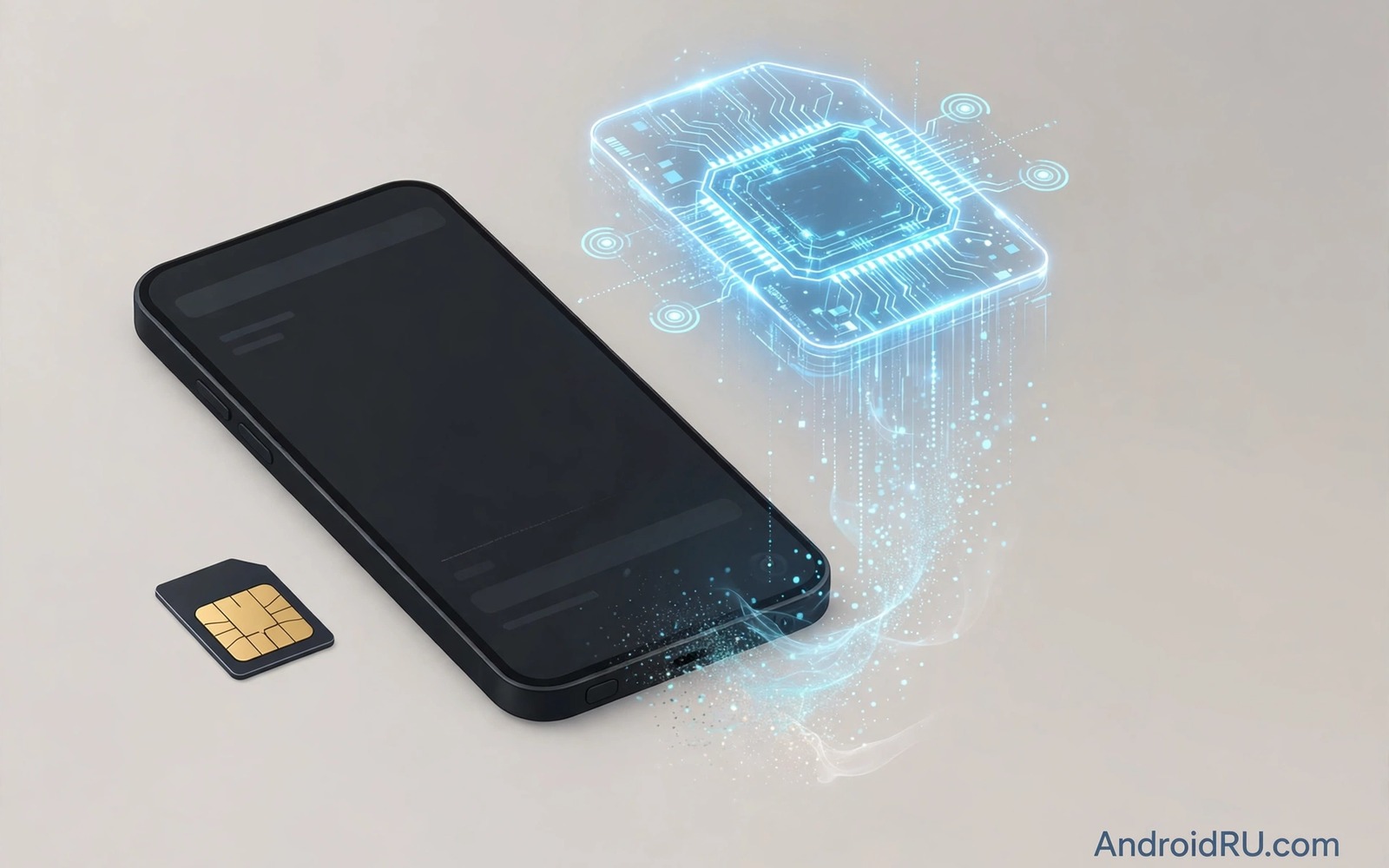
Some new phones ship without a physical SIM tray in certain regions. Others keep a tray alongside eSIM support. The trend is clear in one direction. The timeline is far less clear. Physical SIM cards will fade in some markets long before they fade everywhere.
A SIM card identifies your phone to a carrier network. A physical SIM is a small chip you insert into a tray. An eSIM is a chip built into the phone that can store several carrier profiles. You activate a profile by scanning a code or by using a carrier app. You can switch profiles without opening the phone.
For many users eSIM is more convenient. For other users a physical SIM is more flexible. Travel and repair and carrier choice all affect the answer. This guide weighs both sides in practical terms rather than in slogans.
Why Manufacturers Prefer eSIM
Removing a SIM tray saves internal space. That space can hold a slightly larger battery or better sealing against water. A tray is also a point of failure. It can break or let dust inside. A sealed design without a tray can be more durable in theory.
Manufacturing also becomes simpler with fewer variants. A phone without a tray needs fewer mechanical parts. It also avoids regional tray differences for single and dual SIM models. These savings matter at scale even when each saving looks small on one phone.
Security is another argument. A built in eSIM cannot be removed by a thief in seconds. A stolen phone with eSIM can still be tracked if the owner acts quickly. A physical SIM can be removed and replaced to hide the device. This argument is real but it is not decisive on its own.
Why Physical SIM Cards Still Matter
Physical SIM cards are easy to move between phones. You can move a SIM from a broken phone to a spare phone in seconds. You can lend a SIM to a family member for a trip. You can test a phone without a carrier app or a stable internet connection. That simplicity matters in emergencies.
Carrier support for eSIM is uneven. Some carriers support eSIM well with instant activation. Others require a store visit or a phone call. Some prepaid plans still work best with a physical card. In regions with limited support a phone without a tray can become a problem rather than a convenience.
Travel also favours a physical option for many people. A traveller can buy a local SIM at an airport and insert it on arrival. An eSIM travel plan can be easier when it works. It can also fail if activation needs strong internet or a carrier app that is blocked. Having both options is the safest setup for frequent travellers today.
What eSIM Does Better Today
eSIM shines when you manage several numbers. A phone can store many profiles and keep two active at once. You can keep a work number and a personal number on one device. You can add a travel profile without removing your home profile. Switching back is a menu action rather than a physical swap.
Activation can also be fast when carrier systems work well. A new phone can download a profile during setup. A user can switch carriers without waiting for a card in the mail. For users who change plans often this speed is a real benefit. It also reduces plastic waste from cards and packaging.
Device makers and carriers are improving transfer tools. Moving an eSIM to a new phone is becoming easier on recent systems. The process still varies by carrier and by region. Before you buy a phone without a tray check how your carrier handles transfers and replacements. That check matters more than any future prediction. The same practical check applies to why manufacturers extend software support because long ownership makes carrier flexibility more important over time.
A Practical Decision Guide
Ask three questions before you choose. Does your carrier support eSIM activation and transfer smoothly today. Do you travel to places where local SIM cards are the norm. Do you rely on a spare phone during repairs. If the answer to the first question is yes and the other answers are no then an eSIM only phone is a safe choice.
If you travel often or you swap phones during repairs then keep a physical tray for now. A dual setup with one physical SIM and one eSIM gives the best balance. You can use eSIM for travel profiles and keep your main number on a physical card. You can also reverse that setup if your carrier prefers eSIM for your main line.
Question 1: Carrier eSIM support confirmed
Question 2: Travel SIM needs in next year
Question 3: Spare phone use during repairs
Result: eSIM only only when answer 1 is yes
Result: Dual setup when travel or repair needs are high
The decision guide above is an original example written for this guide. It is not copied from a vendor document and it does not require a special app or a paid tool. Use it before you buy a phone that lacks a tray.
Common mistakes
One mistake is to assume that eSIM works the same everywhere. Support varies by carrier and by country and by plan type. A feature that works in one market may need a store visit in another. Check your specific carrier and plan before you commit.
Another mistake is to delete an eSIM profile without a backup plan. Deleting a profile can require carrier help to restore. If you reset a phone then note which profiles you need to re-add. Keep carrier activation details in a safe place separate from the phone.
A third mistake is to buy a phone without a tray for a family member who needs simple swapping. Older users and children may find a physical SIM easier to understand. A tray also helps a support person move service quickly during a repair. Convenience for the owner matters more than a design trend.
A final mistake is to treat the SIM debate as a single global event. Phones vary by region even within one model line. A model sold without a tray in one country may keep a tray in another. Check the exact regional model before you order from another market.
Frequently Asked Questions
Will Android phones lose SIM trays in the next year?
Some models will lose trays in some regions. Most Android models will keep a tray or a dual setup for now. The market is diverse and carriers move at different speeds. A complete disappearance is not a near term event for Android as a whole.
Is eSIM more secure than a physical SIM?
eSIM is harder to remove physically. It still depends on account security and carrier controls. A weak account password can allow a transfer attack. Use strong account protection regardless of SIM type.
Can I use eSIM and a physical SIM together?
Yes on many Android phones. You can keep one profile active on eSIM and one card in the tray. Dual SIM settings let you choose which line handles calls and data. This setup gives flexibility for work and travel.
eSIM for Families and Businesses
Families face a different SIM question than single users. A parent may manage several lines for children and older relatives. Physical SIM cards are easy to explain and easy to swap when a phone breaks. eSIM profiles require account access and carrier steps that a child or an older user may not handle alone. A family plan should favour the method that the least technical member can use in an emergency.
Businesses face a similar trade off at scale. A company that issues hundreds of phones needs a fast way to activate and transfer lines. eSIM can speed up deployment when carrier tools work well. It can also create a bottleneck when a carrier requires manual steps for each transfer. IT teams should test eSIM workflows with their specific carrier before they order eSIM only devices.
For both groups a mixed fleet is often the practical answer. Give eSIM only phones to users who travel and who handle their own setup. Give dual SIM phones to users who need simple swaps and emergency flexibility. A single policy for every user rarely fits every need.
What Happens When You Lose a Phone With eSIM
Losing a phone with eSIM creates a different recovery process than losing a phone with a physical SIM. You cannot simply move a card to a spare phone. You must contact your carrier to transfer the profile to a new device. That transfer may require identity verification and a working internet connection. Keep your carrier account details in a safe place separate from the phone.
Remote locking and tracking also work differently with eSIM. A thief cannot remove an eSIM in seconds to hide the phone. That advantage lasts only if you act quickly to lock the device. If you delay then a thief may still reset the phone or remove the account. Speed matters more than SIM type in the first hours after a loss.
Preparation makes recovery much easier. Note your carrier support number and your account identifier before a loss happens. Keep a spare phone that can receive an eSIM profile. Test the transfer process with your carrier before you need it in an emergency. A rehearsed recovery plan turns a stressful loss into a manageable inconvenience.
Switching Carriers With eSIM
Switching carriers with eSIM starts with checking your current contract. Some contracts require a notice period or a device payoff before a switch. A switch that ignores contract terms can create unexpected charges. Read the terms before you request a transfer.
Next request an eSIM activation from the new carrier. The carrier may send a code by email or through an app. Scan the code on the new phone and follow the setup steps. Keep the old profile active until the new profile is confirmed working.
Test calls and data on the new profile before you delete the old profile. A test call confirms voice service. A data test confirms internet access. A message test confirms text service. Only delete the old profile after all three tests pass.
If a transfer fails then contact the new carrier support with your activation details. Note the error message and the time of the attempt. A clear error report helps support fix the problem faster. Avoid repeated failed attempts that may lock the activation code.
For a family switch plan the order carefully. Switch one line first and confirm it works. Then switch the remaining lines one by one. A staged switch prevents a whole family from losing service at the same time.
Conclusion
Physical SIM cards will not disappear completely in the near term. They will become less common in premium models and in markets with strong eSIM support. They will remain important for travel and repair and regions with uneven carrier support. The future is dual and gradual rather than sudden and universal.
Your concrete next step is to contact your carrier this week and ask three things. How do you activate eSIM and how do you transfer it to a new phone and what happens if the phone is reset. Write down the answers before your next phone purchase. That note will tell you whether an eSIM only phone is safe for you. For a broader look at device evolution read about whether glass backs will be replaced by self healing materials and leaked hardware patent designs for next generation flagships to see which design changes are likely to arrive first.

