

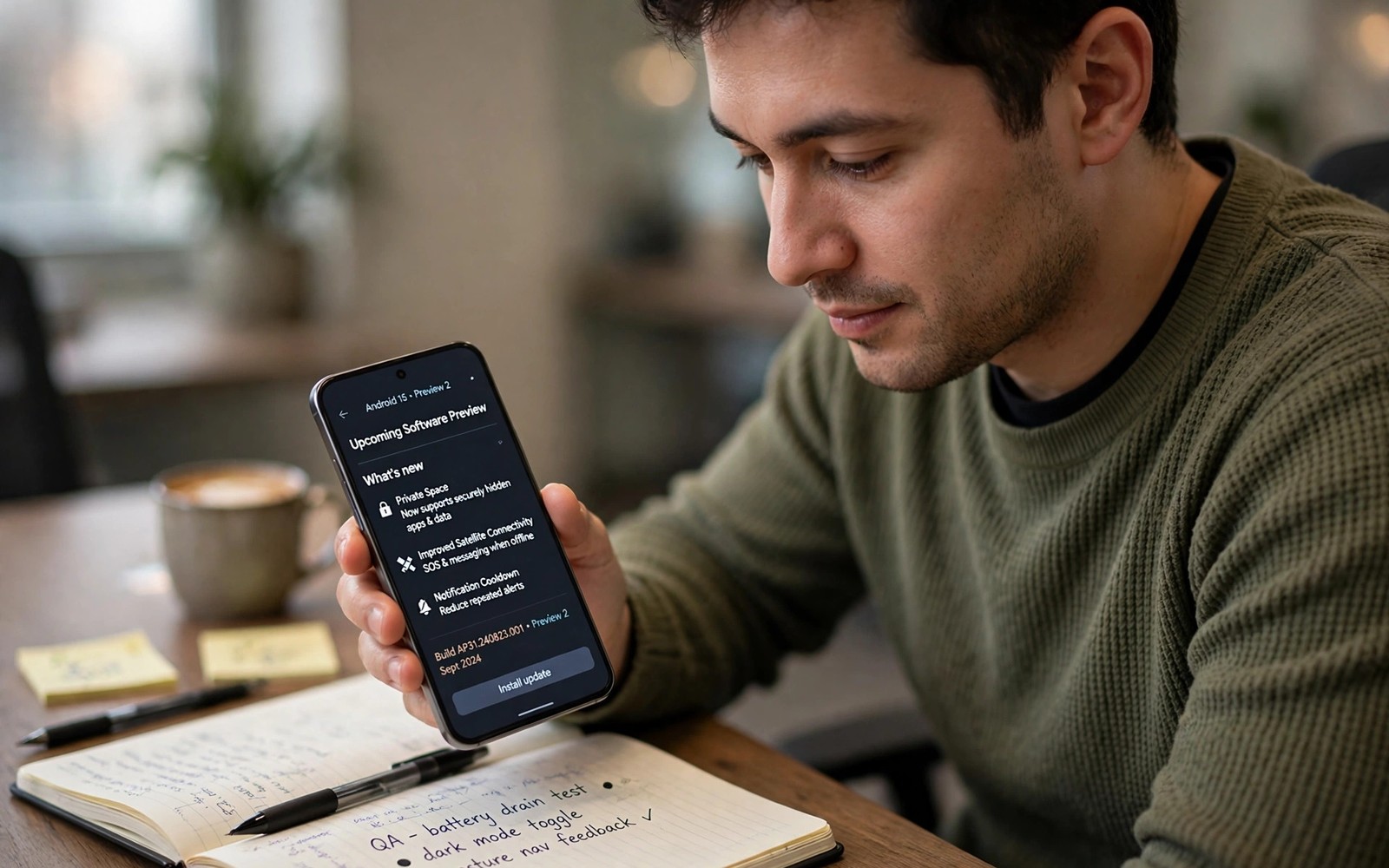
Android leaks arrive weekly, promising mind blowing changes that may or may not reach your phone. A leaked screenshot or a code reference can spark excitement, but leaks rarely tell the full story. Some leaks describe early experiments that never ship, while others preview features months before release. Learning to read leaks critically saves you from disappointment. The eligibility guide on whether your phone will get the next Android OS update helps you check which leaked features your model might actually receive.
Leaks come from many sources, including code repositories and regulatory filings and supply chain reports. Each source has different reliability, because code references may describe tests rather than plans. A single source leak deserves more scepticism than a leak confirmed by several independent sources. Source diversity is the first filter for any exciting claim.
Software changes leaks often preview
Software leaks often preview interface changes, such as new notification designs or redesigned settings menus. Interface leaks are visually exciting, yet they may change substantially before release. A leaked design from an early test build may look nothing like the final version. Treat interface leaks as direction hints, not as final screenshots.
Leaks also preview new features such as smarter multitasking or improved privacy controls. Feature leaks gain credibility when code references show actual implementation rather than only a name. Implementation details such as settings toggles and permission prompts suggest real work. A feature name alone proves little about readiness.
How to judge a leak source
Judge a leak by the track record of its source over several releases. A source that correctly predicted past features earns more trust than a new account with one spectacular claim. Check whether the source corrects past mistakes, because honest correction signals reliability. A source that never admits errors may be guessing loudly rather than reporting carefully.
Check whether other independent sources confirm the same detail, because independent confirmation reduces the chance of a single misreading. Two sources citing the same code reference are not fully independent, while a code leak plus a regulatory filing plus a supply chain report together strengthen a claim. Independence matters more than repetition.
Leaks versus official announcements
Official announcements differ from leaks because they carry commitment and timelines and device lists. A manufacturer that announces a feature has invested in shipping it, while a leak may describe an abandoned test. Announcements still change, but they change less often than leak interpretations. Wait for official confirmation before planning a purchase around a leaked feature.
Leaks still serve a purpose, because they help developers and enthusiasts prepare for changes early. Developers can test compatibility with upcoming interface changes before release. Enthusiasts can discuss design directions while feedback might still influence final choices. Leaks are useful as early signals, not as purchase guarantees.
Changes that leaks got right in the past
Past leaks correctly previewed major shifts such as gesture navigation and privacy dashboards and foldable software improvements. Those leaks succeeded because multiple sources confirmed implementation details over months. Sustained confirmation over time is a strong signal, because a rumour that survives months of scrutiny likely reflects real work. Single day excitement rarely matches that pattern.
Past leaks also exaggerated minor tweaks into major revolutions, because a small code change can look dramatic out of context. A new settings toggle may signal a minor experiment rather than a platform overhaul. Context from developers who read code carefully helps separate tweaks from revolutions. Expert context matters when a leak goes viral.
Mind blowing claims need extra care
Claims described as mind blowing deserve extra care, because excitement drives sharing more than accuracy. A claim that promises to change everything should require stronger evidence than a claim about a minor tweak. Ask what evidence supports the superlative, and whether the source explains the mechanism behind the change. Vague superlatives without mechanism are marketing, not reporting.
Compare mind blowing claims with hardware realities, because software cannot magically overcome chip or battery limits. A leak promising desktop class performance on a budget phone should trigger scepticism. The chip outlook in future mobile processors and 3nm chip benchmarks shows how hardware progress sets realistic bounds. Hardware context grounds software excitement in physical limits.
How to use leaks without being misled
Use leaks to watch trends rather than to predict exact features for your phone. A trend such as stronger privacy controls across several leaks suggests a real direction, even if individual features change. Trends survive individual errors, while single feature predictions often fail. Trend watching turns leaks into useful background knowledge.
Set a personal rule to wait for official confirmation before acting on a leak, whether the action is a purchase or a device sale. A waiting rule prevents costly decisions based on unverified claims. Leaks can inform curiosity, while official announcements should inform spending. That boundary protects both wallet and expectations.
A leak credibility checklist
Apply this checklist to any Android leak before you share it or act on it. It takes a minute and it prevents most leak driven mistakes.
Source: track record checked, past errors corrected
Confirmation: independent sources agree, not only repeats
Implementation: code or filing shows real work, not only a name
Hardware: claim fits chip and battery realities
Action rule: no purchase or sale until official confirmation
The code above is an original example written for this guide. It shows one practical way to apply the idea in this article. You can adapt the wording and the values to fit your own phone and your own routine.
Leaks about AI features need context
AI feature leaks often promise dramatic capabilities without explaining model size or hardware requirements. A leaked AI feature may require a future chip that current phones lack. Without hardware context, a software leak can mislead owners of older devices into expecting an impossible upgrade. Always pair an AI leak with a hardware reality check.
The on device AI discussion in whether on device AI is the future of smartphones shows how local and cloud processing differ in practice. A leaked AI feature that sounds cloud based may actually run locally in limited form, or vice versa. Understanding that distinction helps you judge whether a leaked feature will reach your phone. Context turns a headline into a realistic expectation.
Leaks from beta software
Beta software leaks deserve special caution, because beta builds contain experiments that may never ship. A feature flag in beta code proves only that developers tested an idea, not that they committed to releasing it. Beta leaks are useful for developers preparing for possible changes, but they should not drive consumer purchases. Beta means unfinished by definition.
When a beta leak excites you, check whether the feature appears in multiple beta builds over time. Persistence across builds suggests ongoing work, while a single appearance suggests a brief experiment. Persistence is a stronger signal than novelty. Time filters experiments from commitments.
Community discussion around leaks
Community discussion can improve leak understanding, because developers and enthusiasts often add technical context that news posts omit. A forum thread may explain that a leaked code reference relates to testing infrastructure rather than a user feature. Expert commentary prevents misreading of technical details. Seek out technical voices before forming a strong opinion on a leak.
Community discussion can also amplify errors, because confident speculation spreads faster than careful correction. A popular theory may become accepted fact through repetition alone. Treat community consensus as a hypothesis to verify, not as proof. Verification through official sources remains the final step.
Common mistakes
The most common mistake is treating a single screenshot as proof of a shipping feature. Screenshots can come from test builds that never reach users. Another mistake is sharing leaks without checking source track record. Sharing amplifies unverified claims quickly.
- Do not buy or sell a phone based solely on a leaked feature list.
- Do not treat repeated coverage as independent confirmation.
- Do not ignore hardware limits when judging software leak claims.
- Do not present an interface leak as a final design.
A final mistake is losing interest in real updates because leak hype set impossible expectations. Real updates often improve daily life quietly, while leaks promise revolutions. Judge shipped software on its own merits after release.
Frequently asked questions
Are Android leaks usually accurate?
Some are, especially when multiple independent sources confirm implementation details over months. Single source leaks about early tests often prove wrong or change substantially. Accuracy depends on source quality and on confirmation, not on excitement level.
Should I wait for a leaked feature before buying a phone?
No as a general rule, because leaked features may arrive late or not at all. Buy a phone for its current strengths and treat leaked features as possible bonuses. Official announcements provide a firmer basis for waiting.
How can I tell a real leak from a fake one?
Check source track record and independent confirmation and implementation evidence. Real leaks usually show code or filings or consistent details across sources. Fake leaks often rely on vague claims and dramatic wording without mechanism.
Leak reading also improves with a personal archive, because keeping notes on past leaks lets you compare predictions with shipped reality. An archive of your own notes shows which sources earned trust over time. That personal record beats memory when a new leak excites you. Keep the archive short and dated, so it stays useful rather than becoming clutter.
Conclusion
Android leaks preview software changes ahead, but they require critical reading based on source quality and independent confirmation and hardware reality. Trends across leaks matter more than single spectacular claims.
Your concrete next step is to pick one recent leak you found exciting and run it through the checklist above. Note whether it survives source and hardware checks before you share it.

