

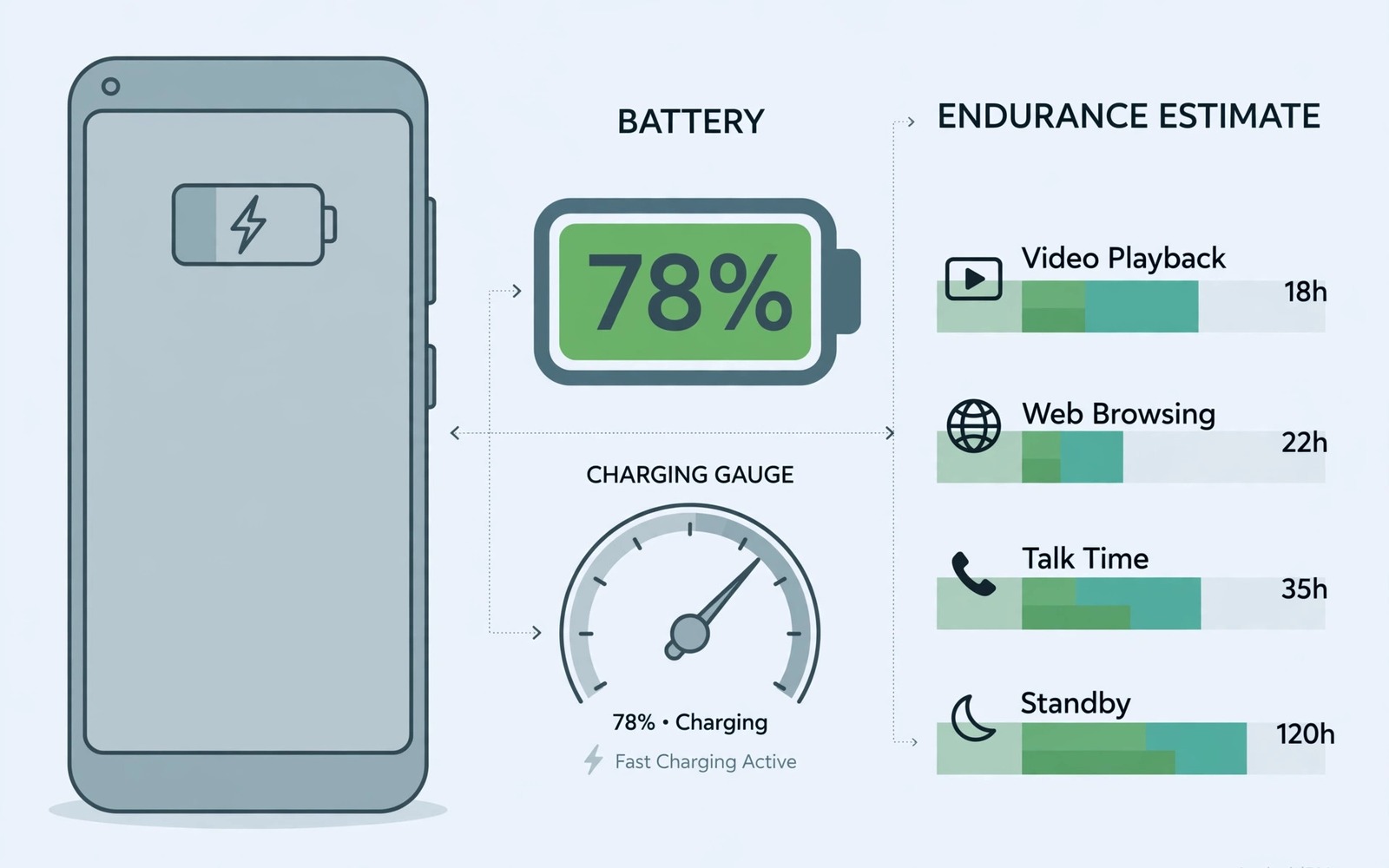
Battery lifespan means more than a single day of use. It means how many years a phone keeps strong endurance before fading. Some phones hold charge well after hundreds of cycles. Others fade fast because heat and aggressive charging age their cells early.
Capacity alone does not predict lifespan. Charging habits and heat management and software tuning shape ageing heavily. A phone with smart charging limits can outlast a larger battery that charges harshly. Longevity comes from chemistry plus care plus design.
This guide explains what makes a battery last for years. You will learn about cell types and charging curves and heat and usage patterns. You will also learn habits that protect any phone battery you own.
What battery lifespan really measures
Battery health measures capacity retained after many charge cycles. A healthy battery after two years still delivers close to its original endurance. A degraded battery forces midday charging even with light use. Health percentage in settings offers a useful snapshot when available.
Cycle count matters because each full charge cycle wears chemistry slightly. Partial charges wear less than full deep cycles. Charging from twenty to eighty percent stresses a battery less than charging from zero to full repeatedly. Small habit changes compound over years.
Heat accelerates ageing more than any other single factor. A phone that runs hot during gaming or fast charging ages faster. Cooling design and moderate charging speeds protect long term health. Keep your phone cool whenever you can.
Design traits of long lasting phones
Long lasting phones pair efficient chips with large batteries. Efficiency reduces heat and cycle depth during daily use. A phone that sips power needs fewer full cycles per year. Fewer cycles mean slower ageing and longer useful life.
Smart charging features also extend lifespan. Charge limits and overnight optimisation reduce time spent at full charge. A phone that pauses at eighty percent overnight protects chemistry while you sleep. These features work quietly and reward patient owners.
Good thermal design spreads heat away from the battery during heavy use. Vapour chambers and graphite sheets help during gaming and video. A phone that stays cool under load ages gracefully. Heat checks during a store demo reveal thermal quality early.
Usage patterns that preserve health
Daily habits shape battery ageing more than brand choice. Avoid deep discharges below ten percent whenever possible. Avoid leaving a phone at full charge in a hot car. Small charges throughout the day beat a single harsh full cycle.
Fast charging helps in emergencies but daily fast charging adds heat. Use moderate charging overnight or at a desk when time allows. Reserve the fastest charger for travel days and tight schedules. Balance speed against longevity for your routine.
Background apps and weak signal also drain batteries and add cycles. A phone hunting for signal in a basement works harder and heats more. Airplane mode in dead zones saves cycles and frustration. Manage background permissions for apps you rarely use.
Testing lifespan before you buy
Long term tests track battery health after months of controlled cycling. Look for tests that report capacity retention rather than only day one endurance. A phone with great day one battery but fast degradation disappoints by year two. Retention data predicts ownership satisfaction better.
Check whether the maker publishes battery health tools in settings. A visible health percentage helps you monitor ageing and plan replacement. Phones without health tools hide degradation until endurance collapses. Transparency helps owners act early.
Research battery replacement cost and availability before buying. A phone with affordable replacement effectively gains a second life. A phone with costly sealed replacement forces early upgrade. Replacement economics form part of true lifespan value.
Estimate lifespan with a simple model
A short script can estimate years of strong battery life from cycle habits. Enter daily full cycle equivalents and a degradation rate per hundred cycles. The script below shows a plain projection for two usage styles.
styles = {"heavy": 1.0, "moderate": 0.6}
for name, cycles in styles.items():
    years = 0
    health = 100
    while health > 80:
        health -= cycles * 365 * 0.02 / 100 * 100
        years += 1
        if years > 10:
            break
    print(name, years, "years above 80 percent")
This snippet was written for this guide so you can project battery health years from your daily cycle habits. Adjust the numbers to match your usage and treat the result as a rough guide rather than a promise.
Projections help you compare habits rather than predict exact failure dates. A moderate habit that adds a year of strong life saves real money. Small daily choices compound into large longevity gains.
Charging routines for a five year battery
A five year battery starts with a simple daily routine. Charge overnight with a moderate charger in a cool room. Enable any charge limit or overnight optimisation your phone offers. Small nightly habits compound into years of extra health.
Desk charging during work hours beats constant fast charging. A slow top-up while you work keeps the battery in a comfortable range. Avoid letting the phone sit at full charge in a hot car or sunny window. Heat plus full charge ages cells fastest.
Travel days justify fast charging because time matters more than longevity. Use the fastest charger when a flight or meeting demands a quick top-up. Return to moderate charging at home after travel. Occasional fast charging harms little when daily habits stay gentle.
Gaming sessions deserve special charging care. Bypass charging or unplugged play reduces heat during long sessions. A phone that games while fast charging heats from both chip and battery. Separate gaming and charging when possible for battery health.
Seasonal heat demands extra attention too. Summer cars and direct sunlight can push battery temperature dangerously high. Move the phone to shade and pause charging when it feels hot. Temperature awareness protects chemistry better than any app.
Track battery health every few months and adjust habits when decline accelerates. A sudden health drop may signal a faulty charger or excessive heat exposure. Early adjustments preserve remaining life. Monitoring turns battery care from guesswork into routine.
When to replace versus when to repair a battery
Replace a battery when endurance no longer covers a normal day. Frequent midday charging despite careful habits signals end of useful life. Replacement restores the phone for a modest cost. Repair of other parts rarely fixes pure battery wear.
Repair the charging system instead when a new battery still drains fast. Faulty ports and boards can mimic battery failure. A diagnostic test separates battery wear from board faults. Correct diagnosis saves money on wrong parts.
Swelling demands immediate professional replacement without delay. A swollen battery can damage screens and frames as it expands. Never charge a swollen phone or puncture the battery. Safety outweighs every cost consideration here.
Compare replacement cost against the phone resale value before deciding. A costly replacement on a low value phone wastes money. A cheap replacement on a capable phone extends life wisely. Value maths guides the repair decision.
Choose reputable service with genuine parts for safety. Cheap unknown cells can swell or fail early. Genuine parts carry warranties that protect your investment. Service quality matters as much as part price.
Recycle the old battery through proper channels after replacement. Lithium cells must never enter household waste. Service centres usually recycle old cells responsibly. Proper disposal completes safe battery care.
After replacement adopt gentle charging habits immediately. Charge limits and cool charging protect the fresh cell. Early habits determine whether the new battery lasts four years. A fresh start deserves fresh discipline.
Common mistakes
Many owners charge to full every night and leave phones hot on chargers. Full charge plus heat accelerates ageing silently. Use a charge limit when available and charge in a cool place. Nightly full charging in heat is the fastest ageing habit.
Another mistake is judging battery only by day one endurance. Day one endurance ignores degradation speed. A phone with slightly lower day one endurance but slower ageing wins by year three. Retention matters more than launch stamina.
Owners also ignore battery health until endurance collapses. Regular health checks reveal gradual decline early. Early awareness lets you adjust habits or plan replacement. Monitor health every few months for best results.
Finally avoid cheap chargers with unstable voltage. Poor chargers generate heat and stress cells unpredictably. Use a reputable charger with proper certification. Charger quality protects both phone and battery.
Frequently asked questions
How long should a phone battery last?
A well cared phone battery should deliver strong endurance for three to four years. Heavy heat and fast charging shorten that span. Moderate habits and charge limits extend it noticeably. Replacement can add further years when available at fair cost.
Does wireless charging harm battery lifespan?
Wireless charging generates more heat than wired charging in many cases. Heat accelerates ageing when charging pads trap warmth. Use wireless charging in a cool ventilated place when possible. Wired moderate charging remains gentler for long term health.
When should I replace a battery?
Replace a battery when endurance no longer covers your day despite careful habits. Unexpected shutdowns and swelling signal urgent replacement need. A swollen battery demands immediate professional attention. Never ignore swelling or severe heat.
Conclusion
The best battery lifespan comes from efficient design plus smart charging plus cool daily habits. Capacity helps but retention decides long term satisfaction. Choose a phone with good thermal design and visible health tools and affordable replacement.
Your concrete next step is to enable a charge limit on your current phone tonight and check its battery health in settings this week. Apply the same checks to any phone you shortlist before buying. Chip readers can compare processor efficiency for battery life and gamers should read about gaming phones that manage heat well while patient owners can learn why older phones still hold up and update conscious buyers can check update guarantees that extend phone life before deciding.

