

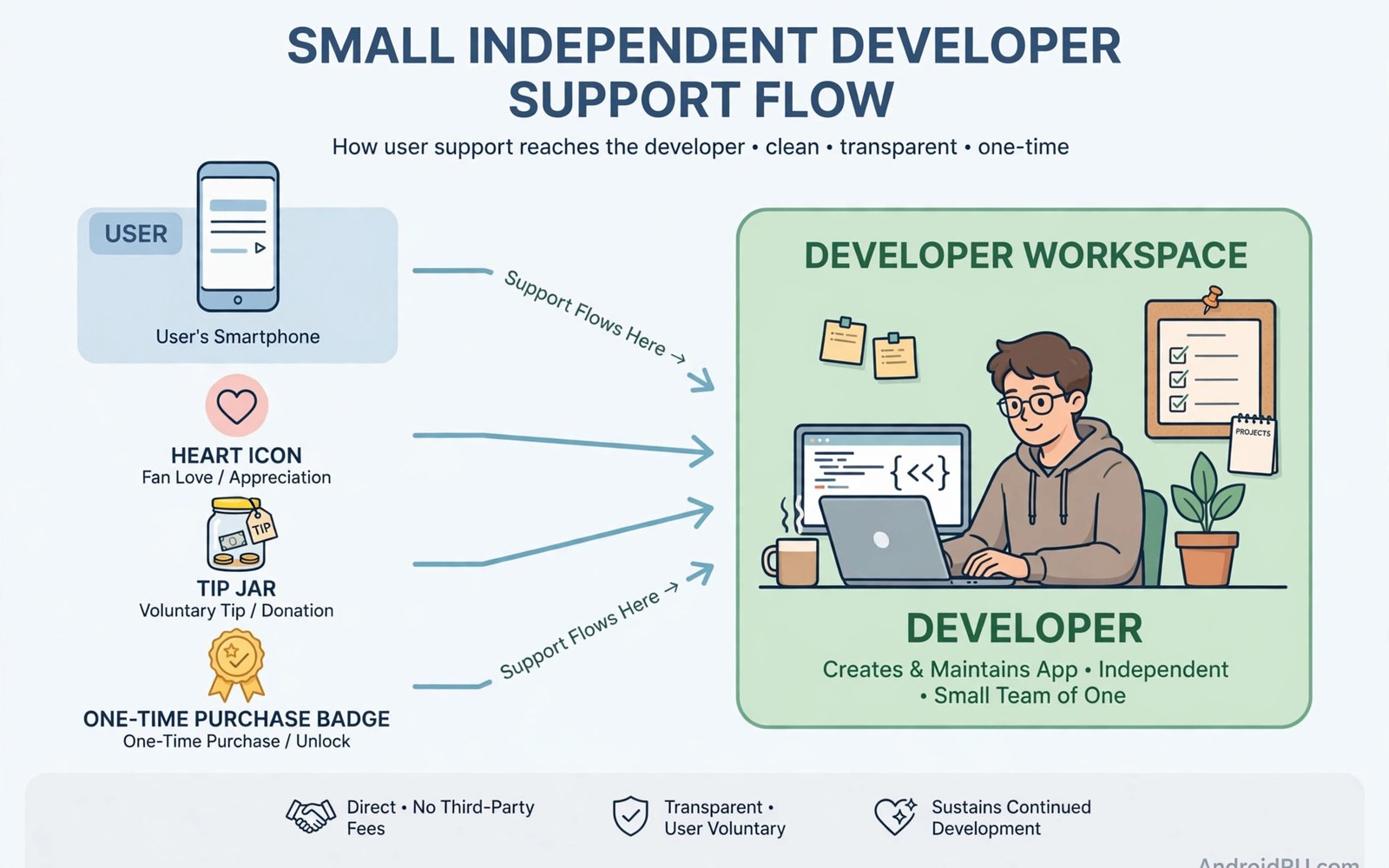
Independent developers build many of the best apps on Android. They work alone or in tiny teams without corporate funding. Subscriptions help them survive but not every user wants another monthly bill. Fortunately many other support options exist that fund developers fairly.
This guide explores support outside subscriptions. It covers one-time purchases and donations and reviews and referrals. It also explains which support types help most. Supporting indie developers sustains the diverse app ecosystem everyone enjoys.
Why Indie Developers Need Support
Indie developers compete against companies with huge marketing budgets. Discovery on app stores favors big publishers. Indie apps often remain hidden despite superior quality. Direct support from users bridges that visibility gap.
Development costs continue even for small apps. Devices and test hardware and store fees add up. Time invested in updates deserves compensation like any work. Users who value an app should ensure its developer can afford to maintain it.
One-Time Purchases as Support
Buying a pro version or lifetime unlock supports developers directly. That single payment may fund weeks of development time. It also signals that users value ownership models. Developers notice when lifetime purchases outsell subscriptions.
One-time purchases suit users who dislike recurring billing. They also suit apps with stable features that need little server support. Check whether the app offers a lifetime option before assuming subscription is the only path. Many indie apps hide lifetime deals in settings. Readers comparing purchase paths can review pro keys versus in-app billing for the mechanics of each option.
Donations and Tip Jars
Many indie developers accept donations through tip jars or funding platforms. A donation of any size helps sustain development. Regular small donations can rival subscription income without locking users into billing. Donations also carry no feature expectations beyond gratitude.
Donate to apps you use daily rather than spreading tiny amounts everywhere. Concentrated support sustains specific developers meaningfully. A yearly donation equal to a few months of subscription makes a real difference. That habit funds the apps you love most directly.
Reviews That Actually Help
Thoughtful reviews help indie developers enormously. Store algorithms promote highly rated apps to new users. A detailed positive review can drive more downloads than advertising. Mention specific features you love and real use cases.
Constructive criticism helps too when delivered kindly. Report bugs through developer channels before leaving negative reviews. Developers fix reported bugs faster than reviewed complaints. A fair review culture improves apps for everyone while supporting creators.
Referrals and Word of Mouth
Recommending an indie app costs nothing and helps greatly. Share the app with friends who need its features. Post about it in communities where it fits naturally. Personal recommendations convert better than any advertisement.
Referrals compound over time. Each new user may recommend further users. That organic growth sustains indie developers without marketing budgets. Your recommendation is a genuine economic contribution to the developer livelihood.
Beta Testing and Feedback
Beta testing gives developers free quality assurance. Testers catch bugs before public releases. They also suggest features from real usage. That feedback improves apps faster than solo development alone.
Join beta programs for apps you care about deeply. Report bugs clearly with steps to reproduce them. Suggest improvements respectfully and realistically. Good beta testers become valued community members whose input shapes roadmaps.
Buying Merchandise and Extras
Some developers sell merchandise or extra content outside apps. Themes and icon packs and companion content generate revenue without subscriptions. Buying those extras supports developers while personalizing your experience. That exchange feels rewarding for both sides.
Extras also let users support at their own pace. Buy an extra when you feel generous rather than on a schedule. That flexibility suits users with irregular incomes. Developers appreciate irregular support more than no support at all.
Supporting Open Source Indie Projects
Open source indie projects rely on donations and community help. Code contributions from skilled users advance projects directly. Documentation and translation help from others expands reach. Financial donations fund hosting and hardware for maintainers.
Even non-technical support matters for open projects. Answering questions in community forums reduces maintainer burden. Testing releases and reporting issues improves quality. Community effort is the lifeblood of open source sustainability. Free alternatives in this space appear in open-source free alternatives for users exploring that ecosystem.
Crowdfunding New Indie Apps
Crowdfunding lets users fund apps before they exist. Developers propose features and users pledge support. Successful campaigns validate demand before development starts. Backers often receive lifetime access as a reward.
Crowdfunding carries risk because projects sometimes fail. Pledge amounts you can afford to lose. Research developer track records before backing. Successful indie crowdfunding has launched many beloved apps that subscriptions alone could not fund.
Fair Funding Models to Encourage
Several fair models deserve user encouragement. Pay what you want pricing lets users choose their contribution. Lifetime purchases reward durable tools. Donationware sustains niche tools with small audiences. Each model respects user autonomy better than forced subscriptions.
Support developers who offer these models with purchases and recommendations. Market signals guide developer choices over time. When fair models earn revenue developers adopt them more widely. Your spending votes for the app economy you want.
What Not to Do
Piracy harms indie developers disproportionately. A pirated copy from a solo developer represents a larger share of potential income than from a corporation. Avoid unofficial downloads for indie apps especially. The savings are small and the harm is concentrated.
Similarly avoid leaving unfair negative reviews over minor issues. A harsh review can bury an indie app in store rankings. Contact developers first about problems. Most indie developers respond personally and fix issues quickly. That direct approach helps everyone more than public complaints.
Building a Support Routine
Create a yearly support routine for your favorite indie apps. Review the apps you use daily each January. Donate or buy lifetime upgrades for the top few. Leave fresh reviews for apps that improved during the year. Recommend one indie app monthly to someone new.
That routine takes little time but sustains the ecosystem meaningfully. Indie developers notice and appreciate consistent supporters. Your routine also deepens your own connection to tools you use daily. Supporting creators feels good because it genuinely helps real people. Users auditing overall app spending can pair this routine with a monthly expense audit to keep total costs balanced.
The Future of Indie Funding
New funding tools keep emerging for indie developers. Direct payment links bypass store fees partially. Membership platforms offer flexible support tiers. Store policies gradually improve indie visibility. Each development expands options beyond subscriptions.
Users shape this future through their choices. Every donation and purchase and review influences what survives. Choose to fund the developers whose work enriches your daily life. That collective choice determines whether indie apps thrive or disappear.
Patreon Style Memberships for Developers
Membership platforms let users support developers monthly at chosen tiers. Unlike app subscriptions memberships fund the developer generally. Supporters may receive early access or behind the scenes updates. That relationship feels personal rather than transactional.
Memberships suit developers with loyal communities. Users who follow development closely enjoy insider updates. Casual users may prefer simple one-time purchases instead. Memberships work best when developers actively engage supporters.
Pay What You Want Models
Pay what you want pricing trusts users to pay fairly. Developers set a minimum or leave pricing fully open. Generous users often pay more than a fixed price would demand. That generosity offsets users who pay little or nothing.
Pay what you want works best for niche tools with passionate users. Broad market apps struggle because average payments fall too low. Indie developers with devoted audiences thrive under this model. It rewards trust with trust in return.
Corporate Sponsorship for Indie Apps
Some indie apps attract corporate sponsorship. A company funds development in exchange for visibility or features. Sponsorship can sustain an app without charging users at all. But sponsorship may influence development priorities toward sponsor needs.
Users should watch for sponsorship influence on app direction. Sponsored features that serve users remain welcome. Features that serve only sponsors deserve skepticism. Transparent sponsorship disclosure helps users judge influence fairly.
Grants and Public Funding
Grants from foundations and public bodies fund some indie projects. Privacy tools and accessibility apps often qualify for such funding. Grants free developers from commercial pressure entirely. That freedom produces tools optimized for users rather than revenue.
Grant funded apps may lack long term sustainability after grants end. Users should support grant funded favorites with donations to extend their life. Grants seed projects but communities sustain them. Both funding sources matter for lasting tools.
Local Community Support
Local user groups support indie developers through meetups and feedback. A developer who meets users personally gains motivation and insight. Community events also spread awareness through personal networks. That grassroots support complements financial contributions.
Attend developer talks and demo events when available. Your presence encourages developers more than silent downloads. Personal connections transform anonymous users into community members. Communities sustain indie development through difficult periods.
Indie Developer Burnout and Support
Indie developers face burnout from solo workloads and financial pressure. Supportive communities reduce burnout significantly. Kind feedback and fair compensation sustain motivation. Users who appreciate an app should express that appreciation directly.
Burnout often ends promising apps prematurely. A developer who quits leaves users without updates. Supporting developers early prevents that loss. Your support is an investment in the continued existence of tools you rely on.
Transparency Reports from Developers
Some indie developers publish transparency reports about income and costs. Those reports show exactly how support money gets used. Transparency builds trust and encourages further support. Users can see their contributions funding real development work.
Encourage transparency by asking developers about funding needs. Developers who share openly deserve extra support. Their honesty helps users allocate support wisely across many apps. Transparent funding is fair funding in practice.
Support Planner Script
The snippet below models a simple yearly support plan. It lists favorite indie apps with a planned support action each. Adapt it as a personal reminder to sustain the developers behind your daily tools.
support_plan = [
    {"app": "Note App Indie", "action": "Donate yearly"},
    {"app": "Photo Editor Indie", "action": "Buy lifetime unlock"},
    {"app": "Task App Indie", "action": "Leave detailed review"},
]
for item in support_plan:
    print(item["app"], "-", item["action"])
The snippet above is a simple organizational example. It does not send any payment or review. Use it only as a personal planning aid for supporting developers you value.

