

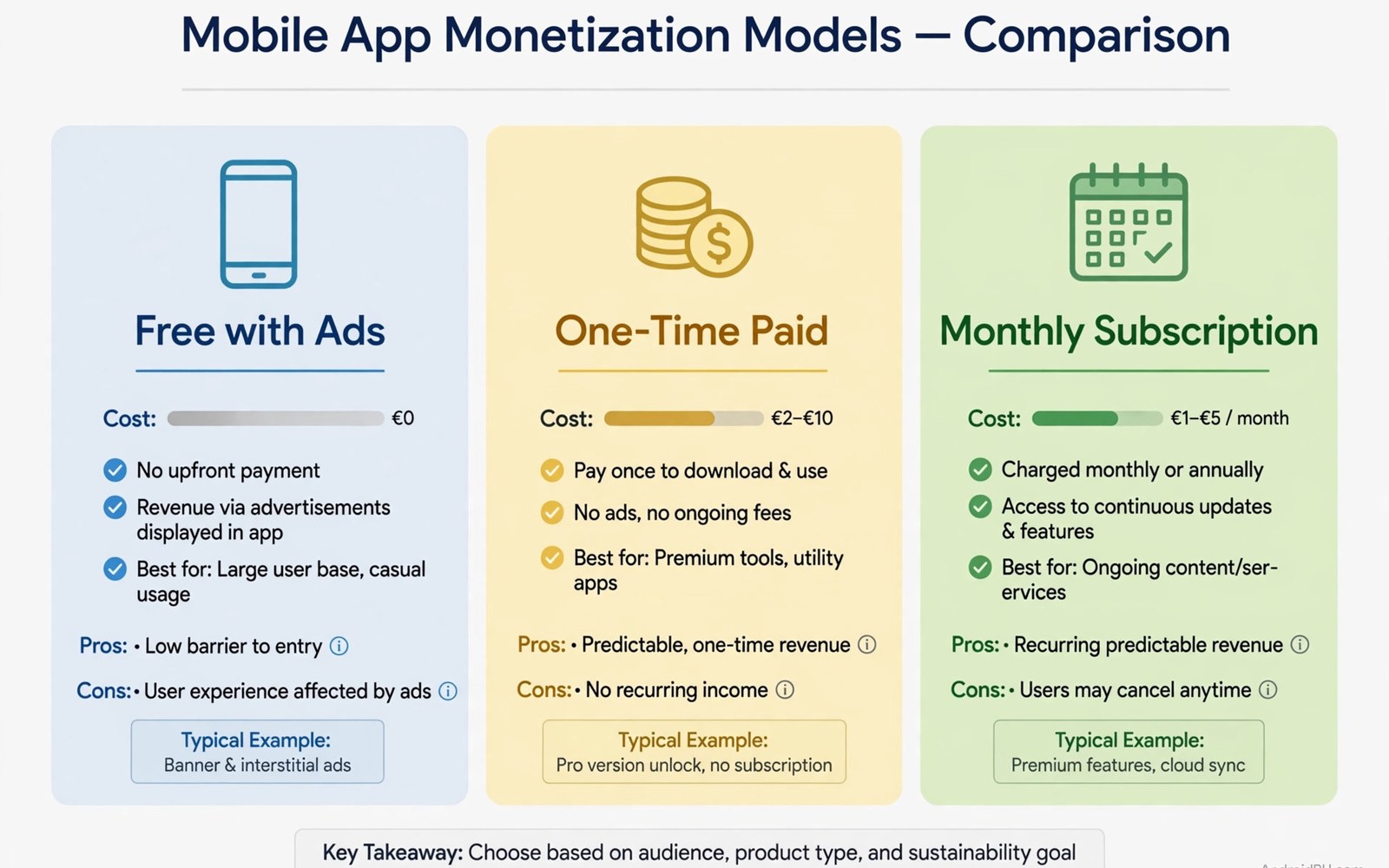
Almost every app offers you one of three deals. You can use it free with ads. You can pay once and own it. Or you can pay every month for a subscription. Each model looks reasonable on its own. The real question is which one gives you the best value for how you actually use the app.
This analysis compares all three models side by side. It looks at money and ads and features and long term access. It also shows simple math you can apply to any app. By the end you will have a clear method for choosing the right deal every time.
The Free with Ads Model
Free apps earn money by showing you advertisements. You pay nothing upfront and you get the core features at once. That low barrier explains why free apps dominate download charts. For a casual user who opens an app twice a week the free version is often enough.
Ads carry hidden costs though. They slow down the app and drain battery and consume mobile data. They interrupt your flow at the worst moments. Some free apps also collect more personal data to target those ads. Your attention becomes the product that funds the app.
The One-Time Paid Model
A one-time purchase removes ads and unlocks the full app in a single payment. You know exactly what you spend. You keep access even if you stop using the app for a year. That certainty appeals to users who dislike recurring bills.
The risk is that development may stall. A developer paid once has less reason to keep updating. Major new versions sometimes arrive as separate paid apps. You may end up buying the same app twice over several years. Still the total often stays below years of subscription fees.
The Monthly Subscription Model
Subscriptions fund continuous updates and cloud features and fresh content. You always get the latest version. You can cancel when the app stops serving you. That flexibility suits apps that evolve constantly like fitness coaches or language tutors.
The danger is cost creep. A small monthly fee feels painless until you multiply it across many apps. Subscriptions also end your access the moment you stop paying. Your data and premium features may vanish overnight. That trade demands a careful look before you commit.
Comparing Real Costs Over Three Years
Time changes the math dramatically. A five dollar monthly subscription costs sixty dollars in one year. Over three years it reaches one hundred eighty dollars. A one-time purchase of thirty dollars looks far cheaper across that same period. Even a yearly plan at forty dollars totals one hundred twenty dollars over three years.
Free with ads costs zero dollars in cash across all three years. But it costs time and attention and sometimes privacy. The honest comparison weighs all three currencies. Money matters but so do interruptions and data exposure. Different users will weigh those costs differently.
When Free with Ads Wins
Free wins when you use an app rarely or briefly. A travel app you open twice a year needs no paid upgrade. A game you play for ten minutes a day tolerates ads well. A tool you are still evaluating should stay free until it proves its worth.
Free also wins for kids and casual users on tight budgets. Ads are annoying but they are not a financial burden. Just check the privacy settings and limit data sharing where possible. If the ads stay tolerable then there is no reason to pay.
When One-Time Paid Wins
One-time paid wins for tools you will use for years. A photo editor or a file manager or an offline dictionary fits this pattern. You pay once and the tool serves you indefinitely. The break-even point against a subscription often arrives within six to twelve months.
It also wins for apps that work fully offline. An offline app needs no servers and no fresh content. Charging monthly for it makes little sense. Look for a lifetime option before accepting a subscription for any offline tool. Many users find that lifetime purchase options still exist for serious productivity apps if you search carefully.
When Subscription Wins
Subscriptions win when the app delivers fresh value every month. A news app with daily reporting needs journalists on staff. A workout app with new programs needs coaches and video production. A cloud storage app rents server space for your files around the clock. Those ongoing costs justify ongoing payment.
Subscriptions also win when you need flexibility. A project tool for a three month contract should not demand a lifetime purchase. Subscribe for the project and cancel when it ends. That short term use is exactly where subscriptions shine brightest.
The Ad Question Nobody Asks
Ads do more than annoy you. They change how apps are designed. Free apps optimize for engagement and ad views rather than for your goals. Features may push you toward screens with more ads. Paid apps optimize for your satisfaction instead because you already paid.
That design difference is worth money to many users. An ad-free experience feels calmer and faster and more focused. If an app is central to your daily work then removing ads may improve your whole day. Weigh that quality gain alongside the price tag.
A Decision Method You Can Reuse
Ask four questions before choosing. How often will I use this app each week. Does it need live data or fresh content or cloud storage. How long will I realistically keep using it. What happens to my data if I stop paying. Your answers point to the right model almost every time.
Daily use plus live data plus long term commitment points to subscription. Occasional use plus offline work points to free or one-time paid. Short term projects point to subscription with a planned cancellation date. This method also guards against subscription fatigue because it forces a real usage estimate before money leaves your account.
Common Traps Across All Three Models
Free apps sometimes hide key features behind aggressive upsells. One-time apps sometimes charge again for a sequel version. Subscriptions sometimes renew silently after a forgotten trial. No model is free of traps. Read the pricing screen fully before tapping any buy button.
Also watch for fake discounts. A subscription marked as half price may simply compare against an inflated monthly rate. A one-time sale may hide that a subscription version exists elsewhere. Compare the real prices across the app store listing and the developer website when in doubt. Broader context on the market shift helps too and readers can explore the rise of app subscriptions to understand why developers favor recurring billing today.
The Bottom Line
There is no single best model for every app. Free with ads suits casual and short term use. One-time paid suits stable tools you will keep for years. Subscriptions suit living services that deliver fresh value monthly. The best value comes from matching the model to your real habits.
Review your apps once a quarter with this framework. Downgrade what you barely use and upgrade what serves you daily. That habit alone will save more money than chasing any single deal. Value is not about the lowest price. It is about paying fairly for what you truly use.
The Psychology of Small Monthly Fees
Small fees bypass our normal spending caution. Five dollars feels like pocket change. We approve it without the thought we would give a sixty dollar purchase. Developers understand this psychology and price accordingly. The monthly framing hides the yearly total from view.
Annual totals reframe the decision honestly. Multiply any monthly fee by twelve before judging it. Compare that yearly figure against a one-time price directly. The comparison often flips your first instinct. A fee that felt trivial monthly can look expensive yearly.
Data and Privacy Across Models
Free apps often fund themselves with advertising data. Paid apps usually collect less because your payment funds them directly. Subscriptions sit in the middle and vary widely by developer. Read the privacy policy for any app that handles sensitive data like health or finance.
Paying does not guarantee privacy on its own. Some paid apps still track usage heavily. But the business model sets the incentive. An app funded by your payment has less reason to sell your attention. That incentive difference is a genuine part of the value calculation.
Switching Models Without Losing Data
Switching from a subscription to a one-time purchase needs care. Export your data from the old app first. Confirm the export opened correctly in the new app. Only then cancel the old subscription. Rushing the order risks losing work that took months to build.
Some apps let you downgrade to a free tier instead of cancelling fully. The free tier may keep your data readable but not editable. That middle step works well during a transition period. Use it while you test the replacement app with real daily work.
Trial Periods Across All Three Models
Trials exist in every model but they work differently. Free apps need no trial because the core is already free. One-time apps rarely offer trials so reviews and refund windows matter more. Subscriptions lean heavily on trials that convert automatically unless you cancel.
Treat every trial as a purchase decision in waiting. Mark the end date the moment you start the trial. Test the premium features hard during the trial window. A trial you forget is a purchase you never chose.
Regional Prices Change the Equation
Pricing models feel different across regions. A monthly fee that looks small in one country may be large in another. One-time prices also vary by region and currency. Users in lower income regions often prefer one-time purchases because they avoid ongoing foreign currency charges.
Check local pricing before comparing models. A subscription that wins in one market may lose in another. Currency shifts can also raise subscription prices over time. A one-time purchase locks your cost at the moment you buy it.
When to Revisit Your Choice
Your first choice is not permanent. Usage changes over time and pricing changes too. A free app you now open daily may deserve a paid upgrade. A subscription you once loved may sit unused for months. Revisit each app choice twice a year with fresh eyes.
Set a simple rule for revisits. If you have not opened an app in thirty days then downgrade or cancel it. If you open an app daily then consider whether a better tier exists. Those two rules keep your app spending aligned with your real life rather than your past intentions.
Student and Family Discounts Worth Checking
Many apps offer student or family pricing that changes the value math. A student discount can cut a subscription price in half. A family plan can spread one fee across several people. Always check for these tiers before accepting the standard price.
Family plans deserve a careful look at who actually uses the app. A family tier for an app only one person opens is wasted money. But a family tier for an app everyone uses daily is the best deal available. Match the tier to real household usage rather than to the headline discount.
Cost Comparison Script
The snippet below compares all three models over three years. It totals a monthly subscription and a yearly plan and a one-time price side by side. Change the numbers to match any app you are evaluating. The output makes the long term difference easy to see at a glance.
monthly = 4.99 * 36
yearly = 39.99 * 3
one_time = 29.99
print("Monthly plan over 3 years:", monthly)
print("Yearly plan over 3 years:", yearly)
print("One-time purchase:", one_time)
The snippet above is a simple illustration of pricing math. It uses sample figures only. Plug in the real prices from the app listing you are considering for an accurate personal comparison.

