

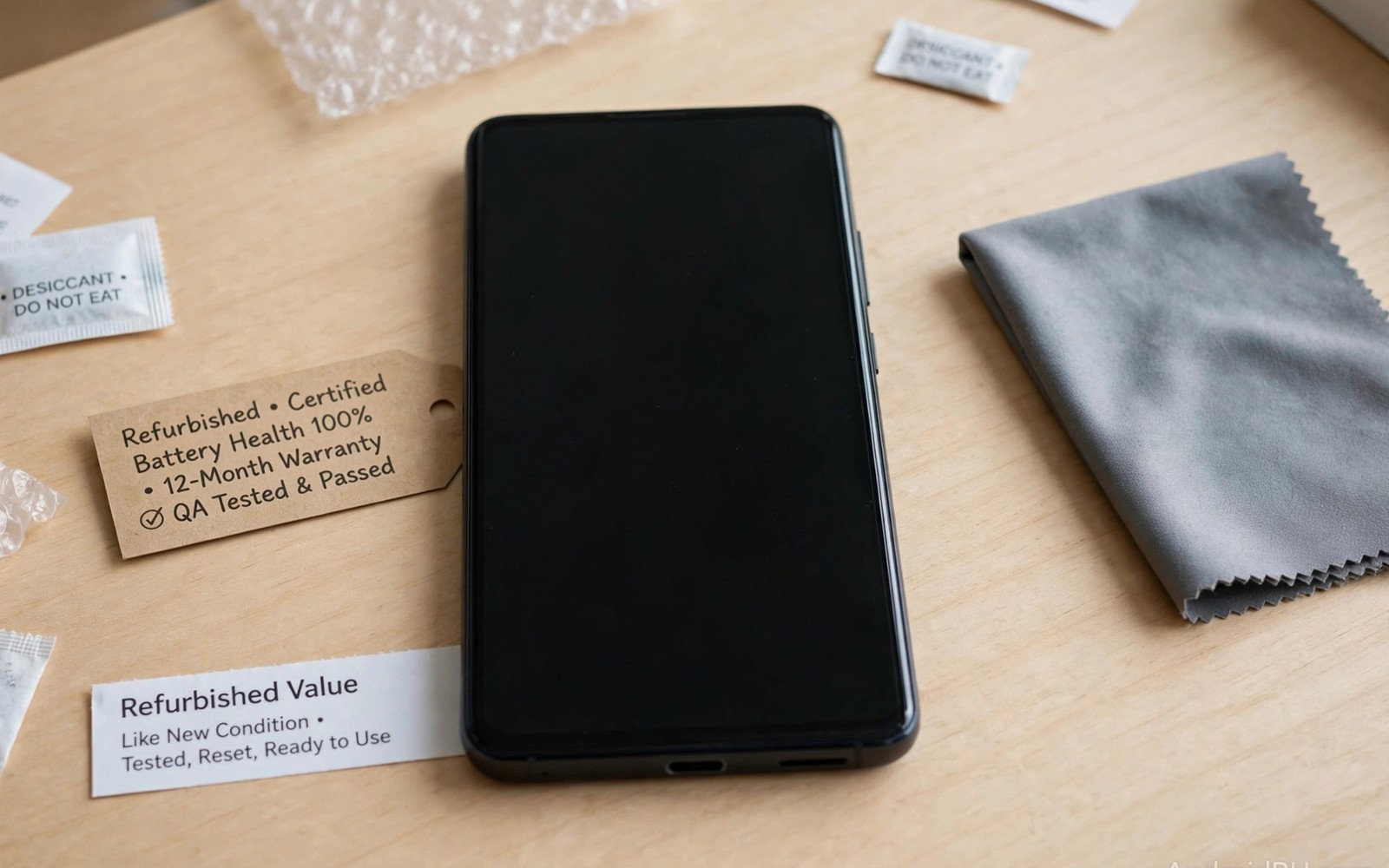
Top Value Refurbished Flagships Under $400 That Beat New Mid-Rangers
A new mid-range phone gives you a fresh battery, a full warranty and a box that has never been opened. A refurbished flagship gives you something a mid-ranger cannot buy at the same price: a camera system that was once the best in the business, a bright adaptive display, wireless charging, an aluminium frame and water resistance. After two years on the second-hand market, those flagships fall under $400, and the gap in daily feel is hard to ignore once you hold both phones side by side.
I spent weeks comparing refurbished units against new phones in the same price band, checking battery reports, running the same apps and shooting the same scenes. The pattern held up again and again. The refurbished flagship won on photos, on screen quality and on build, while the new mid-ranger won on battery freshness and on years of software support left on the clock. That trade-off is the whole decision, and this guide walks through it phone by phone so you can pick the side that fits your habits.
Before you shortlist anything, it helps to see how value is measured across the market. A quick look at price performance ranking shows how rivals balance price and speed, and the same thinking applies here: a phone is only good value if it stays fast, holds a charge and keeps getting patches for the years you plan to keep it.
What a Refurbished Flagship Actually Gives You Under $400
Flagship hardware ages slowly. A Snapdragon 8 Gen 1 or 8 Gen 2 chip from 2022 or 2023 still opens apps instantly, edits 4K video without stutter and plays demanding games at high settings. The mid-range chips in new $300 to $400 phones are efficient and capable, but they sit a full class below on graphics and on sustained performance, and the difference shows up in long gaming sessions and in heavy photo processing.
Cameras tell the same story. A flagship main sensor with optical image stabilisation, a real telephoto lens and a large sensor gathers far more light than the small main sensor in a typical mid-ranger, even when the mid-ranger advertises a higher megapixel count. Night shots, portraits and zoom shots are where the old flagship pulls away, and those are the shots people actually keep.
Why two-year-old flagships age better than new mid-rangers
Premium phones are built to a different standard from the start. Gorilla Glass Victus on the front, an aluminium frame, IP68 water resistance and a display that reaches 1,200 nits or more outdoors were standard on flagships two years ago and are still rare on new phones under $400. Those parts do not get slower with age. A screen that was bright in 2023 is still bright now, and a frame that survived a drop test then will survive one now.
Software is the one area where age bites. A 2022 flagship may have two or three years of updates left, while a new mid-ranger starts with four or five. If you keep a phone for two years, that gap barely matters. If you keep it for four, it matters a lot, and the software section later in this guide shows exactly how to check the remaining support for each model before you pay.
Certified refurbished, seller refurbished and used: what the labels mean
Certified refurbished means the maker or a large authorised refurbisher tested the phone, replaced the battery if it fell below a set threshold, fitted genuine parts and sold it with a warranty, usually 12 months. Seller refurbished usually means a marketplace seller cleaned the phone, ran a basic function test and offers a 30 to 90 day warranty. Used means exactly what it says: the previous owner sold it as it was, and any promise beyond the marketplace return window is thin.
The label matters more than the price. A certified Galaxy S23 at $380 with a fresh battery and a one-year warranty is a safer buy than a used one at $300 with an unknown battery and no warranty at all. The $80 gap buys a new battery, a real return policy and someone to call when the speaker crackles in week three.
The three grades that matter: battery, screen and frame
Every listing grades the phone somehow, but only three grades change your daily life. Battery health decides whether you reach bedtime without a charger. Screen condition decides whether you see a scratch every time you open the phone. Frame condition decides resale value and whether the water resistance seals are still intact. Ask the seller for the battery health figure in writing, look at close-up photos of the screen under bright light, and check the frame corners for dents that suggest a hard drop.
How to read a listing in 60 seconds
Start with the battery health number, then the warranty length, then the grade description, then the return window. If any of those four is missing, treat the listing as a gamble and price it like one. A listing that hides the battery figure behind vague words like good condition is telling you something, and it is not good news. The best sellers publish the exact health percentage, the exact grade and the exact warranty terms on the listing page itself.
The 8 Best Refurbished Flagships Under $400
Every phone below was chosen because it regularly sells refurbished under $400 in good condition, still receives security patches, and beats a new mid-ranger in at least two areas that matter daily: camera, display, build or raw speed. Prices are typical refurbished ranges in 2026 and move with condition, storage and seller, so treat them as a guide and check the current listing before you buy.
1. Samsung Galaxy S23: the compact flagship that still leads the pack
The Galaxy S23 is the sweet spot of this whole list. Its Snapdragon 8 Gen 2 chip is still fast enough for anything in the Play catalogue, its 6.1-inch Dynamic AMOLED 2X display runs at 120 Hz and reaches 1,750 nits at peak, and its triple camera with a 50 MP main sensor and 3x optical zoom takes photos that embarrass every new phone under $400. Refurbished units in good condition typically sell for $320 to $390 with 128 GB of storage, and 256 GB units often land just under the $400 line.
Battery check: the 3,900 mAh cell was the S23 weak point when new, so health matters here more than anywhere else. Ask for 88% or better, and expect five to six hours of screen-on time with a healthy cell. A unit at 80% will feel like a different, worse phone by late afternoon. Warranty: Samsung certified refurbished units carry 12 months, while marketplace sellers usually offer 90 days. Pros: best camera in this price band, compact and easy to hold, four years of major updates from launch with support running into 2027, IP68 rating, wireless charging. Cons: battery capacity is modest, charging tops out at 25 W wired, no charger in the box. Verdict: buy this if you want the best all-round phone under $400 and you charge overnight.
Battery check for the Galaxy S23 before you pay
Ask the seller for a screenshot from a battery health app or the Samsung Members diagnostics screen, and check the cycle count if it is shown. A cycle count under 400 with health above 88% is a healthy unit. If the seller cannot provide either number, knock $40 off the price in your head for a battery replacement and decide whether the deal still works.
2. Samsung Galaxy S22 Ultra: the big-screen flagship with a real zoom lens
The S22 Ultra is for people who want a large screen, a built-in S Pen and a camera that reaches further than anything else under $400. Its 6.8-inch display, 5,000 mAh battery and 10x optical zoom were the headline specs of 2022, and refurbished prices now sit between $330 and $400. The Snapdragon 8 Gen 1 runs warm under sustained load, so this is not the pick for long gaming sessions, but for photos, notes and media it remains a serious tool.
Battery check: the large cell hides wear better than a small one, so accept 85% or better and expect a full day with mixed use. Check the S Pen slot and the pen itself, since a missing or dead pen is a common refurbished omission. Warranty: certified units carry 12 months, most sellers offer 90 days. Pros: 10x optical zoom, huge bright display, S Pen included, large battery. Cons: Snapdragon 8 Gen 1 throttles under heat, the phone is heavy at 228 g, software support ends sooner than the S23. Verdict: buy this if you want zoom photography and a big screen and you rarely play demanding games for an hour straight.
3. Google Pixel 7 Pro: the smartest camera under $400
The Pixel 7 Pro earns its place on computational photography alone. Its Tensor G2 chip powers Magic Eraser, Photo Unblur and Night Sight, and its 5x optical zoom plus 30x Super Res Zoom captures detail that mid-range phones simply cannot reach. The 6.7-inch QHD+ display runs at 120 Hz, and refurbished units sell for $280 to $380. Google promises updates for the Pixel 7 Pro until late 2027, which is generous for a phone of this age.
Battery check: the 5,000 mAh cell should show 87% or better. Pixel battery reporting lives in Settings, and a healthy unit gives six to seven hours of screen-on time. Watch for the modem: early Tensor phones had patchy signal in weak coverage, so test calls and data on your own network during the return window. Warranty: Google certified refurbished stock is rare, so most units come from marketplace sellers with 90 days. Pros: best computational camera in the band, clean software, long update promise, excellent voice typing. Cons: Tensor G2 runs warm, charging is slow at 23 W, modem can struggle in weak signal areas. Verdict: buy this if photos and clean software matter more than raw gaming speed.
4. Google Pixel 7: the clean, simple flagship for less
The Pixel 7 is the S23 rival for people who prefer Google software. Its 6.3-inch display, Tensor G2 chip and 50 MP main camera deliver the same photo magic as the Pro in a smaller, lighter body, and refurbished prices run $220 to $320, leaving room in the budget for a case, a charger and a battery replacement if needed. That price gap is the Pixel 7 story: it is the cheapest way into flagship photography in this guide.
Battery check: the 4,355 mAh cell is modest, so hold out for 88% or better and expect five to six hours of screen-on time. Warranty: marketplace sellers typically offer 90 days, and some offer 12 months through third-party cover. Pros: excellent main camera, clean Android with no duplicate apps, updates until late 2027, light and comfortable to hold. Cons: no telephoto lens, 90 Hz display rather than 120 Hz, slow 20 W charging. Verdict: buy this if you want Pixel photos at the lowest price and you can live without a zoom lens.
5. OnePlus 10 Pro: the fast-charging flagship for heavy users
The OnePlus 10 Pro solves the one problem every other phone on this list shares: slow charging. Its 65 W wired charging fills the 5,000 mAh battery in about half an hour, and its Snapdragon 8 Gen 1 chip, 120 Hz LTPO display and Hasselblad-tuned cameras make it a strong all-rounder. Refurbished units sell for $240 to $340, which makes it one of the cheapest flagships here.
Battery check: the large cell and fast charging forgive a weaker battery, so 85% is acceptable, and a full charge in 30 minutes covers most mistakes. Check that the original 65 W charger is included, since a generic charger will charge far more slowly. Warranty: OnePlus certified stock is scarce, so expect 90 days from a marketplace seller. Pros: very fast charging, large battery, smooth 120 Hz display, good value. Cons: software support ends sooner than Samsung or Google, the ultrawide camera is average, no IP68 rating, only IP64 splash resistance. Verdict: buy this if you charge in short bursts between tasks and want the most phone per dollar.
6. Samsung Galaxy Z Flip 4: the foldable flagship for something different
The Z Flip 4 is the wildcard. Folded, it fits in a small pocket or a jacket pocket that no other flagship fits. Unfolded, it is a normal 6.7-inch phone with a 120 Hz display and a Snapdragon 8+ Gen 1 chip. Refurbished units run $280 to $390, and the folding design still turns heads in 2026. The trade-off is durability: the hinge and the folding screen need more care than a slab phone, and battery life is modest.
Battery check: the 3,700 mAh cell is small, so demand 88% or better and expect four to five hours of screen-on time. Inspect the crease under bright light and open and close the hinge several times to check for stiffness or grinding. Warranty: buy only with at least 90 days of cover, and prefer a seller that covers the hinge and display specifically. Pros: pocketable when folded, fun and distinctive design, good main cameras, fast chip. Cons: small battery, folding screen is more fragile, no telephoto lens, hinge repairs are expensive. Verdict: buy this if you love the folding form and you accept the durability trade-off with your eyes open.
7. Google Pixel 6 Pro: the cheapest route to a flagship camera
The Pixel 6 Pro is the oldest phone on this list and the cheapest, with refurbished units at $180 to $280. Its 50 MP main camera and 4x optical zoom still beat new mid-rangers on photo quality, and its 6.7-inch QHD+ display with 120 Hz refresh looks premium beside any budget panel. The catch is age: security updates for the Pixel 6 Pro end in 2026, so this is a short-term buy, not a four-year phone.
Battery check: accept 85% or better on the 5,003 mAh cell, and test the fingerprint sensor carefully, since early Pixel 6 units had slow and unreliable readers that later updates improved. Warranty: marketplace sellers offer 30 to 90 days. Pros: lowest price here, great cameras, large sharp display, wireless charging. Cons: updates ending soon, Tensor G1 runs warm and can throttle, fingerprint sensor can be slow. Verdict: buy this if your budget is tight, you want flagship photos now, and you plan to upgrade again within two years.
8. OnePlus 9 Pro: the value sleeper with a great screen
The OnePlus 9 Pro rounds out the list as the sleeper pick. Its 6.7-inch LTPO display, Snapdragon 888 chip and 65 W charging still feel fast in daily use, and refurbished prices of $200 to $300 make it the joint cheapest flagship here. The Hasselblad colour tuning gives photos a natural look that many people prefer to the oversaturated style of budget phones, and the 4,500 mAh battery charges fully in under 30 minutes.
Battery check: the Snapdragon 888 is a warm chip, so check health at 85% or better and watch for heat during a 20-minute video call test. Warranty: marketplace sellers offer 30 to 90 days, and certified stock is rare. Pros: very low price, fast charging, excellent display, clean and fast software. Cons: software support is nearly finished, the chip runs warm, the ultrawide camera distorts at the edges. Verdict: buy this if you want a big-screen flagship for the least money and you upgrade every two years anyway.
Refurbished Flagships vs New Mid-Rangers: Side-by-Side Comparison
The table below puts the eight phones side by side on the numbers that decide a purchase. Prices are typical refurbished ranges, and battery figures assume a healthy cell at 85% or better. Use it to narrow the list to two or three candidates, then read the full section for each one before you decide.
| Phone | Refurbished price | Battery | Best for |
|---|---|---|---|
| Galaxy S23 | $320–$390 | 3,900 mAh | Best all-round pick |
| Galaxy S22 Ultra | $330–$400 | 5,000 mAh | Zoom photos and S Pen |
| Pixel 7 Pro | $280–$380 | 5,000 mAh | Computational photography |
| Pixel 7 | $220–$320 | 4,355 mAh | Lowest-cost Pixel photos |
| OnePlus 10 Pro | $240–$340 | 5,000 mAh | Fast charging |
| Galaxy Z Flip 4 | $280–$390 | 3,700 mAh | Pocketable folding design |
| Pixel 6 Pro | $180–$280 | 5,003 mAh | Cheapest flagship camera |
| OnePlus 9 Pro | $200–$300 | 4,500 mAh | Big screen for least money |
Shoppers who compare screens and stamina should also study entry level value phones before deciding. That comparison adds context on battery and display trade-offs at the cheapest end of the market, and it helps you see what you gain by stepping up from $200 to $400. A great screen with a weak battery still frustrates, and a strong battery with a dull screen still disappoints, so balance wins again.
Against a new mid-ranger, the refurbished flagship usually wins on camera, display brightness, build quality and wireless charging, while the new phone wins on battery freshness, years of support left and a warranty that starts on day one. If you shoot photos daily, the flagship wins. If you keep a phone for four years and rarely take photos, the new mid-ranger may be the smarter buy, and there is no shame in that choice.
Battery Health: How to Check It Before You Pay
Battery health is the single number that decides whether a refurbished phone feels new or tired. A lithium battery loses capacity with every charge cycle, and after two years of daily use a phone can sit anywhere from 78% to 95% depending on how its owner charged it. The difference between those two numbers is the difference between reaching bedtime and reaching for a charger at 4 pm.
Ask for the health figure before you buy, in writing, on the listing or in a message you can keep. A seller who measures health will tell you the number. A seller who guesses will use words like good or strong instead. Trust the number, not the adjective, and walk away from any listing that refuses to give one.
What battery health percentage is actually acceptable
For most phones, battery health above 85% is the line for a comfortable buy, and 88% or better is the line for a small-battery phone like the Galaxy S23 or the Z Flip 4. Below 80%, the phone will need a replacement within a year, so either negotiate the price down by the cost of that replacement or pick a different unit. Between 80% and 85%, the phone is usable but you should plan for a battery swap in the second year of ownership.
Health figures come from different tools, so compare like with like. Samsung diagnostics, the Pixel battery settings screen and apps such as AccuBattery all estimate health slightly differently, and a reading can move a point or two after a few charge cycles. What matters is the trend: a battery that drops 3% in a week is a warning sign, while one that holds steady for a month is fine.
How to test battery health on day one
Charge the phone to full on the first evening, then use it normally the next day and note the screen-on time at 20% battery. A healthy flagship should reach five to seven hours depending on the model, and anything under four hours on a large-battery phone deserves a closer look. Run a 20-minute video call as a stress check, since sustained load exposes weak cells faster than scrolling a feed.
Check for swelling before anything else. A screen that lifts at the edges, a back panel that rocks on a flat table or a phone that feels warm while idle can all point to a swollen battery, and a swollen battery is a safety issue, not a minor fault. Stop using the phone and contact the seller at once if you see any of those signs.
Warranty, Returns and Seller Grades Explained
A warranty is only as good as the seller behind it. A 12-month warranty from a certified refurbisher means a tested phone, genuine parts and a repair or replacement when something fails. A 12-month warranty from an unknown seller with no address and no reviews may mean very little, and the return window is often the only protection that actually works.
Read the return policy before you pay, not after the phone arrives. A 30-day return window with free return shipping is the standard you should expect, and a 14-day window with the buyer paying return shipping is a sign to look elsewhere. Keep the box, the accessories and the listing screenshots until the return window closes, since a dispute without evidence is hard to win.
Which seller grade should you actually buy
Grade A or Excellent usually means light wear, no screen scratches and battery health above 85%. Grade B or Good means visible wear, possible light screen marks and battery health that may sit closer to 80%. Grade C is a budget buy with obvious wear and should only be chosen when the price reflects it. For most buyers, Grade A is worth the extra $30 to $50 over Grade B, because the screen is the part you look at all day and a scratched screen annoys you every single time you open the phone.
Software Support: How Many Safe Years Are Left
Security patches guard against new threats, and major updates bring fresh features, so the remaining support life is real money. Divide the price by the safe years left and you get a fair yearly cost. A $350 Galaxy S23 with three safe years left costs about $117 per year. A $250 Pixel 6 Pro with one safe year left costs $250 per year, and suddenly the cheaper phone is the expensive one.
Check the exact update promise for your model and your region, since regional variants can differ. Samsung promises four major updates and five years of patches for the S23 and S22 series, Google promises five years of patches for the Pixel 7 series, and OnePlus support for the 10 Pro and 9 Pro is shorter. Confirm the promise on the maker support page for your exact model number before you buy, and be wary of a seller who claims longer support than the maker promises.
What to do when updates run out
When patches stop, the phone does not stop working, but it stops getting fixes for new security holes. You can keep using it for a year or two with care: keep apps updated, avoid sideloading unknown files, use a browser that still updates itself, and avoid banking on public Wi-Fi without protection. That said, a phone without patches should not be your main device for banking and work email indefinitely, and the yearly-cost math above is the honest way to decide when to move on.
Day-One Checklist You Can Run in 30 Minutes
Run this checklist before you install dozens of apps, while the return window is still wide open. Early numbers give you a baseline, and later changes stand out against that baseline. Keep notes for the first week, and repeat the battery check after any major update.
- Inspect the screen under bright light for scratches, check the frame corners for dents, and test every button and the charging port.
- Check battery health in settings or a battery app, note the percentage, and charge to full while timing how long a full charge takes.
- Test the cameras indoors and outdoors, including the zoom lens and the front camera, and listen for rattling from the stabiliser.
- Make a call, test mobile data and Wi-Fi, play audio through the speakers, and test Bluetooth with a headset.
- Check for updates in Settings, install any pending patches, and confirm the model number matches the listing exactly.
- Test the fingerprint sensor or face recognition ten times in a row, since a flaky sensor is a common refurbished fault.
Any failure on that list is a reason to contact the seller at once, not a reason to live with it. A phone that fails the checklist on day one will not improve with time, and the return window is your leverage. Use it.
Frequently Asked Questions About Refurbished Flagships Under $400
Is a refurbished flagship really better than a new mid-range phone?
For camera quality, display brightness, build and wireless charging, yes, the refurbished flagship usually wins by a clear margin. For battery freshness and years of software support left, the new mid-ranger wins. Pick the flagship if you take photos daily and upgrade every two to three years, and pick the new mid-ranger if you keep a phone for four years and rarely use the camera.
How do I know a refurbished phone is not stolen or blacklisted?
Ask for the IMEI before you buy and check it against a free IMEI checker for blacklist and finance status. A legitimate seller will share it without hesitation. After the phone arrives, insert your SIM and confirm calls, texts and mobile data work on your network, and check that the phone is not locked to another carrier or tied to a previous owner account.
Should I buy a refurbished phone with 80% battery health?
Only if the price reflects a battery replacement, which typically costs $50 to $90 fitted. A phone at 80% will reach the end of its useful battery life within a year of heavy use, so either negotiate that cost off the price or choose a unit at 85% or better. For a small-battery phone, hold out for 88% or better regardless of price.
Which refurbished flagship holds its resale value best?
Samsung Galaxy S models and Google Pixel phones hold value best in this band, because buyers trust the brands and the update promises. Keep the box, keep the phone in a case, keep the battery healthy, and a popular model will return a meaningful share of its price when you sell it on. Niche models and phones with short support left lose value fastest.
Final Verdict: Which Refurbished Flagship Should You Buy
If you want one answer, buy the Galaxy S23 with battery health above 88% and a 90-day warranty or better. It has the best balance of camera, size, speed and remaining support in this price band, and it feels like a current flagship in daily use. If photos matter most, the Pixel 7 Pro is the better pick. If your budget is tight, the Pixel 7 or the OnePlus 10 Pro give you flagship quality for far less.
If you still feel torn, a final look at daily performance phones can sharpen the choice. It frames value from a different angle, weighting daily speed and stamina over camera specs, and a second view often reveals the priority you missed. Then trust your shortlist, run the day-one checklist, and buy with confidence. The best phone is the one that fits your life, not the one with the longest spec sheet.

