

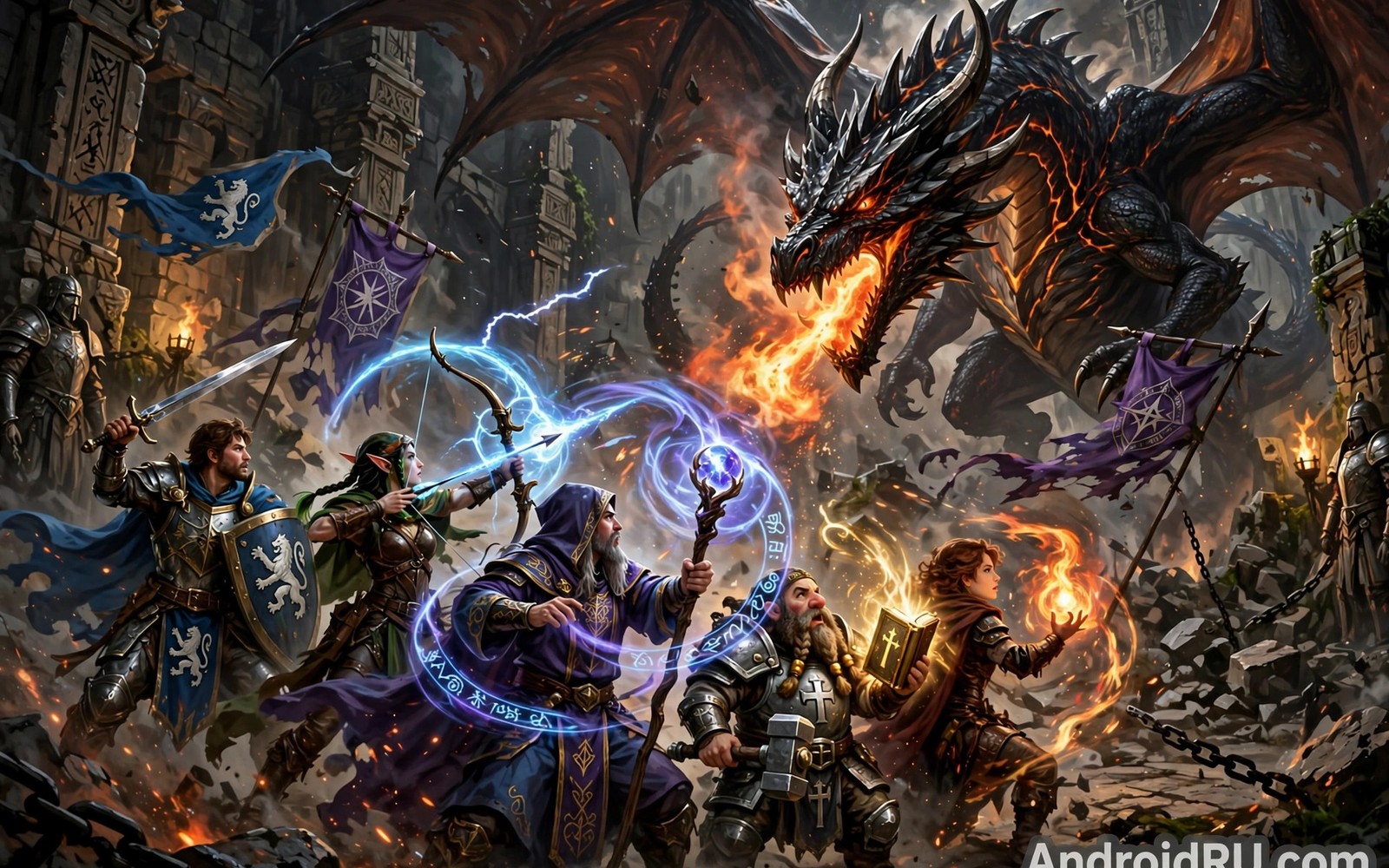
Mobile RPG guild raids turn solo grinding into team triumph. A raid boss that crushes one player falls to a coordinated guild. Voice calls fill with shouts and laughter as a plan comes together. That shared victory is the genre at its best.
Guild raids demand more than strong characters. They need roles and timing and communication. This guide explains how guild raids work and how to become a valued raider. Understanding team economies also helps since guilds share resources and you can learn how player markets work through this comparison of player economies: player economies in mobile MMORPGs.
How guild raids work
A guild raid gathers ten to fifty players against a powerful boss. The boss uses phases that change attacks as its health drops. Early phases teach mechanics gently. Late phases demand precise execution from every role. One mistake can wipe the whole group.
Roles divide the work. Tanks hold the boss and control its position. Damage dealers burn health while dodging attacks. Healers keep everyone alive through burst damage. Support players buff the team and remove debuffs. Every role matters and no role carries alone.
Joining and preparing for a guild
Find a guild that matches your schedule and skill level. Casual guilds raid once a week and welcome learners. Hardcore guilds raid several nights and expect preparation. Honesty about your availability prevents frustration on both sides.
Prepare before your first raid. Read a boss guide and gear to the recommended level and stock consumables. Arrive early and test your connection and audio. A prepared newcomer earns respect fast even without top gear.
Communication during raids
Voice chat transforms raids. A raid leader calls mechanics and timers while players confirm key actions. Keep callouts short and clear. Long stories during a boss fight distract the team and cause wipes.
Learn the common callouts before your first raid. Terms for stacking and spreading and interrupting vary by game but the concepts stay constant. Ask your guild for a callout list if you are unsure. Good guilds teach newcomers gladly.
Loot, fairness, and guild drama
Raid loot causes more guild drama than any boss. Fair guilds use transparent systems like loot councils or point systems. Loot councils award gear by need and contribution. Point systems let players spend earned points on drops. Both beat random rolls for team health.
Avoid guilds where officers take every rare drop. That pattern signals corruption and kills motivation. A healthy guild spreads loot to strengthen the whole team. Your turn will come if the system is honest. For players managing huge raid games, storage planning matters too and you can handle it through this guide to managing space for massive games: managing storage for massive mobile games.
Raid roles in depth: tanks
Tanks carry the heaviest responsibility in raids, because they control boss position and absorb damage that would kill anyone else. A great tank knows boss attack patterns intimately and positions the boss so the team can damage it safely. Tanks also manage threat, ensuring the boss attacks them rather than fragile teammates. That control looks simple from outside, yet it demands constant attention and split second reactions throughout every fight.
Become a better tank by studying boss guides before raids and practising positioning during easier content. Learn which attacks require movement and which require defensive skills, since confusing them causes wipes. Communicate your cooldown status clearly, because healers plan around your defences. A tank who communicates well makes the whole raid feel safer, which improves everyone’s performance through confidence alone.
Raid roles in depth: healers
Healers decide raid survival through triage, which means choosing who lives when everyone needs healing at once. A great healer anticipates damage spikes before they happen, preparing shields and heals for known boss phases. Healers also manage their own resources carefully, because running dry mid-fight dooms the team regardless of skill. That foresight separates great healers from reactive ones who merely respond to health bars.
Improve healing by learning boss timelines so thoroughly that you cast before damage lands rather than after. Track your teammates’ defensive skills and coordinate with other healers to avoid overlapping big heals wastefully. Protect yourself first during dangerous phases, because a dead healer heals nobody. Healing rewards calm players who plan ahead, and it offers a satisfaction that damage roles rarely match when a perfect save turns a wipe into victory.
Raid roles in depth: damage dealers
Damage dealers carry raid progress through sustained output, yet their job involves far more than pressing attack buttons. Great damage players maximize output while dodging mechanics perfectly, because dead damage deals nothing. They learn boss phases to time burst skills for vulnerable windows, multiplying their effectiveness. They also manage threat and positioning, ensuring they never pull bosses away from tanks or stand in danger zones.
Improve damage by practising rotations until they become muscle memory, freeing your attention for mechanics. Study logs after raids to find wasted time and missed opportunities, since small improvements compound across a long fight. Prioritize survival over personal rankings, because a living damage dealer with modest output beats a dead star every time. Teams value reliable damage far more than flashy damage that dies early.
Raid leadership and shot calling
Raid leaders coordinate twenty or more players through chaos, which demands clarity and calm under pressure. A great leader calls mechanics seconds before they happen, giving the team time to react without panic. Leaders also make real time decisions about retreats and adjustments when plans fail, because hesitation during a boss fight wastes precious seconds. That leadership looks effortless when done well, yet it requires preparation and confidence built over many raids.
Support your raid leader by following calls promptly and reporting problems concisely, because leaders cannot fix issues they do not know about. Offer suggestions after raids rather than during them, since mid-fight debates distract everyone. If leadership interests you then volunteer for small roles first. Try calling a single mechanic before leading full raids. Great leaders grow from supportive team members who understand both strategy and people.
Burnout and healthy raiding
Raiding burnout affects even passionate players, because scheduled commitments and repeated wipes drain enthusiasm over time. Signs include dreading raid nights and resenting teammates and feeling relief rather than disappointment when raids cancel. Recognizing burnout early matters, because pushing through it damages both your enjoyment and your guild relationships. Healthy raiding requires balance that hardcore cultures sometimes discourage.
Prevent burnout by setting clear boundaries around raid schedules and honouring them without guilt. Take breaks between raid tiers rather than grinding continuously, since fresh enthusiasm beats exhausted persistence. Talk openly with guild leaders about your limits, because good guilds respect boundaries and bad guilds reveal themselves by ignoring them. Gaming should enrich your life, not consume it, and sustainable raiding protects both your hobby and your friendships.
Scheduling raids across time zones
Scheduling raids across time zones challenges global guilds, because members spread across continents share few convenient hours. A raid time perfect for European evenings falls in the middle of the night for Asian players and during work hours for Americans. Successful global guilds rotate raid times periodically, sharing inconvenience fairly rather than forcing one region to always sacrifice sleep. That rotation builds loyalty across regions, since everyone feels considered.
Use scheduling tools that display times in each member’s local zone automatically, because manual conversion causes missed raids and confusion. Publish raid calendars weeks in advance so members can plan around them, and record attendance patterns to find times that maximize participation. Flexibility matters too, since rigid schedules exclude players with changing lives. Guilds that adapt their schedules retain members longer than guilds that demand perfect attendance at inconvenient hours. Recorded sessions also help absent members catch up on strategies they missed.
Prepare for a raid night
A raid checklist prevents the small failures that wipe groups. This plain text template works in any notes app. Run through it thirty minutes before raid time.
GEAR: repaired / enchanted / correct build loaded
CONSUMABLES: food buff / potions / repair kits stocked
KNOWLEDGE: boss phases read / my role clear
TECH: connection stable / audio tested / battery above 50%
TIME: available for full raid window? yes-no
This checklist is an original tool written for this guide. It uses no data from any specific game. Its purpose is to catch preventable failures before they cost twenty other players a wipe. Battery above fifty percent matters on mobile because raids run long and chargers fail. Never join a raid you cannot finish.
Common mistakes
The biggest mistake is joining a raid unprepared. Players who skip boss guides and arrive undergeared waste the whole group’s time. Preparation is respect. A prepared player with modest gear beats an unprepared player with great gear.
Another mistake is blaming teammates after wipes. Raids fail as teams and improve as teams. Analyse what went wrong calmly and adjust. Guilds that flame members lose members fast.
FAQ
Do I need top gear to join guild raids?
No. Most guilds run entry raids for new players. Gear requirements rise with raid difficulty. Start at entry level and grow with your guild.
How long does a typical guild raid take?
Most raids take one to three hours including preparation. Casual guilds split raids across nights. Check the schedule before committing.
Can I raid on a phone comfortably?
Yes. Mobile raid interfaces suit touch play well. A stable connection and a charged battery matter more than screen size.
Conclusion
Mobile RPGs supporting multiplayer guild raids offer the richest social play on Android. Learn your role and prepare properly and communicate clearly. Your guild will carry you through bosses you could never face alone.
Your next step is to join a guild that matches your schedule this week and read one boss guide before your first raid. If team economies interest you then player markets add another layer and you can explore them through this comparison of player economies: player economies in mobile MMORPGs.

