

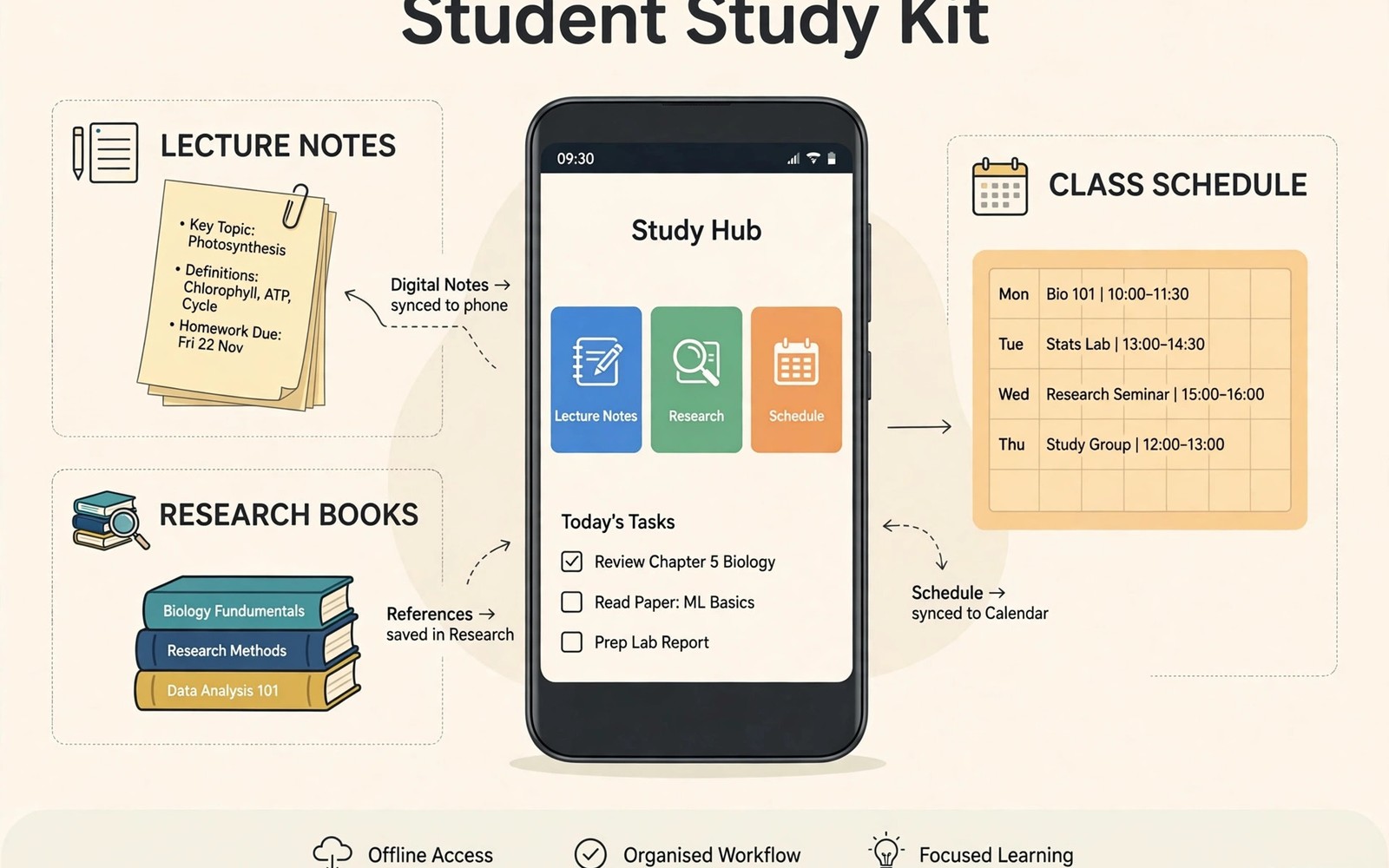
Essential student apps for note-taking and research and scheduling help students turn a busy semester into a manageable plan. Lecture notes and research sources and assignment deadlines compete for attention every week. A phone system that captures notes and tracks deadlines and plans study sessions reduces stress. This article builds that student system with tools that work on a tight budget and a busy schedule.
Start with the class schedule as the backbone of the system. Enter every class and deadline into a calendar during the first week of term. A complete calendar prevents surprise deadlines later. Add a notes app next for lecture capture. Students who also manage work can adapt daily organization and time management apps to study life with the same capture and review habits. Schedule first and notes second keeps the semester honest.
This article gives you a practical path through the topic without hype. You will learn what to install first and what to skip and how to judge each option on your own phone.
A good setup starts with a clear purpose for each app on your phone. Open the app once a day for a week and notice whether it saves time or adds noise. Keep the apps that earn their place and remove the ones that only fill space on the home screen.
Storage and battery shape how well any app performs over time. Check storage use once a month and clear cached files that grow without adding value. A phone with free space runs smoother and updates install without errors.
A backup turns a phone problem into a short delay instead of a lost week. Sync important notes and files to a cloud account you control and test the restore step once. A backup you never tested is only a hope and not a plan.
Note-taking for lectures
Lecture notes work best when capture is fast and review is easy. Use headings for topics and short bullets in your head even when the app stores plain paragraphs. Review notes within a day while memory is fresh and fill gaps from slides or classmates. Same day review turns notes into learning instead of storage.
Record audio only with permission and use it to fill gaps rather than as a replacement for notes. Listening to a full lecture again costs hours while targeted replay of one confusing section costs minutes. Mark timestamps for confusing moments during the lecture. Targeted replay respects study time.
A good setup starts with a clear purpose for each app on your phone. Open the app once a day for a week and notice whether it saves time or adds noise. Keep the apps that earn their place and remove the ones that only fill space on the home screen.
Permissions deserve a quick review before you trust a new app with daily work. Grant only the access the app truly needs for its main job and leave the rest off until a feature asks for it. You can change any permission later in system settings without losing your data.
Storage and battery shape how well any app performs over time. Check storage use once a month and clear cached files that grow without adding value. A phone with free space runs smoother and updates install without errors.
Research and source management
Research apps should save articles and sources with titles and links you can cite later. Save the source at once when you find it because a lost source wastes search time. Add a one line summary in your own words so future you remembers why the source mattered. Summaries turn a pile of links into usable research.
Organise sources by assignment rather than by topic alone. An assignment folder gathers everything needed for one deadline in one place. Check the folder before writing so missing sources surface early. Assignment folders prevent last minute hunts. A deeper system worth exploring is productivity engine apps alongside the tools above.
Storage and battery shape how well any app performs over time. Check storage use once a month and clear cached files that grow without adding value. A phone with free space runs smoother and updates install without errors.
A backup turns a phone problem into a short delay instead of a lost week. Sync important notes and files to a cloud account you control and test the restore step once. A backup you never tested is only a hope and not a plan.
Test an app with your real routine before you judge it. A demo on a quiet afternoon hides problems that appear during a busy commute or a low battery day. Real use shows speed and reliability in a way that screenshots never can.
Scheduling classes and deadlines
A student calendar needs class times and assignment deadlines and exam dates in distinct colours. Colour separation lets a glance show whether a week holds classes or deadlines or both. Add study blocks as calendar events so study time gets protected like class time. Protected study blocks beat vague intentions.
Set reminders two days before a deadline and again on the due morning. Early reminders allow a calm finish while a single last minute reminder invites panic. Review the next two weeks each Sunday to spot deadline clusters. Early sight of clusters allows planned work instead of all night sessions.
A backup turns a phone problem into a short delay instead of a lost week. Sync important notes and files to a cloud account you control and test the restore step once. A backup you never tested is only a hope and not a plan.
Test an app with your real routine before you judge it. A demo on a quiet afternoon hides problems that appear during a busy commute or a low battery day. Real use shows speed and reliability in a way that screenshots never can.
Compare two similar apps on the same task on the same day. A direct comparison shows speed and clarity differences that feature lists hide. Pick the winner promptly and remove the loser so data never splits across two tools.
adb shell dumpsys alarm
adb shell cmd jobscheduler list
adb shell settings get global auto_time
The scheduling commands above follow the pattern used in Android developer guides for inspecting alarms and scheduled jobs. The same guides explain that scheduled work controls reminders and background updates.
Study sessions and focus
Study in focused blocks with short breaks and a clear goal per block. A block goal such as finish chapter summary beats a vague goal such as study biology. Track completed blocks to build visible momentum across a week. Visible progress motivates the next session. For easier daily use you may also try accessibility apps for everyone for the same routine.
Study groups benefit from shared notes and shared task lists. Share a folder per group project so every member sees the same material. Agree on file names and update times to avoid version confusion. Shared clarity prevents group friction.
Notifications decide whether an app helps you or interrupts you all day. Keep alerts on for messages that need a fast reply and silence the rest. A quiet phone still delivers urgent news while it protects your focus.
Test a new app in a real situation before you trust it with important work. A short test on a busy day reveals speed problems that a quiet demo hides. Keep the test short and focused so you can judge fairly without wasting an afternoon.
Set a reminder to revisit a new app after thirty days. A month of use shows whether the app became a habit or a forgotten icon. Remove habits that faded and keep tools that proved their worth.
Budget and campus life
Free student tools cover most needs so spend carefully on paid apps. Try free versions through a full assignment cycle before paying. A paid app should solve a proven pain rather than promise a better semester. Proven pain deserves payment while vague promise does not.
Campus apps for transport and dining and library hours save daily time. Add those local apps to a campus folder on the home screen. A campus folder keeps daily campus tools one tap away. Small local tools often help more than grand study suites.
Check how an app handles your data before you sign in. Read the privacy screen inside the app and look for clear controls to export or delete your content. Strong defaults beat long promises when you compare two similar apps.
Check the data use of a new app during its first week. An app that syncs large files in the background can surprise you on a capped plan. Wi-Fi only sync for heavy apps keeps mobile data for urgent use.
Storage and battery shape how well any app performs over time. Check storage use once a month and clear cached files that grow without adding value. A phone with free space runs smoother and updates install without errors.
Common mistakes
A common mistake is downloading many study apps before classes start and then using none consistently. Another mistake is taking perfect notes but never reviewing them until exam week. A third mistake is tracking deadlines only in memory instead of a calendar. One notes app and one calendar and a weekly review form a complete student system.
Updates matter because developers fix bugs and close security gaps in each release. Turn on automatic updates for trusted apps and read the changelog when an update changes a feature you rely on. Skip an update only when you have a clear reason and a backup plan.
Try one change at a time when you rebuild your phone setup. Install two or three apps first and use them for real tasks before you add more. A slow start reveals problems early while a rushed setup hides them until they hurt.
Test an app with your real routine before you judge it. A demo on a quiet afternoon hides problems that appear during a busy commute or a low battery day. Real use shows speed and reliability in a way that screenshots never can.
Frequently asked questions
Which student app matters most?
A calendar with all deadlines matters most because missed deadlines cost grades directly. Add a notes app next for lecture capture.
Should students pay for study apps?
Try free tools for a full assignment cycle first. Pay only when a paid feature solves a pain you already felt repeatedly.
How often should I review notes?
Review notes within a day of each lecture and again weekly. Short frequent reviews beat a single exam week cram.
What to do next
Your concrete next step is to enter every class and deadline into your calendar tonight. Add your first study block for tomorrow and review the calendar each morning this week. One honest week of scheduling changes a whole semester.
Updates matter because developers fix bugs and close security gaps in each release. Turn on automatic updates for trusted apps and read the changelog when an update changes a feature you rely on. Skip an update only when you have a clear reason and a backup plan.
Start small and review your setup after one week of real use. Keep what helped and remove what did not and your phone will stay fast and useful.

