

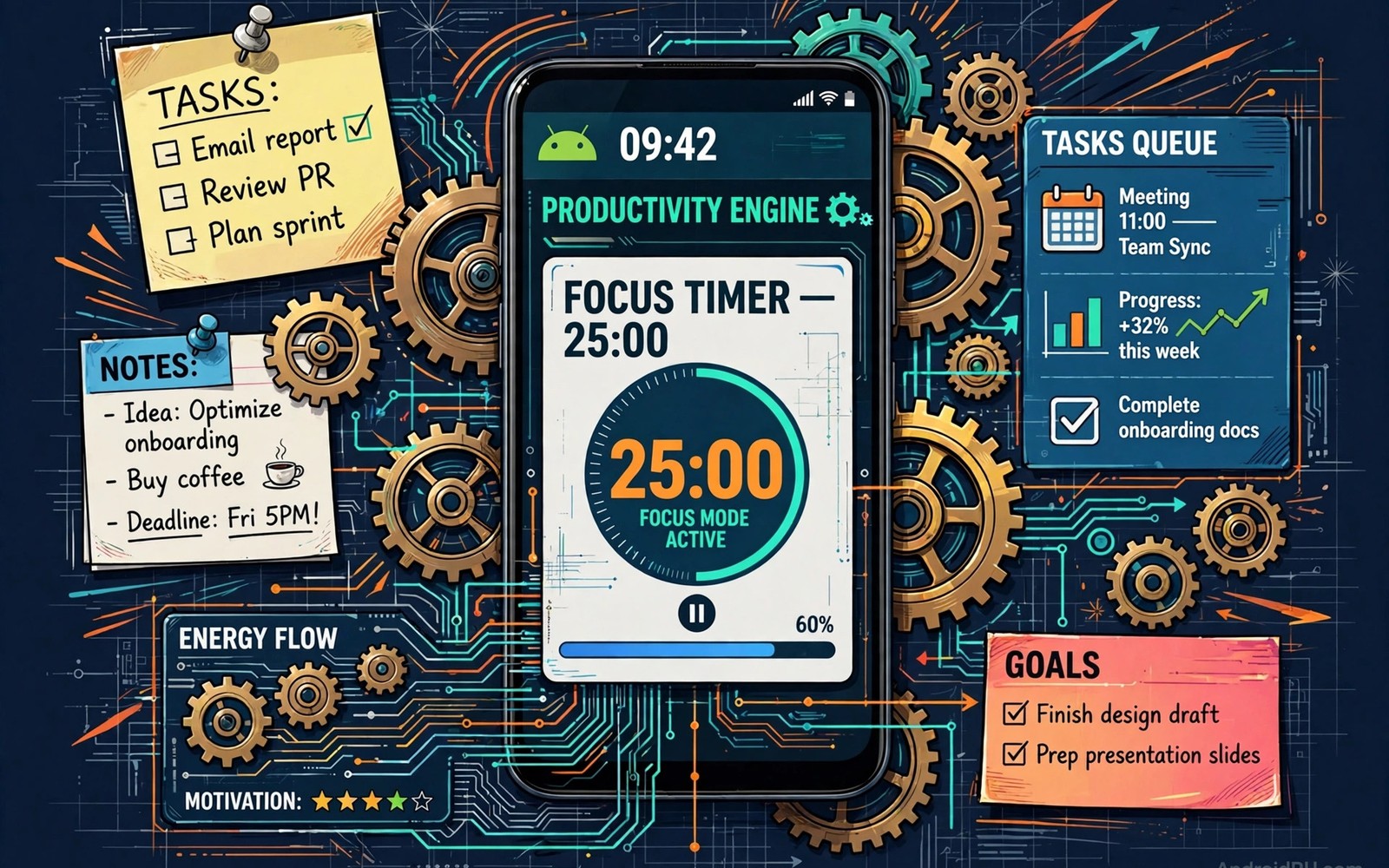
Essential apps to transform your Android phone into a productivity engine go beyond a single task list. A focus timer and an automation routine and a linked notes system together create a workflow that carries real projects. The phone stops being a distraction machine and starts being a workbench. This article builds that engine step by step for owners who want serious output from a small device.
Start by naming the work the engine must carry. Writing and project management and field work each need different tools. A writer needs a calm editor while a manager needs shared tasks and quick capture. Build around that main work type first. Students and professionals alike can also learn from student apps for note-taking and scheduling because study systems share the same capture and review habits. One main workflow first and extras later keeps the engine focused.
The advice below focuses on daily use rather than feature lists. A useful app proves itself in real tasks and a weak app reveals itself just as fast.
Notifications decide whether an app helps you or interrupts you all day. Keep alerts on for messages that need a fast reply and silence the rest. A quiet phone still delivers urgent news while it protects your focus.
A good setup starts with a clear purpose for each app on your phone. Open the app once a day for a week and notice whether it saves time or adds noise. Keep the apps that earn their place and remove the ones that only fill space on the home screen.
Notifications decide whether an app helps you or interrupts you all day. Keep alerts on for messages that need a fast reply and silence the rest. A quiet phone still delivers urgent news while it protects your focus.
Capture everything fast
Fast capture is the foundation of any productivity engine. A capture tool should open in one tap and save a thought without asking for folders or tags. Capture first and organise later during a review. A slow capture tool loses ideas because the moment passes before the app opens.
Keep a single inbox for all captures so nothing hides in scattered apps. Review the inbox daily and move each item to a task or a note or trash. An inbox reviewed daily stays trustworthy while an inbox ignored for weeks becomes a graveyard. Trust in capture drives use of capture.
Keep the home screen focused on tools you open every day. Move seasonal or rare apps into a folder with a clear name. A focused home screen reduces taps and helps you reach the right tool without hunting.
Write down the settings you change when you set up a new app. A short note helps you restore the setup after a reset or a new phone. Good notes turn a one time setup into a repeatable routine.
Check how an app handles your data before you sign in. Read the privacy screen inside the app and look for clear controls to export or delete your content. Strong defaults beat long promises when you compare two similar apps.
Focus tools that protect time
A focus timer breaks work into sessions with short breaks that sustain energy. Work for a focused block and then rest briefly before the next block. A focus app that blocks distracting apps during sessions adds real value. Blocking should be firm during the session and easy to lift after it ends.
Focus modes built into Android can silence apps by schedule without extra software. Combine a system focus mode with a timer app for a complete focus setup. Test the combination for one workday before you judge it. Focus tools prove themselves in real work and not in settings screens. For planning work you may also add daily organization apps alongside the tools above.
Share a useful app with a friend only after you have used it for a week. A recommendation based on real use carries more weight than one based on a store page. Honest recommendations help friends avoid the same trial and error you already did.
Keep the home screen focused on tools you open every day. Move seasonal or rare apps into a folder with a clear name. A focused home screen reduces taps and helps you reach the right tool without hunting.
Check the data use of a new app during its first week. An app that syncs large files in the background can surprise you on a capped plan. Wi-Fi only sync for heavy apps keeps mobile data for urgent use.
Automation for routine work
Automation routines handle repetitive steps such as silencing the phone in meetings and opening a project folder at work. A routine saves small decisions that add up across a day. Build routines for actions you already repeat by hand. Automation should remove friction and never add mystery.
Log automation runs for the first week so failures surface early. A routine that fires at the wrong time teaches you to refine its trigger. Refine one routine at a time until it feels invisible. Invisible automation is successful automation.
Learn one advanced feature per month inside an app you already love. Small steady learning beats a weekend of tutorials that you forget by Monday. One feature per month compounds into mastery within a year.
Set a reminder to revisit a new app after thirty days. A month of use shows whether the app became a habit or a forgotten icon. Remove habits that faded and keep tools that proved their worth.
Learn one advanced feature per month inside an app you already love. Small steady learning beats a weekend of tutorials that you forget by Monday. One feature per month compounds into mastery within a year.
adb shell dumpsys usagestats
adb shell cmd deviceidle whitelist
adb shell settings get global zen_mode
The usage and focus commands above follow the pattern used in Android developer guides for inspecting app usage and do not disturb state. The same guides explain that usage stats reveal which apps consume attention across a day.
Linked notes for projects
Linked notes connect ideas and tasks and references into a web you can navigate. A project note links to its research and its meeting notes and its next actions. That web prevents rework because prior thinking stays visible. Start linking with a few core notes rather than linking everything at once. Creators can also manage apps for multiple social profiles for the same routine.
Templates for project notes keep structure consistent across projects. A template with goal and next actions and resources saves setup time for each new project. Reuse templates and refine them as projects teach lessons. Consistent structure speeds up every new start.
A good setup starts with a clear purpose for each app on your phone. Open the app once a day for a week and notice whether it saves time or adds noise. Keep the apps that earn their place and remove the ones that only fill space on the home screen.
A good setup starts with a clear purpose for each app on your phone. Open the app once a day for a week and notice whether it saves time or adds noise. Keep the apps that earn their place and remove the ones that only fill space on the home screen.
Updates matter because developers fix bugs and close security gaps in each release. Turn on automatic updates for trusted apps and read the changelog when an update changes a feature you rely on. Skip an update only when you have a clear reason and a backup plan.
Review systems that sustain output
A daily shutdown review closes open loops and plans tomorrow in ten minutes. List finished work and move unfinished tasks to a fresh date. A shutdown review ends the workday cleanly and prevents evening worry. Clean endings protect rest which protects tomorrow focus.
A weekly review updates projects and archives finished work and sets priorities for the next week. Spend thirty minutes on the weekly review and the engine stays aligned with goals. Without review even the best engine drifts toward urgent noise. Review is the steering wheel of productivity.
Storage and battery shape how well any app performs over time. Check storage use once a month and clear cached files that grow without adding value. A phone with free space runs smoother and updates install without errors.
Updates matter because developers fix bugs and close security gaps in each release. Turn on automatic updates for trusted apps and read the changelog when an update changes a feature you rely on. Skip an update only when you have a clear reason and a backup plan.
Check how an app handles your data before you sign in. Read the privacy screen inside the app and look for clear controls to export or delete your content. Strong defaults beat long promises when you compare two similar apps.
Common mistakes
A common mistake is building a complex productivity engine before mastering basic capture and review. Another mistake is installing focus apps while keeping every distraction one tap away. A third mistake is copying a famous system wholesale instead of adapting it to real work. Build capture and focus and review first and adapt the rest.
Permissions deserve a quick review before you trust a new app with daily work. Grant only the access the app truly needs for its main job and leave the rest off until a feature asks for it. You can change any permission later in system settings without losing your data.
Protect your accounts with a second factor wherever the app offers it. A second factor blocks most automated attacks even when a password leaks. Enable it on mail and cloud and banking apps first because those guard the rest.
Permissions deserve a quick review before you trust a new app with daily work. Grant only the access the app truly needs for its main job and leave the rest off until a feature asks for it. You can change any permission later in system settings without losing your data.
Frequently asked questions
Can a phone replace a laptop for productivity?
A phone handles capture and review and short tasks well. Long writing and complex spreadsheets still benefit from a larger screen and keyboard.
How many productivity apps do I need?
Four tools cover most engines: capture and tasks and notes and focus. Add automation only after those four work reliably.
What if my productivity system collapses?
Restart with capture and a short task list only. A collapsed system usually grew too complex and a simple restart restores trust.
What to do next
Your concrete next step is to set up fast capture and a daily shutdown review this week. Capture every idea for three days and review the inbox each evening. That habit alone transforms a phone into a working engine.
A simple home screen layout makes good apps easier to reach. Put daily tools on the first screen and move rarely used apps into folders. Fewer taps mean you finish tasks faster and you are less likely to open a distraction by accident.
A tidy phone setup is a habit and not a one time project. Revisit your apps each month and your choices will stay aligned with your life.

