

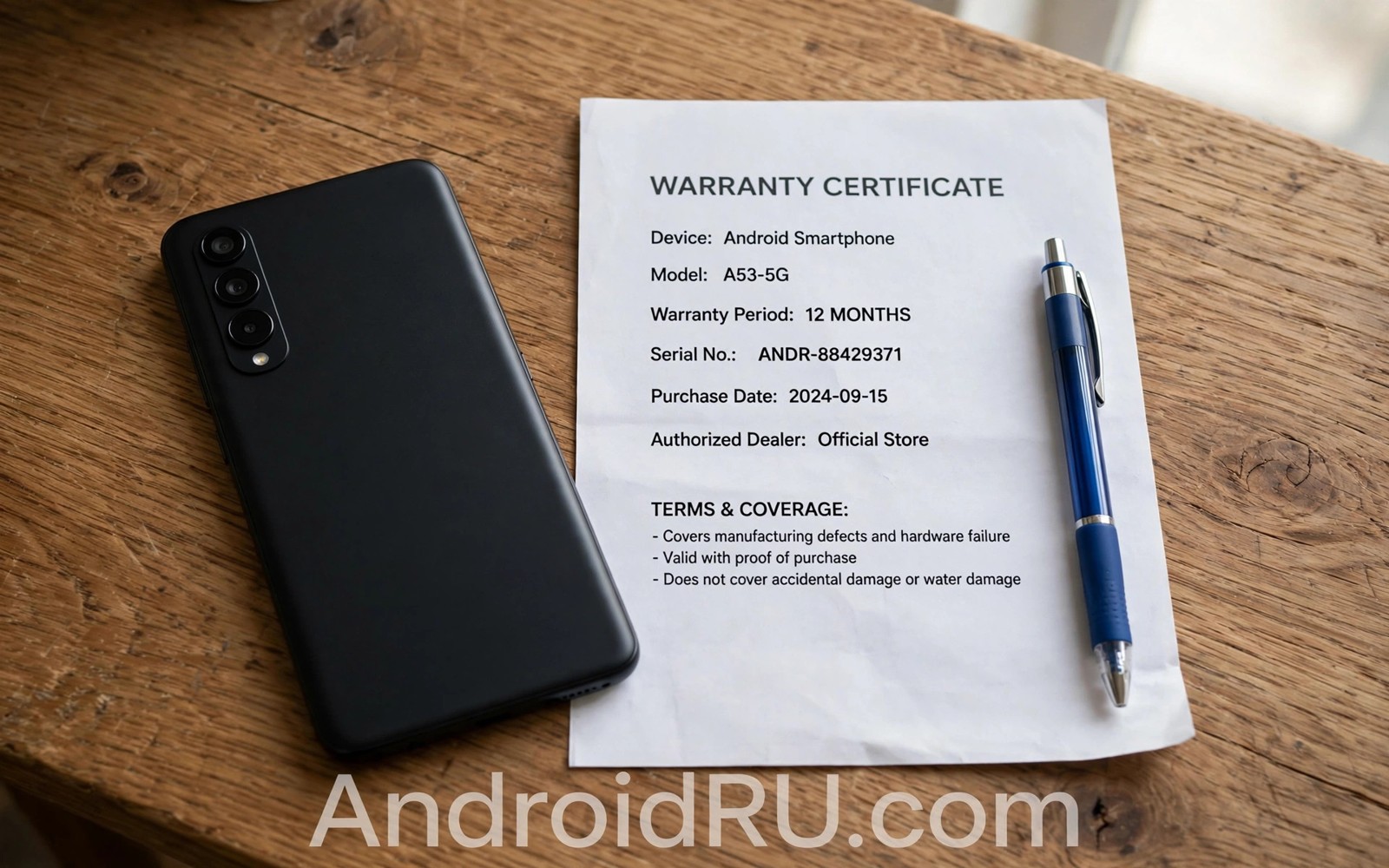
Asking whether installing a custom ROM voids your smartphone warranty is smart before you unlock. The answer varies by maker and by region. Some makers tolerate unlocking. Others treat it as a warranty end. This article separates policy from myth. You will learn how to check your own case.
Warranty rules are contracts and they differ in wording. Read stock simplicity versus custom skins for the broader stock debate. Also see hidden risks of custom ROMs for repair complications. Policy knowledge protects you when a repair is needed.
What warranty actually covers
Warranty covers manufacturing defects in materials and workmanship. It does not cover drops or water damage or misuse. Software changes sit in a grey area. Makers argue that modified software can cause faults. Users argue that hardware defects exist regardless of software.
That argument decides many repair disputes. A dead pixel has no link to a custom ROM. A boot failure after flashing clearly links to software. Repair staff judge each case on evidence. Your documentation helps your case.
Maker policies in plain terms
Some makers run official unlock programs. They still warn that warranty may be affected. Others state plainly that unlocking voids warranty. A few makers distinguish software warranty from hardware warranty. That distinction can save a hardware repair.
Policies change over time so check the current page for your model. Screenshots of the policy help later. Note the date you checked. Keep the unlock approval email if the maker sends one. Paper trails matter in disputes.
Regional law can change the answer
Consumer law in some regions protects repair rights strongly. A maker cannot always void all warranty for software changes. The burden may fall on the maker to prove the change caused the fault. Rules differ by country and by purchase channel.
Carrier phones may carry extra terms beyond maker policy. Carrier contracts can restrict unlocking separately. Read carrier terms too. Imported phones may follow the seller region rules. That complexity deserves a careful check.
How repair centres actually judge phones
Repair staff first check bootloader state and software version. A modified phone may be flagged automatically. Some centres restore stock before diagnosis. Others refuse service at intake. Experiences vary even within one maker.
Returning to stock before a repair helps greatly. Flash stock firmware and relock when the maker allows it. Remove root traces carefully. Present a clean stock phone for hardware issues. That practice resolves many disputes early.
Protecting yourself before unlocking
Record the phone condition with photos and a short video. Save the purchase receipt and warranty terms. Note the original software version and build number. Keep the stock firmware package for your exact variant. These records cost minutes and save weeks.
Consider timing as well. Unlocking a brand new phone risks the most warranty value. Unlocking an old phone past warranty risks nothing. Many users wait until warranty ends. That patience is a sound strategy.
If a repair is refused
Ask for the refusal in writing with the reason stated. A vague refusal is easier to challenge. Escalate through official support channels with your records. Consumer protection bodies can advise in some regions. Also review choosing the right custom ROM since a stable official build leaves cleaner traces. Calm records beat angry arguments.
Do not misrepresent a modified phone as stock. Honesty protects your credibility. State the facts and the hardware fault separately. Ask the centre to test the hardware fault on stock software. That request is fair and focused.
fastboot flashing get_unlock_ability
adb shell getprop ro.build.display.id
fastboot getvar unlocked
These commands follow the pattern shown in the official Android developer documentation for fastboot and adb. They read unlock state and build data without modifying the phone.
How to read warranty wording like a lawyer
Warranty documents use specific words that change outcomes. Look for the word void and the word affect and the word exclude. Void suggests total loss of cover. Affect suggests partial impact. Exclude suggests specific faults fall outside cover. Those distinctions matter in disputes. Quote the exact wording when you contact support. Exact quotes beat paraphrases in every negotiation.
Look for the burden of proof clause in your region. Some documents say the maker must prove your change caused the fault. Others place the burden on you. That clause decides who must argue harder. Consumer law may override document wording. Research your local rules before accepting a refusal. A short search can reveal strong protections.
Keep every support interaction in writing. Email beats phone calls for disputes. If you must call, note the date and agent name and summary. Ask the agent to confirm key points by email. Written records prevent later denials. Support teams respect customers with records. Records also help consumer bodies act on your behalf.
Time limits matter in warranty claims. Some policies require claims within a set period after purchase. Others require prompt reporting after a fault appears. Delay weakens your position even when the fault is genuine. Report faults promptly and in writing. Prompt action signals good faith. Good faith strengthens negotiations greatly.
Carrier locked phones and warranty traps
Carrier locked phones carry terms beyond maker warranty. Carriers may restrict unlocking for months after purchase. They may require full payment before unlocking. They may refuse unlocking for unpaid accounts. Those terms surprise many buyers. Read carrier terms before purchase. Maker policy alone does not tell the full story. Carrier terms can block ROM plans entirely.
Unlock eligibility windows vary widely by carrier. Some carriers unlock after sixty days of service. Others require a full year. Some require a clean payment history. Check the window for your carrier and plan. Buying a carrier phone for ROM use needs that check. Direct unlocked models avoid the window entirely. That freedom often justifies their higher price.
Warranty claims on carrier phones route through the carrier first. Carrier staff may apply stricter rules than maker staff. They may flag modified phones faster. Returning to stock before a carrier claim helps greatly. Present a clean stock phone at the counter. That practice reduces disputes sharply. Documentation helps here too.
Insurance plans add another layer of terms. Some insurance plans exclude modified phones. Others cover them with higher excess fees. Read insurance wording before unlocking. An unlocked phone with no insurance cover risks more. Weigh that risk against ROM benefits. Insurance value grows with phone price. Expensive phones deserve careful term reading.
Resale value drops for modified phones in many markets. Buyers fear hidden faults in flashed phones. Returning to stock before sale restores value. Relocking when possible restores more value. Keep original boxes and receipts for resale. Those items signal careful ownership. Careful sellers earn better prices. Modification history should stay honest in listings.
Warranty law around the world
European consumer law protects buyers strongly. Sellers must prove user damage caused faults. That burden helps ROM users greatly. Makers cannot void all cover casually. They must link fault to modification. Linkage proof is hard for unrelated faults. Dead pixels rarely link to ROMs. Battery faults rarely link either. European users hold strong positions. Strong positions still need documentation. Documentation turns rights into outcomes.
United States warranty law uses a different framework. The Magnuson Moss Act limits blanket voiding. Makers must show modification caused the fault. That showing is often weak. Enforcement varies by state and by maker. Users may need to escalate firmly. Firm escalation with records works often. Records include receipts and policy copies. Copies prove terms at purchase time. Terms change later sometimes. Purchase time terms govern claims.
Australian consumer guarantees add another layer. Guarantees cannot be excluded by contract terms. Faulty products deserve remedy regardless of wording. Modification complicates but does not erase guarantees. Fault linkage still matters. Unrelated faults still deserve remedy. Australian users should cite guarantees explicitly. Explicit citation strengthens claims. Support staff respond to cited law. Citations signal informed customers.
Asian consumer protections vary widely by country. Some countries offer strong statutory rights. Others rely on maker goodwill mostly. Research your country before unlocking. Goodwill systems reward polite persistence. Legal systems reward cited statutes. Match your approach to your system. Approach matching improves outcomes. Outcomes improve with preparation. Preparation starts with reading local law.
Documenting your unlock decision
Write down why you unlocked your phone. Reasons include features or support or privacy. Written reasons clarify later regrets. Regrets need context to evaluate. Context shows whether reasons still hold. Holding reasons justify continued use. Changed reasons suggest reverting. Reverting with clear reasons feels right. Right decisions need records. Records beat fading memory.
Record the unlock date and policy version. Policy versions change over time. Change may affect future claims. Claims need purchase era terms. Era terms are provable with records. Records include screenshots and emails. Emails from makers carry weight. Weight helps disputes. Disputes favour prepared owners. Prepared owners win more often.
Keep a folder for all phone documents. Folders include receipts and policies. Folders include firmware files. Firmware files enable stock return. Return capability protects resale value. Value protection matters for upgrades. Upgrades come every few years. Years of records compound. Compounded records simplify sales. Sales with records close faster.
Common mistakes
Unlocking without reading the current policy is the top mistake. Old forum claims may be outdated. Always check the maker page for your model. Assuming all makers share one rule is equally wrong.
Failing to keep stock firmware blocks a clean return. Download it before you unlock. Returning a modified phone for repair without restoring stock invites refusal. Restore first when possible.
Deleting purchase records and policy screenshots weakens disputes. Keep a small folder with all proof. That folder is your warranty toolkit.
Frequently asked questions
Does unlocking always void warranty?
No. It depends on maker policy and regional law. Some makers allow unlocking with limits. Others void terms clearly. Check your maker and region before deciding.
Can I relock and restore warranty?
Relocking and stock restore help but may not erase unlock records. Some phones keep a permanent unlock flag. That flag can still affect warranty claims. Know your model behaviour first.
Should I unlock a phone still under warranty?
Only if the benefit outweighs the risk for you. Many users wait until warranty ends. Others accept the risk for features or support. Make the call with full policy facts.
Conclusion
Warranty risk is real but it is not uniform. Maker policy and regional law and repair practice all shape the outcome. Records and stock restore give you the strongest position.
Your concrete next step is to find the current unlock policy page for your exact model today and save a dated copy. Then decide whether to unlock now or wait until warranty ends.

