

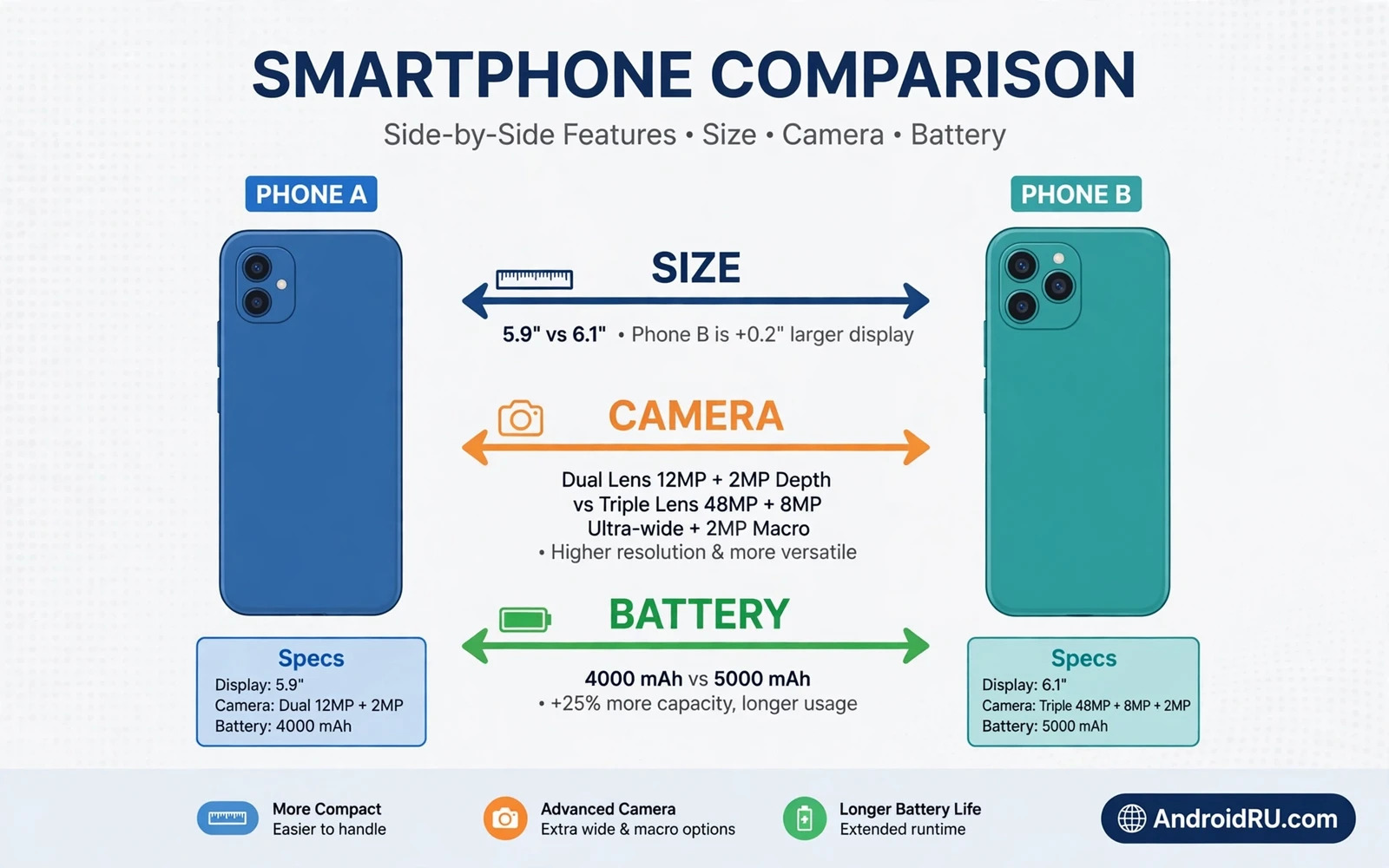
Why Compact Flagships Still Matter
A compact flagship is a phone that refuses to treat small size as a compromise. It keeps a fast processor and a strong camera and a bright screen while it stays easy to hold with one hand. Many buyers want that balance because a large phone can feel clumsy in a pocket and tiring during a long call and awkward on a crowded train. The Asus Zenfone line has built its reputation on this idea for years. The base Pixel has become the other natural choice because it pairs a clean software experience with a camera that punches above its size. This comparison looks at both phones through daily use rather than through a single headline feature.
Size alone does not decide the winner. A phone that is a few millimetres narrower can still feel wide when its edges are flat and its weight sits high. A phone that is slightly taller can still feel balanced when its weight sits low and its back curves gently into the palm. You should hold both shapes in mind while you read each section below. Think about your hand size and your pocket depth and your typing style and your camera habits. The right compact flagship is the one that disappears into your routine instead of demanding attention at every step.
Design And One Hand Comfort
The Zenfone approach leans toward a dense and purposeful build. Its frame feels solid and its buttons sit where a thumb can reach them without a grip shift. Its back panel usually avoids a slippery gloss finish so the phone stays secure during a quick photo or a one handed reply. The base Pixel leans toward a softer and more rounded design language. Its camera bar gives the phone a distinct identity and it also stops the phone from rocking on a table. Its rounded corners help the phone slide into a tight pocket without catching on fabric.
One handed comfort depends on more than width. Reach to the top of the screen matters when you pull down notifications or tap a search bar. Thumb arc matters when you type quickly with one hand. Weight distribution matters when you hold the phone for a video call that lasts half an hour. The Zenfone often wins on raw grip security because its body is compact in every direction. The Pixel often wins on software reach because its gesture system and its one handed mode reduce the distance your thumb must travel. Readers who value pocketability above all else may lean toward the Zenfone shape while readers who value software polish may lean toward the Pixel shape.
Display Quality In Daily Light
Both phones offer sharp and colourful screens that look excellent indoors. Differences appear outdoors and at night and during long reading sessions. Peak brightness decides whether a map stays readable in strong sunlight. Colour tuning decides whether photos look natural or oversaturated. Refresh behaviour decides whether scrolling feels smooth or slightly choppy. A compact phone shows these traits quickly because you hold it closer and you notice flicker and tint sooner.
The Zenfone screen tends to favour a vivid and punchy presentation that makes games and videos pop. The Pixel screen tends to favour a calmer and more accurate presentation that makes photos look closer to real life. Neither tuning is wrong. Video lovers may prefer punch while photo editors may prefer accuracy. You can adjust both screens in settings but the factory tuning still shapes the first impression. Check text sharpness at low brightness too because some screens shift colour when brightness drops at night.
Performance And Heat Under Load
Compact bodies leave less room for heat to escape. That fact shapes every performance test on a small flagship. A processor can run at full speed for a short burst and then it must slow down to protect the battery and the internal parts. The Zenfone line has often tuned its phones for sustained speed with careful thermal design. The Pixel line has often tuned its phones for smart features and camera processing rather than for raw gaming speed. Both approaches work but they suit different buyers.
Daily tasks feel fast on either phone. App launches and web browsing and photo editing and social feeds all run without delay. Gaming separates them more clearly. A demanding game will warm a compact phone faster than it warms a large phone with a bigger vapour chamber. Short gaming sessions stay smooth on both phones. Long gaming sessions may show a steadier frame rate on the phone with the better cooling path. If you play for hours each day then a larger gaming phone may serve you better than any compact flagship. If you play in short bursts then either compact flagship will satisfy you.
Camera Results For Real Photos
Camera quality is where the Pixel earns much of its praise. Its processing lifts shadows and preserves skin tones and handles tricky indoor light with confidence. Night shots look bright without looking artificial. Portrait shots separate the subject cleanly in most scenes. The Zenfone camera has improved steadily and it offers strong detail in daylight and a useful set of manual controls for keen photographers. Its weakness tends to appear in very low light where processing noise becomes more visible.
Video tells a second story. Stabilisation matters when you walk while filming. Audio capture matters when you film in a noisy street. Focus tracking matters when your subject moves toward the camera. Test both phones in your own typical scenes when possible. A camera that excels at landscapes may struggle with fast moving children indoors. A camera that excels at portraits may struggle with wide architecture shots. Your own photo library is the best test set because it shows the light and the subjects you actually shoot.
Battery Life And Charging Reality
A smaller body means a smaller battery in most designs. That trade shapes the whole ownership experience. The Zenfone team has often squeezed impressive endurance from a modest battery through efficient tuning and a restrained screen. The Pixel team has often relied on smart software to stretch a day of use even when the battery size looks average on paper. Real endurance depends on your signal strength and your screen brightness and your app mix and your refresh setting. A phone that lasts two days for a light user may last barely one day for a heavy user on a weak signal.
Charging speed also matters for compact phones because a quick top up can rescue a busy afternoon. Check the wired charging speed and the wireless charging support and the time needed for a half charge from empty. A phone that charges fast can live happily with a smaller battery because you can refill it during a coffee break. A phone that charges slowly needs a larger battery to avoid anxiety. Readers who want deeper battery context can read the detailed longest battery runtime comparison before they decide. That comparison explains how test conditions change endurance claims.
Software Support And Everyday Polish
Software support length now matters as much as launch hardware. A phone that receives years of system updates and security patches stays safe and stays fresh long after purchase. Pixel phones lead on update speed because the maker controls both hardware and software. Zenfone phones offer a capable Android skin with useful extras but update timing can lag behind Pixel. If you keep a phone for four years or more then update policy deserves a large weight in your decision.
Everyday polish shows in small details. Call screening and spam filtering and voice typing and photo editing tools all save time each week. Pixel software excels at these smart helpers. Zenfone software excels at giving power users more toggles and more control over performance and audio. Neither approach suits everyone. Minimalists tend to love Pixel simplicity. Tweakers tend to love Zenfone flexibility. Brand history also matters here and the clean interface comparison covering Asus software shows how Asus tuning feels beside a rival clean skin.
Who Should Buy Which Phone
Choose the Zenfone style compact flagship when pocket size and grip and manual camera control top your list. Choose it when you want strong sustained performance in a small body and you enjoy extra settings. Choose the base Pixel when camera consistency and fast updates and smart software helpers top your list. Choose it when you want a phone that stays current for years and you value computational photography over manual controls.
Price can break the tie. Compact flagships often launch at a premium because small engineering costs more. Discounts change the value balance quickly. Compare the street price on the day you buy rather than the launch price from months earlier. Check storage options too because a compact phone without expandable storage locks you into your launch choice. A related size and speed debate appears in the in display versus side mounted fingerprint comparison which matters because compact phones place sensors in tight spaces.
Buying Checklist Before You Pay
- Hold both phones or at least check exact width and weight and grip shape
- Test the camera in low light and in motion rather than only in daylight
- Confirm the update policy length and the security patch promise
- Check battery endurance at your own brightness and signal conditions
- Confirm storage size because neither line forgives a small storage choice
- Compare current street prices and warranty terms before you commit
Final Verdict
There is no single winner for every buyer. The Zenfone wins the pure compact brief with its dense build and its grip and its performance tuning. The Pixel wins the everyday smart phone brief with its camera and its updates and its helpful software. Your hand and your photo habits and your update expectations will point to one of them. Pick the phone that fits your daily routine rather than the phone that wins a single benchmark chart. A compact flagship should feel effortless after a week of use and that feeling is the truest test of all.
Update Longevity And Resale Value
Update longevity shapes compact flagship value long after launch excitement fades. A phone that receives system updates for many years stays secure against new threats and stays compatible with new apps. A phone abandoned early may still run well today but it will age faster in practical terms because banking apps and messaging apps eventually require newer system features. Buyers who keep phones for four years or more should treat update length as a core specification rather than a footnote. Check the maker promise for the exact model because promises vary between flagship lines and regional variants. A promise measured in years from launch differs from a promise measured in Android version counts so read the wording carefully before you compare two makers.
Security patches matter even when system version upgrades stop. Monthly or quarterly patches close vulnerabilities that attackers actively exploit. A phone with regular patches stays safer for everyday banking and shopping and messaging. A phone without patches becomes a riskier daily driver even when its hardware still performs well. Update speed matters too because a patch that arrives months late leaves a longer exposure window. Pixel phones usually receive patches promptly because the maker controls the whole stack. Other makers vary by model priority and by carrier approval steps which can delay delivery.
Resale value follows update longevity closely. Used buyers pay more for a phone with years of support remaining because they buy future usability rather than past glory. A compact flagship with a long promise therefore returns more money at upgrade time. That return can offset a higher launch price substantially over a full ownership cycle. Keep the phone in good condition and keep its original box and accessories to maximise resale further. A well protected compact flagship with long support often costs less overall than a cheaper phone that depreciates fast and needs early replacement.
Software features also evolve during a long support window. Camera processing improves through updates on many phones. Battery management improves as makers tune background behaviour. Accessibility features expand with newer system versions. A phone that receives these improvements feels newer for longer which delays upgrade pressure. That feeling of freshness is a genuine ownership benefit rather than marketing language. It means your careful compact choice keeps paying dividends in daily use rather than only on the day you unbox it.

