

Waterproof Is A Word To Treat With Care
Phone makers rarely promise a truly waterproof phone because no consumer phone survives every water situation forever. Water resistant is the honest term for most rated phones because resistance has limits of depth and time and water type. A phone that survives a splash may fail after a long swim. A phone that survives fresh water may fail in salt water or soapy water. Marketing language often blurs this distinction and buyers pay the price when a phone dies after an adventure that looked safe in an advertisement. Understanding the rating behind the claim protects both your phone and your wallet.
Ingress protection ratings exist to replace vague marketing with a testable standard. The IP code describes protection against solids and liquids under controlled laboratory conditions. Those conditions matter because a lab tank of fresh still water differs greatly from a beach or a pool or a rainy worksite. A rating tells you what a new phone survived in a lab. It does not guarantee that your two-year-old phone with a worn seal will survive the same test. Treat every rating as a safety margin for accidents rather than as permission to use the phone underwater deliberately.
Decoding The IP Code Digit By Digit
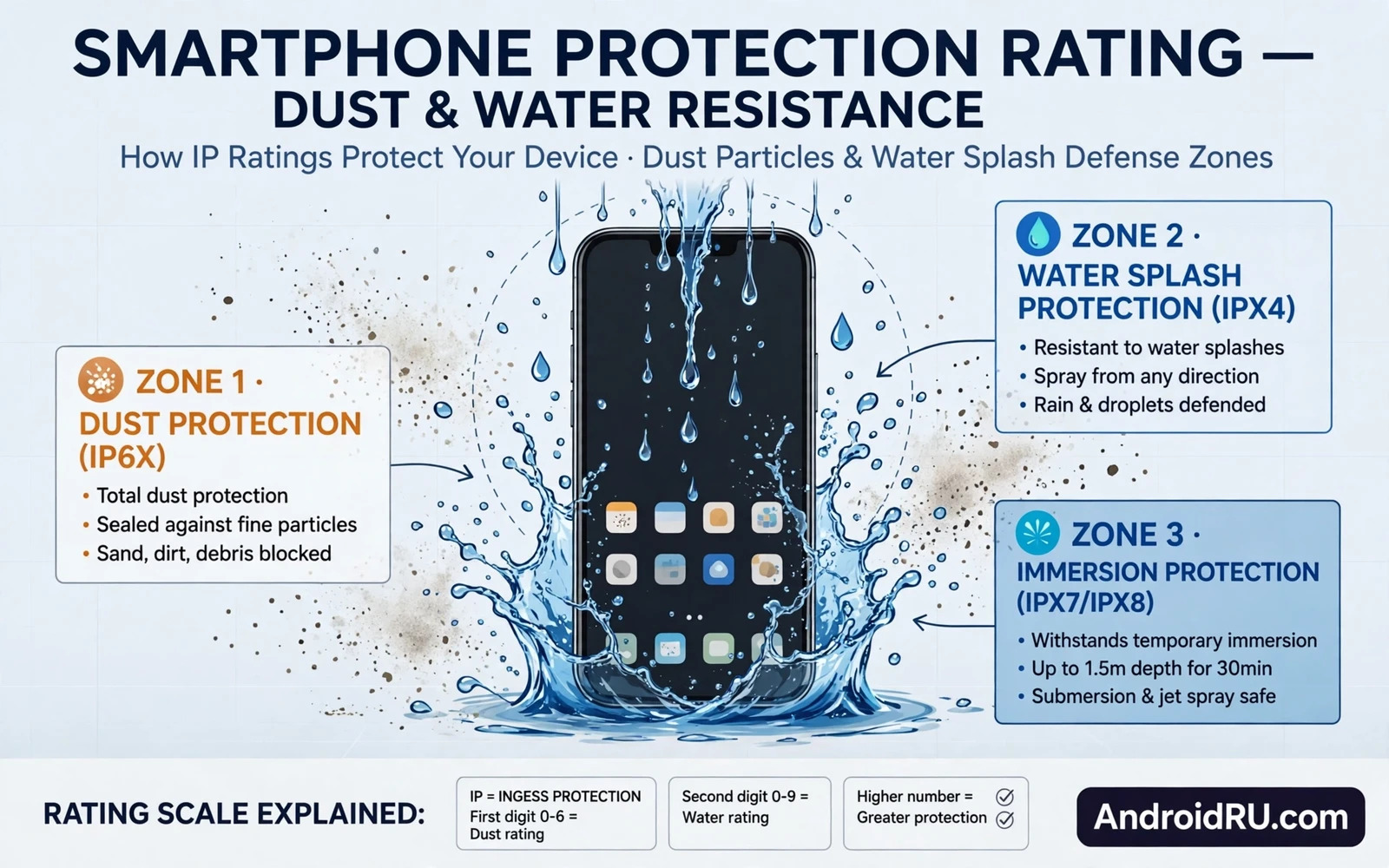
The IP code uses two digits after the letters IP and each digit carries a distinct meaning. The first digit rates protection against solids such as dust. The second digit rates protection against liquids such as water. A higher number means stronger protection in that category. A phone rated for dust and water will show both digits while a phone tested only for water may show an X for the dust digit. Reading both digits matters because a phone can resist water yet still suffer in a dusty workshop. A complete rating gives a fuller picture of outdoor toughness.
Common water digits tell a clear story when read in order. A low water digit covers drips and light splashes only. A middle digit covers water jets from any direction. A high digit covers immersion at a stated depth for a stated time. The highest common digit covers powerful jets and immersion under stricter conditions. Buyers should match the digit to their real risk. A commuter caught in rain needs far less protection than a kayaker or a construction worker. Choosing a higher rating than you need is fine yet it should not be the only reason to buy a phone.
Outdoor workers need more than a water digit and the rugged heavy-duty phone guide covers drop protection and dust sealing for tough daily environments. Military style durability adds another layer and the durability ratings explainer decodes drop and dust standards beside water ratings. Pocketable phones face different risks and the compact phone guide shows how compact bodies and cases protect a phone during everyday carry.
Lab Tests Versus Real Life
Laboratory tests use fresh water at controlled temperature and still conditions. Real life adds movement and pressure and temperature change and chemicals. Jumping into a pool creates pressure spikes that exceed a gentle immersion test. Hot water expands seals differently from cool lab water. Soap and shampoo and chlorine and salt all attack seals and coatings over time. Steam in a bathroom can bypass seals that block liquid water. These differences explain why a rated phone can still fail after a seemingly mild exposure. The lab test is a baseline rather than a real world guarantee.
Age and wear also erode water resistance in ways that no rating captures. Drops can crack seals invisibly. A phone opened for repair may never regain its original sealing. A charging port full of lint can trap moisture against contacts. A case that traps sand can abrade seals during removal. Owners should inspect ports and seals after drops and they should dry a wet phone gently rather than forcing water out with heat. A rated phone deserves the same care as an unrated phone because resistance is a feature that degrades with time and damage.
What To Do When A Phone Gets Wet
Quick calm action improves the odds after an accidental dunk. Remove the phone from water immediately and power it off if it behaves strangely. Wipe the exterior dry with a soft cloth and shake out loose water gently without blowing hard into ports. Let the phone dry in airflow at room temperature for many hours before charging. Do not use a hair dryer on high heat because heat can damage seals and internal parts. Do not insert objects into ports to dry them because that risks pushing water deeper or damaging contacts.
Charging a wet phone is the most dangerous mistake after water exposure. Modern phones warn about moisture in the charging port and owners should heed that warning. Wireless charging can help in some situations because it avoids the wet port yet it still generates heat that should be avoided until the phone is dry. If the phone shows persistent faults after drying then a professional inspection is wise. Water damage often appears days later as corrosion spreads. Early inspection can prevent a minor exposure from becoming a dead phone weeks later.
Rugged Phones And Extra Standards
Rugged phones often pair an IP rating with a military durability standard that covers drops and vibration and temperature extremes. That combination suits outdoor workers far better than an IP rating alone. A phone that resists water yet shatters on a concrete drop is not truly tough for a worksite. A phone that survives drops yet lacks dust sealing will suffer in a quarry or a desert. Buyers who work outdoors should therefore read both ratings together. Readers who want a broader toughness picture can explore a guide to rugged heavy-duty Android phones and how drop and dust protection complement water ratings.
Cases and accessories add another layer of protection yet they can also create false confidence. A waterproof pouch can protect an unrated phone during a boat trip if the pouch seal is checked carefully. A rugged case absorbs drops yet it does not make an unrated phone waterproof. A screen protector guards against scratches yet it does not seal the phone body. Buyers should treat accessories as complements to a rating rather than as replacements for one. The phone rating and the accessory rating must both suit the environment you actually enter.
Warranty And Water Damage Reality
Warranty terms surprise many buyers after water damage because most makers exclude water damage despite advertising water resistance. The rating describes a test result rather than a promise to repair every wet phone free of charge. Makers argue that user behaviour and wear make water damage hard to verify. Buyers should read warranty terms before trusting a rating with an expensive phone. Insurance or a protection plan may cover water damage where the standard warranty does not. That extra cover can be worth the cost for outdoor workers and watersport lovers.
Retailers and makers sometimes use water imagery that suggests carefree underwater use. Underwater photography with a rated phone may work briefly yet it risks the phone and it often voids support. Touchscreens behave unpredictably underwater and photos may disappoint. A dedicated waterproof camera or a sealed pouch serves underwater use far better than a bare phone. A rated phone is best understood as a phone that survives accidents gracefully. It is not a submarine camera and treating it as one invites an expensive lesson.
Choosing The Right Rating For You
Choose a basic splash rating when your main risk is rain and kitchen splashes. Choose a strong immersion rating when you work outdoors or near water regularly. Choose a rugged phone with drop protection when your job involves heights and hard surfaces. Choose a pouch for deliberate water activities regardless of rating because a pouch is cheap insurance. Match the rating to your worst realistic accident rather than to your average day. That worst case thinking keeps a single mistake from destroying your phone and your data.
The final lesson is simple and it protects every buyer. Water resistant means the phone can handle defined water exposure under lab conditions. Waterproof as a casual promise means far more than any phone maker will guarantee. Read the IP digits and respect their limits and dry a wet phone patiently. A phone that survives rain and splashes and accidental drops into a puddle has done its job. A phone that you never need to test to its limit will serve you far longer than a phone pushed beyond its rating for a photograph.
Testing Ratings Before You Trust Them
Buyers can sanity check a rating without deliberately drowning a phone. Read independent teardown and durability reviews that examine seals and build quality. Check user reports for the exact model after months of ownership because early reviews cannot reveal seal ageing. Look for maker guidance on water exposure because responsible makers state limits clearly. A maker that hides limits behind vague waterproof language deserves scepticism. Clear limits signal honest engineering while vague promises signal marketing over substance.
Insurance and backup habits complete a sensible water strategy. Back up photos and data regularly so a water accident costs a device rather than memories. Consider a protection plan when your work or hobbies put a phone near water daily. Keep a cheap waterproof pouch for boat trips and beach days regardless of rating. These precautions cost little compared with a replacement phone. A rated phone plus a pouch plus a backup is a far stronger plan than a rating alone.
Swimmers and boaters should remember that even strong ratings assume fresh water and gentle immersion. Chlorinated pools and salt water and soapy water all stress seals differently from lab water. A rinse with fresh water after salt exposure helps yet it does not restore a worn seal. A dedicated waterproof pouch remains the safest choice for deliberate water sports. Treat the phone rating as accident insurance and the pouch as activity gear and both will serve you well.

