

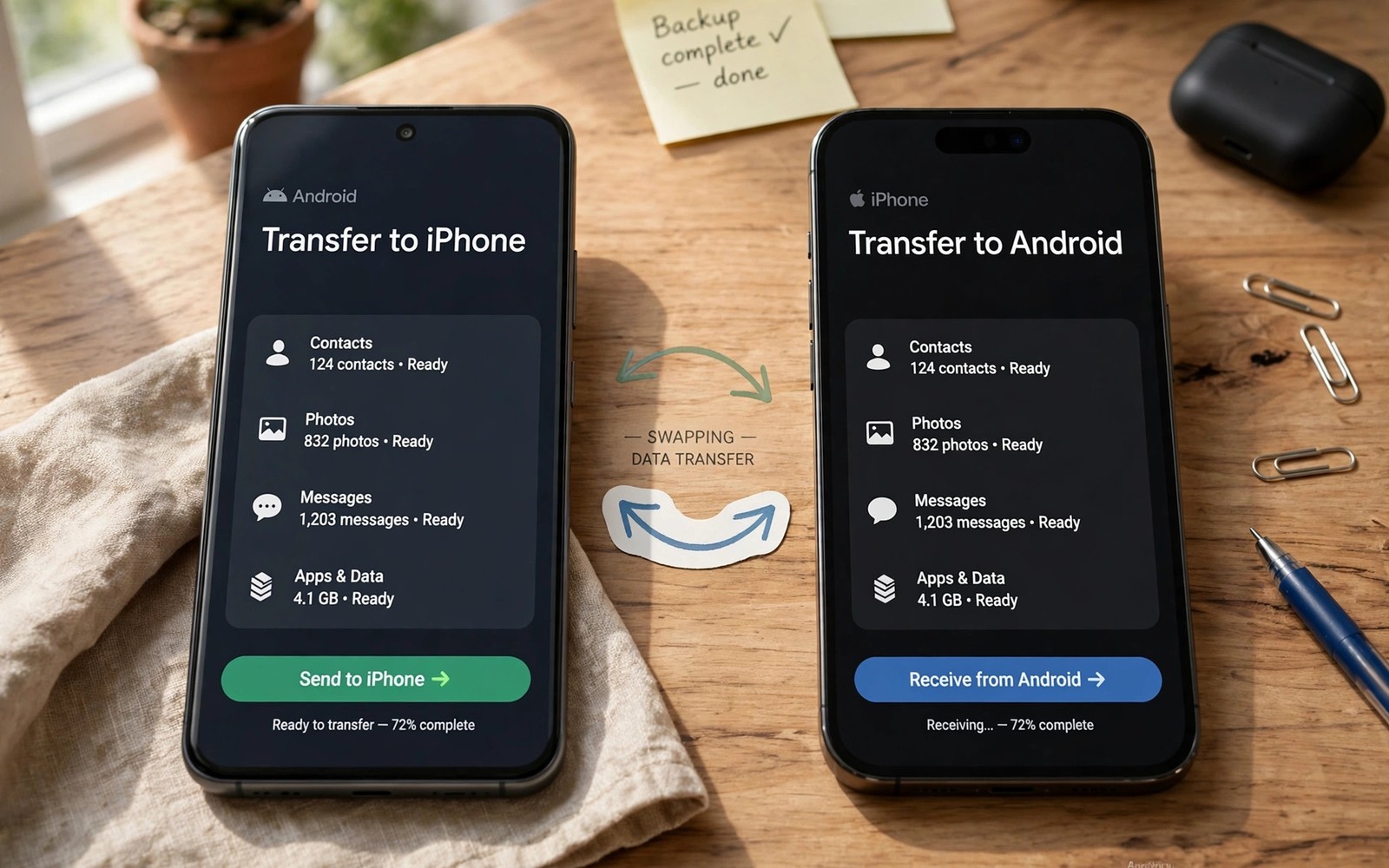
Android and iOS borrow ideas from each other constantly, and fans often argue about who copied whom. A feature that debuts on one platform frequently appears on the other within a year or two, refined for a different design language. That borrowing benefits users on both sides, because good ideas spread. This guide lists five notable exchanges in each direction. The button discussion on how future smartphones will look without physical buttons shows how interaction ideas also travel across platforms.
Borrowing is not the same as copying, because implementation details and design integration differ substantially. A borrowed feature must fit a different system architecture and a different user expectation. Successful borrowing adapts an idea rather than cloning it. Adaptation is why the same feature can feel native on both platforms despite a shared origin.
Five features Android took from iOS
Android adopted gesture navigation after iOS popularised swipe based movement, replacing button navigation with fluid gestures. Android also adopted app privacy labels inspired by iOS nutrition style disclosures, making data practices more visible. Focus modes on Android echo iOS focus tools that silence distractions by context. Live captions and improved accessibility tools also followed iOS leadership in system wide accessibility.
A fifth borrowed area is camera computational photography, where iOS demonstrated that software could rival hardware for image quality. Android manufacturers then invested heavily in computational pipelines. Borrowing in cameras accelerated progress for all phone photographers. Competition through borrowing raised the baseline for everyone.
Five features iOS took from Android
iOS adopted widgets on the home screen after Android had offered them for years, allowing glanceable information without opening apps. iOS also adopted custom keyboards and default app choices, loosening control that once defined the platform. Always on display and improved notification management also followed Android precedents. Split screen multitasking on tablets echoes Android tablet workflows.
A fifth borrowed area is USB C adoption, where Android standardisation preceded iOS by many years. Standard connectors benefit users through shared chargers and accessories. iOS adoption of USB C removed a long standing friction for households with mixed devices. Standardisation through borrowing simplifies daily life.
Why borrowing benefits users
Borrowing benefits users because it spreads proven ideas beyond a single ecosystem. A user who switches platforms loses less when familiar features exist on both sides. Switching costs fall, which increases competition between platforms. Competition then drives further innovation, creating a cycle that benefits users repeatedly.
Borrowing also prevents platform lock in based on a single killer feature. When both platforms offer widgets and focus modes and privacy labels, users choose based on overall experience rather than one missing tool. Choice based on overall experience is healthier than choice based on feature hostage taking. Users win when platforms compete on quality.
How borrowing changes over time
Borrowing patterns change as platforms mature, because early borrowing focused on basic features while later borrowing focuses on intelligence and privacy. Early Android borrowed polish from iOS, while early iOS borrowed customisation from Android. Later exchanges involve AI features and cross device ecosystems. Mature borrowing reflects converging user needs rather than simple imitation.
Convergence does not mean identity loss, because each platform still implements borrowed features with distinct design language. Android widgets feel different from iOS widgets, even when they serve the same purpose. Distinct implementation preserves platform character while sharing utility. Users can enjoy familiar features without losing platform flavour.
What borrowing does not mean
Borrowing does not mean that platforms are identical or that innovation has stopped. Each platform still introduces original ideas that the other may never adopt. Hardware differences and ecosystem differences keep platforms distinct. Borrowing covers common needs, while originality covers differentiating ambitions.
Borrowing also does not mean that timing proves superiority. A feature that appears first is not automatically better than a refined later version. Later versions often fix flaws in the original implementation. The leak guide on Android leaks that show software changes ahead reminds readers that first appearances can mislead. Judge features by implementation quality, not only by debut order.
Choosing a platform in a borrowing world
Choosing a platform today should focus on ecosystem and hardware and long term support, because feature lists overlap heavily. A user invested in a watch and tablet ecosystem may stay for integration rather than for a single feature. A user who values customisation may prefer Android, while a user who values simplicity may prefer iOS. Ecosystem fit matters more than feature counting.
Try both platforms briefly when possible, because hands on experience reveals design differences that feature lists hide. A borrowed feature may feel better on one platform due to integration details. Personal feel should guide the final choice. Spec sheets cannot capture how a phone feels after a week of use.
A borrowing comparison checklist
Use this checklist when comparing platforms, so borrowed features do not distract from real differences.
Feature list: note which features exist on both platforms
Implementation: test borrowed feature on each platform personally
Ecosystem: watch, tablet, computer integration checked
Support: update policy and repair options compared
Feel: one week of daily use, not only a store demo
The code above is an original example written for this guide. It shows one practical way to apply the idea in this article. You can adapt the wording and the values to fit your own phone and your own routine.
Borrowing in camera software
Camera software borrowing deserves special attention, because computational photography advances spread rapidly across platforms. Night mode and portrait mode and HDR processing all appeared on one platform and then improved on the other. Each iteration refined the previous approach, producing better results for all users. Camera borrowing shows how competition through imitation raises quality faster than isolated development.
Users benefit most when camera borrowing includes user interface improvements as well as algorithms. A night mode that is easy to find and use matters as much as its image quality. Interface borrowing ensures that powerful features remain accessible to casual photographers. Accessibility of features matters as much as their technical quality.
Borrowing in privacy tools
Privacy tools also travel across platforms, because user demand for transparency grows on both sides simultaneously. App privacy labels and permission histories and approximate location options all spread after debuting on one platform. The on device AI discussion on whether on device AI is the future of smartphones connects privacy with local processing trends. Privacy borrowing reflects shared user values rather than corporate copying alone.
Privacy borrowing benefits users most when implementations remain comparable, because users can then choose a platform based on privacy strength rather than on feature presence. Comparable privacy tools enable informed choice. When one platform implements a borrowed privacy tool weakly, users should notice the difference. Implementation quality, not feature presence, should guide privacy decisions.
Borrowing and ecosystem lock in
Borrowing reduces lock in for features, but ecosystem lock in persists through services and accessories and data formats. A user may enjoy the same widgets on both platforms yet remain locked by photos and messages and health data. Feature borrowing alone does not free users from ecosystem costs. Data portability matters more than feature parity for true freedom.
Users who value freedom should check data export options alongside feature lists when choosing a platform. Exportable photos and contacts and notes reduce switching costs more than any borrowed feature. Freedom comes from data ownership, not only from feature availability. A platform that exports data easily respects user choice.
Common mistakes
The most common mistake is treating borrowing as theft rather than as industry evolution. All technology builds on prior ideas, and platforms refine each other constantly. Another mistake is choosing a platform based on a single borrowed feature. Feature lists overlap too much for single feature decisions.
- Do not judge a feature by debut order alone without testing implementation quality.
- Do not assume platforms are identical just because they share features.
- Do not ignore ecosystem and support differences when choosing a platform.
- Do not rely on a store demo to judge a borrowed feature feel.
A final mistake is fan loyalty that blinds users to good ideas on the other platform. Openness to borrowing benefits users regardless of brand preference. Good ideas deserve appreciation wherever they appear.
Frequently asked questions
Which platform innovates more, Android or iOS?
Both innovate in different areas, with Android often leading customisation and iOS often leading polish and integration. Borrowing in both directions shows that neither platform holds a monopoly on good ideas. Judge innovation by area rather than by platform overall.
Does borrowing mean my platform choice does not matter?
No, because ecosystem and hardware and design language still differ substantially. Feature overlap reduces switching costs, but overall experience still varies. Choose based on ecosystem fit and personal feel.
Will platforms eventually become identical?
Unlikely, because hardware strategies and business models and design philosophies remain distinct. Convergence covers common features, while differentiation continues in ecosystems and services. Platforms will share utilities while keeping distinct identities.
Conclusion
Android and iOS stole ideas from each other in both directions, and users benefited from every exchange. Feature overlap means platform choice should focus on ecosystem and feel rather than on a single borrowed feature.
Your concrete next step is to list the five features you use most and test how each feels on the other platform. Use that hands on comparison to guide your next phone choice.

