

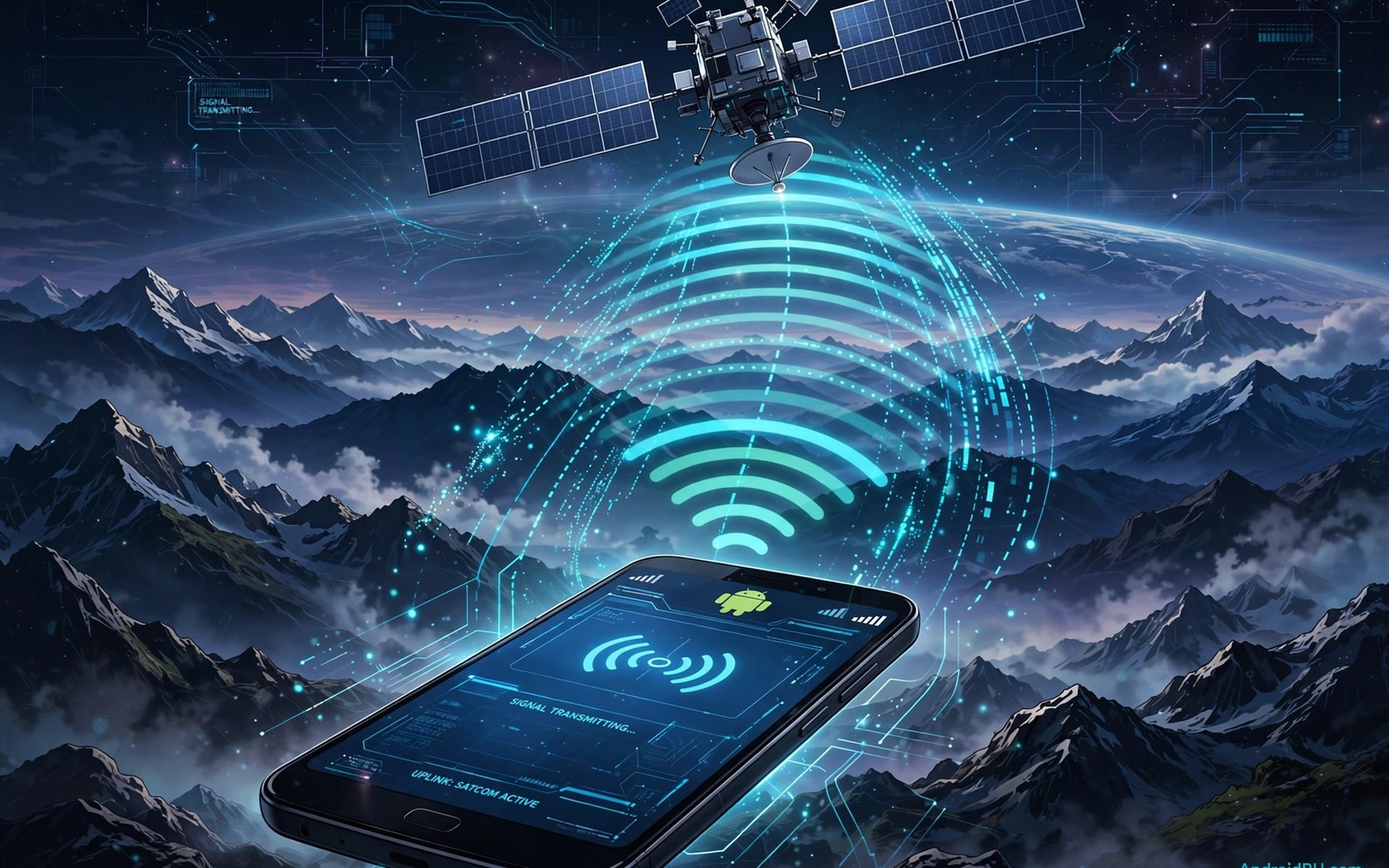
Satellite connectivity promises a phone that can send a message from anywhere on Earth, even far from cell towers. Hikers and sailors and rural residents could gain a safety lifeline that works beyond traditional coverage. That promise raises a natural question about whether satellite features will become standard on every Android phone. The answer depends on cost and hardware and regulation as much as on technology. The feature overview in massive Android features coming to your phone this year places connectivity improvements among quiet but important changes.
Satellite messaging today works best for short emergency texts, not for full internet browsing. Satellites in low orbit can relay short messages with modest antennas, while broadband satellite needs larger antennas and more power. Phone satellite features therefore start with safety messaging rather than with streaming. Emergency use is the realistic first step toward standard satellite support.
How phone satellite messaging works
Phone satellite messaging uses a special modem and antenna design that can reach satellites overhead. The phone must have a clear view of the sky, because buildings and dense tree cover block the signal. Messages travel to a satellite and then to a ground station that forwards them to emergency services or to contacts. The process takes longer than a normal text, often tens of seconds.
Users must usually point the phone toward the satellite or follow on screen guidance to maintain alignment. Alignment guidance makes the process usable, yet it still requires patience and a clear sky. Satellite messaging is a deliberate action, not a background service that works unnoticed. Understanding that process prevents unrealistic expectations.
Cost and who pays
Satellite services cost money to operate, because launching and maintaining satellite constellations requires huge investment. Someone must pay, whether users through subscriptions or manufacturers through partnerships or governments through emergency funding. Early satellite features often include a free emergency period, followed by paid plans for broader use. Long term pricing will shape whether satellite becomes standard or remains premium.
Manufacturers may absorb costs initially to differentiate flagship phones, then pass costs to users as the feature spreads. A feature that starts free on flagships may become a subscription on mid range phones. Users should check pricing terms beyond the launch promotion. Free at launch does not guarantee free forever.
Regulation and coverage limits
Satellite services face regulation in each country, because spectrum use and emergency routing rules differ globally. A feature available in one country may be unavailable in another due to licensing. Global standardisation will take years, as regulators and operators negotiate coverage and emergency protocols. A phone feature that works at home may fail abroad without warning.
Coverage also depends on satellite constellation density, which improves as more satellites launch. Early coverage may have gaps in polar regions or during peak demand. Users in remote areas should check coverage maps for their specific region rather than trusting global claims. Regional coverage matters more than global marketing.
Emergency use versus everyday use
Emergency use justifies satellite support even when everyday use remains limited, because a single saved life outweighs convenience arguments. Emergency messaging can summon help when no other connection exists. That safety value may drive regulators to encourage or require satellite emergency features. Safety regulation could accelerate standardisation faster than market forces alone.
Everyday use such as regular messaging and browsing will need larger antennas and more power than current phones offer. Everyday satellite internet on a phone remains a longer term goal, not an imminent standard. Users should distinguish emergency satellite from broadband satellite when evaluating claims. Conflating the two creates false expectations.
Hardware challenges for standard phones
Satellite hardware adds antenna complexity and modem cost to every phone that includes it. Budget phones face the hardest trade, because added cost competes with battery and camera budgets. Manufacturers must decide whether satellite hardware justifies its cost on a low price device. That decision will determine whether satellite becomes truly standard or stays flagship only.
Antenna design also competes with other phone features, because space inside a phone is limited. A satellite antenna may displace other components or require a larger frame. Design trade-offs mean that standard satellite support will arrive gradually, starting with larger phones that have room to spare. Size and cost together pace adoption.
What standardisation would require
Standardisation would require affordable hardware and clear pricing and global regulatory agreement together. No single breakthrough delivers all three at once. The foldable outlook in future foldable screens and rollable display tech shows how new hardware categories also spread gradually rather than instantly. Satellite will follow a similar gradual path from flagship novelty to common feature.
Users can support standardisation by using emergency satellite responsibly and by reporting coverage gaps. Responsible use helps operators improve service without abuse. Feedback from real remote users shapes constellation planning more than urban test data. Remote users are both the beneficiaries and the testers of early satellite phones.
A satellite readiness checklist
Use this checklist before relying on satellite messaging for a remote trip. It covers the practical limits that marketing often omits.
Sky check: clear view overhead, no dense cover or buildings
Message check: short emergency text prepared in advance
Battery check: phone charged, power bank carried
Coverage check: region coverage confirmed before departure
Cost check: subscription or free period terms understood
The code above is an original example written for this guide. It shows one practical way to apply the idea in this article. You can adapt the wording and the values to fit your own phone and your own routine.
Satellite for rural communities
Rural communities stand to gain most from satellite messaging, because cell coverage gaps affect daily safety and communication there. A farmer or a rural health worker with satellite messaging can summon help or coordinate care without travelling to a coverage area. That benefit extends beyond recreation, reaching essential services in remote regions. Satellite connectivity could reduce the rural connectivity gap for emergency communication.
Affordability remains the barrier for rural adoption, because satellite subscriptions may exceed rural budgets. Subsidised emergency plans or community shared devices could bridge that gap. Policymakers and operators should consider rural affordability when designing satellite pricing. A safety feature that only wealthy users afford leaves the most vulnerable unprotected.
Satellite and disaster response
Disasters often destroy cell towers, leaving satellite as the only remaining link for affected areas. A phone with satellite messaging can report status and request aid when local networks fail. Disaster response teams also use satellite links to coordinate relief. Satellite phones therefore serve both individual safety and collective response during crises.
Disaster use requires pre disaster preparation, because users must know how to activate satellite messaging before a crisis. Practice the alignment process during calm conditions, so stress does not block a successful message. The processor and hardware context in future mobile processors and 3nm chip benchmarks shows how hardware capabilities evolve alongside connectivity. Preparation plus hardware together determine disaster readiness.
Future satellite broadband on phones
Future satellite broadband on phones will need larger antennas or external accessories, because current phone antennas cannot support high data rates efficiently. An accessory antenna could enable broadband for travellers while keeping the phone itself compact. Accessory based broadband may arrive before built in broadband, as a compromise between size and capability. Users should watch accessory developments as a sign of broadband progress.
Broadband satellite also raises power consumption sharply, because transmitting to orbit requires more energy than reaching a nearby tower. Battery life will limit broadband use to short bursts rather than continuous streaming. Power constraints mean that satellite broadband will complement, not replace, terrestrial networks for most users. Complementary use is still valuable for remote work.
Common mistakes
The most common mistake is expecting satellite messaging to work like normal texting indoors. Satellite signals need a clear sky and patience for alignment. Another mistake is assuming that a satellite feature works in every country. Regulation and coverage vary sharply by region.
- Do not rely on satellite messaging without testing alignment guidance beforehand.
- Do not assume launch free periods will continue indefinitely.
- Do not expect broadband satellite internet from a current phone antenna.
- Do not travel remotely without a backup communication plan.
A final mistake is buying a satellite phone solely for a feature you may never use, while ignoring battery and camera needs. Satellite is valuable insurance, but daily phone quality still matters most. Balance insurance value with daily usability.
Frequently asked questions
Will every Android phone get satellite connectivity soon?
Probably not soon, because hardware cost and regulation and coverage limits slow adoption. Flagship phones will lead, while budget phones follow over several years. Emergency satellite may become common faster than everyday satellite internet.
Does satellite messaging work indoors?
No in most cases, because satellite signals need a clear view of the sky. Buildings and dense cover block the connection. Users must go outdoors and follow alignment guidance for a successful message.
Is satellite messaging free forever?
Early offers often include a free emergency period, but long term pricing may involve subscriptions. Check terms beyond the launch promotion before relying on the feature. Pricing will shape how widely satellite spreads.
Conclusion
Satellite connectivity will likely become common for emergency messaging over time, while everyday satellite internet remains a longer term goal. Cost and hardware and regulation together pace that spread from flagships to all phones.
Your concrete next step is to check whether your current or next phone supports satellite emergency messaging and what its coverage and pricing terms are for your region.

